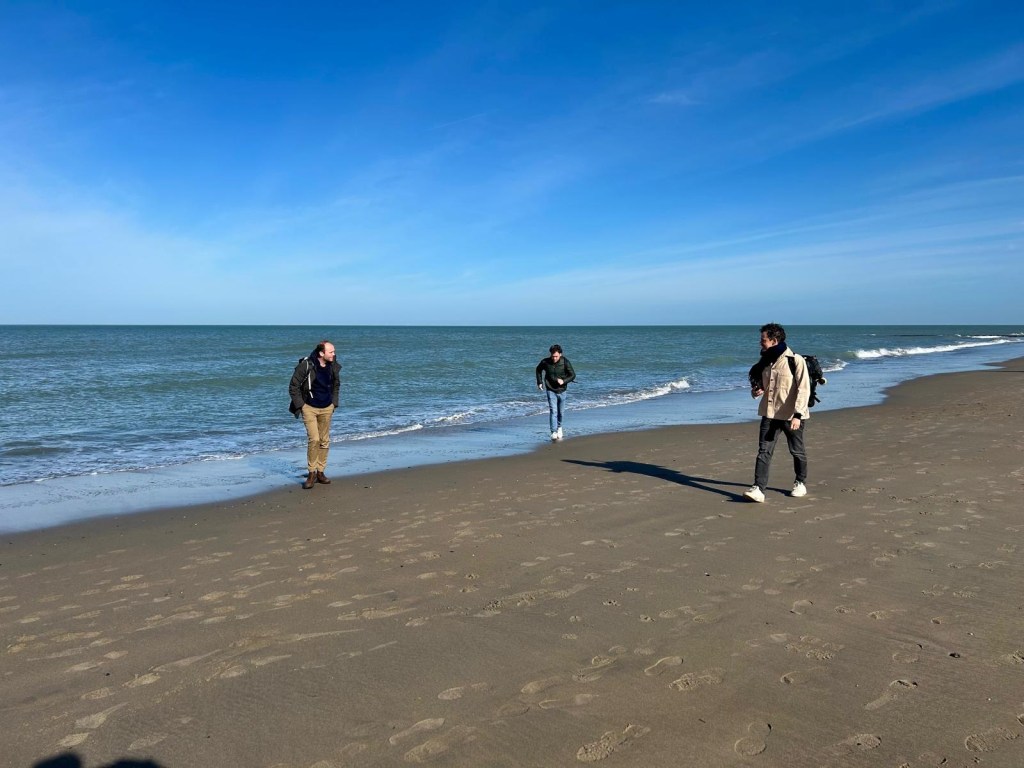
I haven’t set foot on a commercial plane in six years.
Not for lack of opportunity… but my work has been flexible enough to go fully remote with cross-Atlantic clients and by train within Europe: Toulouse, Copenhagen, Lisbon, London, Amsterdam… were all possible by train. Some easier then others. And honestly, Europe just keeps surprising me. Trains to the Calanques. A camper through Norway’s fjords on HVO100 biofuel. Cycling to De Haan. Hiking the GR16 alone through the Belgian Ardennes in the dead of winter. There has never been a reason to fly.
But there’s one trip I know is coming.
My sister lives in Kenya. Her husband, her kids, a life I’ve only glimpsed from a distance. At some point in the next few years, I’m going. And when I do, I want to do it right. Not a quick hop over and back. We’re talking 4 to 6 weeks minimum: family time, some local work, slow travel around East Africa, and as much remote work as I can fold in. One long, purposeful trip. Not five short ones.
And the flight itself? I want to fly on the most fuel-efficient aircraft available, on the highest blend of alternative fuel / sustainable aviation fuel (SAF) I can find, with an airline that’s actually doing something about its footprint. I want it to be worth it.
That’s the lens through which I came across BookBetter.
This post isn’t about encouraging you to fly more. If you can avoid it…and in Europe, most of the time you can…I still think you should. But for the trips where flying is the only real option, there’s a meaningful difference between flights, and most booking platforms won’t show it to you.
Not All Flights Are Equal
Picture two flights from Brussels to Nairobi. Same price range, similar travel times. Most platforms show them as essentially the same choice.
They’re not.
A flight’s climate impact depends on several factors at once: the aircraft type and how fuel-efficient it is, whether you’re flying direct or connecting, how full the plane is, the route it takes, and whether the operator is using any SAF. Two flights can look identical in a search result and have very different real-world footprints.
The problem isn’t that this information doesn’t exist…it’s that it’s buried, scattered, or simply not shown when you’re booking.
What BookBetter Actually Does
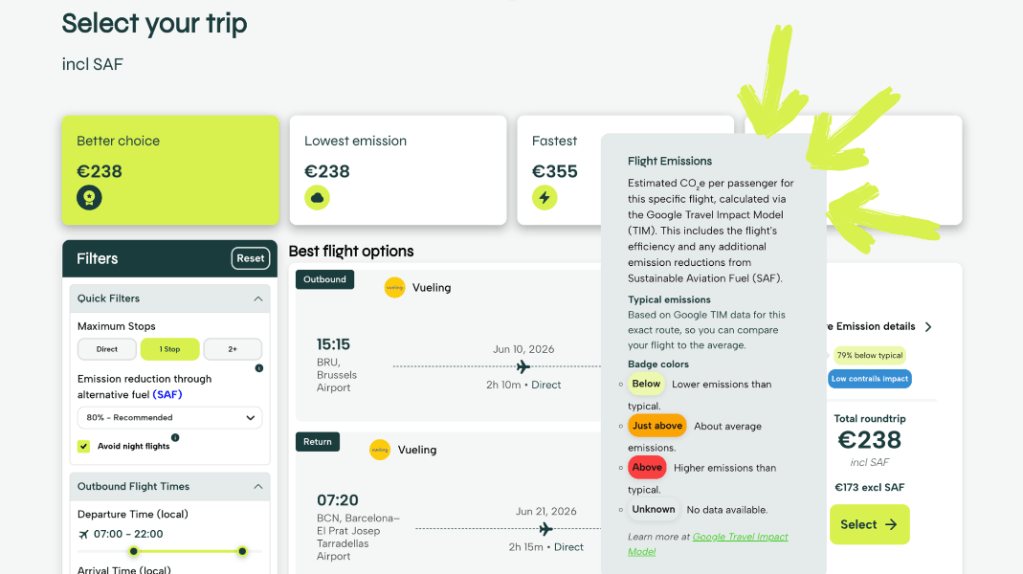
BookBetter is a flight booking platform that puts sustainability information front and center, alongside price and travel time.
Instead of hiding emissions data in fine print, it lets you compare flights based on their actual environmental impact: aircraft efficiency, SAF usage, directness, load factors. You don’t need to be an aviation expert to use it. The information is already there.
It also supports SAF contributions at the point of booking, so if you want to go further than just picking the least-bad option, you can actively support cleaner fuel adoption.
I’ll be honest: no flight is zero-impact. And sustainable aviation fuel, while genuinely promising, capable of reducing lifecycle emissions by 80–90% compared to conventional jet fuel, isn’t a silver bullet. The scale is still limited, and current EU legislation means airlines often count SAF purchases toward their regulatory targets rather than treating them as additive reductions. BookBetter is upfront about this complexity, and only let’s you pay for truly additional SAF.
Better information leads to better choices, and right now, most travelers are making decisions completely blind to the environmental dimension.
On Carbon Offsets versus Insetting
This is where opinions sometimes diverge.
The world needs more tree planting… a lot of it.
But when I fly, I’m more interested in transforming the industry from within and reducing impact in aviation rather than compensating by planting trees, but leaving the travel industry unchanged. The direction of travel (pun intended) is toward fewer emissions, not more emissions plus offsets. Picking a more efficient aircraft, supporting SAF, flying direct when possible, these feel more direct than buying your way out after by planting trees.
That said, it doesn’t have to be either/or. Both can be part of the same decision.
My Own Checklist for When I Finally Go
When that Kenya trip comes together, here’s what I’ll be optimizing for:
- A combination of:
- Direct flight: every connection adds fuel burn and emissions – but only if the sum of the emissions and fuel efficiency make sense: an indirect flight with the newest fleet might have less climate impact then a direct flight with a 15 year old aircraft
- Most fuel-efficient aircraft: newer widebodies like the A350 or 787 make a real difference on long haul
- Highest SAF blend available
- Airline with a credible sustainability program, not just marketing
- 4–6 weeks on the ground — because the whole point of a long-haul trip is staying long enough to actually be present, not just ticking it off… with an impressive safari at Lewa Wilderness? 🙂

BookBetter is the only platform I’ve found so far that makes comparing flights on these dimensions actually practical: without spending hours digging through individual airline websites and emissions calculators.
The Bigger Picture
The goal of this blog has always been the same: travel more consciously, wherever you are in that journey.
For most of us in Europe, that means trains, bikes, ferries, and slow road trips. The continent is extraordinary, and most of it is reachable without ever booking a flight.
But some trips, and some of them really matter, require flying. For those, making a more informed choice isn’t idealism. It’s just the next step.
Check out BookBetter if you’ve got a flight coming up. At minimum, it’ll show you what you’d never see on a standard booking site.