When You Do Have to Fly: How to Make It Count

I haven’t set foot on a commercial plane in six years.

Not for lack of opportunity… but my work has been flexible enough to go fully remote with cross-Atlantic clients and by train within Europe: Toulouse, Copenhagen, Lisbon, London, Amsterdam… were all possible by train. Some easier then others. And honestly, Europe just keeps surprising me. Trains to the Calanques. A camper through Norway’s fjords on HVO100 biofuel. Cycling to De Haan. Hiking the GR16 alone through the Belgian Ardennes in the dead of winter. There has never been a reason to fly.

But there’s one trip I know is coming.

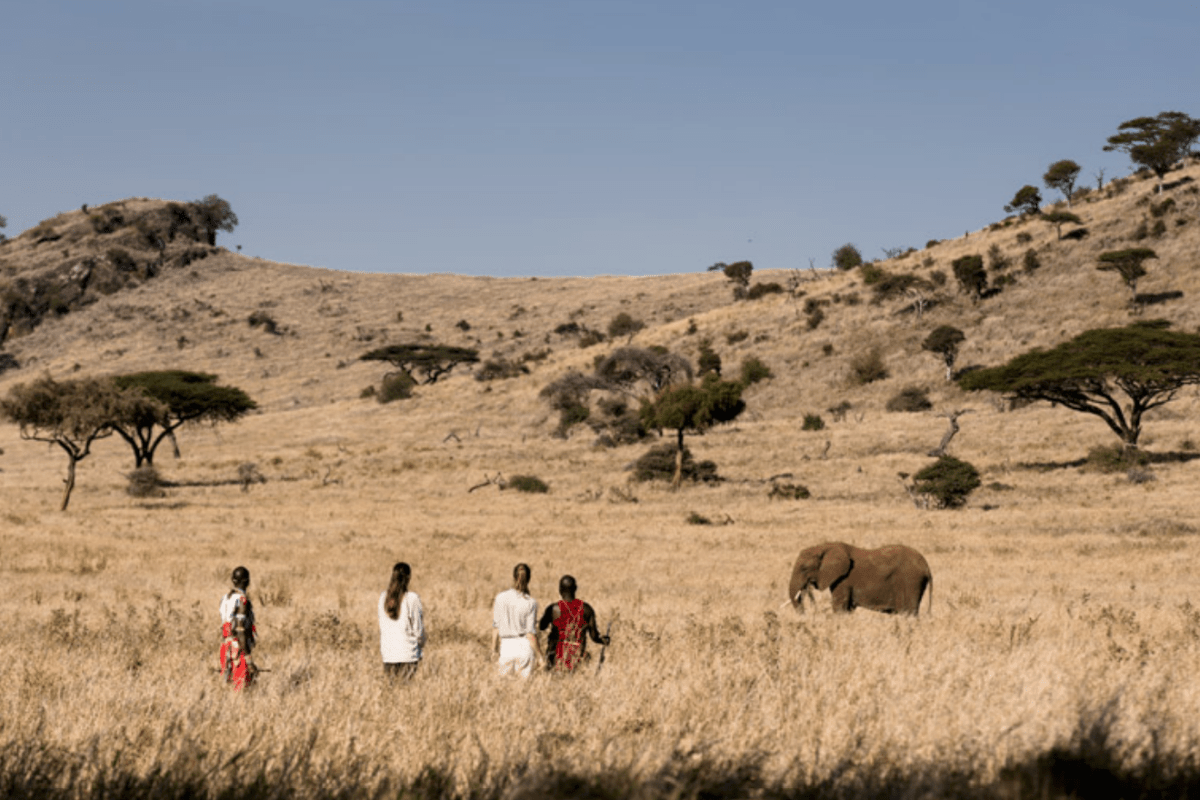
My sister lives in Kenya. Her husband, her kids, a life I’ve only glimpsed from a distance. At some point in the next few years, I’m going. And when I do, I want to do it right. Not a quick hop over and back. We’re talking 4 to 6 weeks minimum: family time, some local work, slow travel around East Africa, and as much remote work as I can fold in. One long, purposeful trip. Not five short ones.

And the flight itself? I want to fly on the most fuel-efficient aircraft available, on the highest blend of alternative fuel / sustainable aviation fuel (SAF) I can find, with an airline that’s actually doing something about its footprint. I want it to be worth it.

That’s the lens through which I came across BookBetter.

This post isn’t about encouraging you to fly more. If you can avoid it…and in Europe, most of the time you can…I still think you should. But for the trips where flying is the only real option, there’s a meaningful difference between flights, and most booking platforms won’t show it to you.


Not All Flights Are Equal

Picture two flights from Brussels to Nairobi. Same price range, similar travel times. Most platforms show them as essentially the same choice.

They’re not.

A flight’s climate impact depends on several factors at once: the aircraft type and how fuel-efficient it is, whether you’re flying direct or connecting, how full the plane is, the route it takes, and whether the operator is using any SAF. Two flights can look identical in a search result and have very different real-world footprints.

The problem isn’t that this information doesn’t exist…it’s that it’s buried, scattered, or simply not shown when you’re booking.


What BookBetter Actually Does

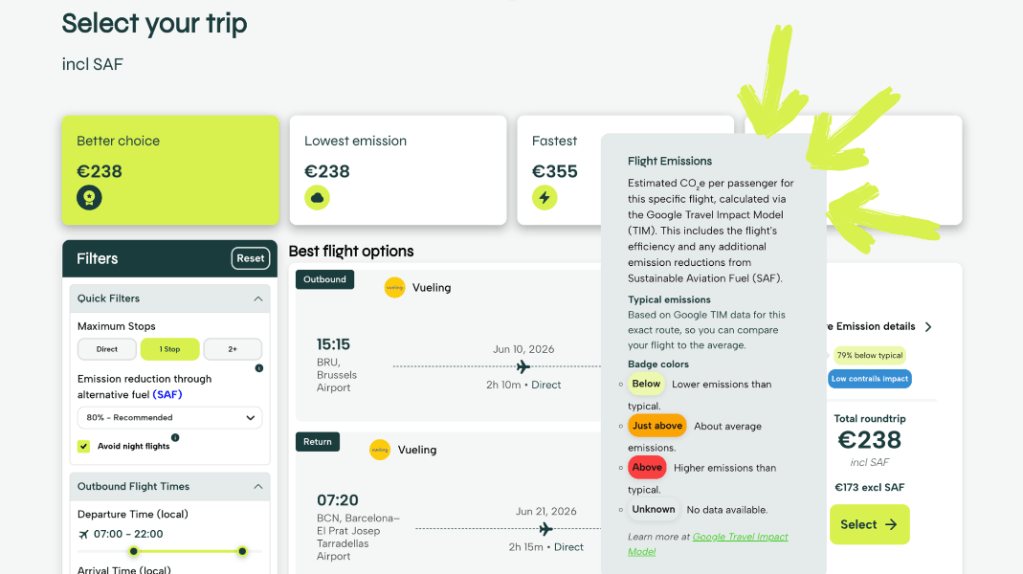
BookBetter is a flight booking platform that puts sustainability information front and center, alongside price and travel time.

Instead of hiding emissions data in fine print, it lets you compare flights based on their actual environmental impact: aircraft efficiency, SAF usage, directness, load factors. You don’t need to be an aviation expert to use it. The information is already there.

It also supports SAF contributions at the point of booking, so if you want to go further than just picking the least-bad option, you can actively support cleaner fuel adoption.

I’ll be honest: no flight is zero-impact. And sustainable aviation fuel, while genuinely promising, capable of reducing lifecycle emissions by 80–90% compared to conventional jet fuel, isn’t a silver bullet. The scale is still limited, and current EU legislation means airlines often count SAF purchases toward their regulatory targets rather than treating them as additive reductions. BookBetter is upfront about this complexity, and only let’s you pay for truly additional SAF.

Better information leads to better choices, and right now, most travelers are making decisions completely blind to the environmental dimension.

On Carbon Offsets versus Insetting

This is where opinions sometimes diverge.

The world needs more tree planting… a lot of it.

But when I fly, I’m more interested in transforming the industry from within and reducing impact in aviation rather than compensating by planting trees, but leaving the travel industry unchanged. The direction of travel (pun intended) is toward fewer emissions, not more emissions plus offsets. Picking a more efficient aircraft, supporting SAF, flying direct when possible, these feel more direct than buying your way out after by planting trees.

That said, it doesn’t have to be either/or. Both can be part of the same decision.


My Own Checklist for When I Finally Go

When that Kenya trip comes together, here’s what I’ll be optimizing for:

  • A combination of:
    • Direct flight: every connection adds fuel burn and emissions – but only if the sum of the emissions and fuel efficiency make sense: an indirect flight with the newest fleet might have less climate impact then a direct flight with a 15 year old aircraft
    • Most fuel-efficient aircraft: newer widebodies like the A350 or 787 make a real difference on long haul
  • Highest SAF blend available
  • Airline with a credible sustainability program, not just marketing
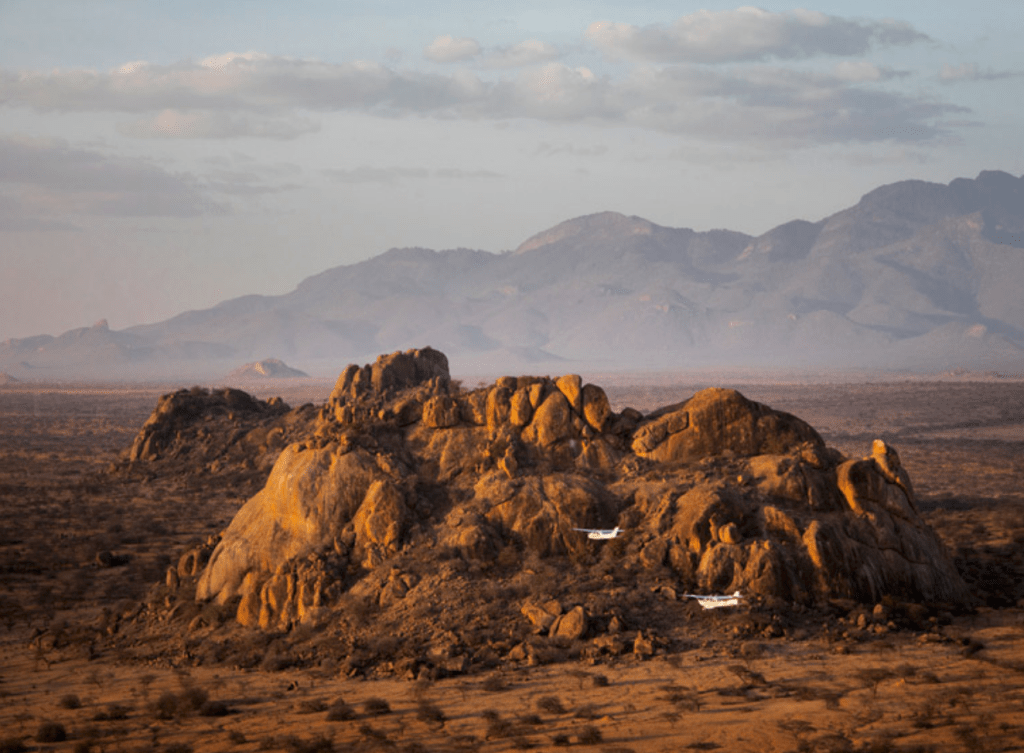
  • 4–6 weeks on the ground — because the whole point of a long-haul trip is staying long enough to actually be present, not just ticking it off… with an impressive safari at Lewa Wilderness? 🙂
BookBetter is the only platform I’ve found so far that makes comparing flights on these dimensions actually practical: without spending hours digging through individual airline websites and emissions calculators.


The Bigger Picture

The goal of this blog has always been the same: travel more consciously, wherever you are in that journey.

For most of us in Europe, that means trains, bikes, ferries, and slow road trips. The continent is extraordinary, and most of it is reachable without ever booking a flight.

But some trips, and some of them really matter, require flying. For those, making a more informed choice isn’t idealism. It’s just the next step.

Check out BookBetter if you’ve got a flight coming up. At minimum, it’ll show you what you’d never see on a standard booking site.


Transform Your Travel Habits with Expert Insights – The podcast

“The Carbon Conscious Traveler” podcast seeks to create new perspectives on travel by engaging in thoughtful discussions with guests from diverse backgrounds. The podcast highlights unique travel experiences, sustainable travel practices, and the personal impact of slower, more meaningful journeys.

By featuring conversations with experts, writers, and notable figures in the travel world, it aims to inspire listeners to rethink their travel habits and embrace more mindful and ecologically friendly ways of exploring the world.

Through a relaxed 45-minute chat, “The Traveler” provides insights and stories that encourage a deeper connection to the places visited and the people met along the way. We’ll try to launch one new episode per month. You can find the podcast here on Spotify.

Are you active in the travel industry? Do you have inspiring stories to share? Reach out and you might be our next guest!

How It All Started

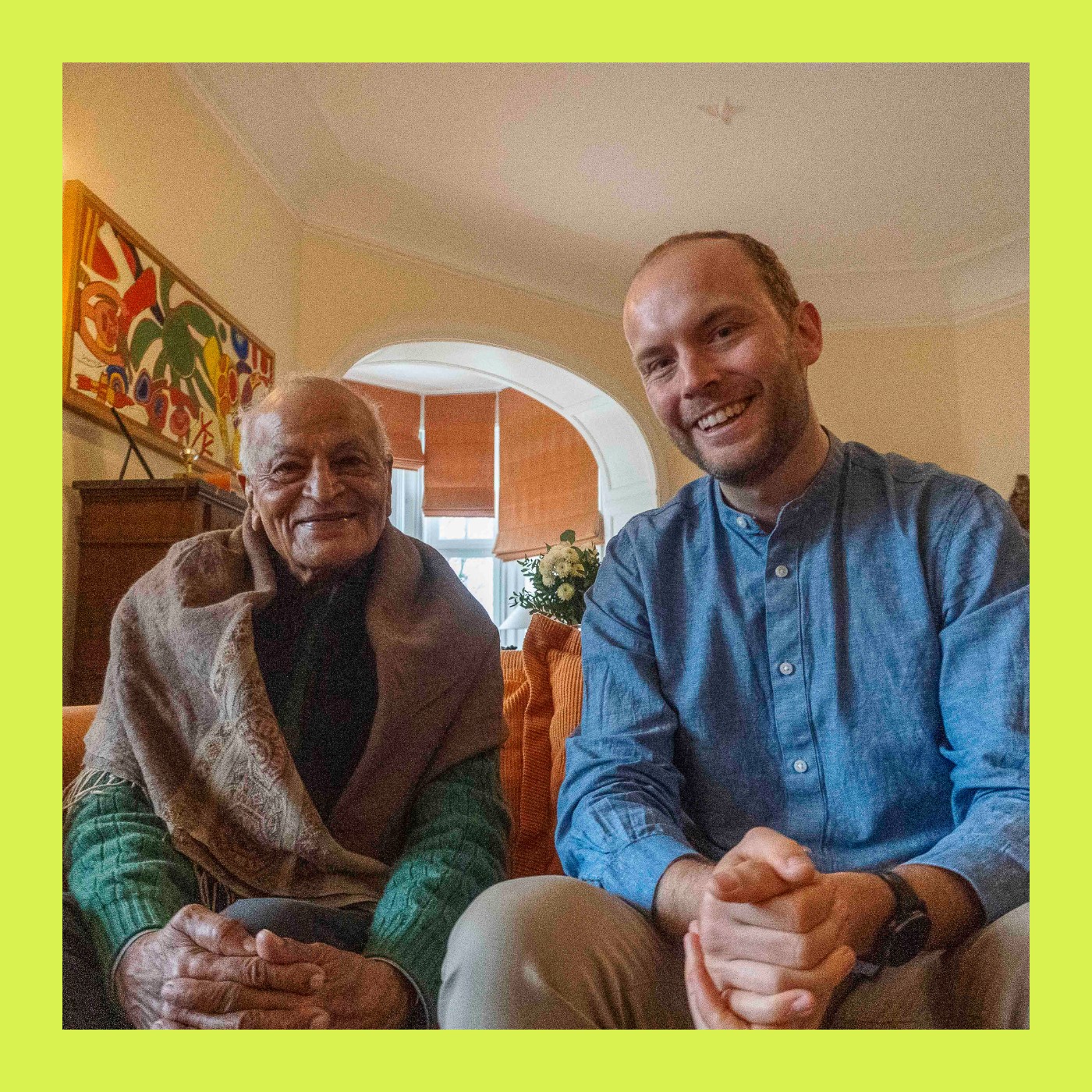
  • I was interviewing Satish Kumar, a former monk and expert on radical love and organic agricultural practices. I wanted to get his thoughts on traveling connected with our planet Earth. He shared his views and I recorded it on my phone to avoid having to write. While listening to it afterward, it sounded like a podcast so I asked permission to publish his views on traveling like a pilgrim in the very first episode.
  • It is fun to engage with inspiring people in tourism and travel and share and inspire others while learning and being motivated to think differently myself, so I keep making new episodes since.

Before we dive in, are you already following this podcast on Spotify? If you enjoy the episodes, please follow, rate, and share them with fellow travelers. We want to help people make more conscious and well-considered travel choices, so reaching as many people as possible is our goal.

If you have suggestions for improvement, additional questions or stories? Engage with us commenting below, reaching out via social media channels or email! Your feedback is needed to improve step by step!

Fun fact: The idea to make the table recording with Satish Kumar made by phone a podcast, and the intro and outro of the first episode with Satish Kumar were recorded here on Mount Etna in Sicily.

Previous guests

  • E1 – Satish Kumar – Travel like a pilgrim: This episode features Satish Kumar, a lifelong activist and former monk, who shares wisdom on traveling with ecological and spiritual awareness. The conversation delves into the concept of mindful travel, peace pilgrimages, and concludes with a meditation on “Gratitude for the traveler.” Satish’s message is rooted in ecological regeneration and spiritual fulfillment.
  • E2 – Andrew Stevenson – The destination & the collective: UK-based travel psychologist Andrew Stevenson examines the psychological impact of travel destinations and ratings, as well as the divisive effects of flight shaming. The episode addresses collective versus individual responsibility in travel decisions and offers advice for those dealing with eco-anxiety. Listeners gain perspective on balancing enjoyment of travel with environmental concerns.
  • E3 – Paige McClanahan – The New Tourist: Journalist and author Paige McClanahan analyzes the impact of tourism on communities, highlighting both its positive and negative effects. The conversation encourages travelers to align their actions with personal values, aiming to maximize positive contributions while recognizing collective responsibility. Paige offers guidance on becoming a more conscious and responsible traveler.
  • E4 – Michael Brein – Unlocking the secrets of Travel Psychology: Michael Brein discusses the evolution from being a tourist to becoming an explorer, introducing psychological concepts to enrich travel experiences. The episode explores how travel journaling and seeing familiar places with new eyes can deepen one’s connection to the world. Michael’s insights offer practical ways to reflect, reconnect, and expand personal boundaries through travel.
  • E5 – Britt Buseyne – The importance of economic equality in travel: Britt Buseyne, an advocate for sustainability and systems thinking, expands the dialogue beyond carbon emissions to include broader ecosystem impacts. The episode debates the merits of carbon offsetting, flight shaming, and the importance of being addressed as citizens rather than just consumers. Britt emphasizes shared responsibility and personal definitions of sustainable travel.
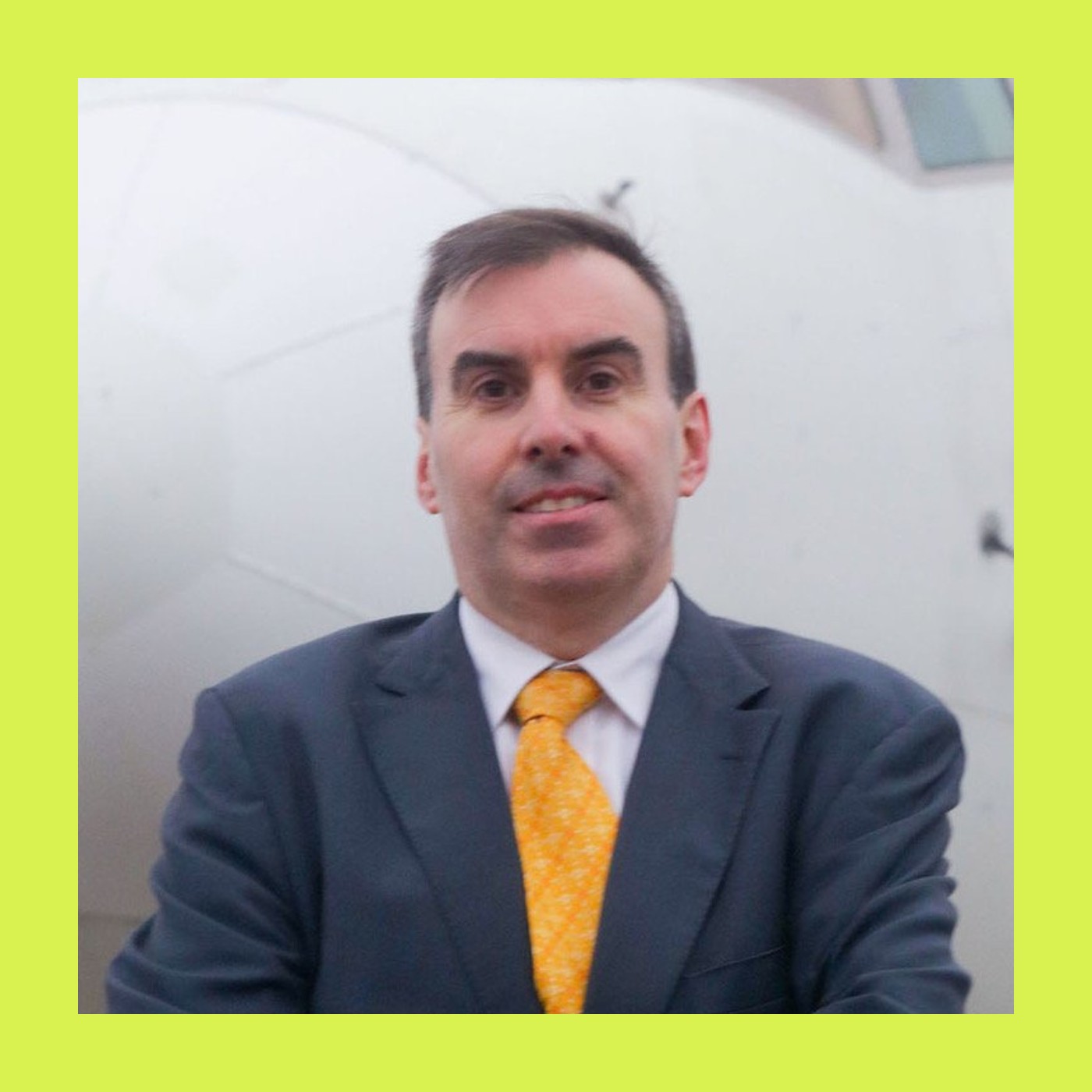
  • E6 – Patrick Edmond – Flying with purpose: Patrick Edmond, Chief Marketing Officer at SAF aggregator Future Energy Global, discusses the shift from recreational flying to purposeful air travel. The conversation covers frequent flyer levies, adverse effects of US SAF tax incentives, and EU policies’ impact on ticket prices. Patrick reflects on aviation’s golden age, current environmental dilemmas, and the industry’s need to decarbonize for future growth.
  • E7 – Louis Lammertyn intro episode – The journey of the traveler: Louis, the host and founder, shares his transition from business aviation to sustainability entrepreneurship. The episode explains the origins of the podcast, its focus on mindful and ecologically friendly travel, and the host’s commitment to low-impact journeys. Louis introduces BookBetter and the mission to inspire travelers to rethink habits for a more sustainable future.
  • E8 – Matt Tips – Green Erasmus & academic travel: Matt Tips, Policy Advisor at KU Leuven, presents sustainable academic and student travel initiatives such as Green Erasmus. The episode covers behavioral changes, institutional support, and practical steps for decarbonizing educational travel. Matt outlines a vision for 2050 in which travel is easier, less polluting, and embedded in academic culture.
  • E9 – Xavier Font – The S-word and certification: Xavier Font, Professor of Sustainability Marketing, analyzes how travel businesses communicate about sustainability and carbon offsets. Research findings reveal that environmental labeling rarely aligns with guest perceptions and that excessive transparency may cause information fatigue. Xavier argues for measuring real improvements rather than mere certification, advocating regulation and innovation over consumer-led change.

Share your ideas! Share the podcast! Because we want to have people make more conscious and well considered travel choices, we want to reach as many people as possible. Please follow, rate, and share with two or more fellow travelers! If you can recommend a new guest for this podcast… let me know!

Exploring Electric Flight: A Sustainable Adventure

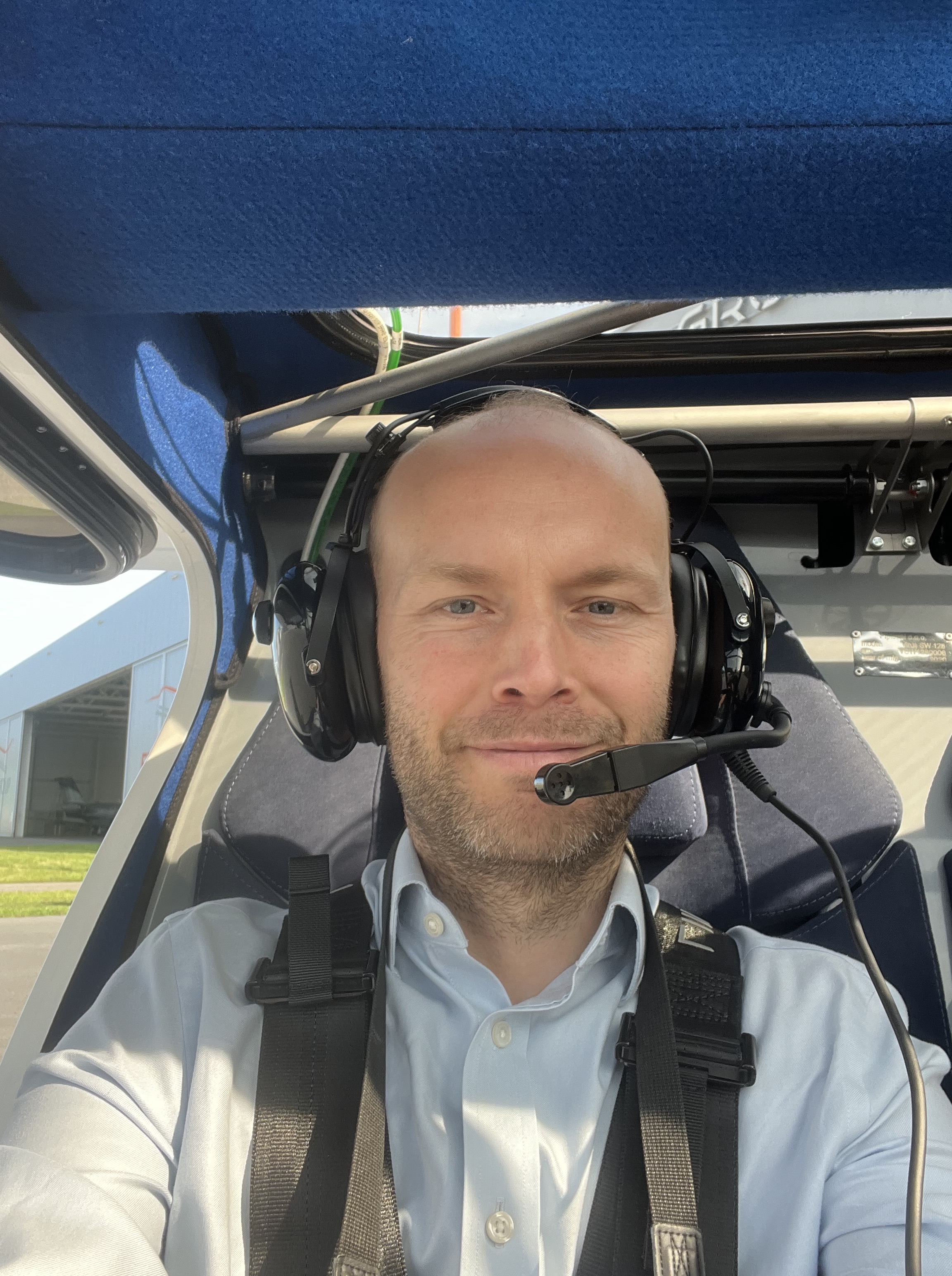
Have you ever wondered what it’s like to see the world from above, knowing your adventure leaves almost no mark on the planet? My recent flight in the electric Pipistrel Velis Electro triggered exactly that: excitement and hope for the future of aviation.

A New Perspective from the Skies

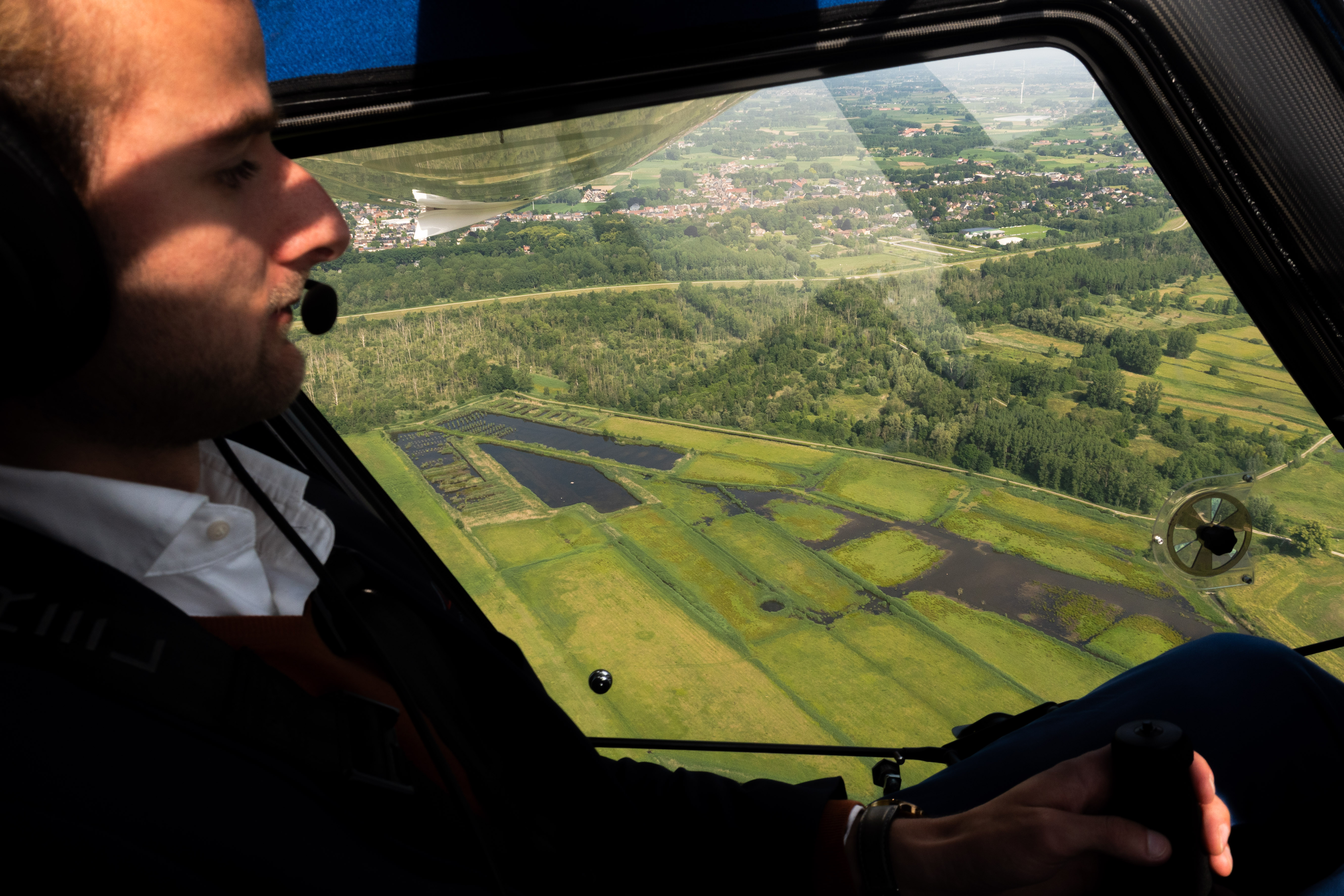
There’s something transformative about viewing the earth from the sky. The patchwork of fields, rivers, and city skylines below reminds us how immense and beautiful our planet is. It’s a humbling experience—one that often shifts our perspective and makes us appreciate nature, while recognizing how small we are in the grand scheme of things. As humans, we often overstate our dominance, but up there, the world feels vast and we feel wonderfully tiny.

Electric Flight: Where Are We Now?

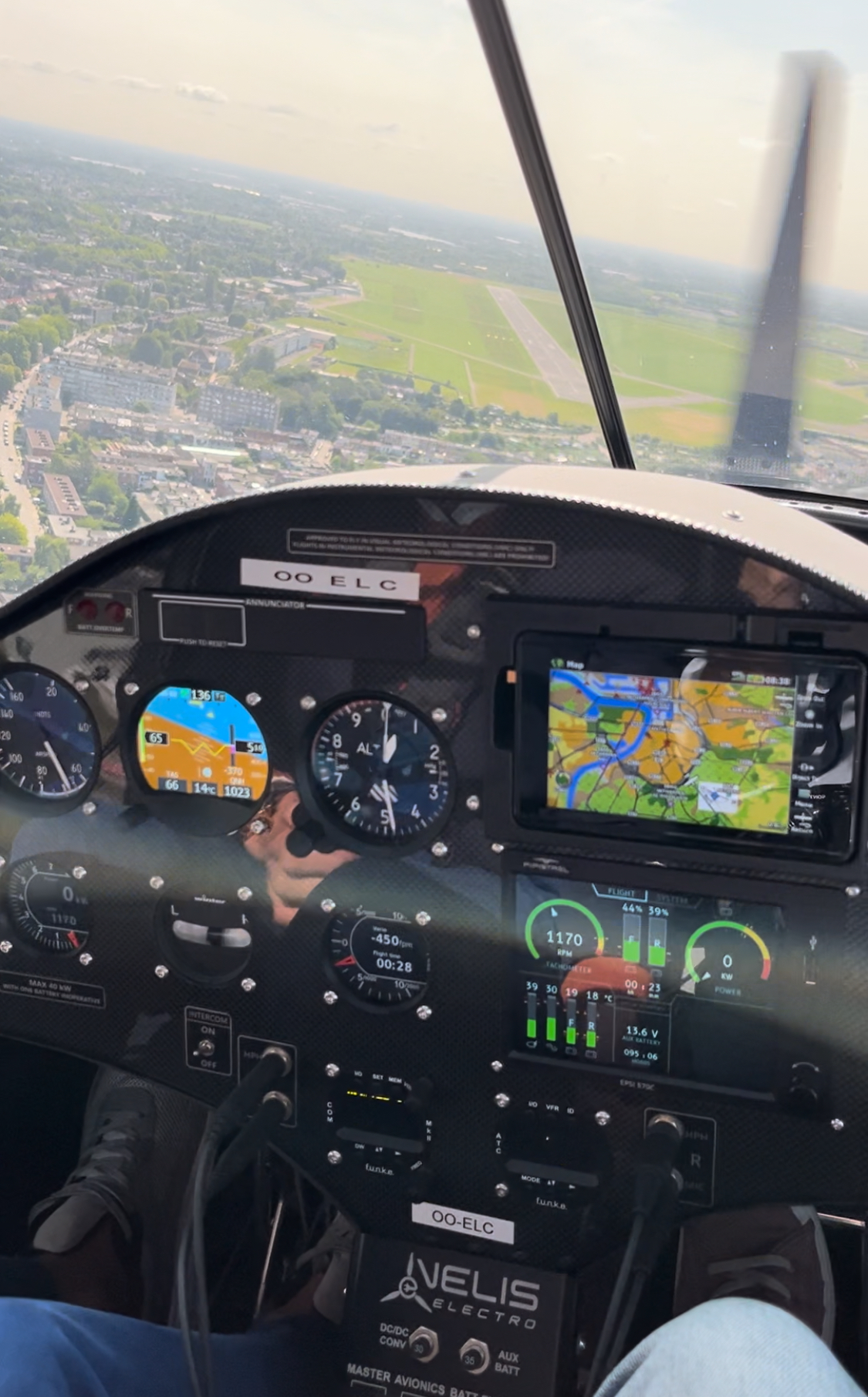
Flying the Pipistrel Velis Electro—a fully electric, zero-emission aircraft—was both thrilling and enlightening. While electric aviation is still in its early days, especially for long-distance journeys, it’s already proving itself as a fantastic option for local sightseeing and pilot training. The technology is advancing rapidly, with battery efficiency and range improving year by year and new model aircraft being developed. For now, short flights like mine (38 minutes for 150 EUR, including VAT and a thorough pre-flight briefing) are the sweet spot for electric planes.

I have a confession to make: During the flight, I truly experienced range anxiety firsthand. Flying the Pipistrel Aircraft Velis Electro—powered entirely by electric batteries—I watched the battery percentage drop rapidly as we flew. Things got even more interesting when we turned around and faced a headwind, causing the battery to drain even faster on our way back to land.

It really hit me: range anxiety in the air is very real! I’m grateful that Sustainable Aviation Fuel is available for longer commercial flights—while it’s not perfect, it’s still much cleaner than traditional fossil jet fuel. We landed safely with 38% battery remaining, which might sound like plenty, but it definitely kept my range anxiety alive. 😉

A huge thank you to Dimitri from ASL Academy for taking me up in their electric Pipistrel Velis Electro for this zero-emission flight over Antwerp. Just a little range anxiety, but absolutely no emissions!

I’m so grateful to experience the range of technological advancements in aviation firsthand—it really helps to understand what’s at stake and how the industry is evolving.

The Future: Hydrogen, SAF, and Beyond

  • Hydrogen-powered aircraft are emerging as a promising solution for sustainable aviation, offering longer ranges and faster refueling compared to batteries. Several prototypes are already in the skies, and industry leaders predict commercial hydrogen flights within the next decade… but it might not be in the first 5-10 years that we will board one.
  • Sustainable Aviation Fuel (SAF) is another key player, already in use for longer commercial flights. While not perfect, SAF drastically reduces lifecycle carbon emissions compared to traditional jet fuel and is helping bridge the gap until zero-emission technologies are ready for mass adoption. SAF is available today, even though it needs rapid scaling up and development of truly sustainable feedstock supply chains. If you want to book flights accounting for 100% SAF, have a look at our startup BookBetter.travel

Adventure and Alternatives

Sightseeing from the air in an electric plane is not only a fun adventure—it’s a technological leap toward a cleaner future for aviation. If you’re looking for an even simpler way to experience the magic of flight, paragliding (see my other blog post on paragliding here) is a fantastic, low-tech alternative that requires minimal equipment and offers a direct connection with nature.

Ready to Take Off?

Curious to try electric flight for yourself? I can connect you with the right people to reserve your own zero-emission adventure—just send me a message!

Let’s keep exploring new horizons sustainably, one flight at a time.