Exploring Norway: Camper Life with Kids & HVO100 biofuels

If you dream of immersing your family in wild nature, forging close bonds, and genuinely treading lightly on the earth—could a camper journey through Norway be your next adventure? For us, it was a test: could we spend a whole month traveling with our two kids, off the beaten path, using only HVO100 biofuel? Welcome to part one of our two-month camper parental leave—a journey blending slow travel, sustainable choices, and family joy.


Why Camper Trips with Young Kids are Perfect (and Perfectly Challenging)

There’s something special about camper life with kids: the flexibility to stop anywhere for diapers or naps, the freedom to picnic under a waterfall, and waking up together in a new place in nature every day. Our little rolling home gave us autonomy—each child with their own tiny locker, our own kitchen, and the ability to spend up to five days far from supermarkets with plenty of fresh and canned or dry food.

Traveling with a tiny baby (Joanna, two months) and an energetic toddler (August, 3.5 years), we sometimes had to limit long hikes, but the van let us blend adventure and comfort: August could walk, ride on our back, or rest, and we could instantly change plans if someone needed a break (or breastfeeding, a diaper, snacks, or a cuddle).


HVO100: The Biofuel Making Camper Trips Cleaner

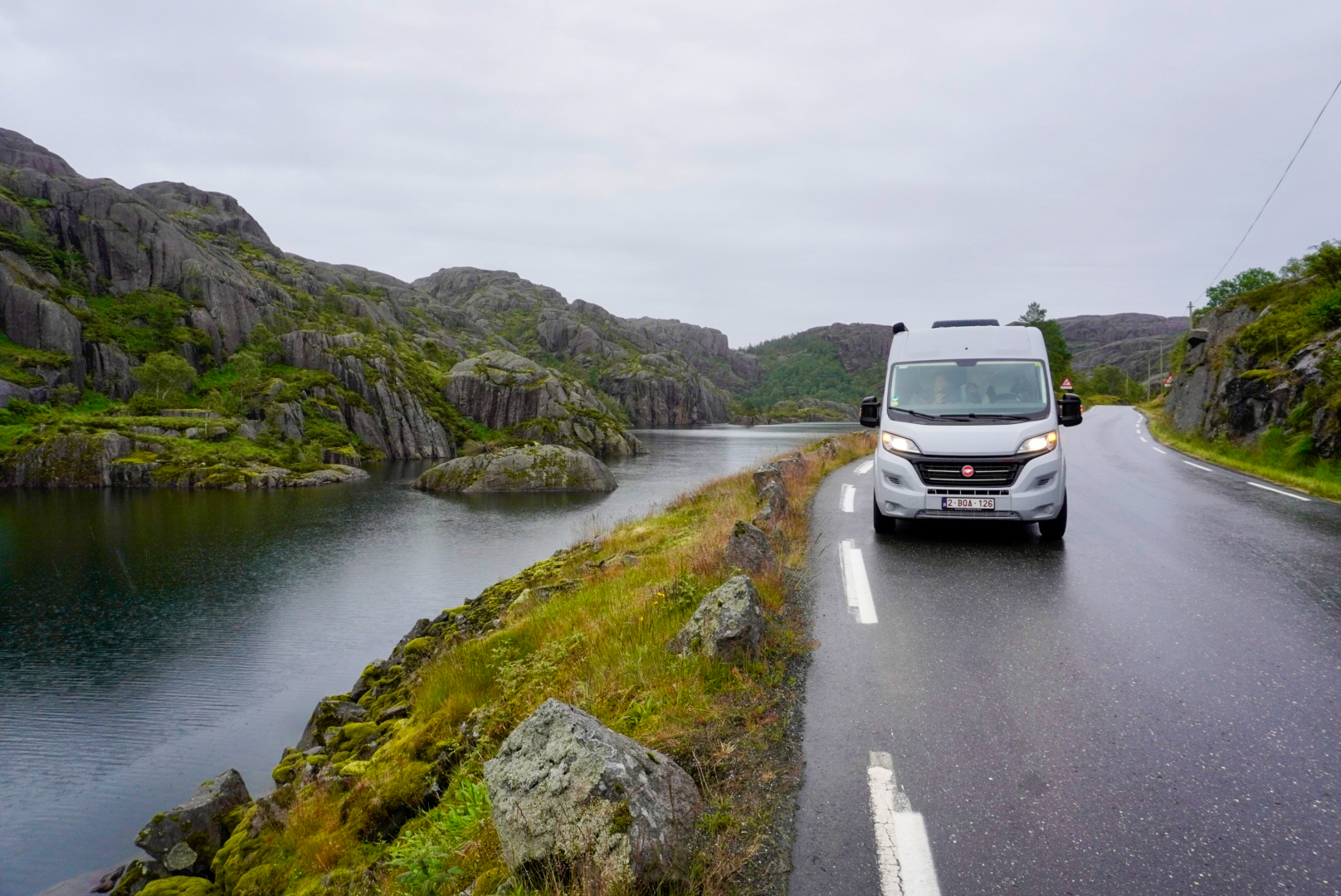
We wanted our camper trip to reflect our values, so our Fiat Ducato ran exclusively on HVO100—a “next generation” biofuel made from waste products, which can reduce CO₂ emissions by 80–90% compared to diesel.

  • How do you find HVO100? In Germany, Denmark, and Norway, stations are best found using the DKV app—but always double check on site if it’s available! Reach out to me if you want our list of exact fuel stops.
  • Why does it matter? Buying HVO100 is a small act of climate responsibility—each purchase signals to suppliers that you care. Unfortunately, current legislation often means HVO100 is used by fuel companies just to meet climate targets, not as a true “extra” emission savings. Your choice does matter, but let’s keep pushing for policies to really accelerate sustainable fuels!
  • Eco driving tips? Go slower! Our under-aerodynamic campervan used 20–30% less fuel at 80–90 km/h versus 120. Bonus: it’s meditative to drive in the lane of the truckers, and you see more of the scenery (and if you ask the kids, less bumpy).

The Adventure Route: A Month of Nature, Fjords & Freedom

After leaving Belgium, we ferried from Hirtshals, Denmark to Kristiansand, Norway (pro tip: buy tickets from the Norwegian site using google translate, for us it was €100 cheaper!).

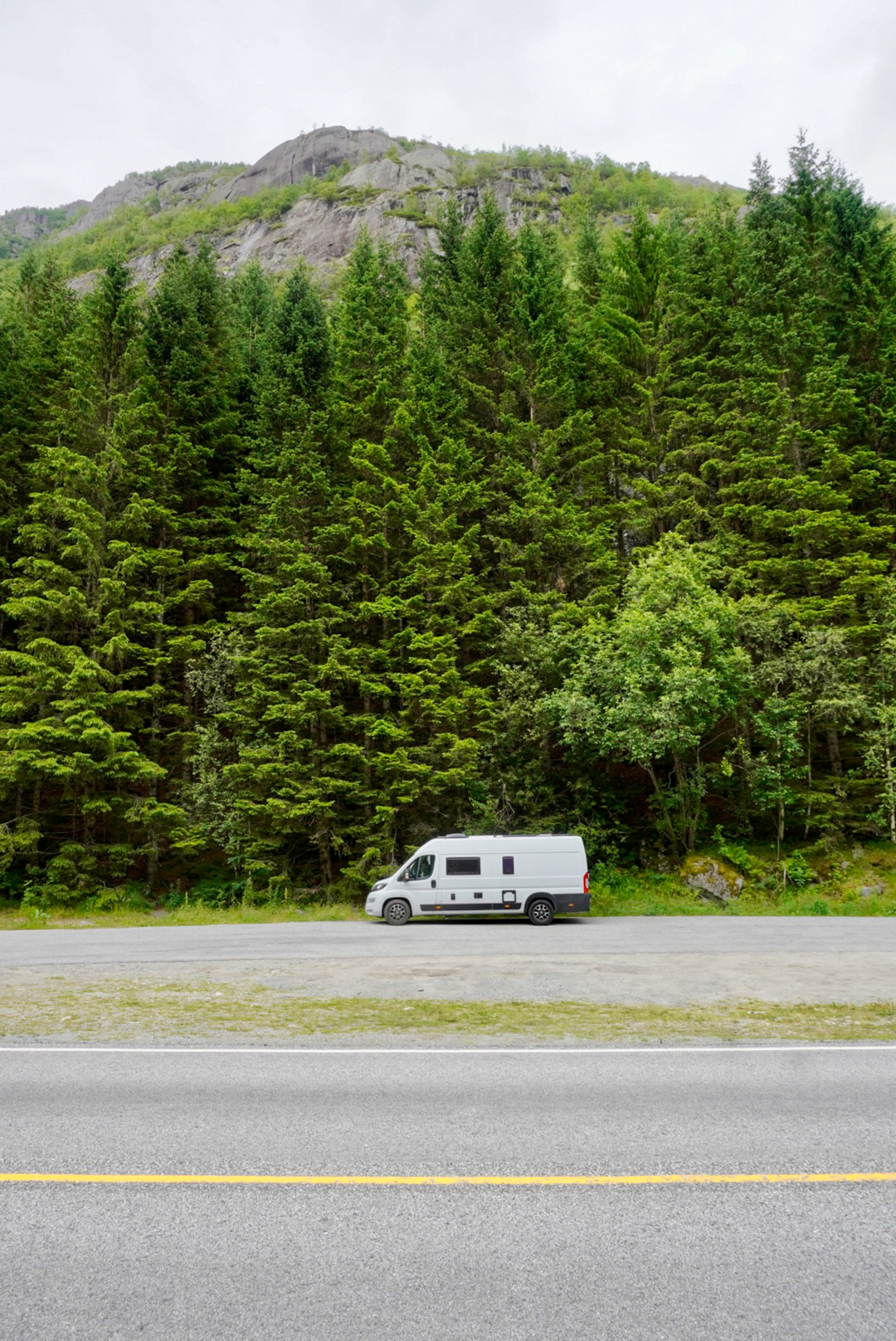
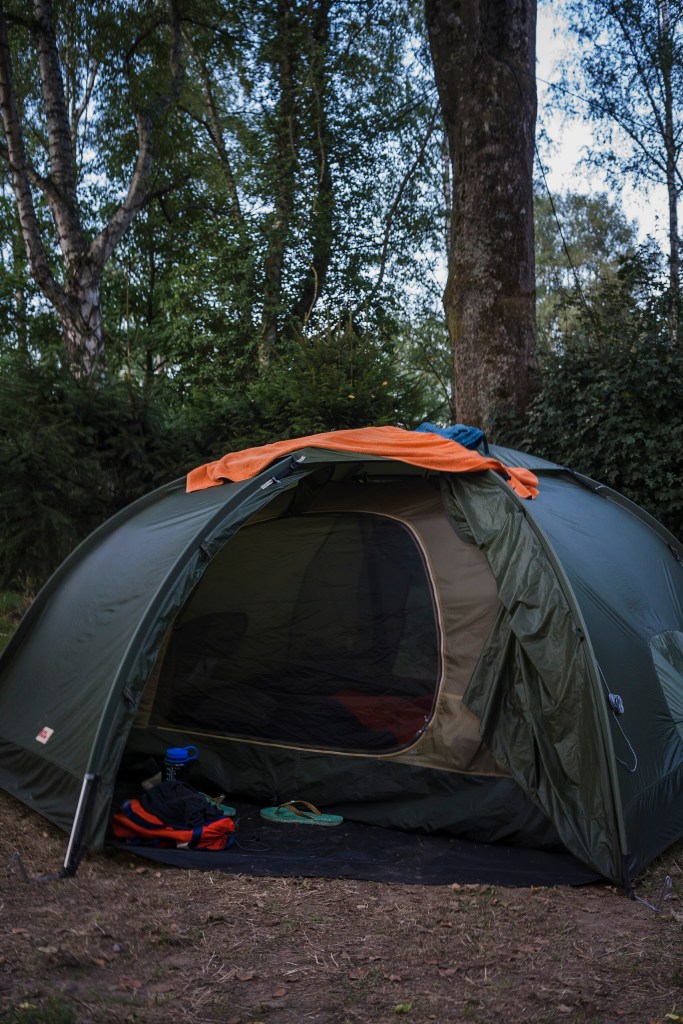
Wild camping is incredible in Norway—although finding a spot in peak summer can mean driving past a few “no camping” signs or busy lots before finding that perfect, peaceful place by a river, lake, or fjord. We only used campgrounds three times in a month; the rest, we lived off-grid, filling water tanks and emptying toilets at camper spots scattered around the country.

Overview of our highlights – in order of the circle we drove in the South of Norway:

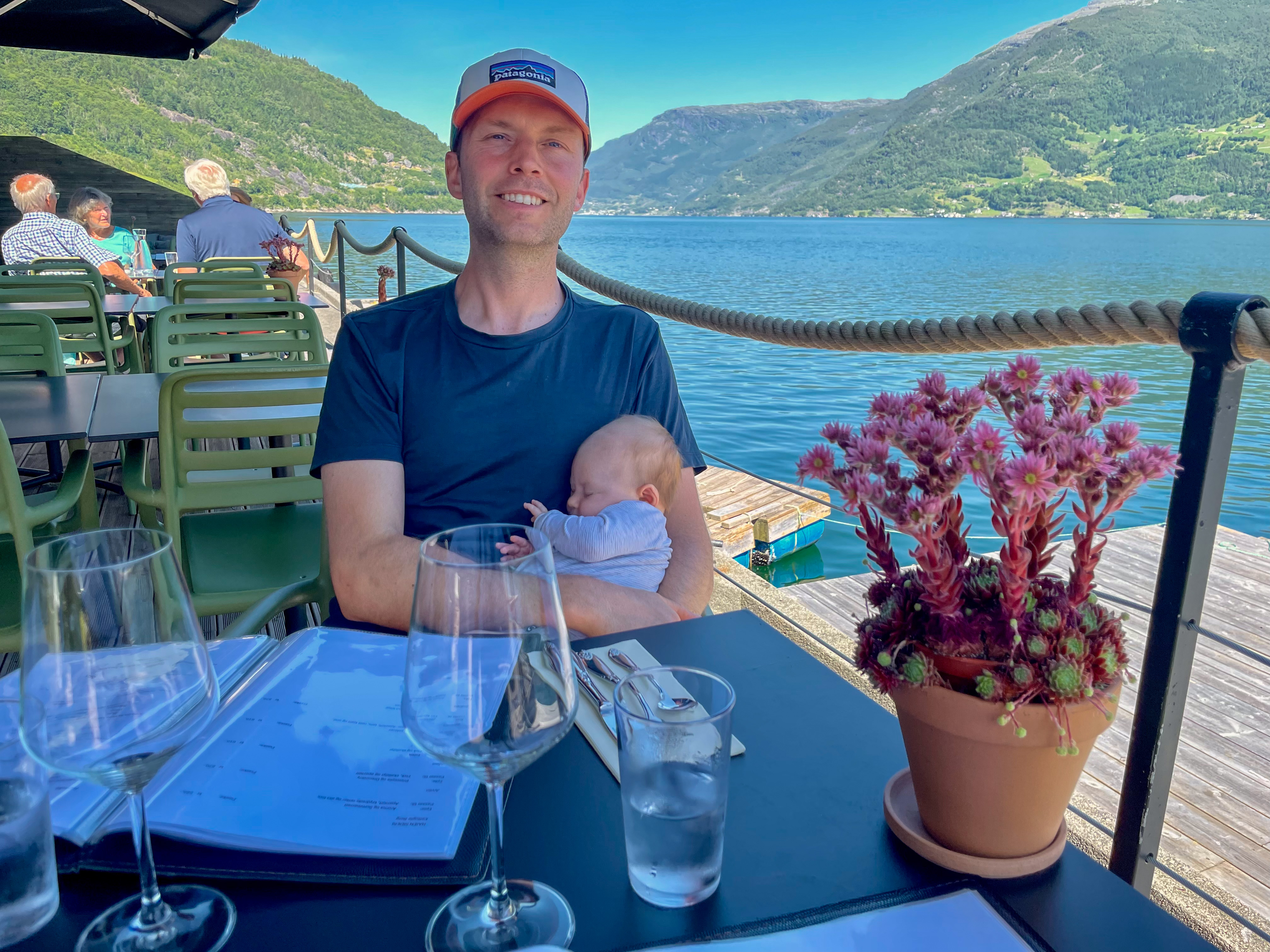
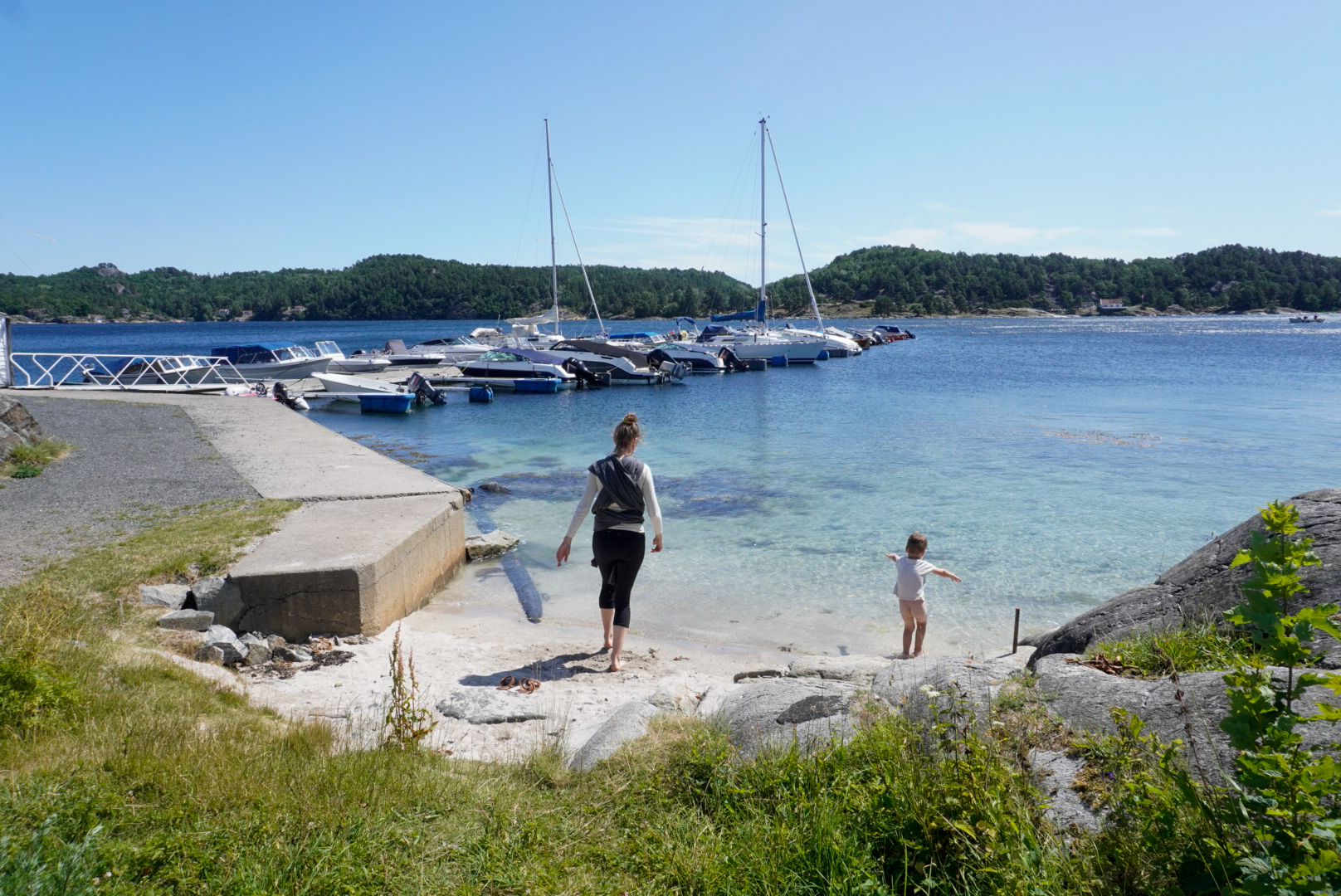
  • Lillesand: Idyllic beach village perfect for kids, with swimming, play spots, and a cozy restaurant by the water.
  • Scenic Route 44: The drive from Flekkefjord to Egersund felt otherworldly—craters and rolling hills, then on to Stavanger and the deep, blue fjords.
  • Preikestolen Hike: Challenging, rewarding, and much longer than planned (6–7 hours with little legs!), but the views were worth every step.
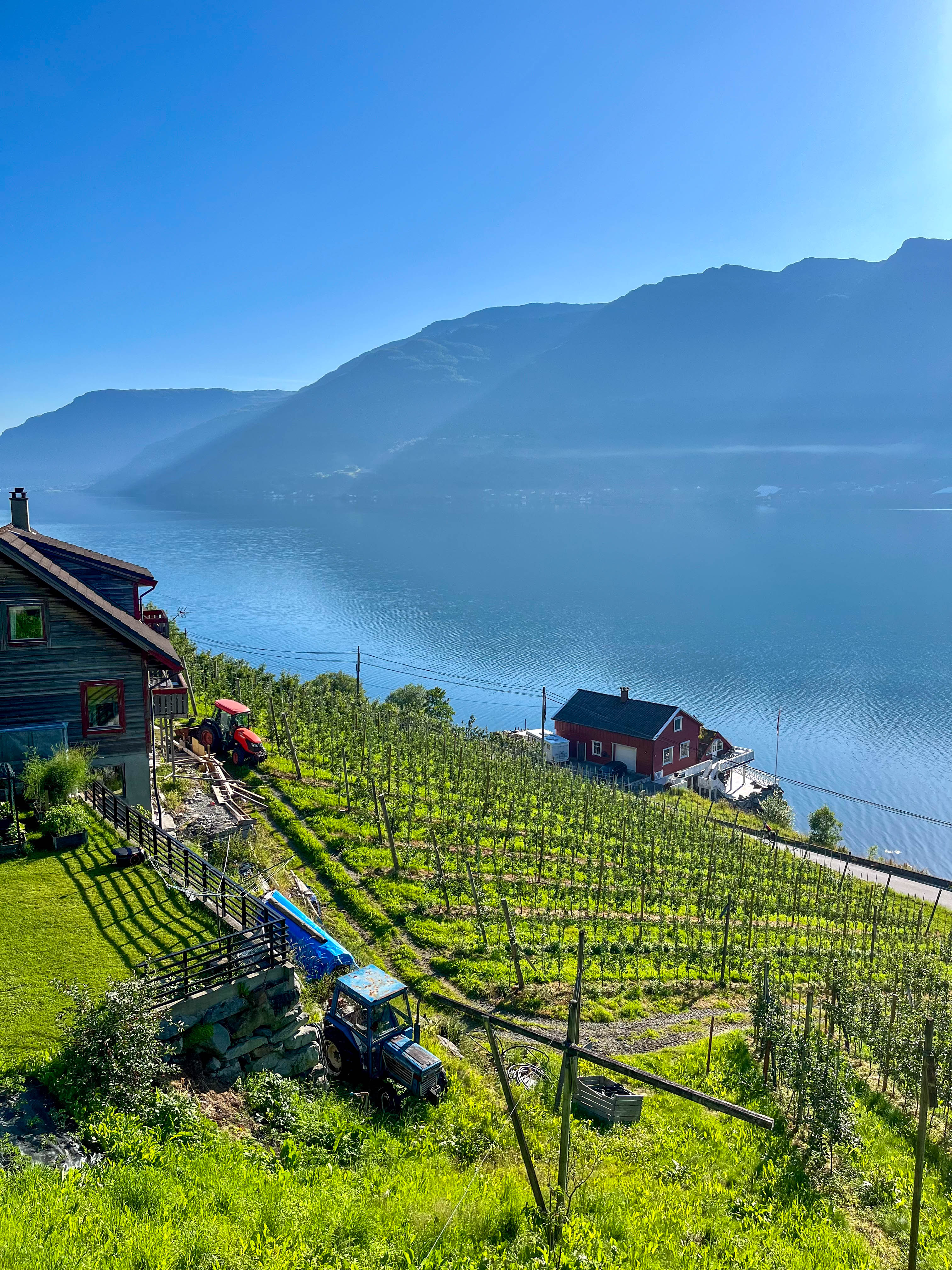
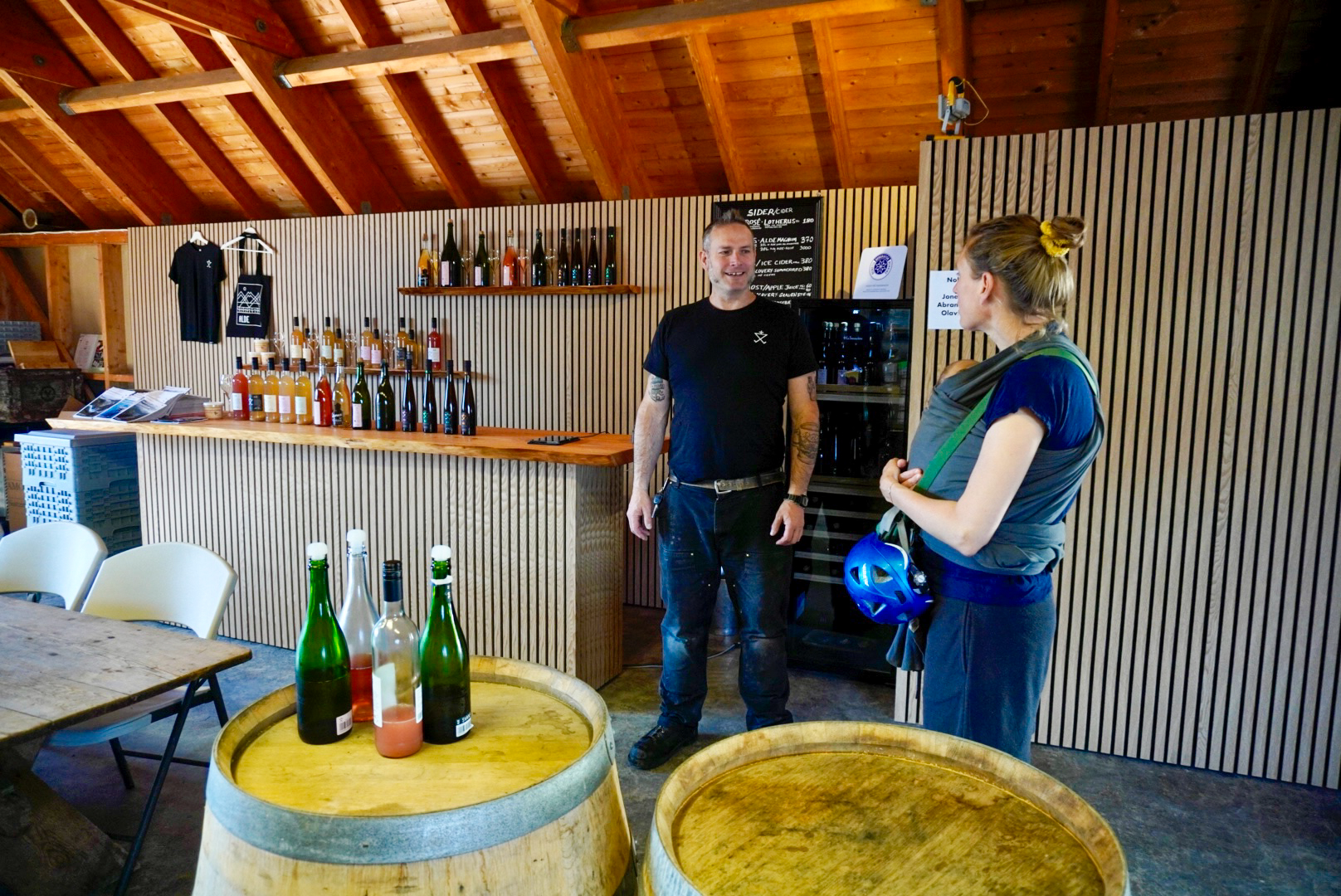
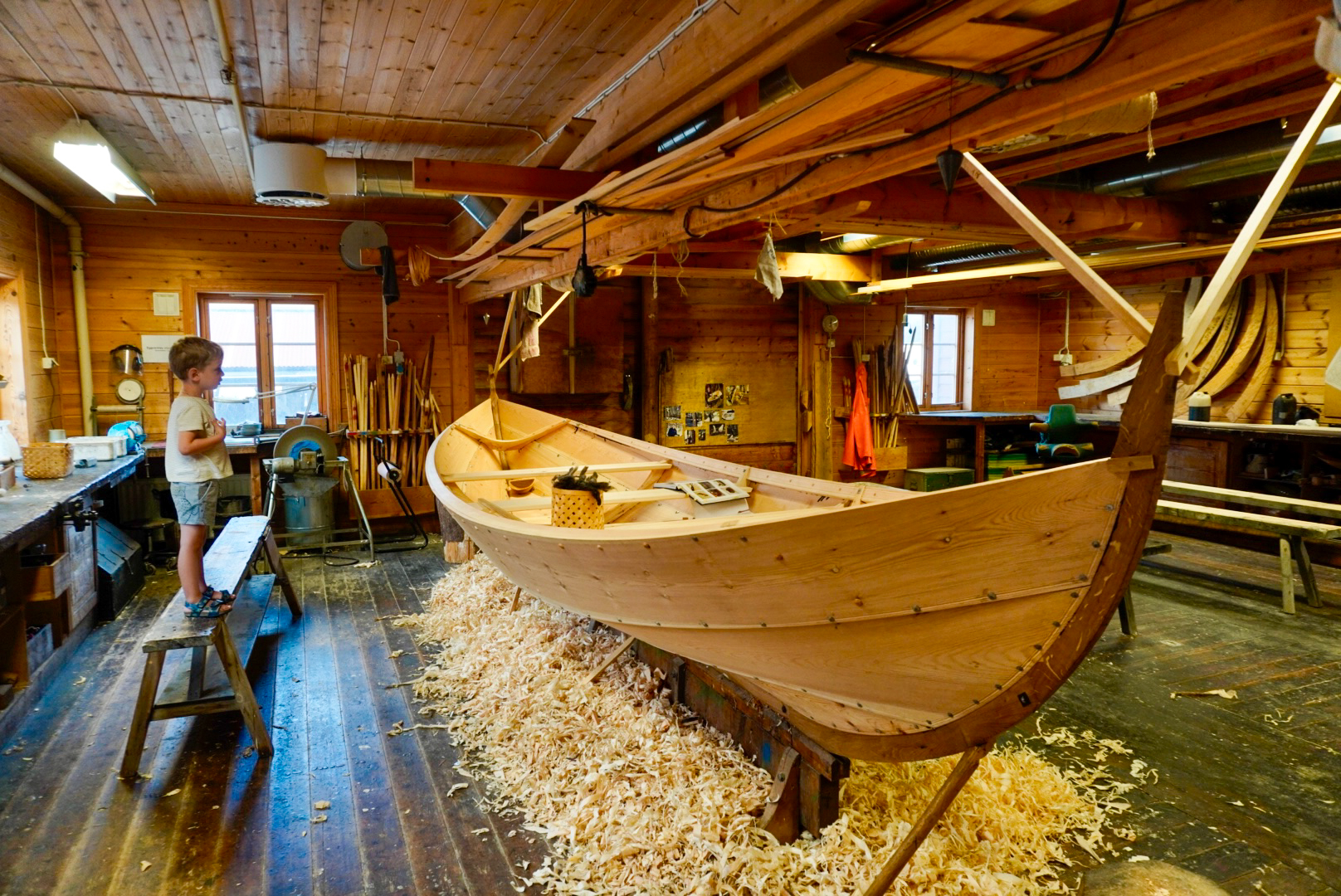
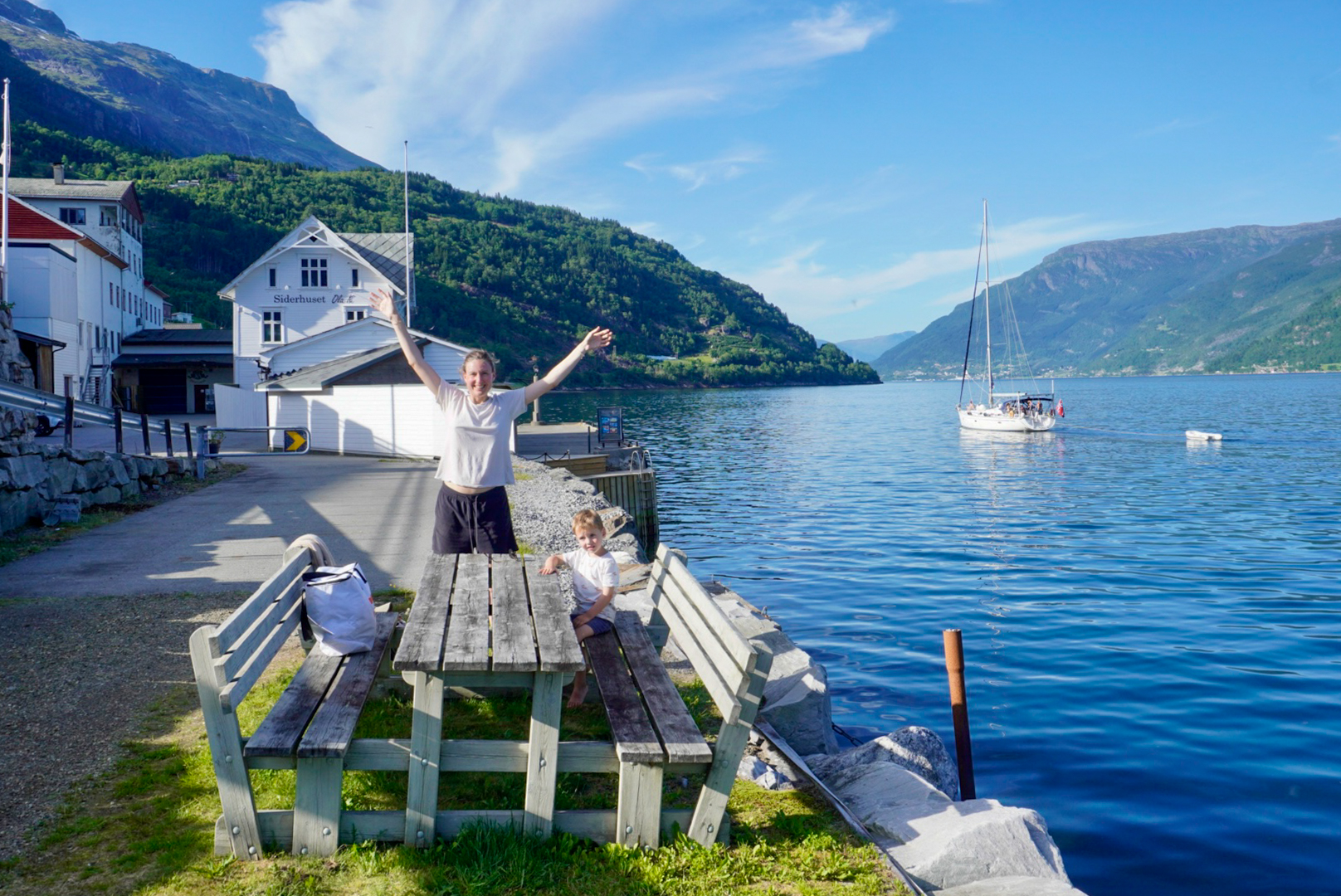
  • Hardangerfjord: Cider tasting in Alde Sider, rowing on the fjord, enjoying Norway’s surprising microclimates, visiting Utne and the Hardanger Maritime Center showing wooden shipbuilding
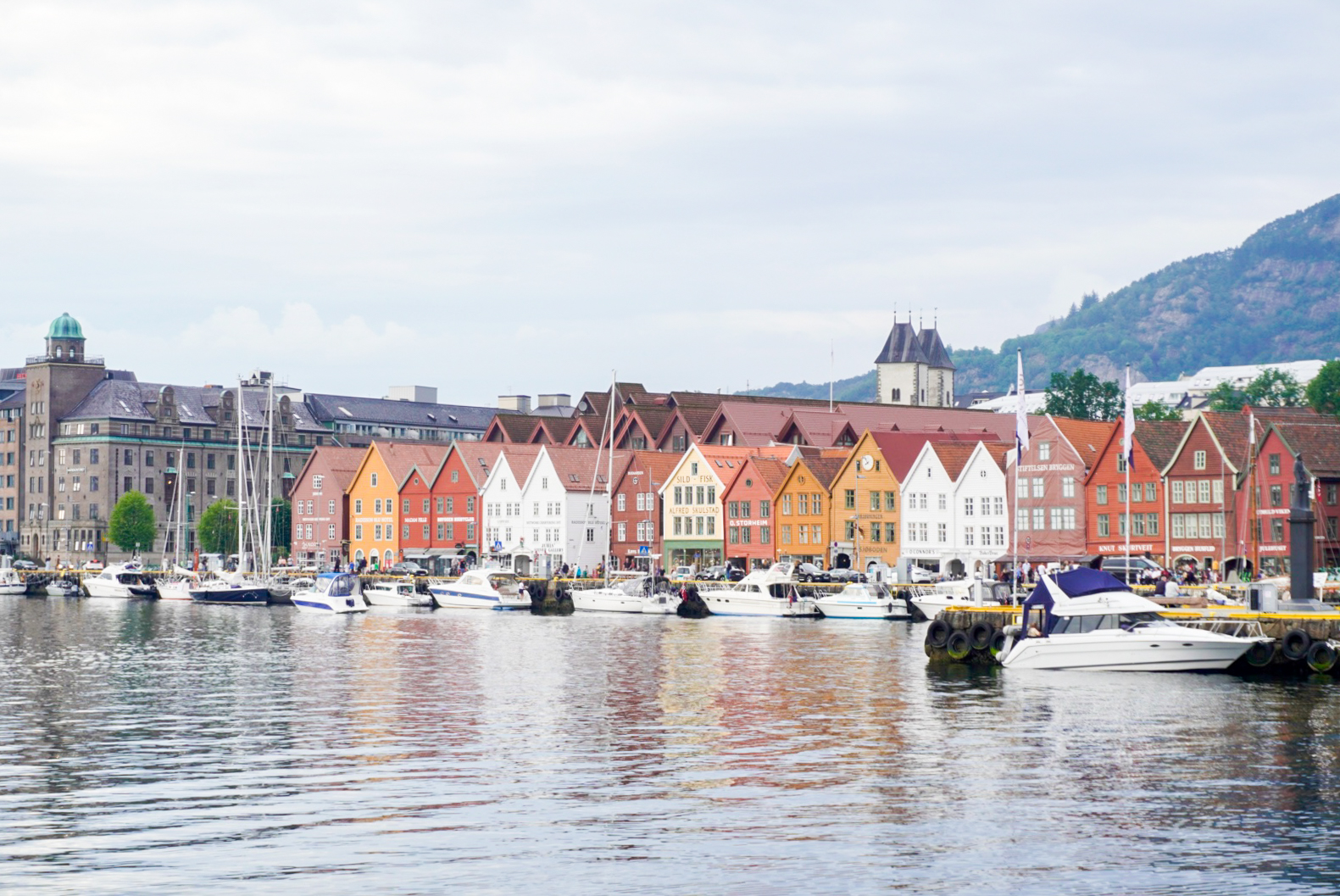
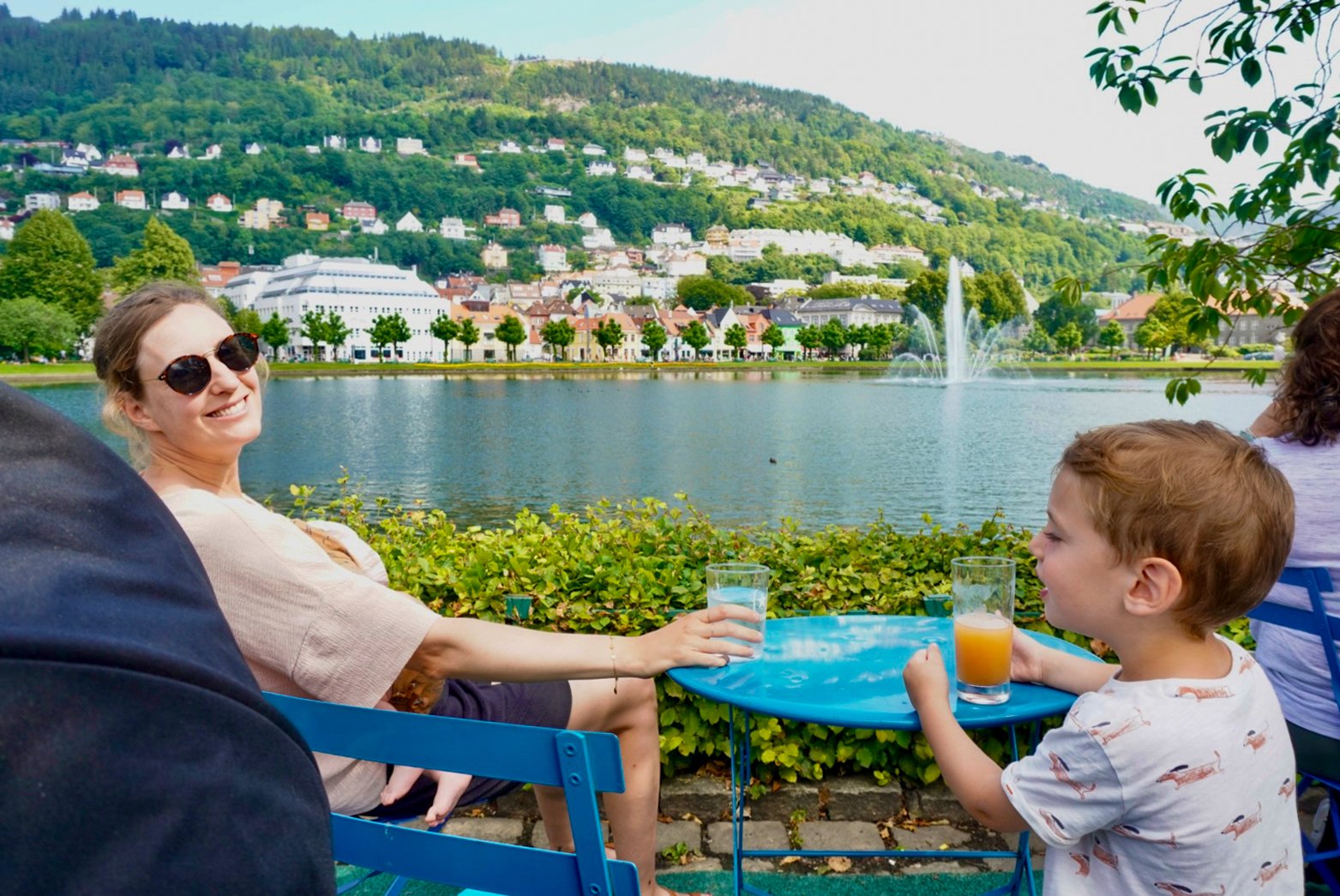
  • Bergen: Camper-parking in the city center, panoramic cable car views, Bryggen’s historic streets, city beach swims, and tasty local food. We enjoyed lots of brunch and restaurants, with a good local dinner in Bryggen Tracteursted.
  • Tvindefossen: Camping next to a roaring waterfall—beautiful (and loud).
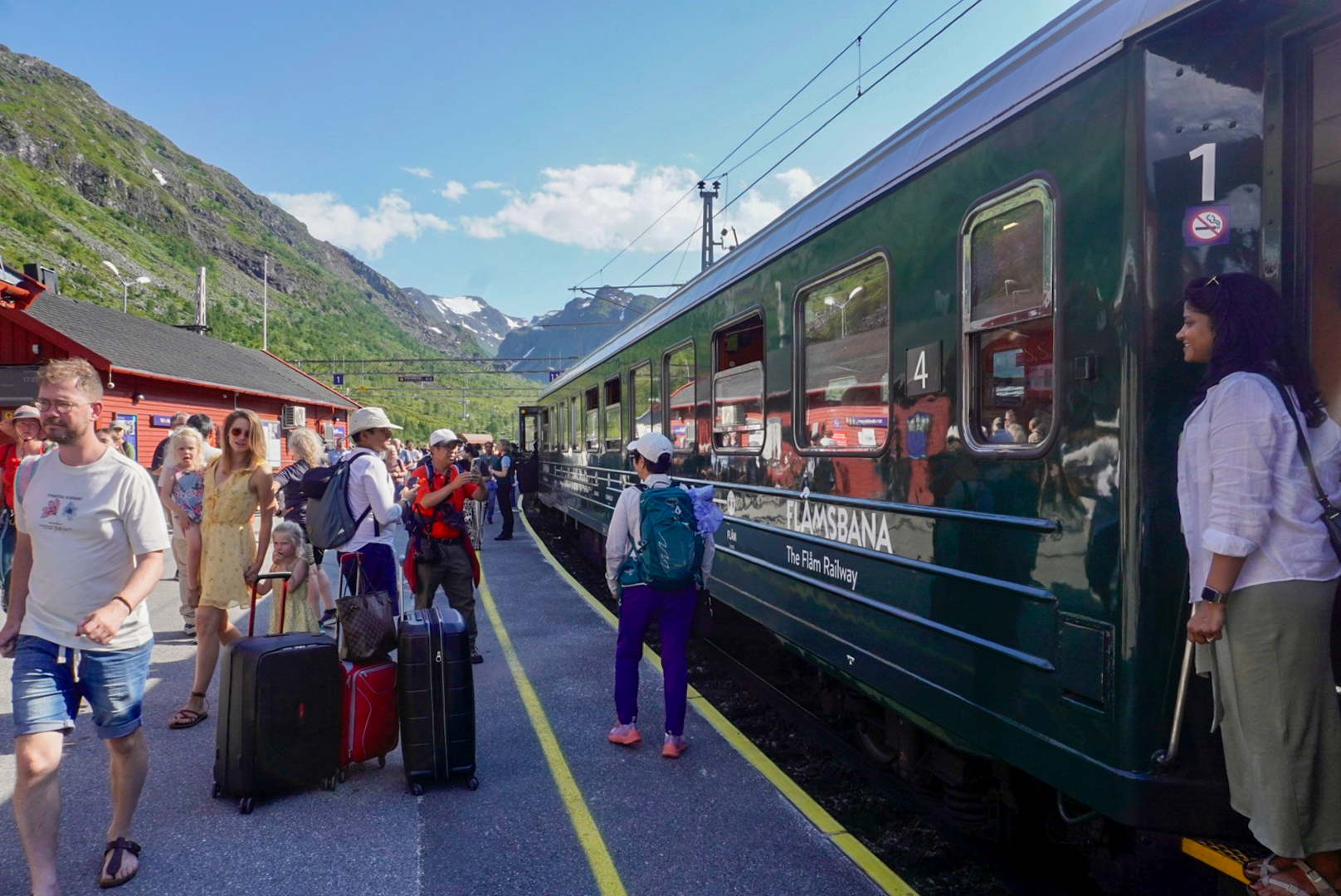
  • Flamsbana: The train leaving from Flam into the mountains. Pretty touristy and expensive, but impressive views without having to hike for hours = handy with children.
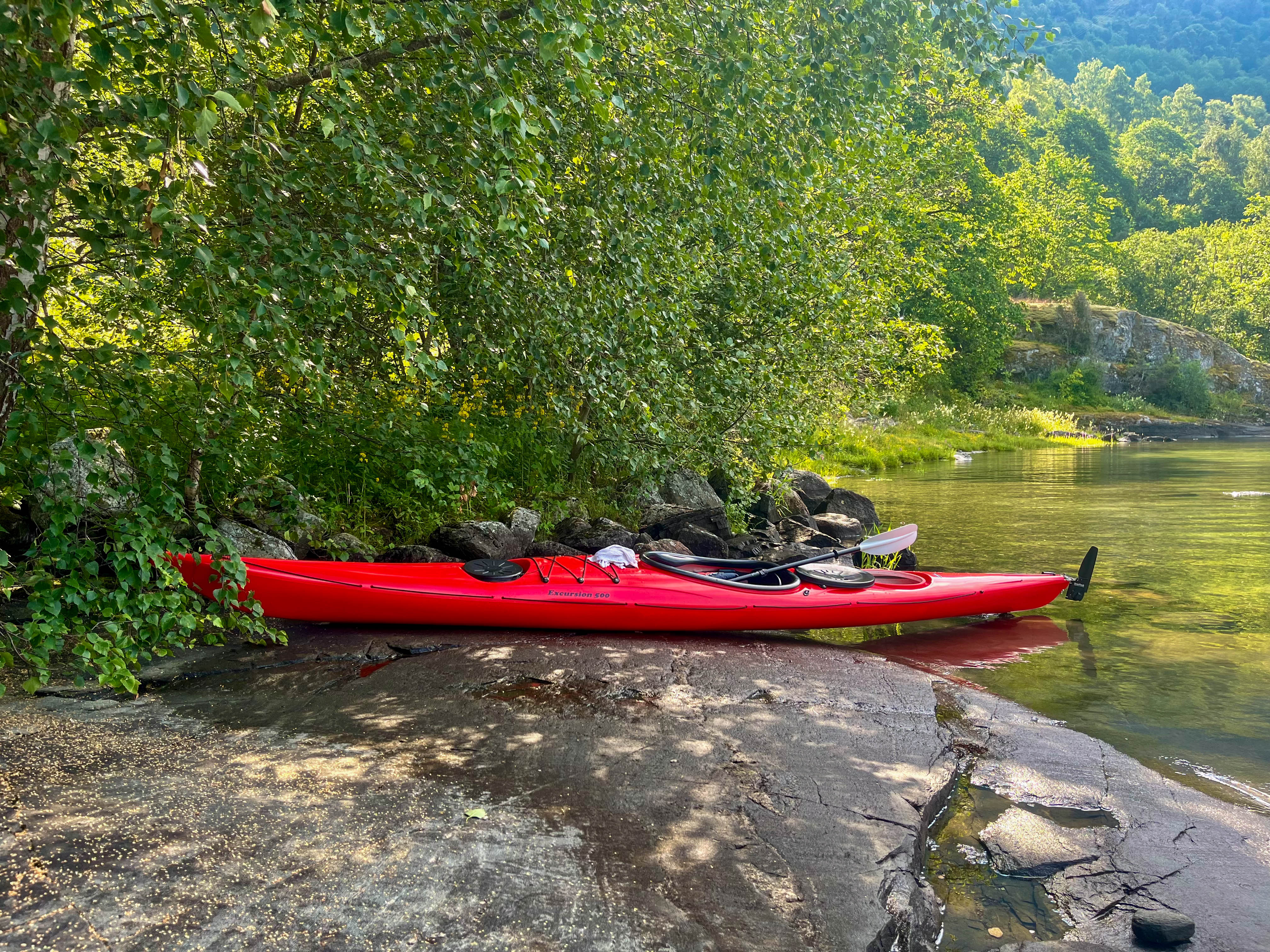
  • Sogndal: Half-day solo kayak trip across clear blue water, hikes and playgrounds.
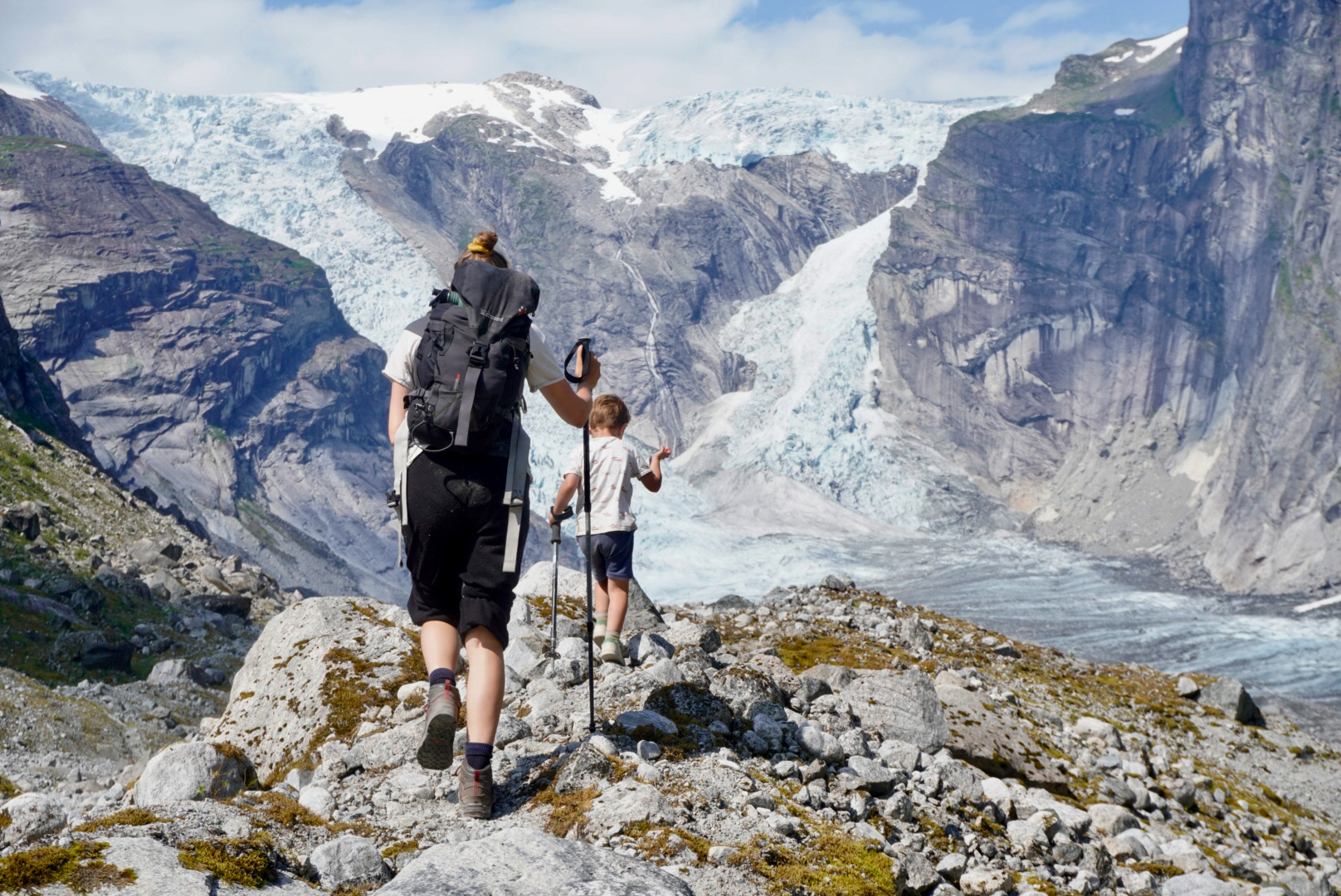
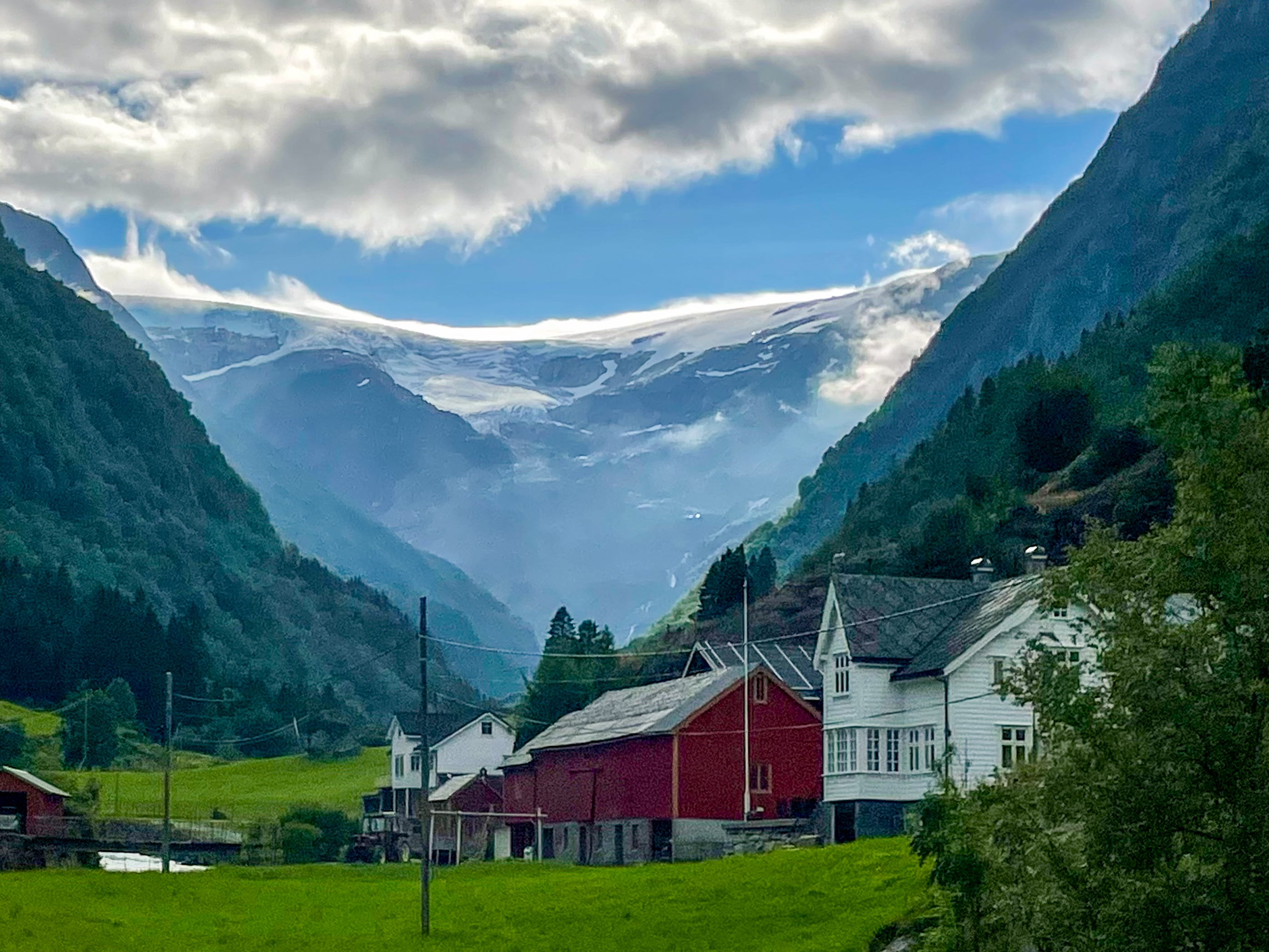
  • Jostedalsbreen NP: Glacier hike from DNT Tungestolen—slow and steady with kids, but jaw-dropping scenery. This was the most beautiful camping spot we had on our trip – 4h took us 8h with the little ones, but the views were impressive
  • Route 55 Glaciers: Views for days between Skjolden and Fossbergom, and wild camping at the edge of the world. We camped on a small parking lot just before Turtagro hotel with the most impressive views. Great spot for small hikes directly in nature.
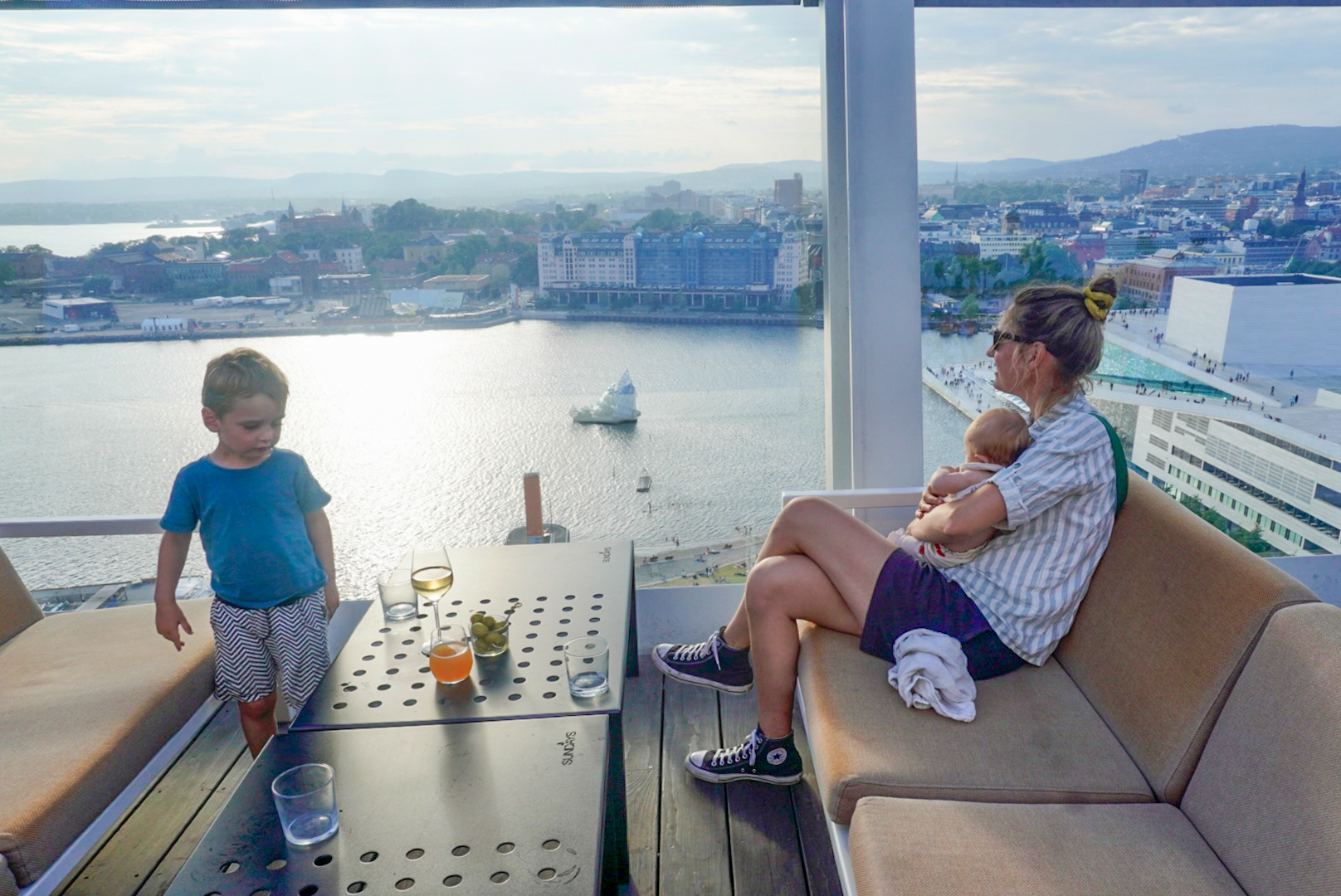
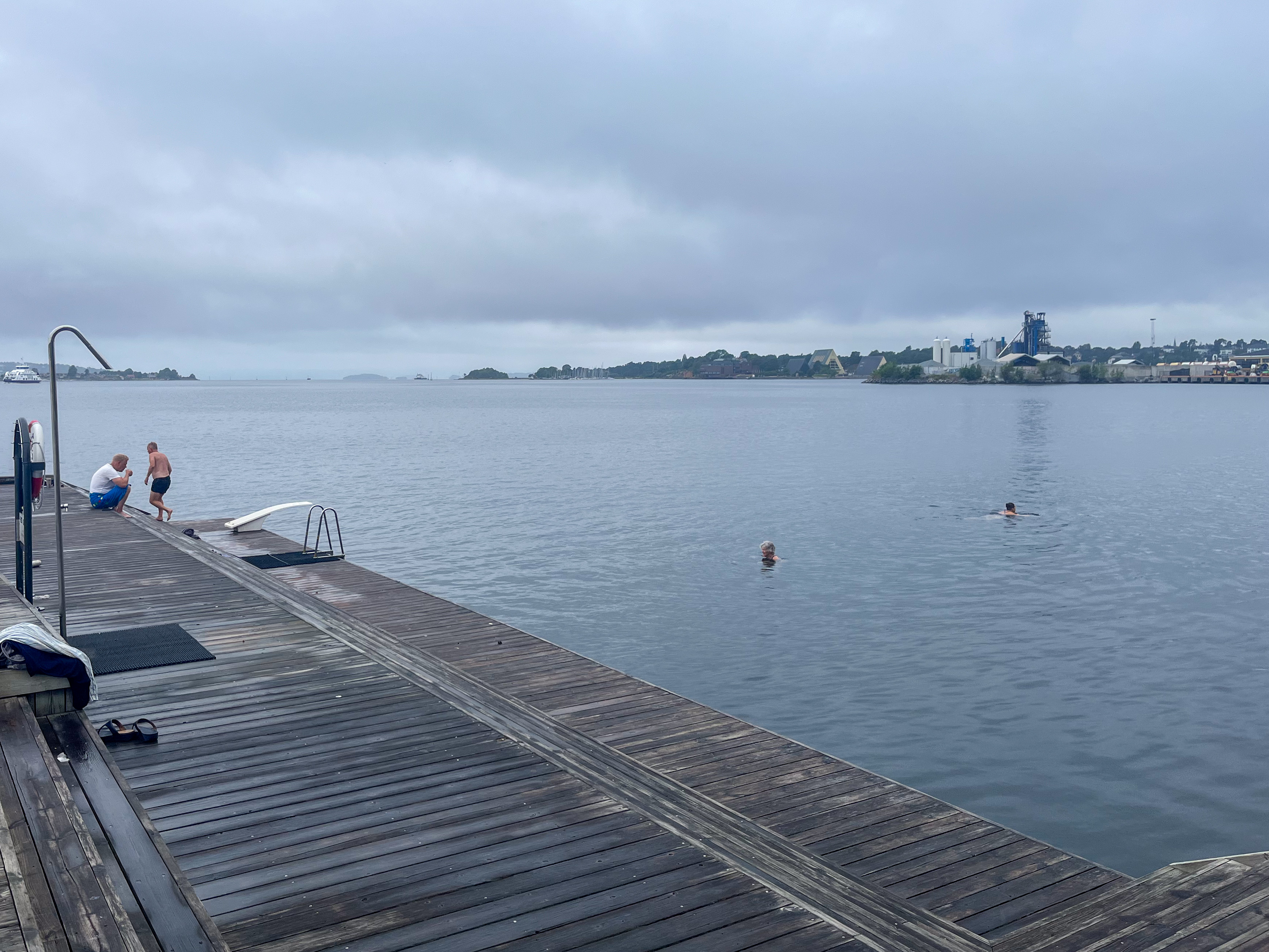
  • Oslo: Easy city exploring from the camper, with surprising swim spots in the heart of the capital. We had a parking close to the Vigeland museum and the Vigeland park, went swimming at the spot in city center in front of the Astrup Furnley museum, enjoyed the views from the Opera house and the Munch museum rooftop.

A Peek into a Typical Camper Day

  • 7:00 | A run, morning dip, or quiet writing for me before the rest of the family woke up.
  • 8:30 | Family breakfast with a view.
  • 10:00–11:00 | Convert van for driving, pack up chairs & table, get everyone bundled and ready.
  • 11:00 | Drive (aim for 1–2 hours max), with snack and play stops for the kids.
  • 13:00 | Picnic, mountain restaurant, or lakeside lunch.
  • 15:00 | Afternoon nap (sometimes all four of us…).
  • 16:00 | Seek out our next wild camp spot, patience required!
  • 17:00 | Set up, let August run wild, apero, prep dinner.
  • 19:30 | Bedtime routine for August, transform front seats for his tent, stories and cuddles.
  • 20:30–22:00 | Parents wind down—reading, quiet time…

I made it my mission to swim once or twice each day—whether in a fjord, a glacier-fed river, or the local lake. No showers needed!


Step by step:

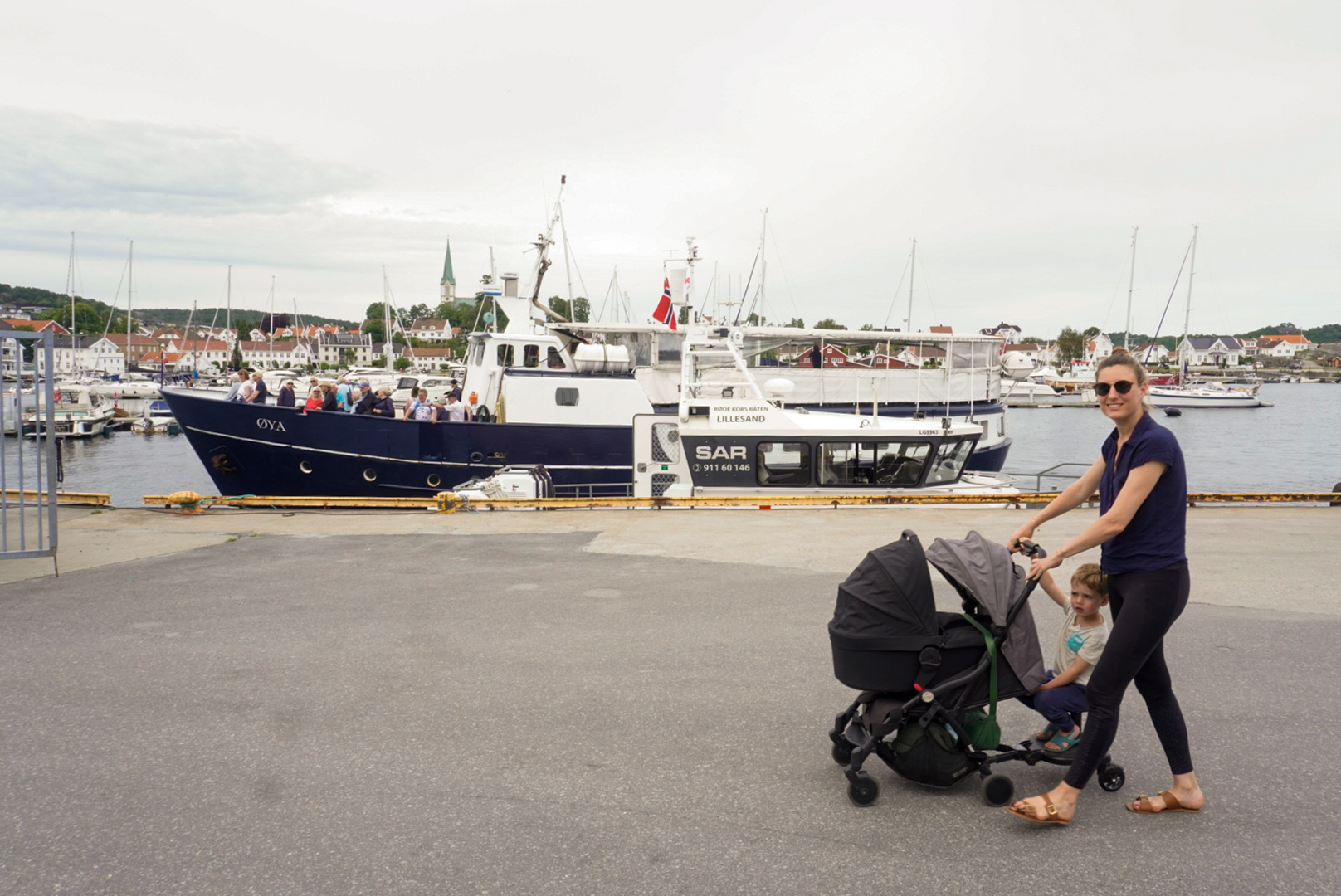
  • Lillesand: Idyllic beach village perfect for kids, with swimming, play spots, and a cozy restaurant by the water.

  • Scenic Route 44: The drive from Flekkefjord to Egersund felt otherworldly—craters and rolling hills, then on to Stavanger and the deep, blue fjords.

  • Preikestolen Hike: Challenging, rewarding, and much longer than planned (6–7 hours with little legs!), but the views were worth every step.

  • Hardangerfjord: Cider tasting in Alde Sider, rowing on the fjord, enjoying Norway’s surprising microclimates, visiting Utne and the Hardanger Maritime Center showing wooden shipbuilding
  • Bergen: Camper-parking in the city center, panoramic cable car views, Bryggen’s historic streets, city beach swims, and tasty local food. We enjoyed lots of brunch and restaurants, with a good local dinner in Bryggen Tracteursted.
  • Tvindefossen: Camping next to a roaring waterfall—beautiful (and loud).

  • Flamsbana: The train leaving from Flam into the mountains. Pretty touristy and expensive, but impressive views without having to hike for hours = handy with children.

  • Sogndal: Half-day solo kayak trip across clear blue water, hikes and playgrounds.

  • Jostedalsbreen NP: Glacier hike from DNT Tungestolen—slow and steady with kids, but jaw-dropping scenery. This was the most beautiful camping spot we had on our trip – 4h took us 8h with the little ones, but the views were impressive
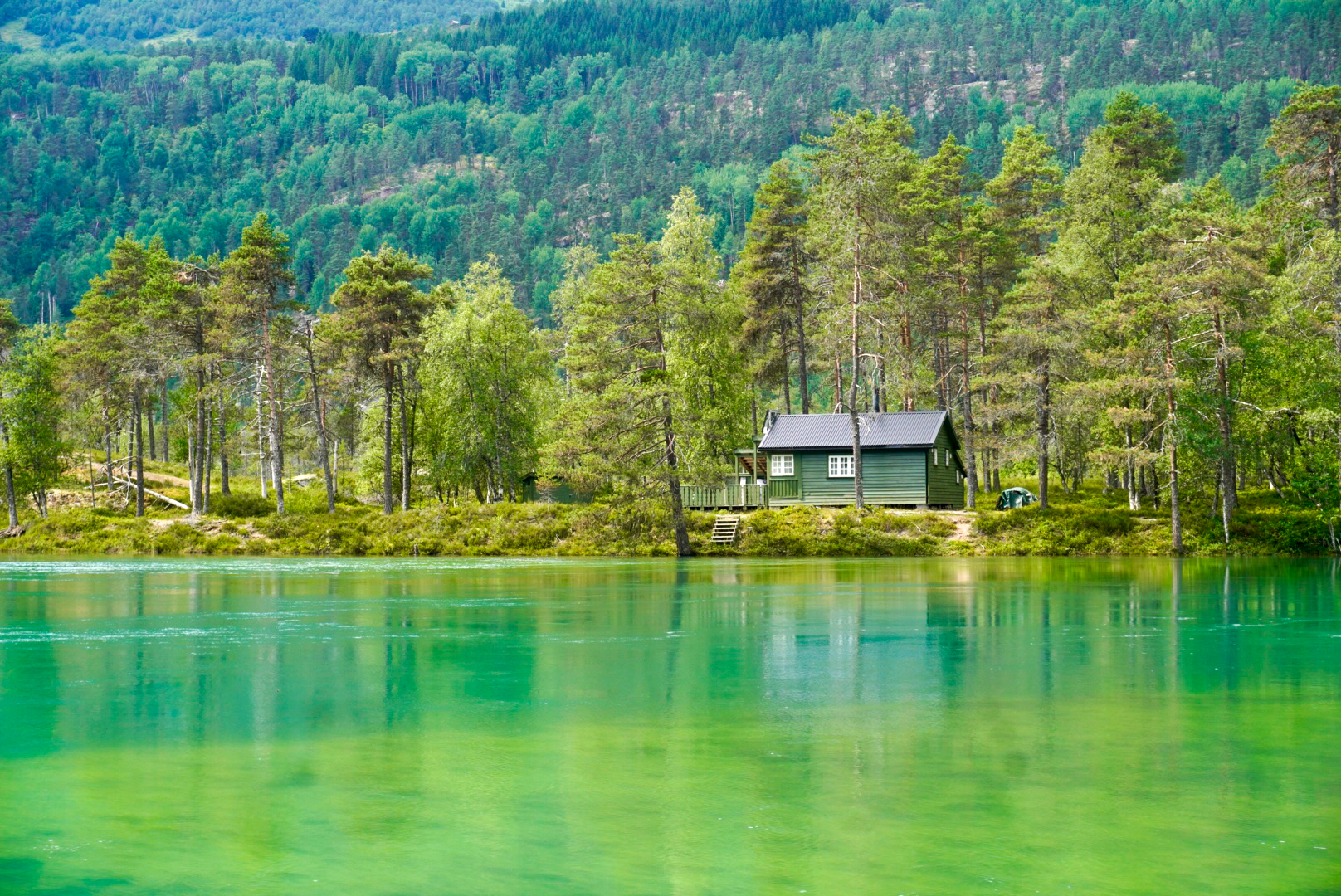
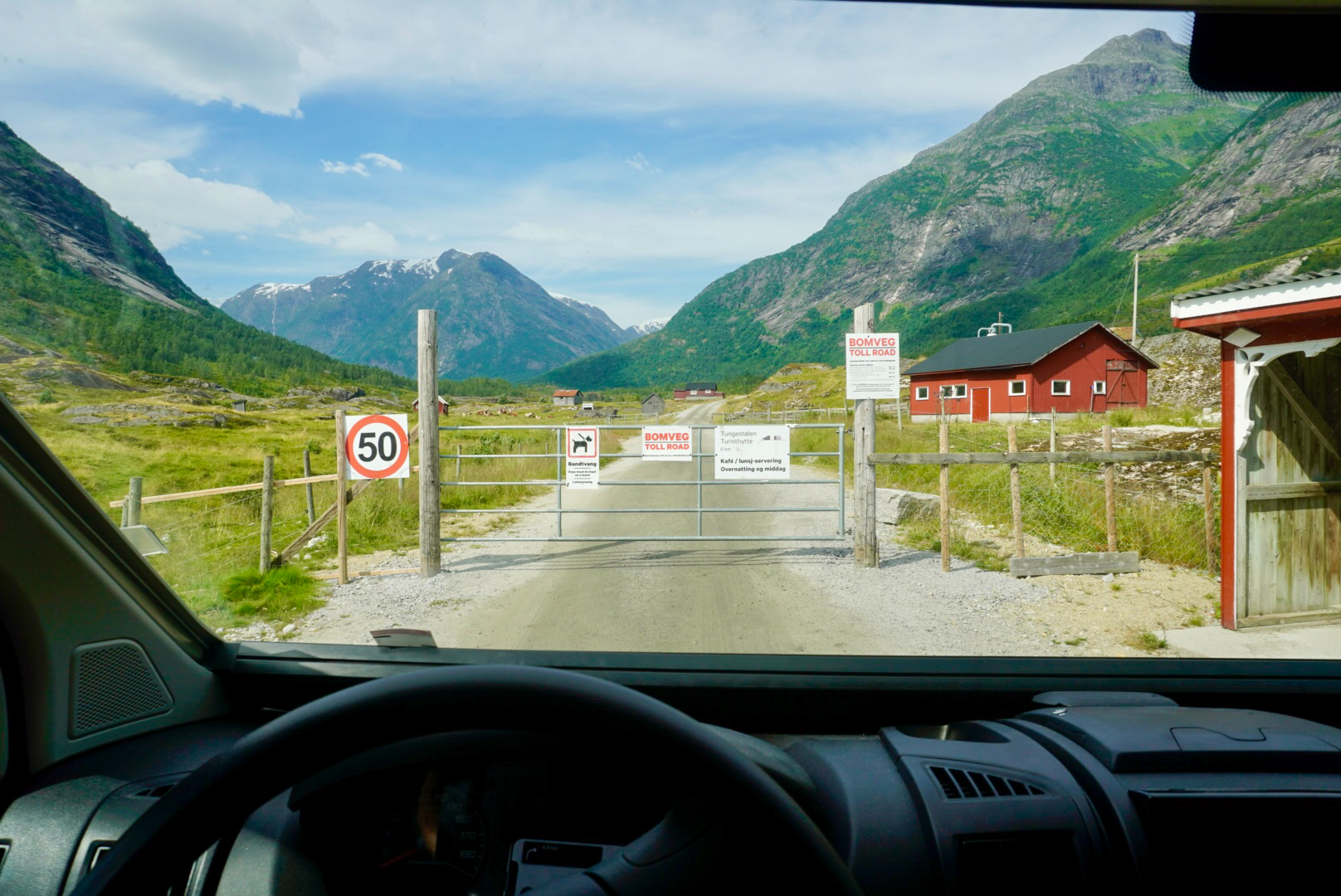
  • Route 55 Glaciers: Views for days between Skjolden and Fossbergom, and wild camping at the edge of the world. We camped on a small parking lot just before Turtagro hotel with the most impressive views. Great spot for small hikes directly in nature.
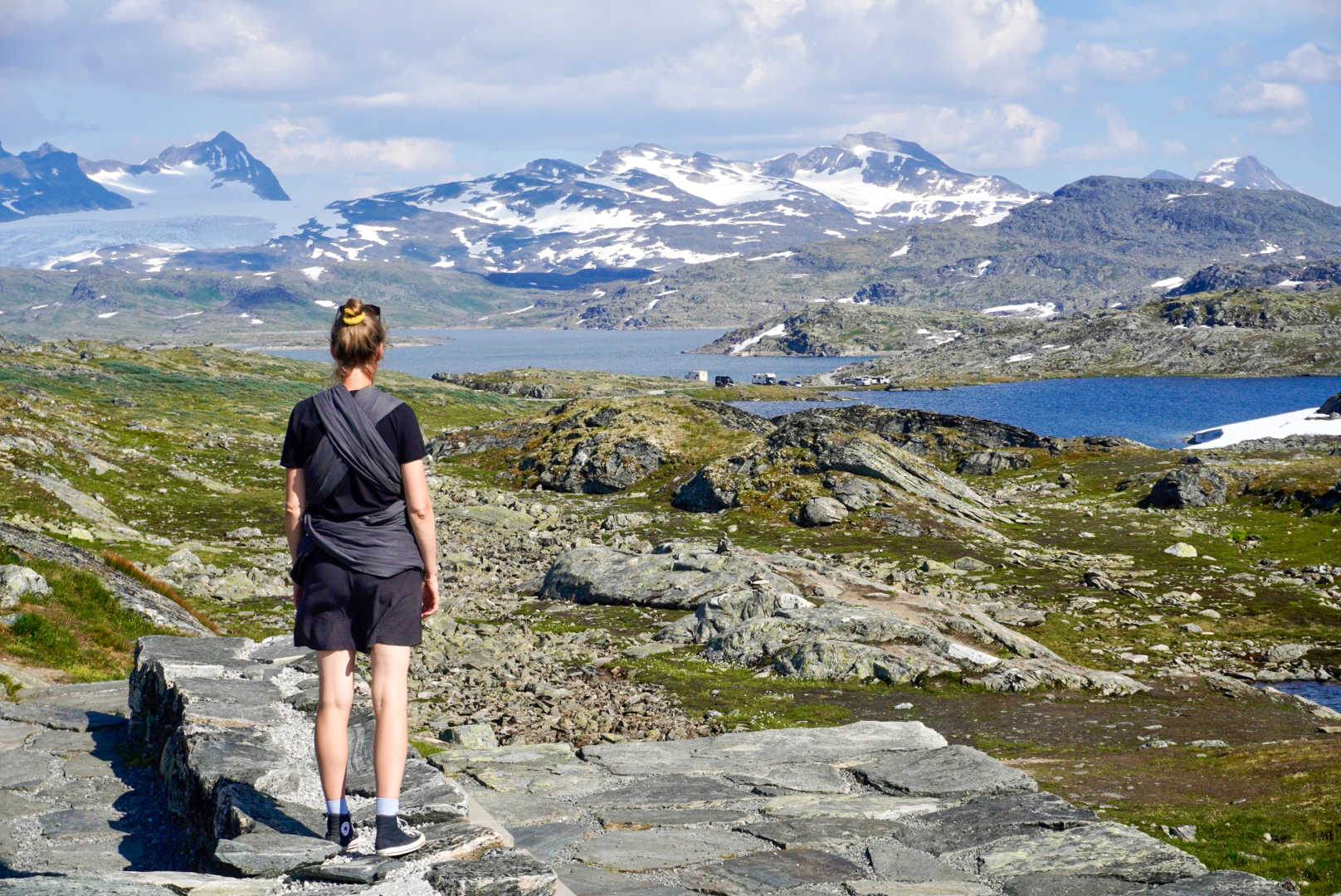
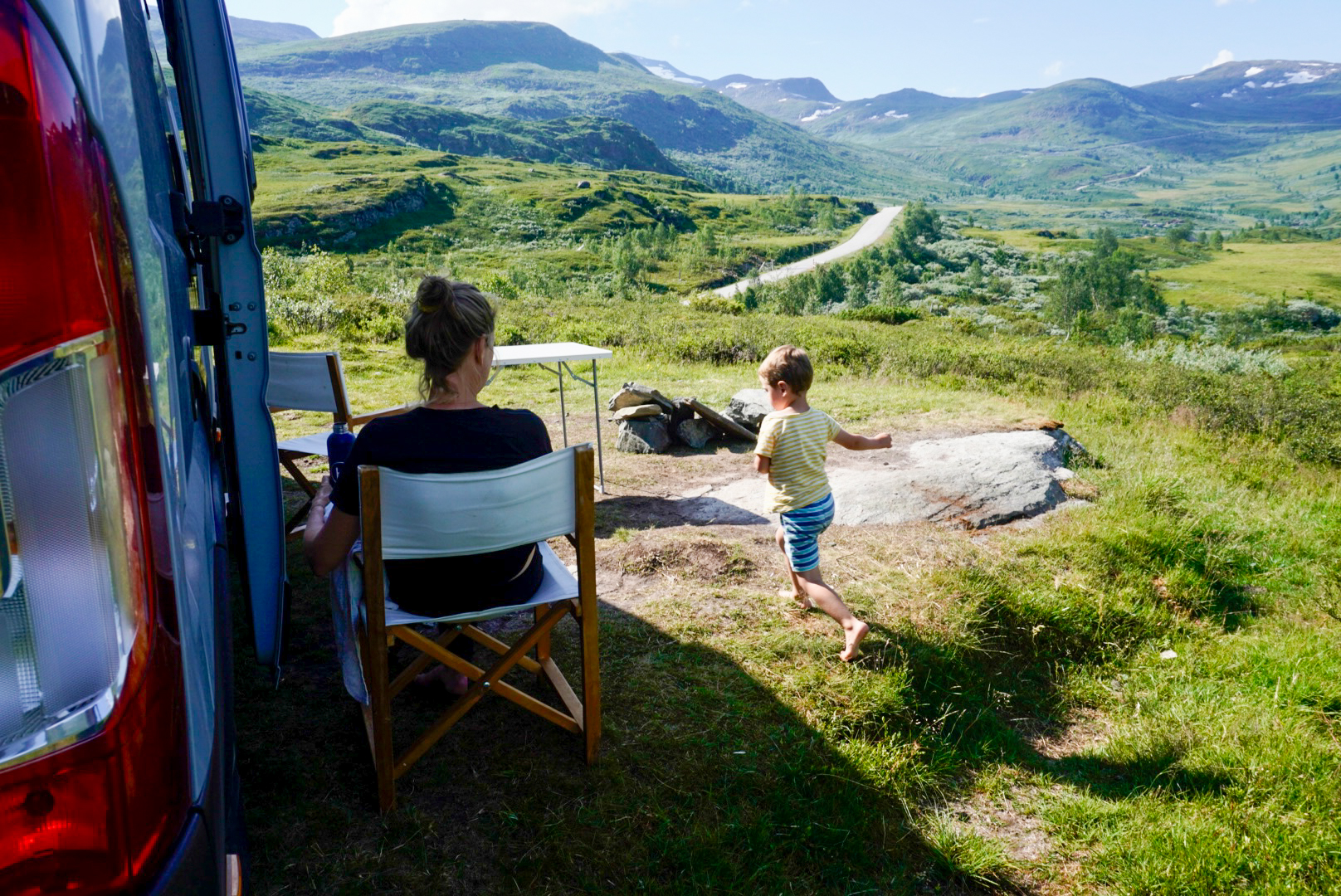
  • Oslo: Easy city exploring from the camper, with surprising swim spots in the heart of the capital. We had a parking close to the Vigeland museum and the Vigeland park, went swimming at the spot in city center in front of the Astrup Furnley museum, enjoyed the views from the Opera house and the Munch museum rooftop.


Final Thoughts: The Real Joy of Family Camper Adventures

This journey was about more than just kilometers and breathtaking views—it was about connection, freedom, and a more conscious way to travel. With two small kids, we moved at the rhythm of nature (and nap schedules!), embraced the unexpected, and kept our footprint as light as we could.

Curious about the route, HVO100 fueling stations, or want tips for your own adventure? Send me a message—I’m happy to help! Stay tuned for part two, as we continue our two-month slow travel.
Solitude and Reflection in Nature: Retreats for Personal Growth

When was the last time you dedicated a full day exclusively to yourself? No work, no family commitments, no phone—just pure, uninterrupted ‘me-time.’ If you’re like many, these moments are rare to nonexistent. Embracing solitude and reconnecting with oneself can ignite creativity and provide a surge of energy that’s hard to put into words.

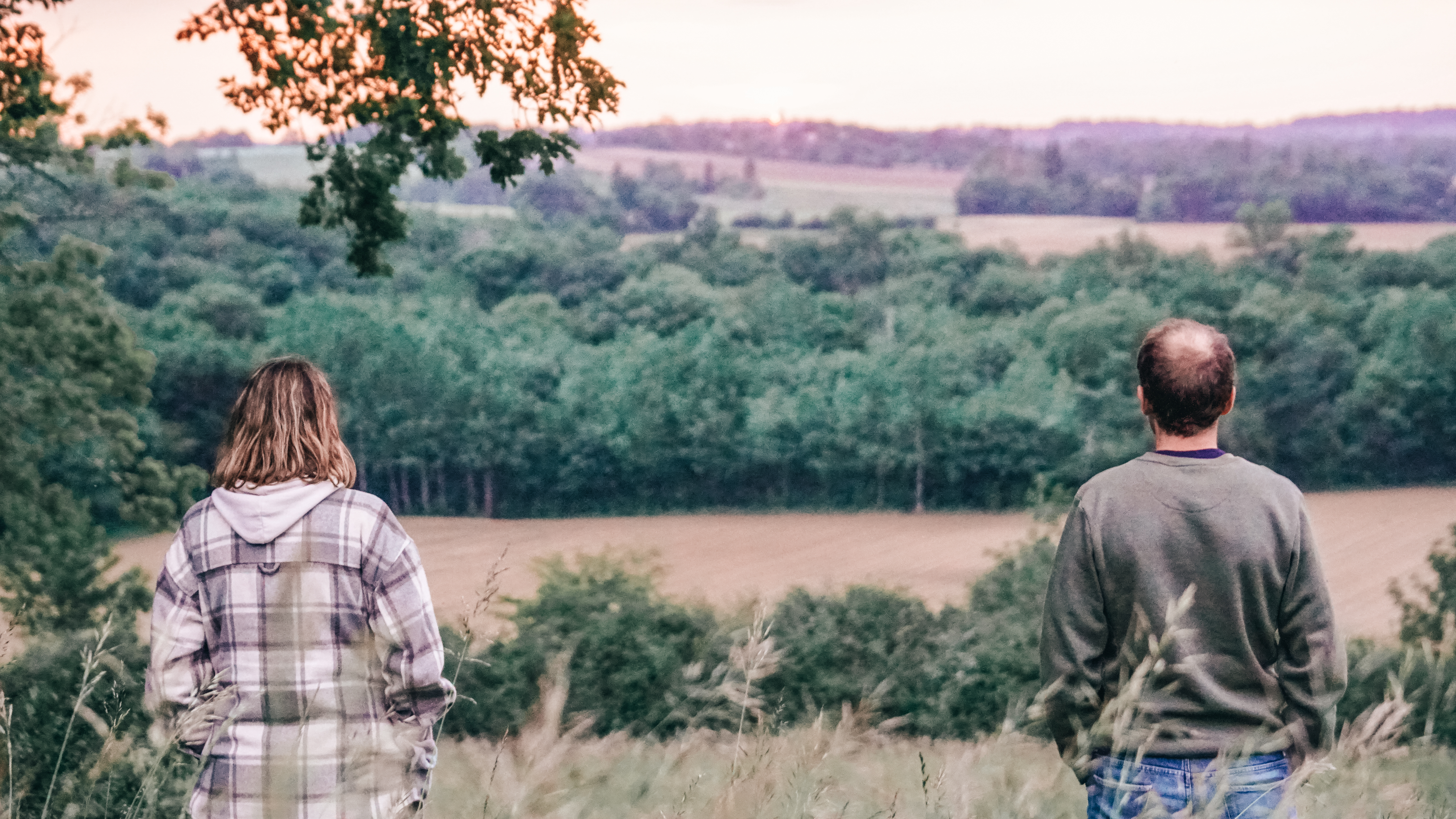
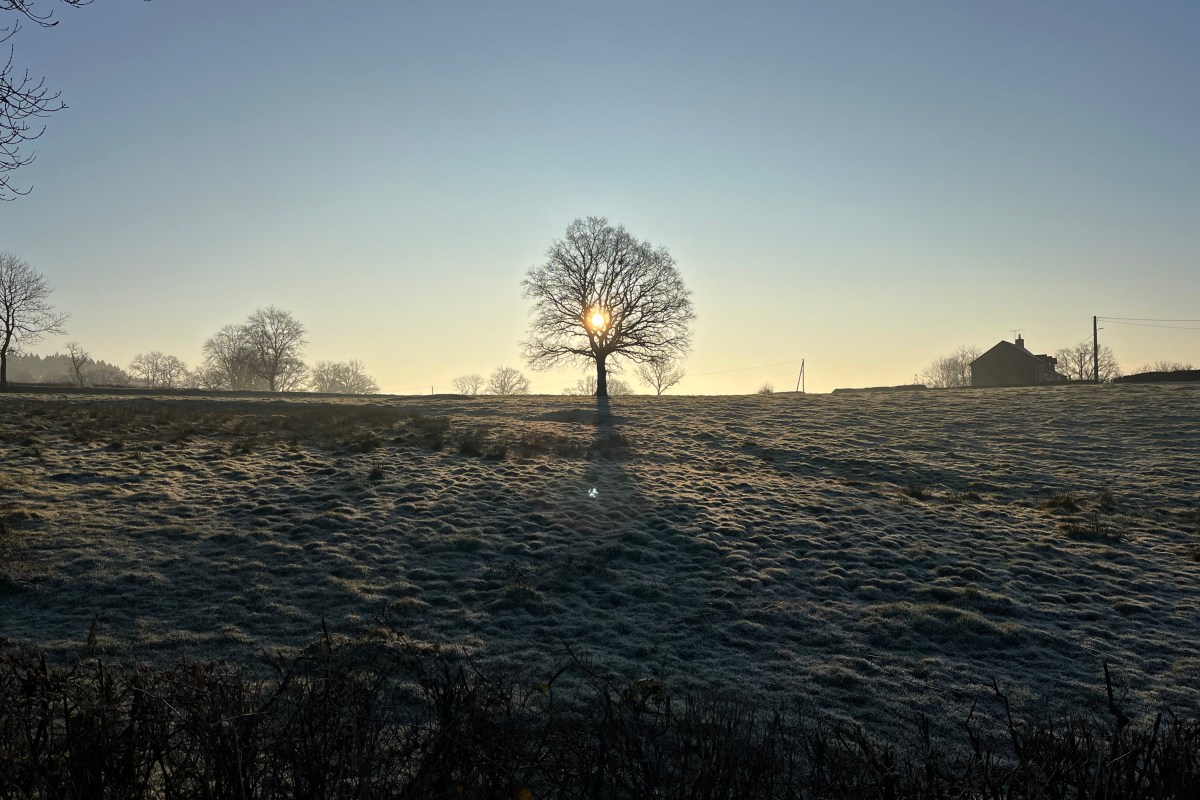
Recently, I embarked on a three-day dry fasting journey, surrounded by nature. I spent my days and nights watching sunsets, stars, moons, and sunrises—cycling through this routine with nothing but a sleeping bag and a rain cover. This simplest form of retreat, often referred to as a “vision quest,” was great to spark me with energy and insights. It’s also by far the easiest and least costly to organize: you only need a sleeping bag and find a bit of nature where you can hide, will not get disturbed and preferably feel some good energy with a nice view.

In this context of low-carbon adventures, here are some sustainable travel experiences and concepts I’ve personally tried and cherished:

1. Vision Quest

Immerse yourself in nature while fasting and sleeping under the stars. My recent quest included three days of fasting combined with two days in the beautiful hills of Auvergne, France, prepared with the guidance of my coach, Alessandro Schiavoni. I would not recommend the dry fasting, since not drinking any water for multiple days is heavy on the kidneys. Nevertheless, it was an amazingly impactful and simple retreat.

2. Silent Retreat

Opt for a 3-day silent retreat. I prepared by sourcing schedules from the internet, stocking up on provisions, and borrowing meditation books from the library. Locked in an apartment by the seaside in Ostend, I spent my days in silence, with occasional quiet walks along the beach, and a routine of repeated 1h meditation, 1h yoga, 2h studying, 1h eating, and sleeping.

3. Explore Retreat

Experience a psychedelic retreat organized by Carlien Cavens of Unplug 48. For a detailed insight, you can read the full article here.

4. Unplug Retreat

A reflective 3-day retreat in the South of France, focusing on past learnings, present strengths, and future missions. This transformative experience was organized by Carlien Cavens of Unplug 48, and reachable by train. You can hear my testimonial as part of this podcast episode made by Carlien.

5. Midweek Micro-Adventures

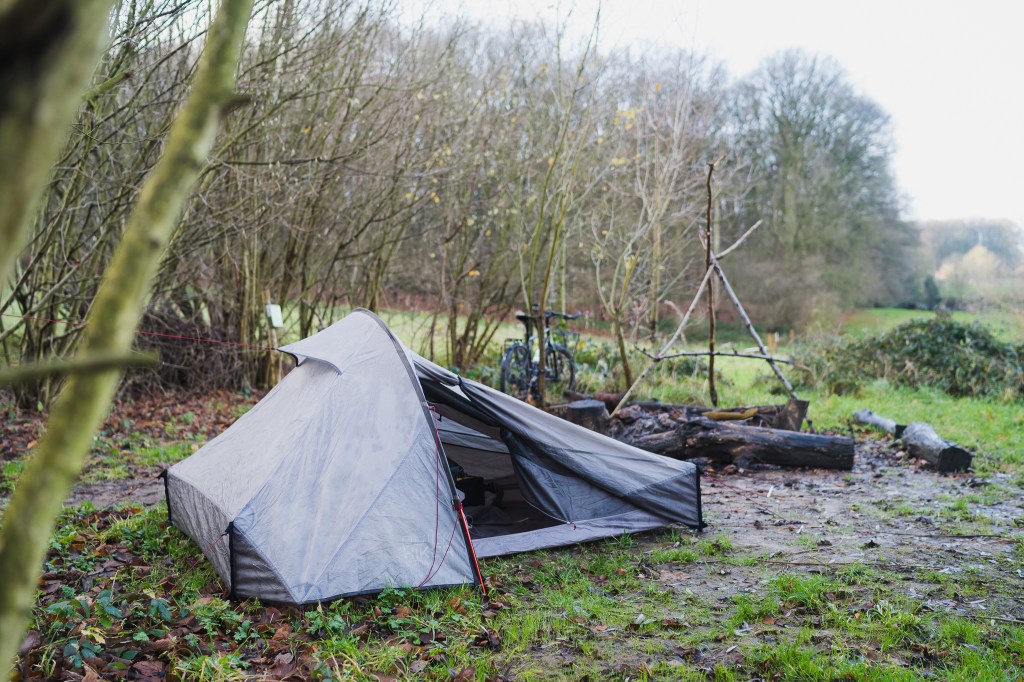
Escape for a midweek micro-adventure. Leave the office in the evening, walk along a scenic route or nearby forest, pitch a tent in a hidden spot (e.g. Sonian Forest), and spend the night in the company of a friend or alone. Resume work the next day, refreshed and reenergized.

6. Hiking with the Guys

Plan a weekend hiking trip with long-time friends. Pick a GR route (see post on GR5A on the Belgian coast). Laugh, share, and reflect while exploring nature together. It’s the perfect blend of camaraderie and self-discovery.

Setting Intentions for Your Retreat

The outcome of these retreats largely depends on your intentions. Here are a few that have guided my own journeys:

  • Connect with Deepest Self: Seek out your most authentic nature.
  • Discover Life’s Purpose: Uncover your Ikigai and life’s calling.
  • Overcome Daily Fears: Face and conquer daily anxieties, embracing life with greater joy.
  • Learn Meditation: Embark on a journey of mindful meditation.
  • Trust and Connect with Nature: Build a deeper trust in life and its natural flow.

Next to clear intentions, not taking a phone or other electronics is probably the most basic starting point to prepare for a retreat. Make sure someone knows exactly where you will be, and inform those close to you that you will not be reachable for multiple days.

Closing Thoughts

These sustainable travel experiences not only minimize carbon footprints but also offer profound opportunities for personal growth and rejuvenation. Embrace solitude, reconnect with nature, and discover a more mindful, balanced life. Explore these sustainable travel adventures and let them inspire your next journey towards inner peace and environmental consciousness.

Eco-Friendly Travel: Mastering the Art of Reusable Diapers

Traveling with reusable diapers might seem daunting, but with the right approach, it can be both eco-friendly and manageable. We’ve had a mix of good and challenging experiences, and we’re here to share what we’ve learned to make your journey smoother.

We have made many trips with August during his first 2 years and always took reusable diapers: on a camper trip of 2 months to Spain and France, on our train adventure of a month in Sicily, on our cycling holidays through the Dolomites last summer,… It requires a bit of planning and reflection, but once you’re used to it it works well.

Our Favorite Reusable Diapers

Our top pick is the “Close Pop-in Bamboo Diaper”. These diapers are easy to wash and use, consisting of a bamboo layer, a water-absorbent insert, and waterproof over pants.

  • For soiled diapers: Simply toss the bamboo layer in the garbage.
  • For wet diapers: Wash and reuse the bamboo layer 3-4 times until it’s too decomposed.

Another setup we love:

  • “Bamboolik Cover Duo Snap” outer pants combined with “Anavy Bamboo Diaper with Velcro” and “TotsBots Bamboo Insert”.

Packing Tips

We typically prepare packaged layers in advance, taking 9-10 sets (3-4 diapers per day, adjusting as your child grows). For extra absorption at night, you can add a night booster like the “Close Pop-in Night Insert”.

Benefits and Practical Tips

  • Washing: Use a bit of eco soap to wash diapers in a lake, shower, washbasin, or toilet.
  • Drying: Lay them open in the sun or wind, or place them in a well-ventilated bicycle cart to dry.
  • Reuse: You can reuse the waterproof cover multiple times without washing if it remains clean.
  • Frequency: In hot weather, do not go longer than 2 days without washing. Use a washing machine every 3-5 days while on holiday.

Challenges & Solutions

  • Skin Irritation: In warm weather, humidity can irritate your child’s skin. Switch to disposable diapers (eco-friendly versions are available in most hypermarkets) if needed.
  • Smell: Carry a plastic bag for odor management.
  • Handling Poo: It’s not always pleasant to handle soiled diapers, but I (Louis) take on this task most often since I care most about the use of reusable diapers.

Additional Tips & Tricks

  1. Wet Bags: Invest in wet bags to store dirty diapers until you can wash them.
  2. Travel Size Detergent: Bring eco-friendly detergent in a travel size for easy washing on the go.
  3. Disposal Liners: Use biodegradable liners inside the diapers to make cleaning easier.
  4. Plan Ahead: Research your destinations for laundry facilities to ensure you can wash the diapers when needed.

Cycling the Dolomites with kids

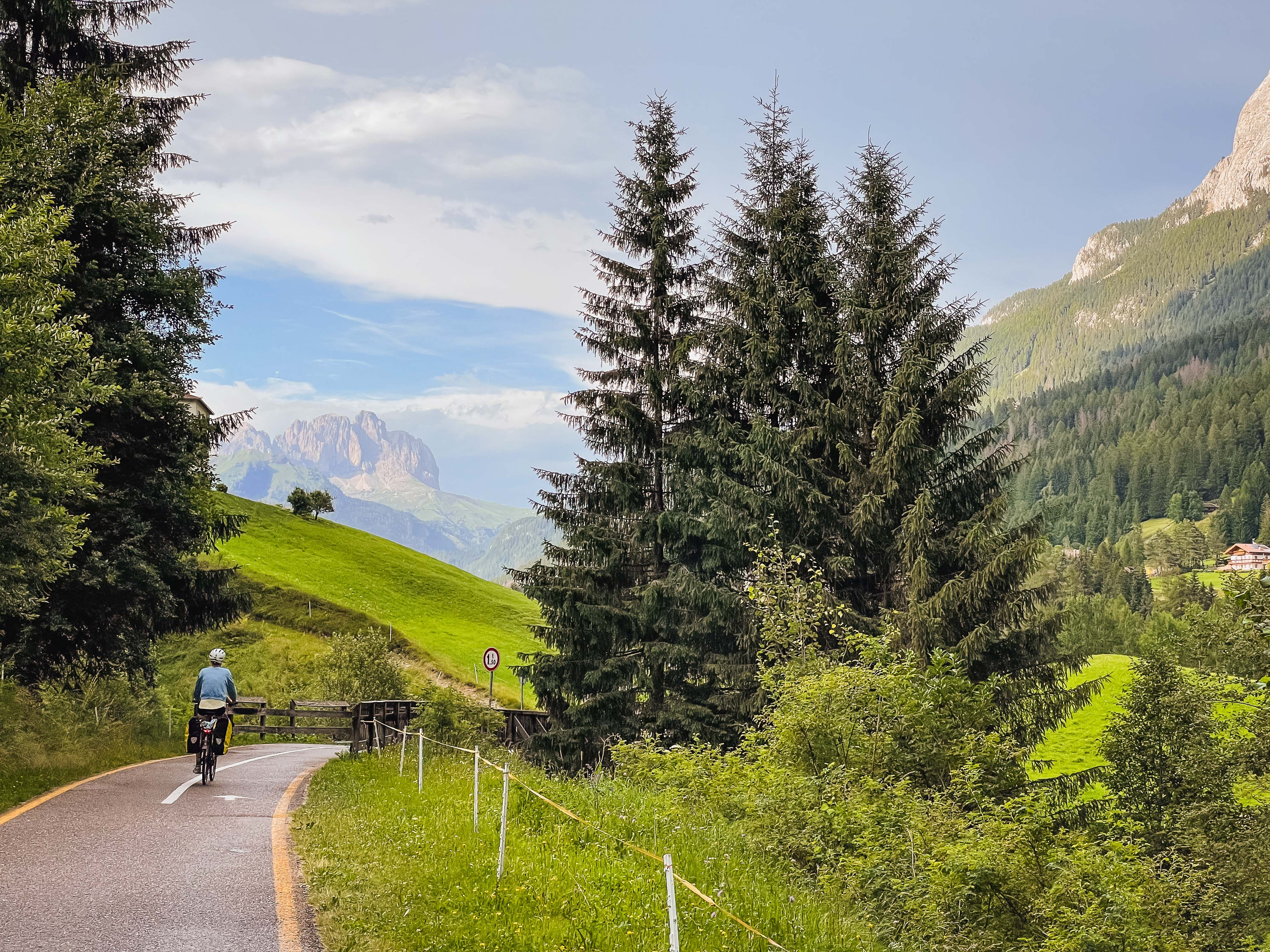
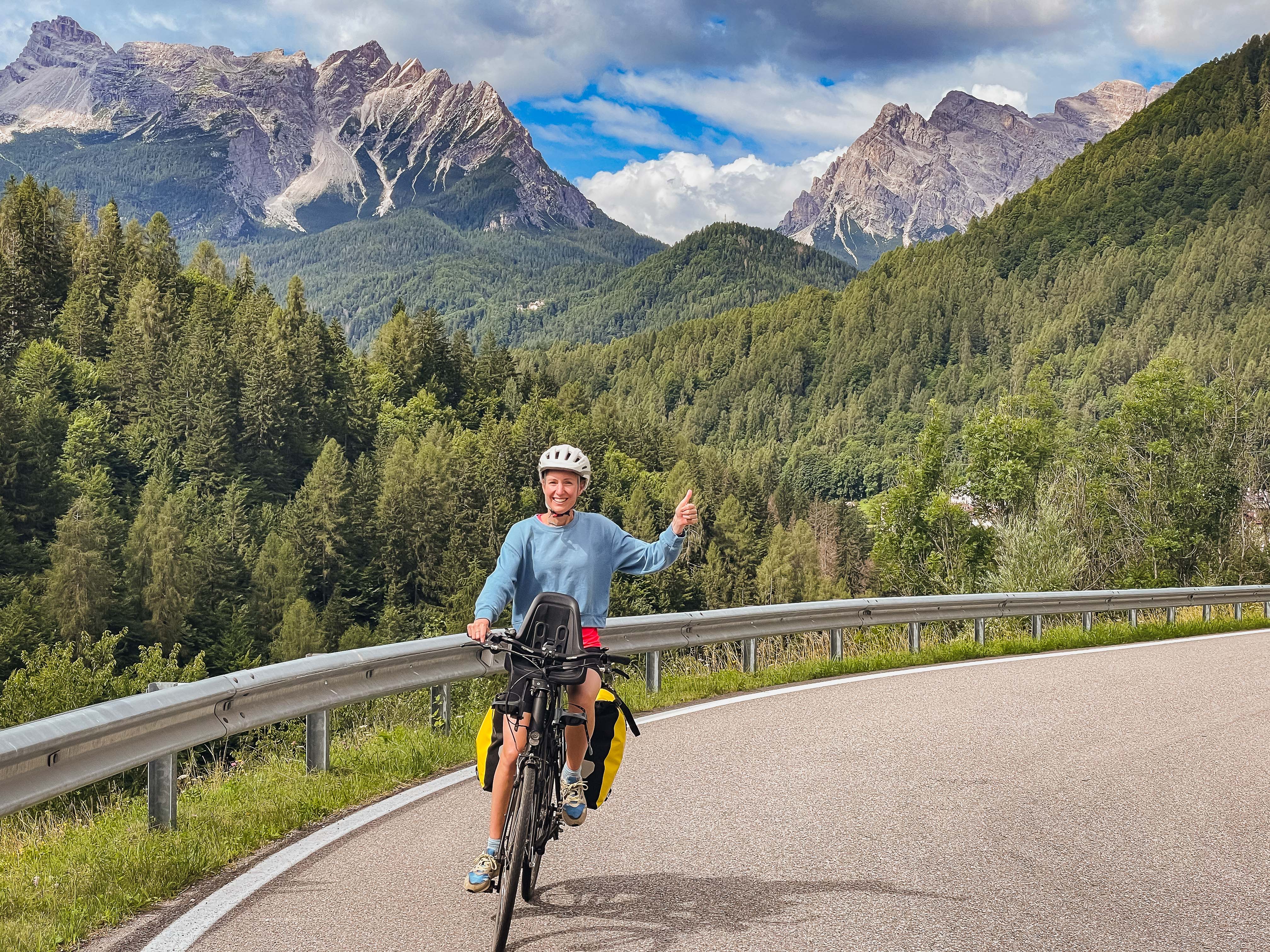
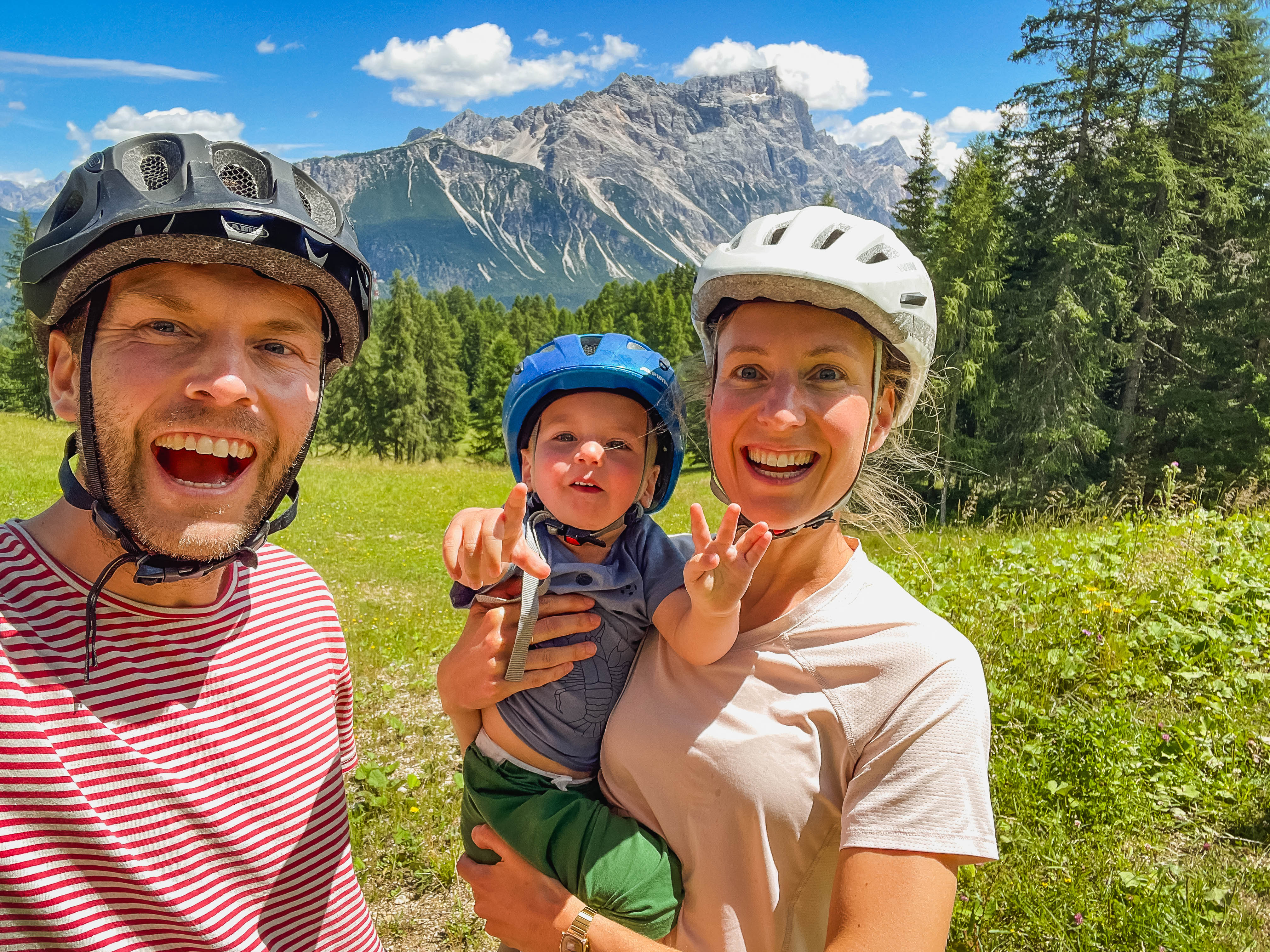
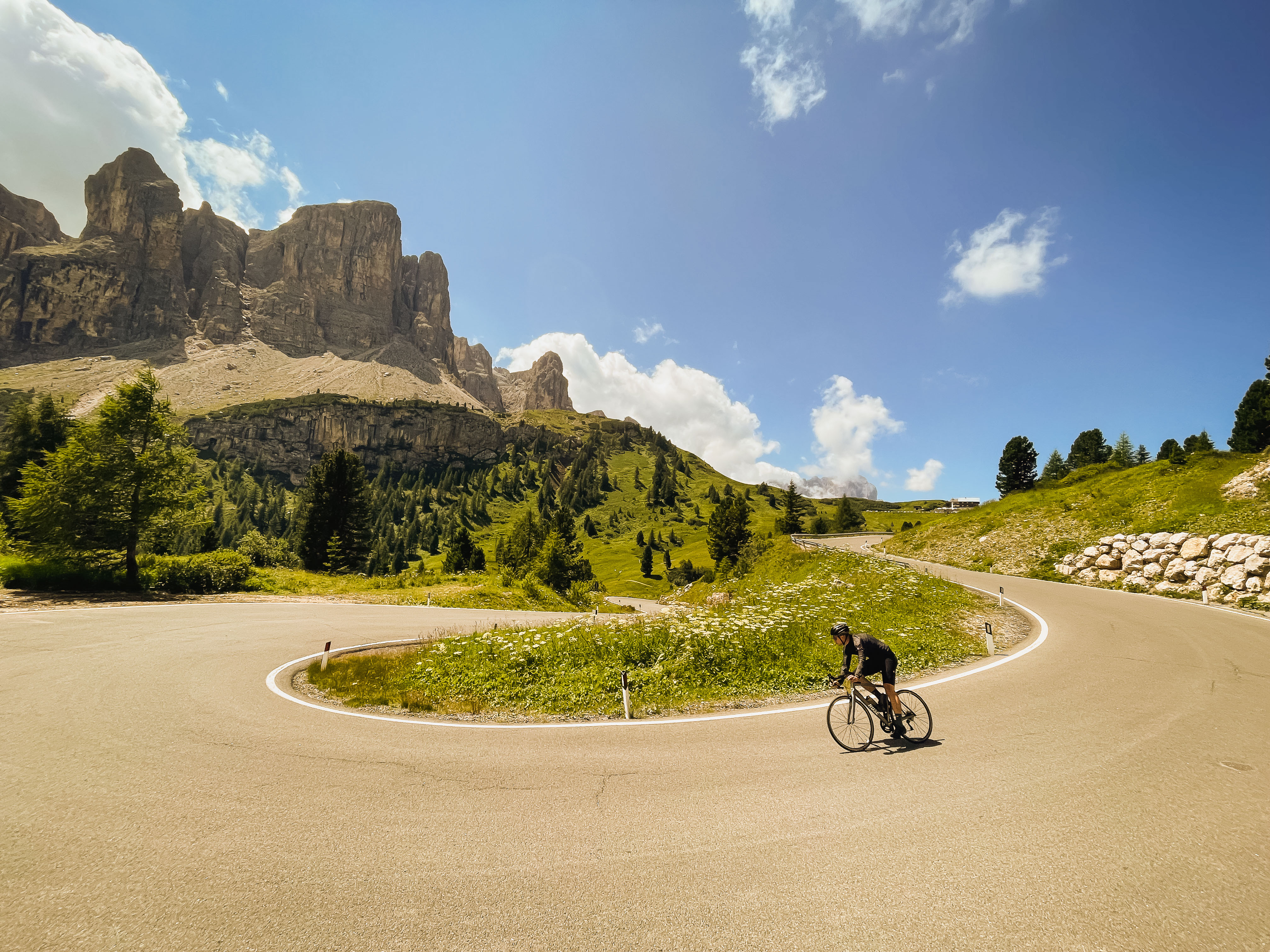
The best memories are made in nature. Spending time slow-traveling with our toddler in the Dolomites was amazing. When researching for this trip, I stumbled upon someone making this comparison list: Himalaya – Andes – Dolomites. I had to laugh since I thought it was slightly exaggerated to put the Dolomites on that list… but after the trip, we fully agreed!

This post is split in 4 parts:

  1. The route through the dolomites
  2. Musts when cycling with kids
  3. Our daily routine while cycling
  4. A day-by-day detail of the itinerary

1. The route through the Dolomites

We traveled by bike a couple of times before, e.g. during our summer trip along the Rhine and through the Black Forest, but never with August. In this post, you’ll find some honest parenting details on how we survived this trip with our 2-year old.

Disclaimer 1: Doing this beautiful bicycle trip with a kid is ABSOLUTELY IMPOSSIBLE without an electric bike! There were many moments when we had a tough time cycling up the passes, even with help of our electric engine. At moments, we would get out of battery and sweat or hardly make it up the 1000m climb.

Disclaimer 2: we did not find a train alternative to get to the Dolomites with our two-year-old todler & two adults; two electric bicycles; a bike trailer and camping gear for all of us. Without a toddler and bike trailer it would have been possible to get to Bolsano and start cycling from there, so let me know if you are planning to do so!

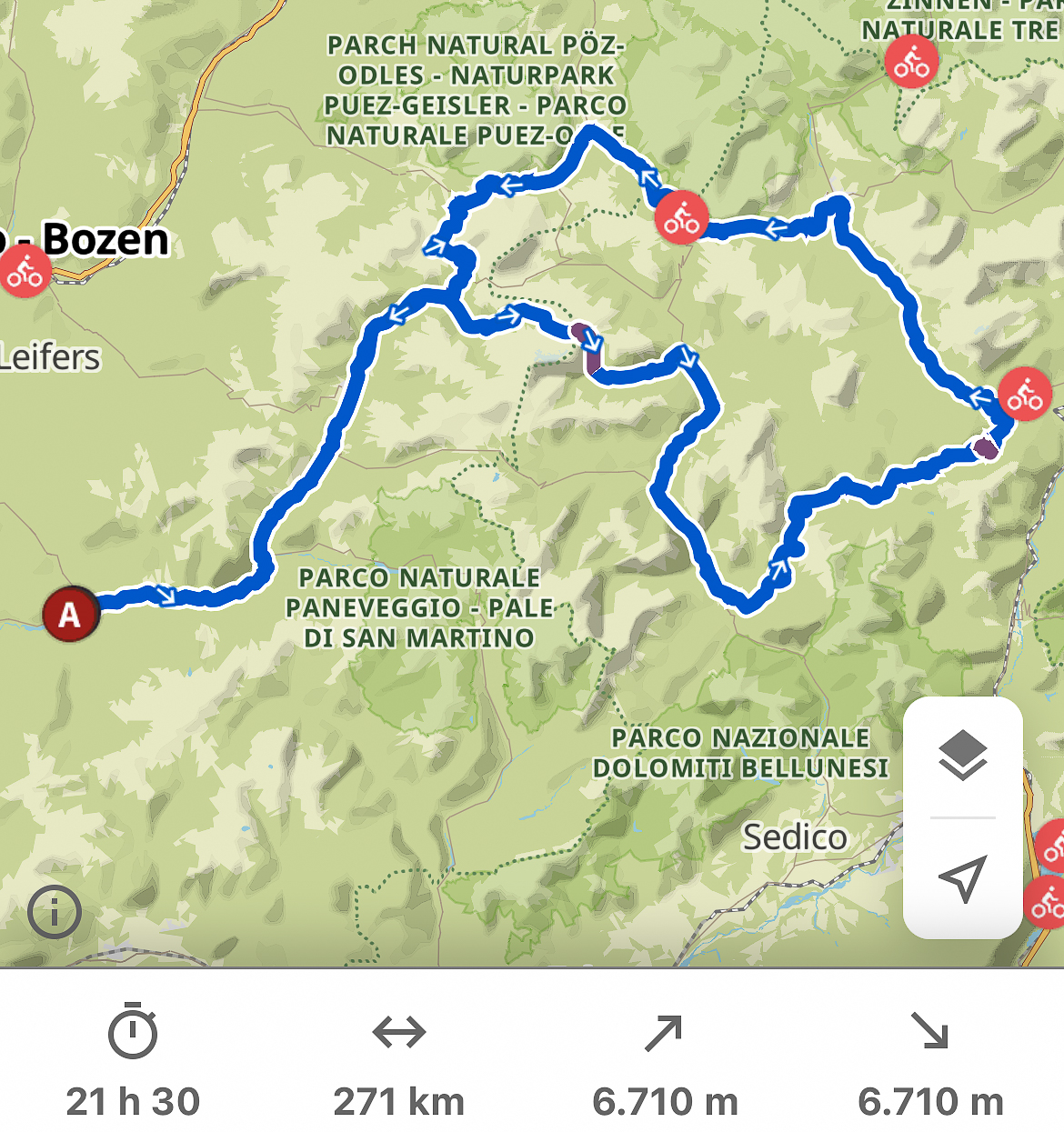
For the route we practically merged the below two routes to create a loop and get back to where we left the car: Dolomites from West to East and Dolomites from East to West (returning via different valleys). We switched from the first to the second route in Cortina.


2. Musts when cycling with kids

If you’re planning to go on a cycling trip with a toddler, this is what you certainly need, on top of the usual kids’ stuff that you would take on any trip:

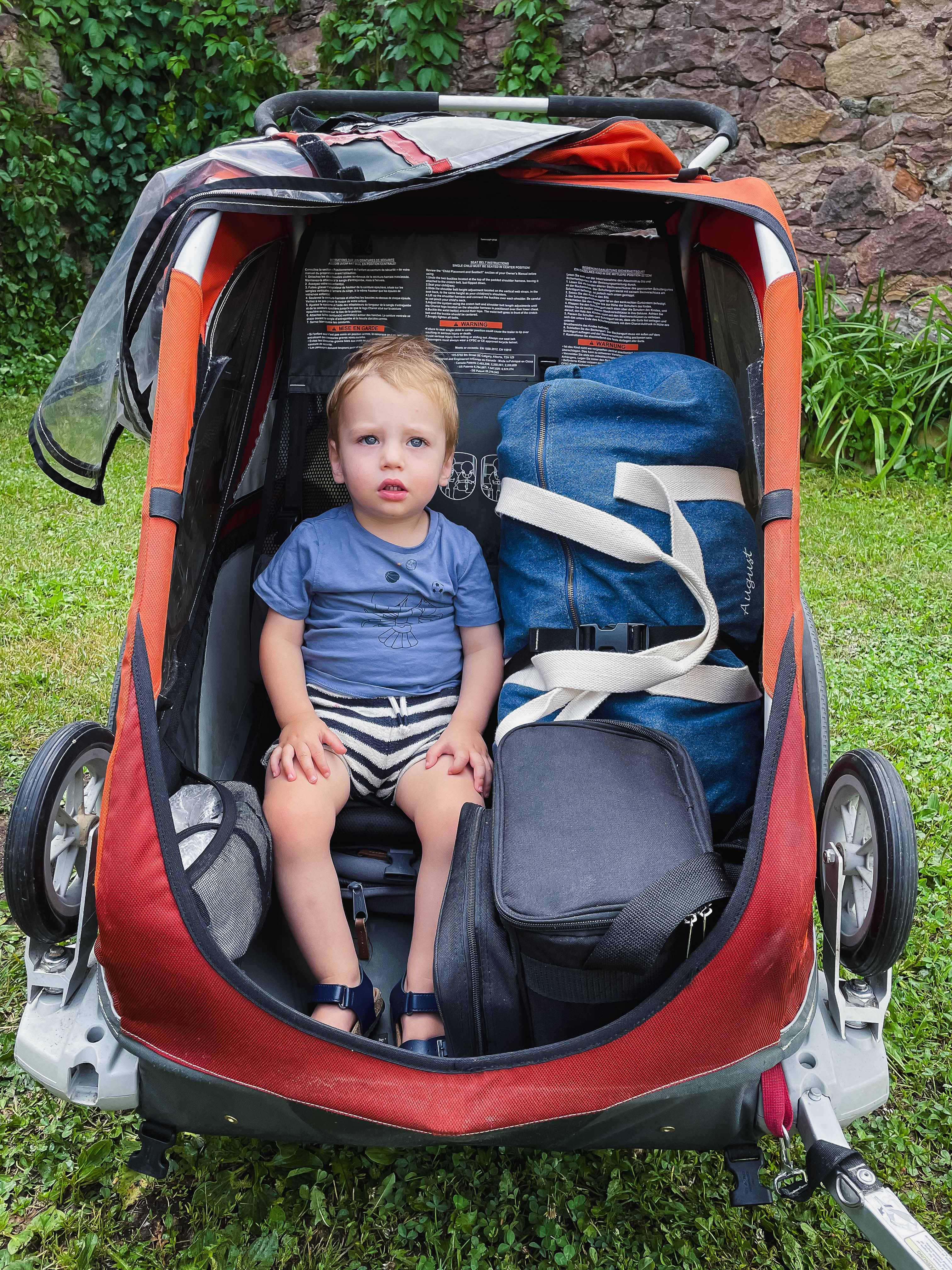
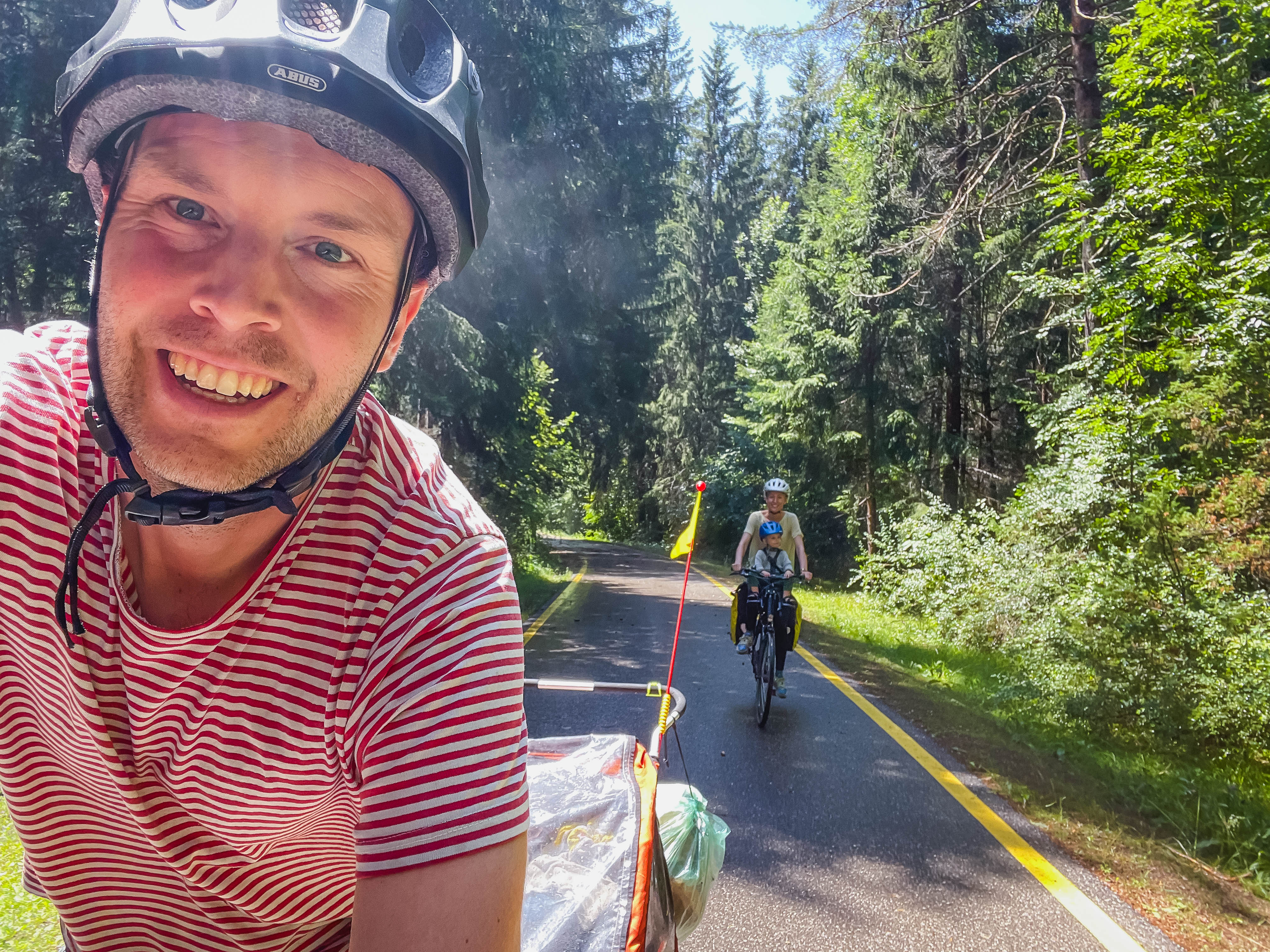
  • Seat & bike trailer: Bring both a child seat in the front and a Thule bike trailer behind one of the bikes. We switched all the time since sitting in the front allows us to look around, sitting in the back is more for playing and taking a nap.
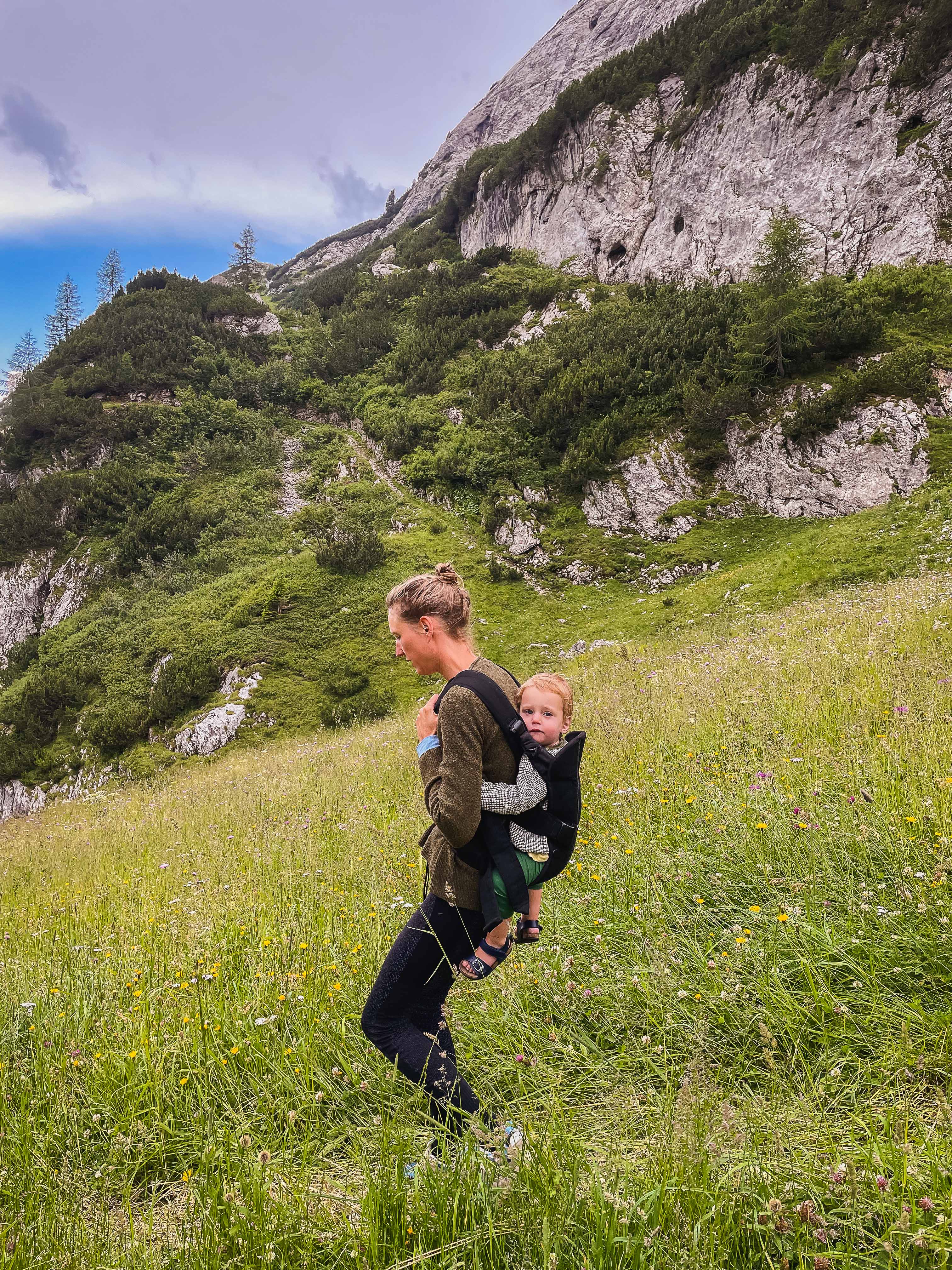
  • Baby carrier: Take a light baby carrier backpack for short hikes in the mountains where the bike trailer cannot be used as a stroller
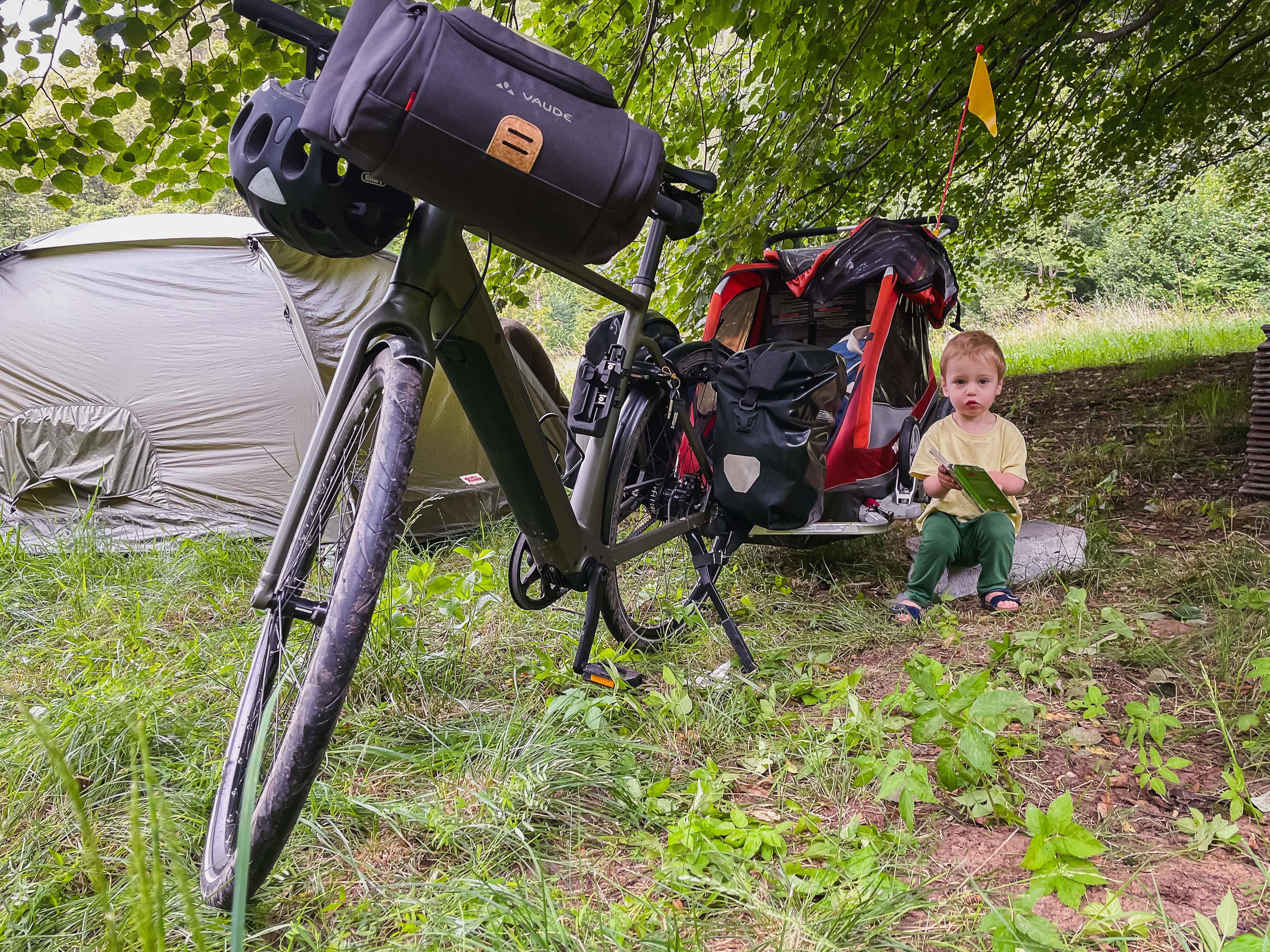
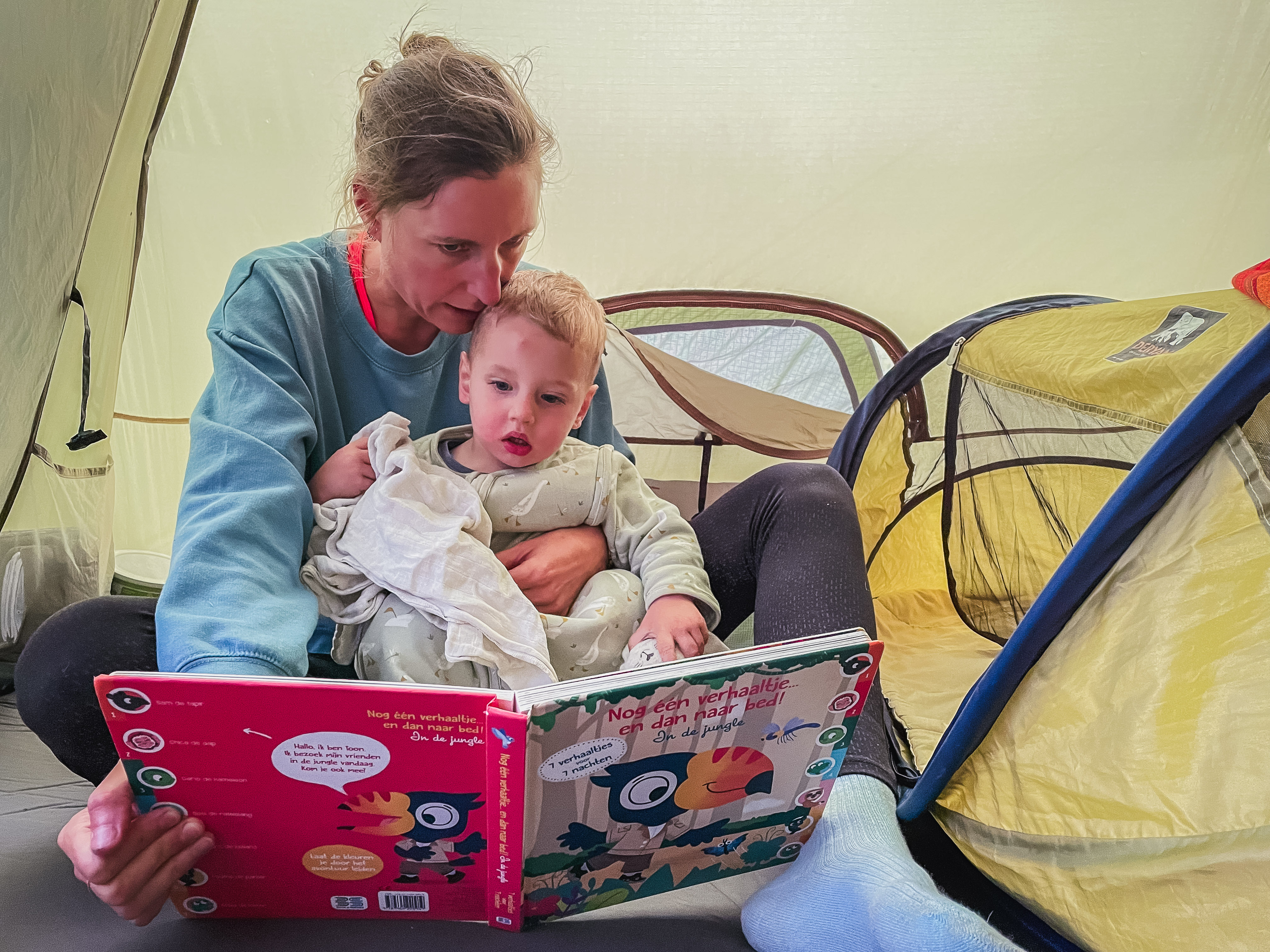
  • Baby sleep tent: We put the little tent inside our tent at our feet at night time. He got so used to it that he sleeps as well in the tent as in his bed at home. See the third tip for more details on our previous post on kids on trains where we tell you a little more about the tent.

For the dutch speakers: one of our biggest inspirations was this podcast of Grensverleggers – two months through Sweden with kids


3. Our daily routine while cycling

While cycling, our typical day routine with 2-year-old August would be as follows:

  • 5:30-6:30 Louis sneaks out of the room, goes running, reading a book, journaling
  • 7:30-8:00 Wake up & milk for August (he drinks his milk cold – makes life easy while camping), get ready for the day
  • 8:00-9:30 Breakfast
  • 9:30-10:00 Pack our stuff
  • 10:00-11:30 Start cycling or if we stayed in the same location, one of us would take 2 hours of me-time and the other would make a hike. We often started with August in front of Tine’s bike so that August could look around (and does not yet fall asleep).
  • 11:30-13:00 Give August his lunch while taking a break… change his diaper and then he slowly falls asleep in the bike trailer behind Louis’ bike around 12:00 or 12:30.
  • 13:00-14:00 Tine & Louis have lunch while August is taking his nap – we take the bike trailer as a stroller onto the restaurant terrace. Warning: we had to be inventive to keep August out of the sun while sleeping…not easy when the roads are curved and the sun comes from a different side every couple of minutes. When he woke up after 2 hours nap we would give him some more of our food or fruit.
  • 14:00-17:00 Visit or cycle: often we would either cycle a bit more, visit a city, do a hike in the mountains, or plan shifts taking me time to read/chill/write.
  • 17:00-18:00 Find a good camping spot or hotel. We traveled in July and August which is high-season, but we did not reserve any hotel or campground in advance. We would often call the day itself either in the morning or sometimes just half an hour before knowing if we would make it to that city or want to stop earlier (in case of August being unhappy on the bicycle or bad weather).
  • 18:00-19:30 Get installed, have dinner together or if there’s a nice restaurant in the hotel we would already give August his dinner and after that put our phones on WhatsApp as baby phone while August is sleeping and we’re having dinner. We would often wash out August’s re-usable diapers by hand in the shower, and let them dry during the day in the bike trailer. More on travelling with re-usable diapers in a seperate blogpost – coming up.
  • 21:30-22:30 Tine & Louis sleeping time


Like what you read? Do yourself and us a pleasure by subscribing to our blog by leaving your email addres below:


4. A day-by-day detail of the itinerary

Day 1: start in Castello-Molina di Fiemme to Pozza di Fassa

On the first day, we started slowly after having spent the night in Hotel Italia. We cycled past the waterfalls – Cascate dell’Avisio di Cavalese, where we had heavy rainfall and stopped cycling for an hour.

We booked an (expensive) camping in Pozza di Fassa: Camping Catinaccio Rosengarten. Since August went to bed around 19:30 we did not have the time to go to a restaurant and had takeaway pizza in front of our tent… in between two rainfalls.

Day 2: to Passo Fedaia

The second day started very beautifully, with views of impressive mountain ranges and a steep climb. We took a break to have lunch in the restaurant La Maison Fredarola while August was sleeping in his bike trailer.

When we wanted to hit the road for the second part of the climb and after having charged our batteries, we found Tine’s bike with a flat tire. When I pumped it up again we noticed it only went flat very slowly… so rather than spending an hour there trying to fix a flat tire of an electric bike, we inflated the tier every 20 minutes. With only a big hour of climbing the Passo Fedaia, we made it to Rifugio Capanna Bill. For the last part of the road we took a little closed-down road next to the hydro reservoir.

Day 3: we stayed at Passo Fedaia in Rifugio Capanna Bill

With beautiful mountains surrounding the Passo Fedaia, we decided to stay for two nights and go for some hikes. In the morning we took turns of 2 hours each to go for a hike with August while the other had some me-time. In the afternoon we took the cable car and went for a hike higher up. The Rifugio had a restaurant so we could have breakfast and dinner there. For lunch, we always had a good stack of food with us in our bags.

Day 4: to Agordo

And guess what… rather than fixing the flat tier, we decided to inflate it every 20 minutes and cycle to a bike repair shop where they fixed it for 10 euros. It saved us a lot of frustration and clumsyness on the road.

We had lunch in Agordo, visited the city, and decided to cycle a bit more uphill before searching for a camping spot in the wild. We were unlucky: The local multinational had organized their international family day in Agordo and fully booked all hotels in the surroundings. Our first pick to camp was in the garden of the school of a small village called La Valle Agordina. We filled our water bottles at the little fountain, and enjoyed the local playground, but we could not find any electricity to charge our bicycle batteries… and with more than 1000m climbing foreseen for the next day, we sure needed that.

After talking to some people in the village, they showed us their little forest and field where we could camp and offered to charge the batteries in their house. Tine had fun building a bonfire and August slept super well in his little tent, inside our bigger tent.

Day 5 to Villa Chele in Pralongo – Val di Zoldo

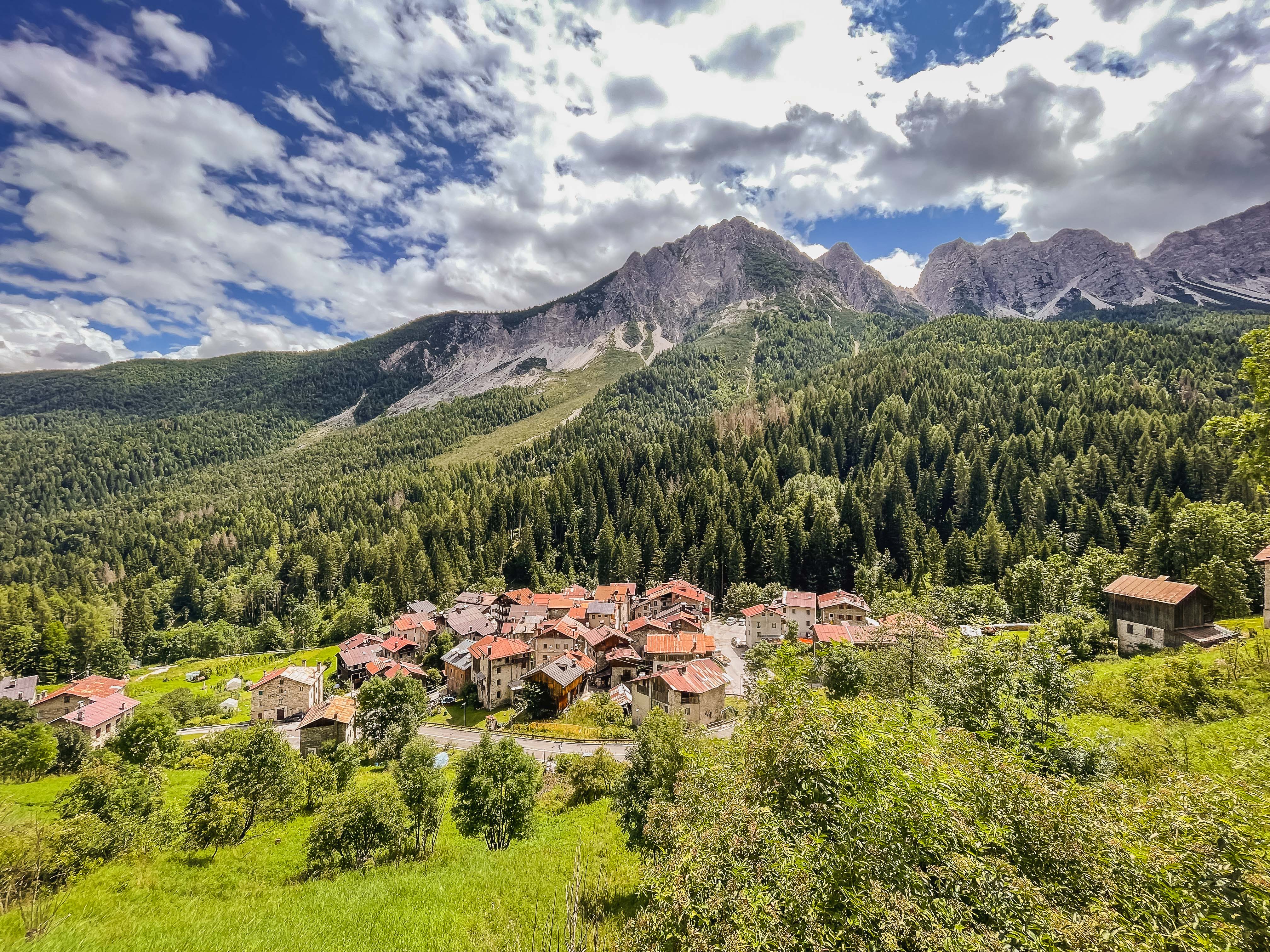
We climbed the mountain until Rifugio Passo Duran where we had lunch. We were rewarded by the impressive views of Chiesa, a beautiful old village with many charming wooden houses.

After that, we continued cycling downhill, with a small climb at the end to reach the charming room we booked with Louisa in Villa Chele. The host is amazing. She immediately volunteered to take care of August while we carried our bags up. We could do our laundry there and she borrowed us her hiking backpack for toddlers to do a bigger mountain hike.

We had dinner in Restaurant El Taier, a couple of 100 meters down from Villa Chele, and enjoyed the sunset from the hill next to the village.

Day 6 & 7 we stayed in Pralongo – Val di Zoldo

The next day she explained she had to take care of her grandkids in Belluno and that we could drive along to the city in her van… so we took a lovely road trip with sixty-something years old Louisa. We talked for hours, where she shared her interesting life story – from Argentina to Germany to Italy – travels by boat – falling in love – … An encounter with a woman full of wisdom. It gave us the perfect “Celestine prophecy” vibe full of magic. If you haven’t read the book yet: this is your call!

In the mornings, Louis would sneak out of the room and go for a long run in the mountains and read his book, while August and Tine would be calmly sleeping. On one of the mornings in Villa Chele a group of women hikers was preparing to head for the mountains, while one took out a box of cards called: “Nature meditation cards”. We bought the same deck and still enjoy it once in a while, a nice gift idea!

Day 8 to Cortina d’Ampezzo

This was a legendary day: we had to take a good 1000m climb again, The majestic roughness of the mountains is impressive, and while cycling you have all the time to enjoy it and look around.

After that, we continued our trip to Cortina d’Ampezzo where we booked a camping ground. We had to go to Camping Cortina, because Camping Rocchetta was already fully booked. The latter is a nicer campground according to the reviews… but the Pizza at Camping Rocchetta was good and August enjoyed the playground a lot.

Day 9 to Cinque Torri and San Ciascian

Before continuing our trip, we visited Cortina and had breakfast there.

While climbing up the next col, the views over the Cortina valley are nice, so worth stopping for.

After a couple of hours, we reached the cable car to Cinque Torri. We did not plan all of this upfront, but when searching we saw that it was certainly worth going up for a hike around the rocks of Cinque Torri.

We continued cycling for a little while until we reached B&B Hotel Frohsinn for the night.

Day 10 to Passo Gardena

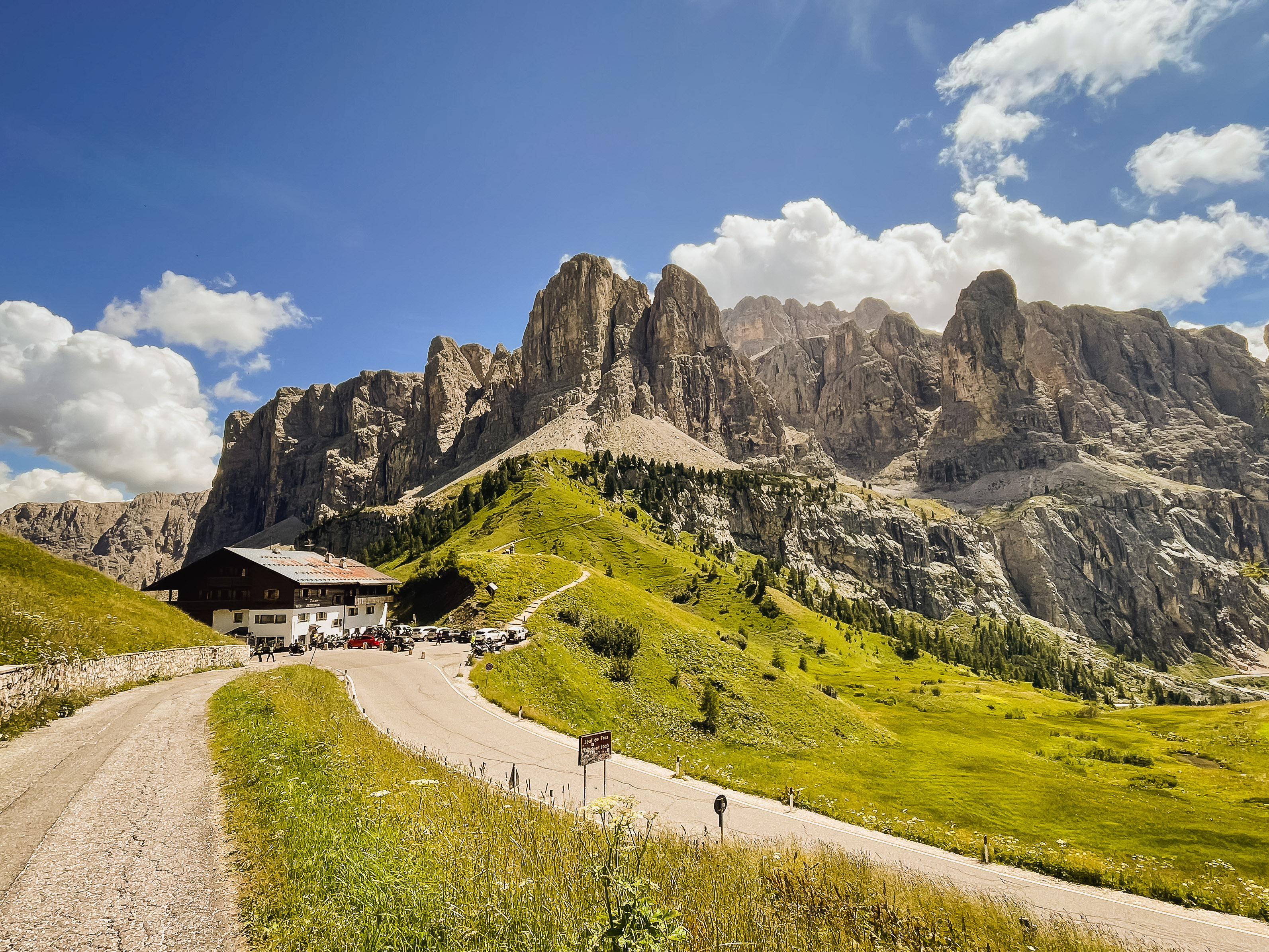
As we never knew what we would find on our route and had quite some flexibility in our schedule, we would never reserve any hotels or campgrounds in advance… so we were extremely happy to find a free room in Hotel Cir. A very nice place on top of the Passo Gardena, with a good restaurant, nice terras with relaxing chairs, and the most impressive views of the rocks around.

Day 11 we stayed in Passo Gardena – Hotel Cir

Since the hotel was so nice and nature so impressive, we decided to stay a second night and take the time to relax and take half a day of me time each, while the other would take care of August.

Day 12 to Moena

We climbed the Sella Pass before closing our loop through the Dolomites in Canazei, the city where we passed as well on our second day. That night we stayed in Hotel Catinaccio, a nostalgic hotel that had its best days… but the old charm was pretty funny and August enjoyed the pool a lot.

Day 13 to Castello di Fiemme

On our last day, we rolled down the hill, along the river with a day of fully separated cycling lanes to our start location. It was an easygoing day to close this beautiful trip through the Dolomites.


In case you are planning to take this trip, please reach out with any questions! It would be great if we could inspire others to have a similar adventure with their kids.

Sevilla by train from Brussels

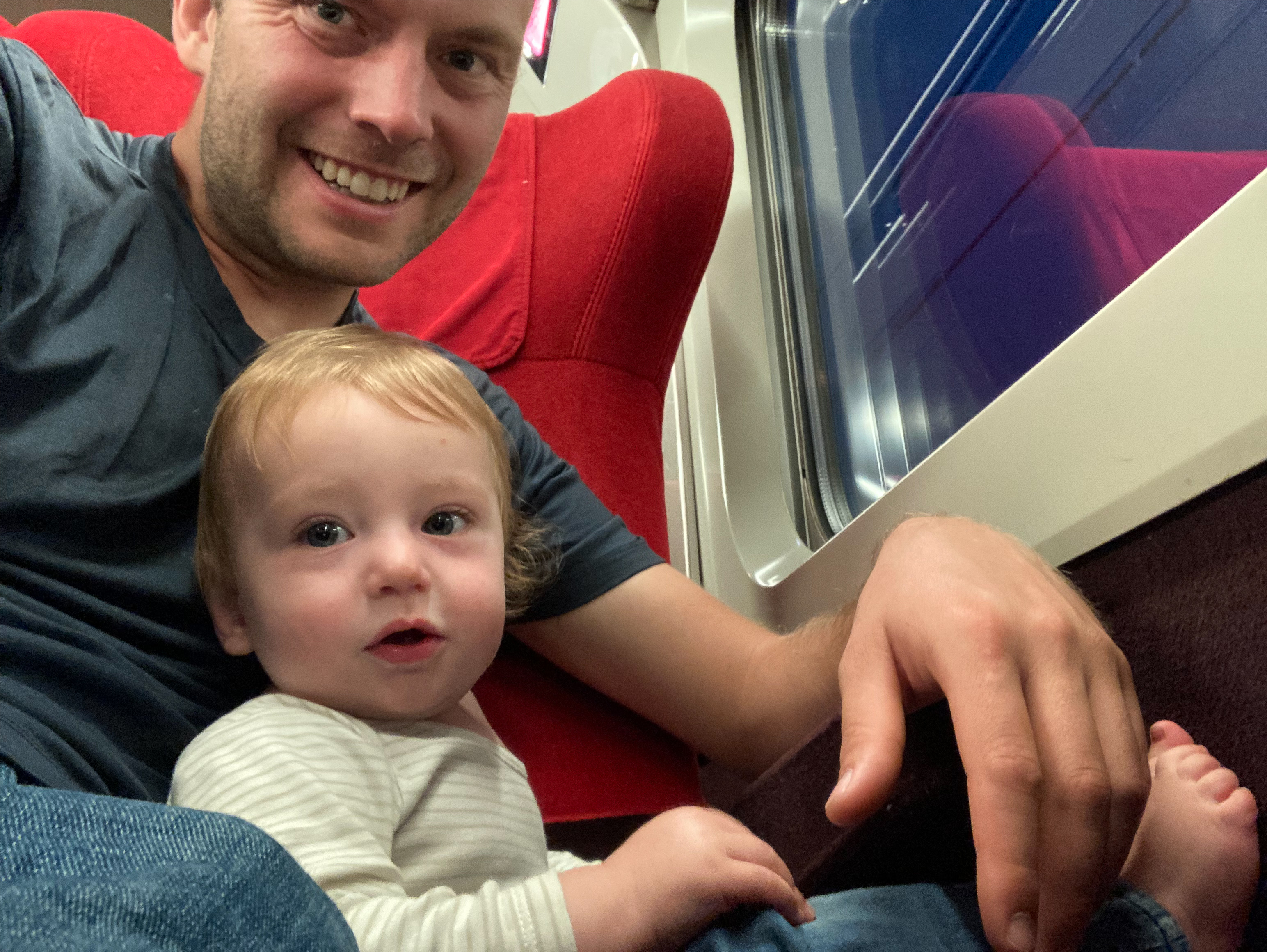
In September we attended the wedding of our good friends Victoria & Karel in Sevilla. The obvious transport mode would have been the airplane, have tons of delays and cancelations and arrive all stressed out. Instead we adventured the other option: going by high-speed train, enjoying the scenery of France, from mountains to the mediterranean and all the way south through Spanish nature. We read books, played with August, slept, ate our picknick, meditated, talked, played games and dreamed away…

The trajectory was simple but expensive: 275 EUR per person one way.

  • Brussels – Paris Nord (D1 – 29 EUR)
  • Paris Gare Lyon – Barcelona (D1 – 122 EUR)
  • Barcelona – Sevilla (D2 – 124 EUR)

We booked the trip via sncf-connect.com (where you should get a “carte avantage adulte” to get more discounts!). You can do this exact same trajectory in a single day, leaving Brussels around 6h30 in the morning and arriving in Sevilla around 22pm in the evening. The connections are tight but possible if there’s no major delays.

There’s also an option with a night train between Paris and Perpignan, but since we had August, our one year old baby with us, we chose to split the trip in two each time and stay for the night in Barcelona. It was a good opportunity for Tine to see some friends back and take a rest.

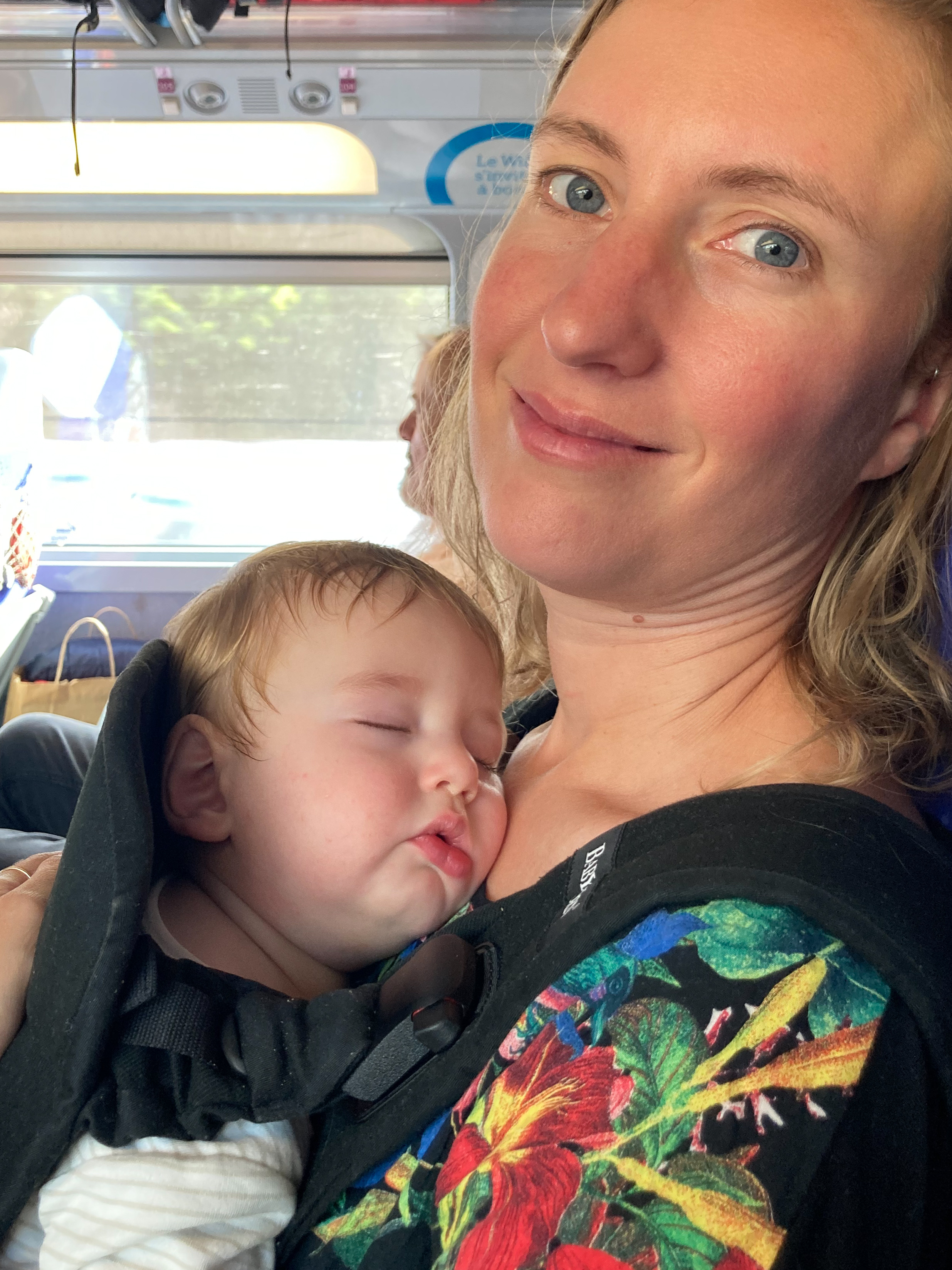
To enjoy the trip we took the baby carrier (draagzak) instead of the stroller. We spent a lot of time in the bar car where August could play on the floor with a couple of simple toys, or sleep in the carrier on our breast.

Since the journey was quite long, spread over two days, we decided to stay longer than just the weekend and added a yoga retreat in Suryalila and a visit to Cadiz. For those who enjoy veggie food, yoga and nature: this is heaven! We stayed in the glamping tents, did yoga every morning at 8am, enjoyed the best all-inclusive veggie buffet I have ever seen, read books by the pool, went for walks and just enjoyed life at its purest.

Our highlights in Sevilla:

  • Real Alcazar
  • Catedral de Sevilla (and the view from its tower)
  • Setas de Sevilla
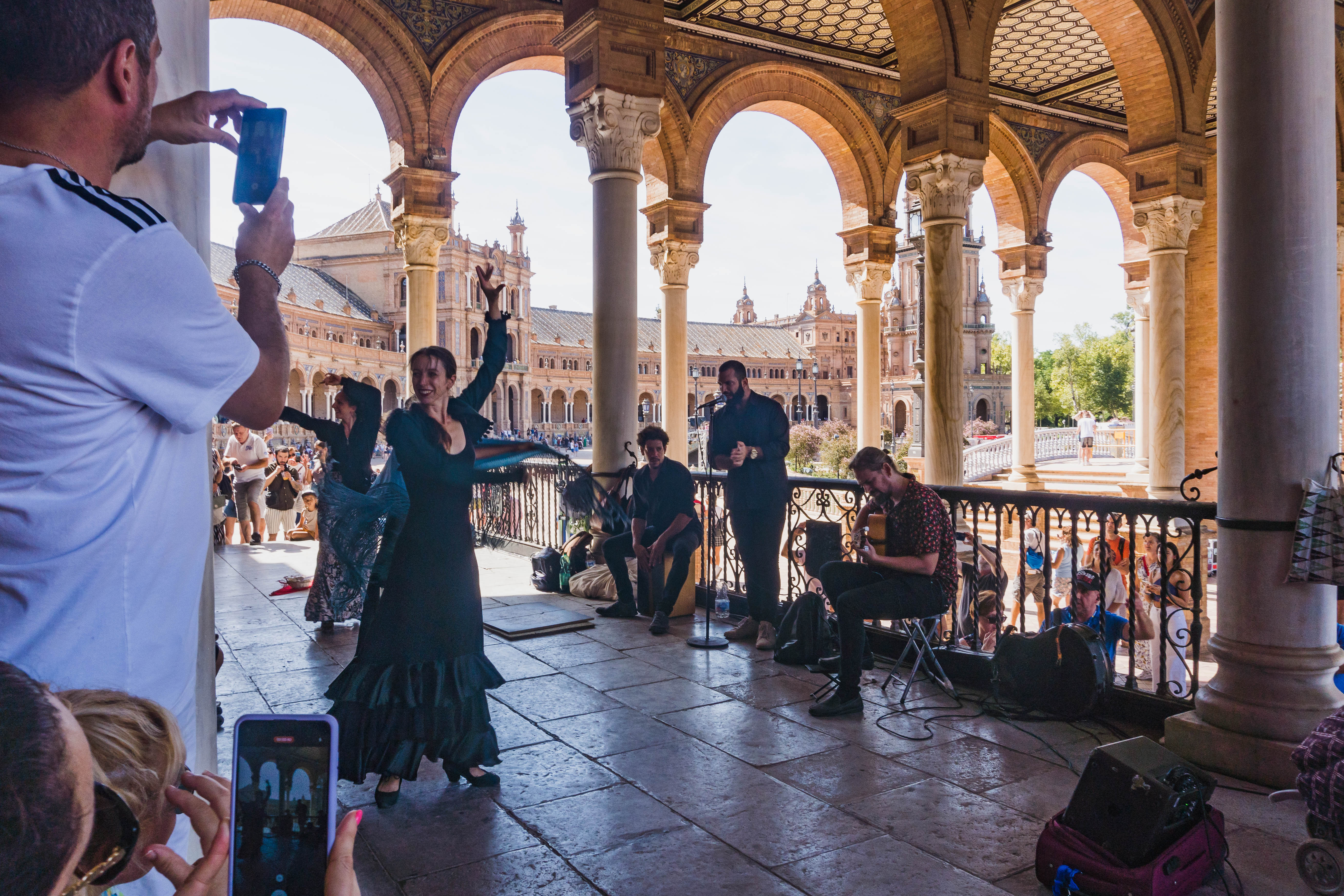
  • Plaza de Espana
  • Restaurants: El Disparate (& rooftop); Espacio Eslava

Our Highlights in Cadiz

  • Torre Tavira (amazing view and camera obscura guided tour)
  • Restaurante Contraseña
  • Breakfast in Restaurante Café Royalty
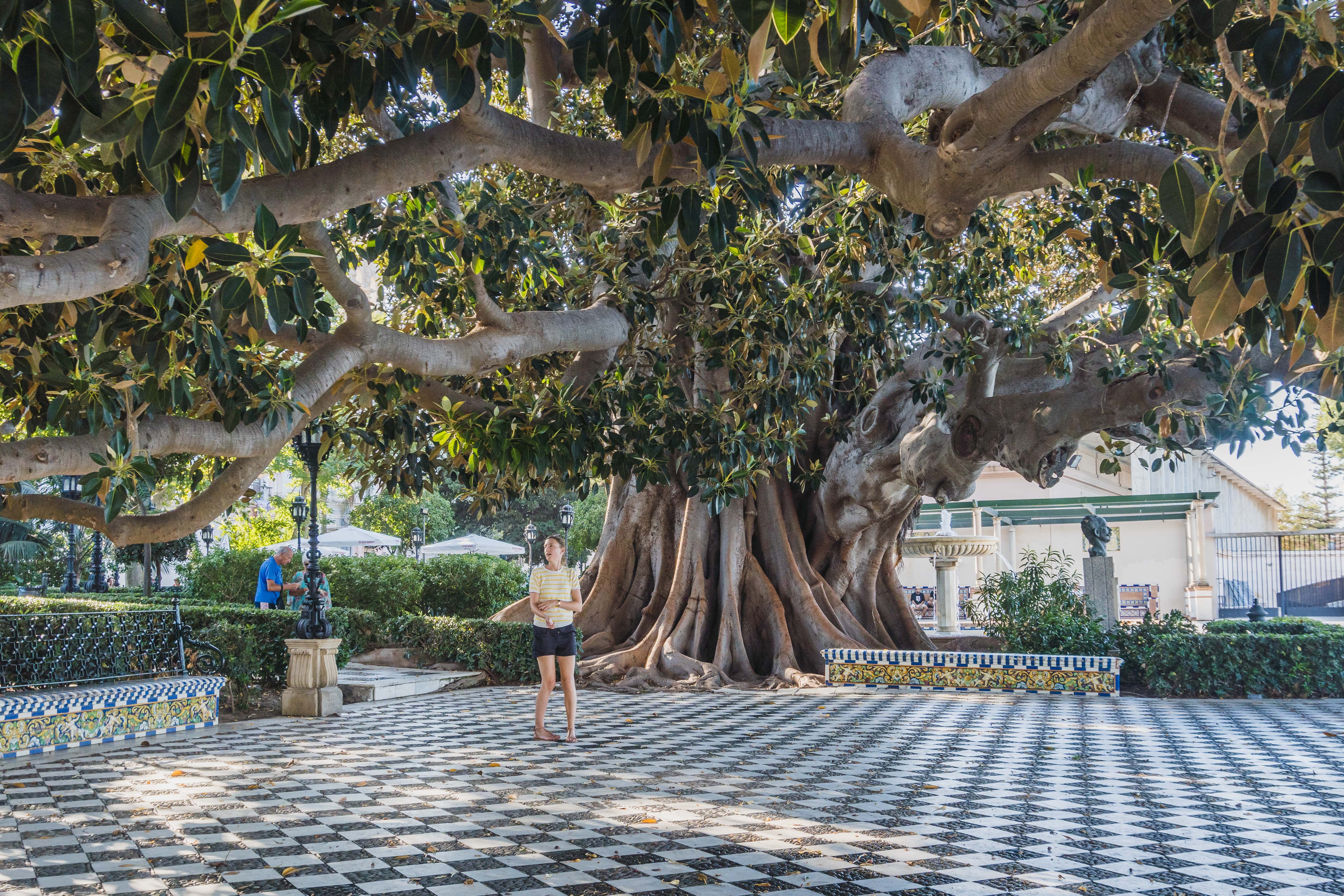
  • Jardines de Alameda Apodaca

For August we brought most of his stuff in our backpacks and bought extra milk and food in the local bio stores in Sevilla. To sleep we have a little 2″ baby tent that is way more portable than most of the travel beds for babies. We would certainly recommend this instead of a normal travel bed to anyone that likes to go on adventures. The baby carrier came in really handy, but when we arrived in Sevilla we did have a stroller that my parents brought along in their camper.

Stay tuned for our next adventure: The night train to Briançon with little August along… we are very curious ourselves if August will be able to sleep or will keep the fellow travellers awake all night…

Office work in nature

Due to obvious reasons we’ve all discovered home working this year. Working away from the office gives all kinds of freedom that we never thought were possible, so let’s get the best of it. To find a place to work more effectively and alone I decided to look for a campsite at easy train distance from Brussels, and I immediately baptised it as my favourite working spot of all: Camping Les Murets.

With my camping gear, notebook and laptop I took the train from Brussels-North to Liege, and a quick train connection from Liege to Hony. From there it’s a 5 minute walk to the campsite. From door to tent it took me a big 1h30 only.

To give you an idea on my daily routine working there:

  • 7h30 wake-up + granola with fruit breakfast
  • 8h00 morning walk to the river, working on paper (structuring, brainstorming, making to-do list,…)
  • 9h-13h working on laptop on the reception terrace (with Wifi and electricity to charge phone or laptop 😉 )
  • 13h00 lunch / picknick (making a fresh salad, some canned fish…)
  • 13h30 hammock time taking a nap, reading a book, working on paper, going for a swim in the Ourthe
  • 14h-19h working on laptop in the hammock without wifi (and without distraction)
  • 19h going for a walk, run, swim in the Ourthe, find a restaurant or food
  • 21h read a little
  • Sleep – Repeat

For 11 EUR per night you get a nice plot of campground in nature, next to a swimming spot in the Ourthe, access to showers and bathrooms and a terrace with food and drinks. It’s actually cheaper per night than renting your own apartment in Brussels. The campground offers pizza’s, but at 20min walking there’s some other restaurants. There’s a GR walking route passing along the campground, so that will always make for beautiful hikes as a break.

If you know other similar working locations in Belgium, please let me know and I’ll add them to this post. Can’t wait for spring to come.

p.s. for those looking for an alternative career, the campground is for sale and still open in the meantime.

How to get lost on purpose in Flanders

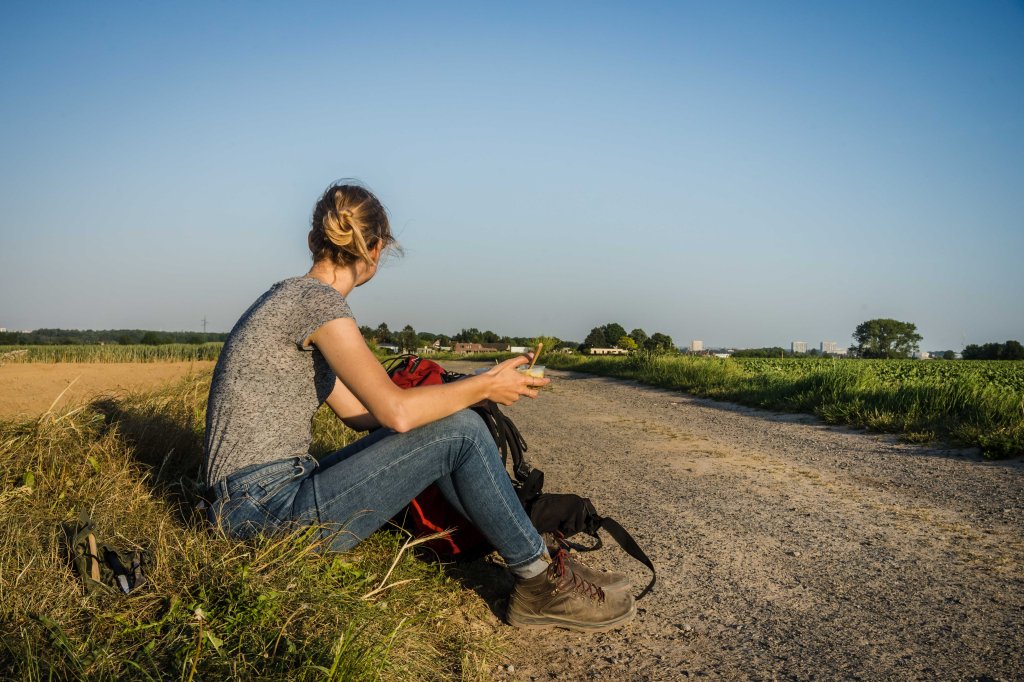
To keep it fun we won’t tell you where we went for this trip. All you need to know is that we packed for 3 days and started walking from our apartment in Brussels. The rest was just purposefully getting lost in Flemish nature along the GR routes.

During the quarantaine we suddenly spotted the famous white-red GR sign in the King Baudouin park in Brussels. That’s when we decided to follow the signs for multiple days without looking at a GPS or map. It was all about the trail and not about the destination or a schedule to stick to. Don’t worry, these GR routes do not go straight from point A to point B but take bends and turns all the time to keep you in the fields. Not knowing your destination makes sure there is no goal for the day, no hurry or rush to get somewhere. It’s just about walking, reading, eating and sleeping.

What we felt was hard to describe, but I want to give you a glimpse just to convince you that it’s totally worth trying yourself. The GR routes have been carefully designed as long distance walking routes that go through as much nature as possible. Once in a while we crossed a village or the suburbs of a city, but very quickly the road turns left or right straight back into the fields and nature.

We’re planning to repeat this concept multiple times in the coming weeks continuing the GR where we left it, or with other routes, e.g. Compostella and other GR routes we saw crossing Brussels.

If you want it or not, when you see a sign you start setting a goal or expectation of where you think you’re going. That’s where the GR is great: it suddenly turns left or right and your expectation soon becomes unrealistic. You’re forced to keep your expectations totally open.

Prepare for 3 days: check the weather, dress appropriately and take a light backpack with the following with you: tent, mattress, sleeping bag, litres of water, picknick (more on that later), pillow, lamp, book and toiletry.

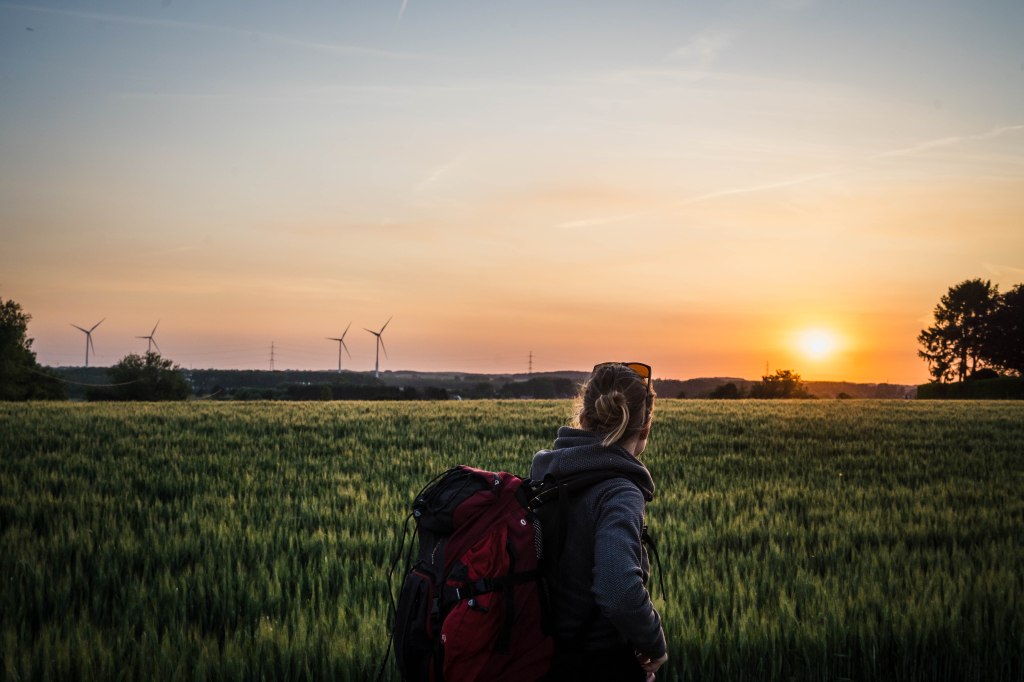
We chose our camping spot around sunset, so that we did not bother other people too much. The first evening we camped on a small plot of grass on the side of a forest, the second night we camped on the side of an open field where our tent could not easily be seen the next morning. If you like sleeping a bit longer the next morning then it helps to chose your spot in a place it will certainly not bother anyone. If you are hungry, find a nice place to sit and eat. If you’re sleepy, find a nice place to set up camp and sleep.

We would wake up around 8 or 9, have breakfast, read a bit and start walking. We took evening walks after dinner because they give beautiful light and help digest your food.

Camping in the wild at such is an interesting activity: it stretches all of your daily routines or processes. It’s not easy at first, since even the smallest or most basic process such as brushing your teeth or going to the toilet don’t go the usual way. It’s good to question yourself and your most basic needs, it gives you fresh insights and stretches the brain.

To make it a good trip enough water and good food is important. Some basic recipes of our all time favourites are the following. To keep the food fresh it’s best to take a small cooling bag in your backpack:

  • Cucumber salad with canned sardines in olive oil
  • Orange, fennel and canned mackerel salad in olive oil
  • Couscous with raisins (pre-prepared and deep frozen to eat on the second day)
  • humous (pre-prepared and deep frozen to eat on the second day)
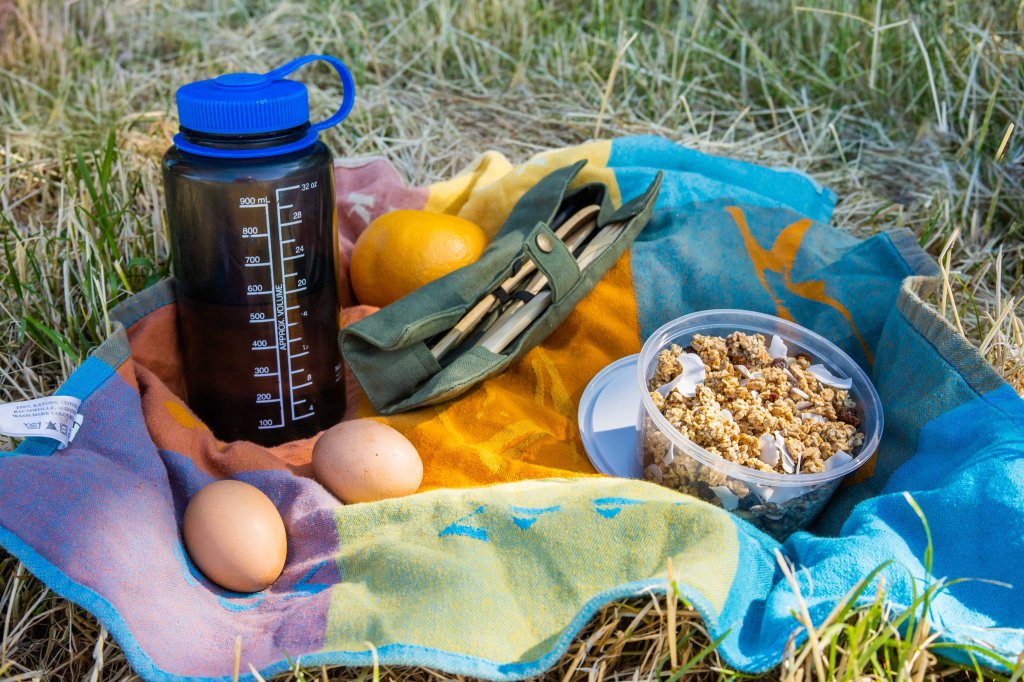
  • Boiled eggs
  • Granolla mix with seeds, dried banana, grains and oatmeal (make in re-usable packaging per breakfast). If you just add water to it before eating it the water and oatmeal becomes ‘milky’.
  • Oranges and grapefruit

Practically, any type of salad that is easy to make on the road. The canned fish with oil allows to have an on-the-go dressing so you don’t need to take any sauces or oil with you. Try to avoid any food that gets bad when pushed in a backpack: e.g. no bananas. If you need water or a shop for something you miss: ask people, don’t take out your phone or gps.

In the afternoon of the third day we took our gps to see which railway station we could go to within 2 hours of walking. That’s where we left the GR route behind, walked along the water to the station and railed back to Brussels.

Paalkamperen in Belgium & other concepts that make cycling trips better

Next to sharing a cycling route, I want to share a couple of logic principles that I realised while cycling around in Flanders during my last trip. Find the three key concepts at the end of the article.

For this trip I randomly searched a route to go from Brussels to the desolated village of Doel. Then I continued to the closest camping spot and from there the next day to another campsite not too far from Brussels, so I could make it to Grimbergen on time for Christmas evening.
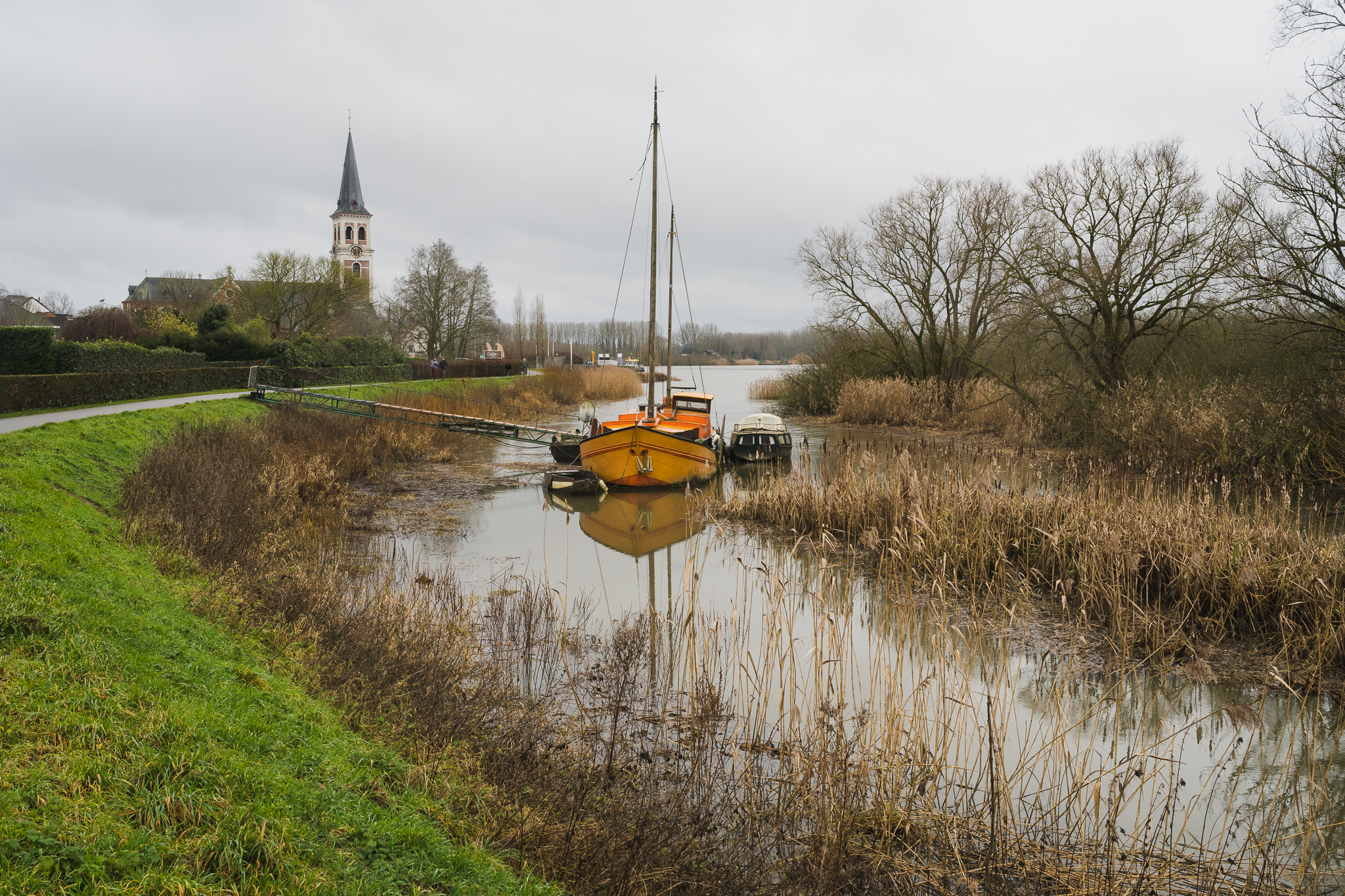
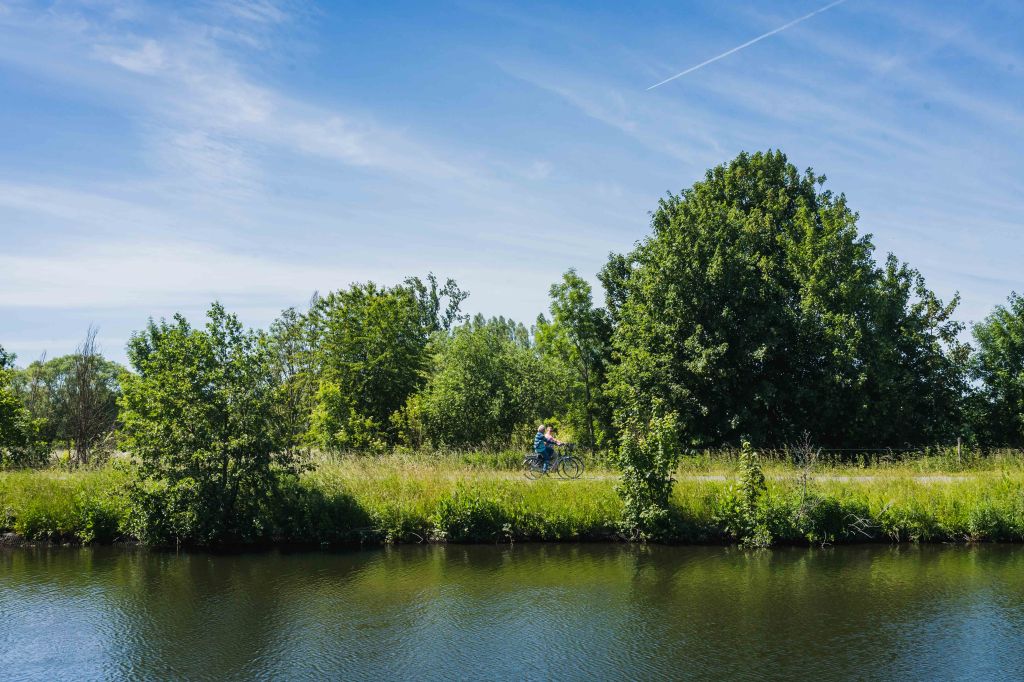
Planning the trip, I soon saw that on day 1 I could follow a very long part of the Schelde river, and on day 2 I could follow the Dender. In between I found the network of old railroads that are now cycling routes.

Day 1: 95km. After leaving Brussels, it takes a couple of kilometers before you end up in the countryside, but as soon as you reach the banks of the Schelde in Briel it’s all nature. You cycle past Sint-Amands on a perfect trail that continues for kilometers.

DSC04348

Depending on the time you have, you can take a straight route to Doel from Temse, or continue until Kruibeke. Before arriving in the desolated city of Doel, you cycle through the Port of Antwerp, along railroads, cranes and industry. In rainy weather it has something moody but beautiful.

DSC04396

From far away you see the nuclear power plant of Doel as a landmark on the horizon.

DSC04403

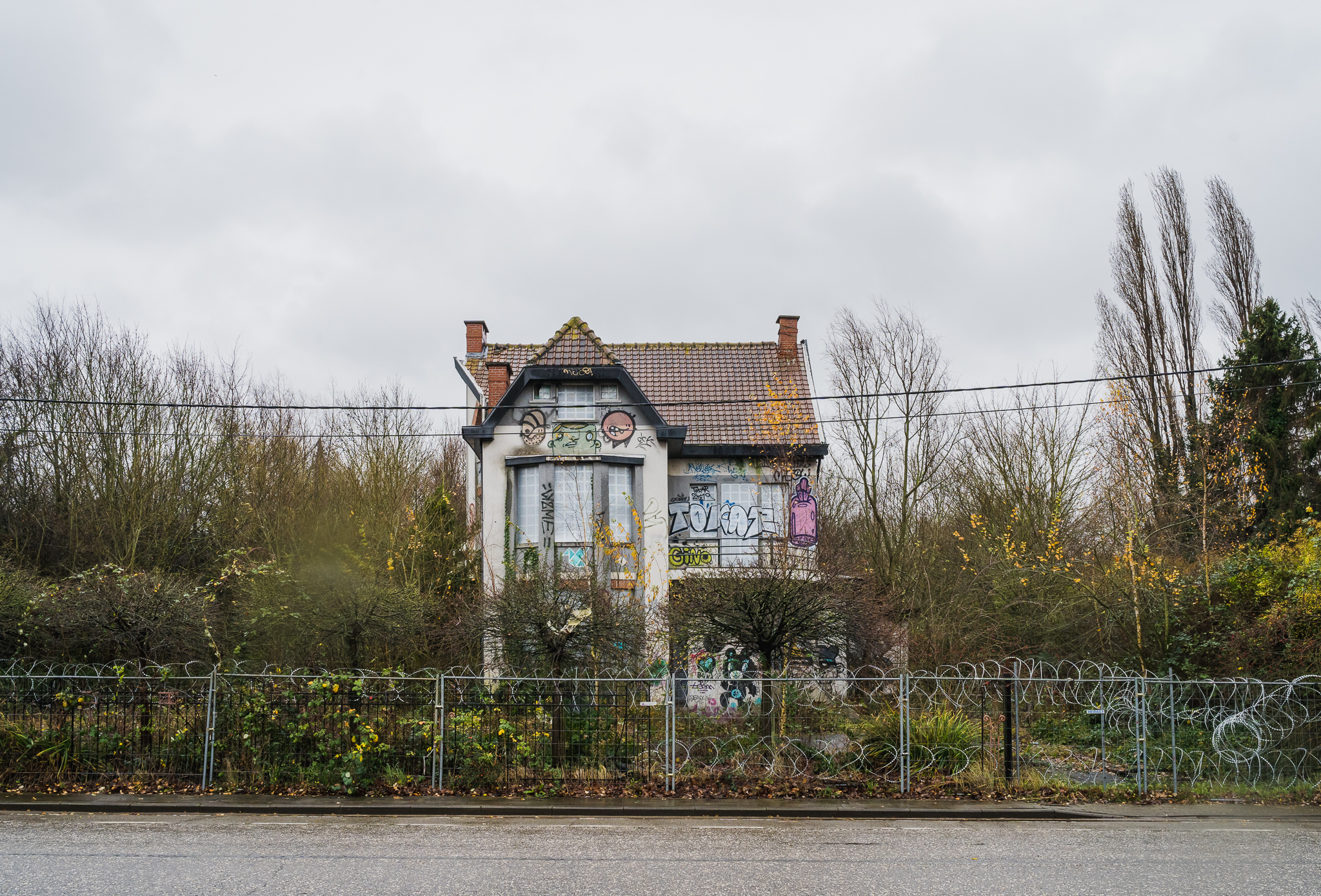
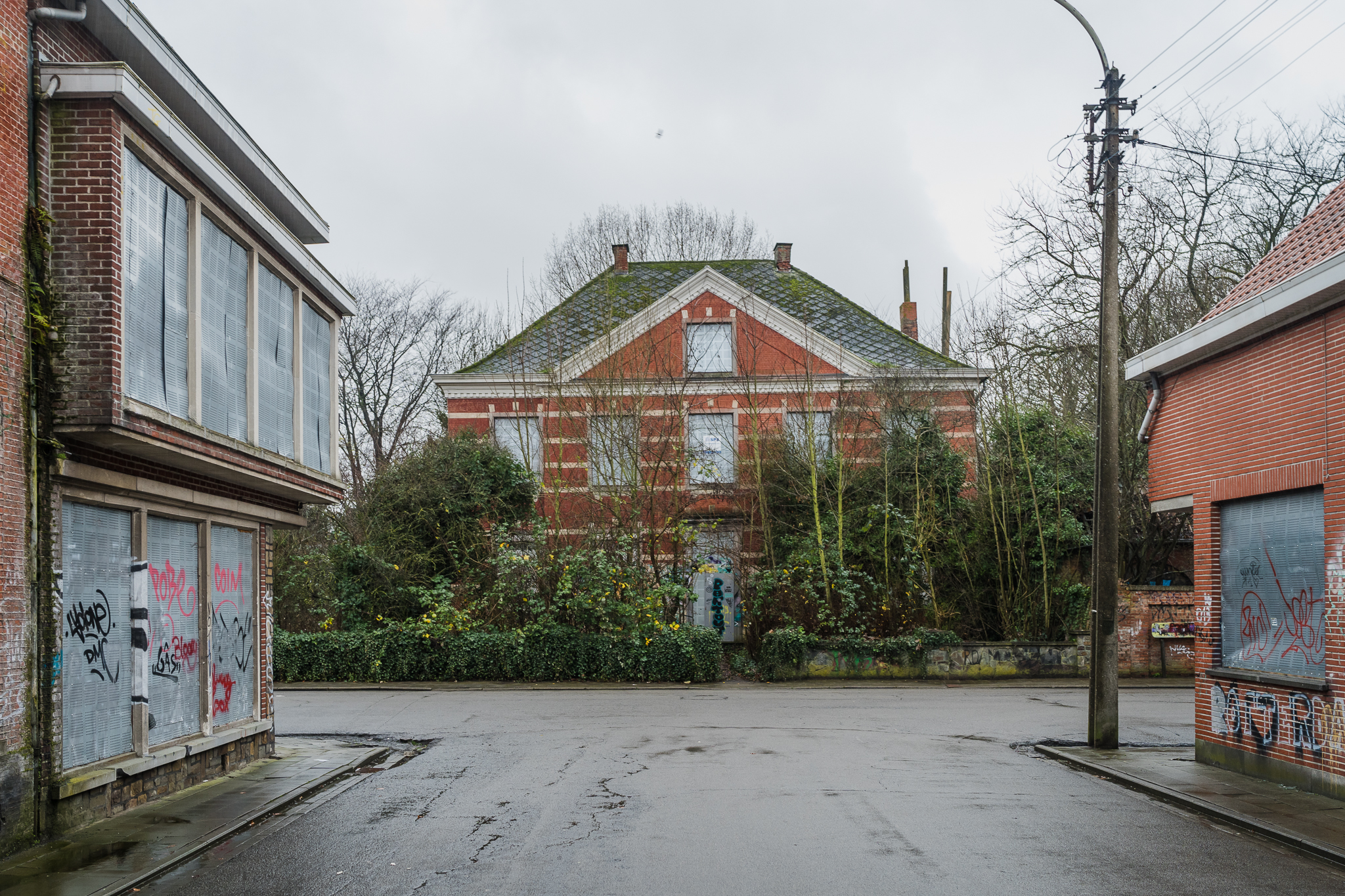
A couple of kilometers further you enter into the main street of Doel. There you find almost all houses locked up and spooky. This is where a controversial story starts of the extension plans of the Port of Antwerp.

DSC04409

If you do not know the story, just search for ‘Doel’ in Wikipedia. A long story short (sorry): the whole village had to disappear to construct a new dock for large ships, property has been bought and villagers left. The construction permit was not granted and plans were not executed. Very few people stayed, but some new people live there now, with very low rental prices. Nevertheless, the place is very desolated and looks like a ghost town.

DSC04423


DSC04459

After visiting the village, I cycled to the camping spot of “Bivakzone Stropersbos”. Just before entering into the woods, I warmed myself with a good diner in De Boshoeve. It had been raining all day, my feet were soaked and in the tent it wouldn’t get any warmer. DSC04519

The campsite is located in the middle of the forest with rivers and lots of water surrounding it. It had been raining for days in a row, so I was lucky to find 2 square meters that were not muddy to pitch my tent. With a good winter sleeping bag I managed to stay warm during the rainy night.

Day 2: 60km. On the second day I followed the old railroad to Sint-Niklaas. From Dendermonde to Okegem, I took the route following the Dender river. This route is at least as beautiful as the one next to the Schelde.

DSC04593

I camped at the campsite of Neighembos with views over the Dender valley. It’s located in the back of a private garden, but with an SMS reservation you can stay there for free.

DSC04625

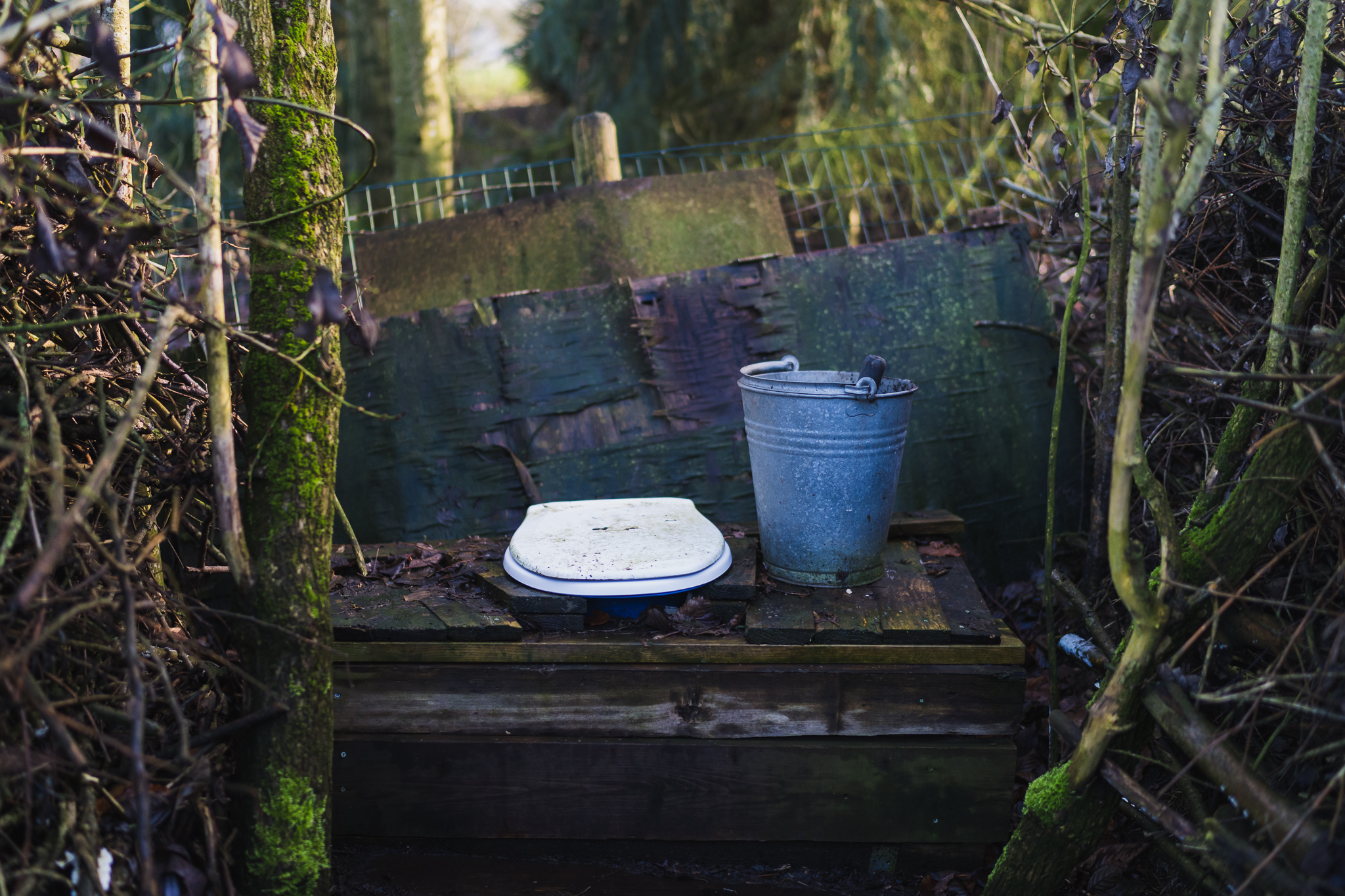
The open air toilet certainly has its charm, but on rainy days you don’t stay there very long.

DSC04646

Day 3: 40km. It sounds like a very short route, but with ripped plastic bags in my shoes and wet feet for three days in a row, I was happy I wasn’t at the other side of Belgium. Again a good lesson learned: proper gear does help. Either rain covers for the shoes, or rainproof shoes.

DSC04659

Cycling around in the neighbourhood is fun: villages with the names of “Woestijn” (= desert) and “Drie-Egypten” made me frown, but the place is beautiful.

DSC04664DSC04666

On my way back I circled around Brussels to go to Grimbergen.

DSC04803

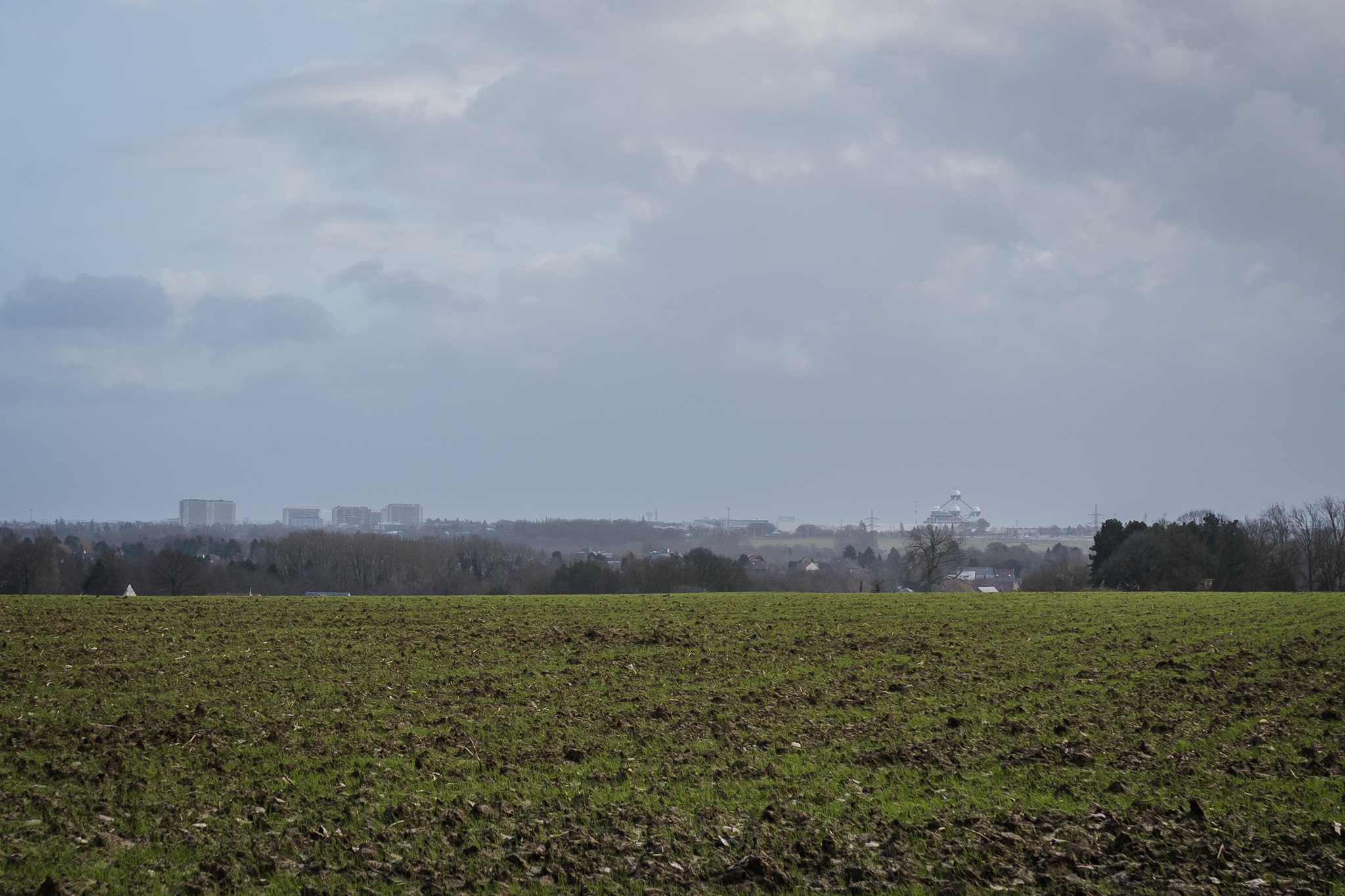
Before getting to Grimbergen I discovered one of the most beautiful views on the skyline of Brussels: de Heirbaan in Meise. While cycling through nature you see all the landmarks of Brussels in a tiny version next to you, which makes Brussels look very small.

DSC04829

To conclude, this was a nice route, getting lost on my tour bike, camping in nature and reading books in the tent while it’s raining and 3°C. I’ll do this route again during the summertime.

The three concepts that can make your cycling trip a blast, no matter if it’s a one day trip or a full week holiday:

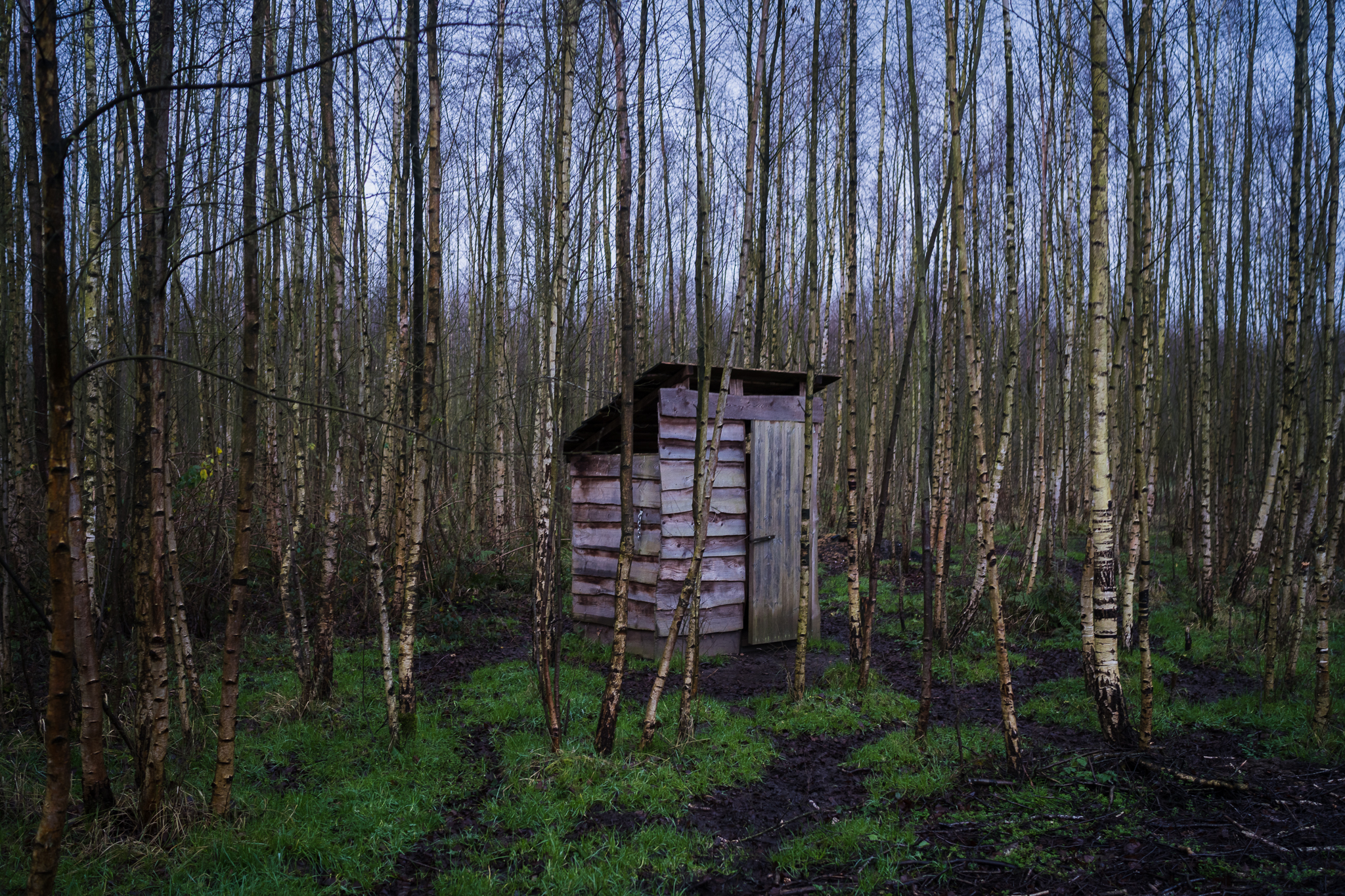
1. Paalkamperen: plenty of beautiful nature camping spots spread over Belgium. You can use them for free all year round. If you start planning a cycling-camping trip, it’s a good way to start planning around some good sleeping locations. All of them have a dry-toilet, a dedicated camping zone, some have a fire pit or a bbq. Check out the map on bivakzone.be. A similar system exists in The Netherlands.

DSC04503

2. Old railway lines: you might have found out yourself already that all over Europe old railway lines have been converted to cycling paths. Most of them cross nature in a safe and efficient way, so if you use them for longer distances it ensures you of a nice trip. Check out this overview for Belgium or if you want to try it out in another country: UK railway lines. If you would rather cross Europe on even longer distances, than make sure to have a look on Eurovelo. You can find routes that go straight from Brussels, over the Alps all the way to the heel of Italy (Eurovelo 5).

DSC04313

3. Canals: take a map, see if there’s a waterway and chances are big there’s a nice cycling path next to it. I cycled along the Schelde and Dender rivers for hours. It’s fast and it’s beautiful.

DSC04567


Hiking through Corsica

Our most impressive trip of 2019 was to Corsica. We took some late summer holidays at the end of September/early October and went by direct train from Brussels to Marseille, and then by boat to Corsica.

Since it was a two week trip, there’s so much we would like to share… but we’ll keep the text a bit shorter and split this post in chapters:

  • Chapter 1: Arrival in Ajaccio
  • Chapter 2: The South
  • Chapter 3: The mountains
  • Chapter 4: The West
  • Chapter 5: Cap Corse
  • Chapter 6: The boat

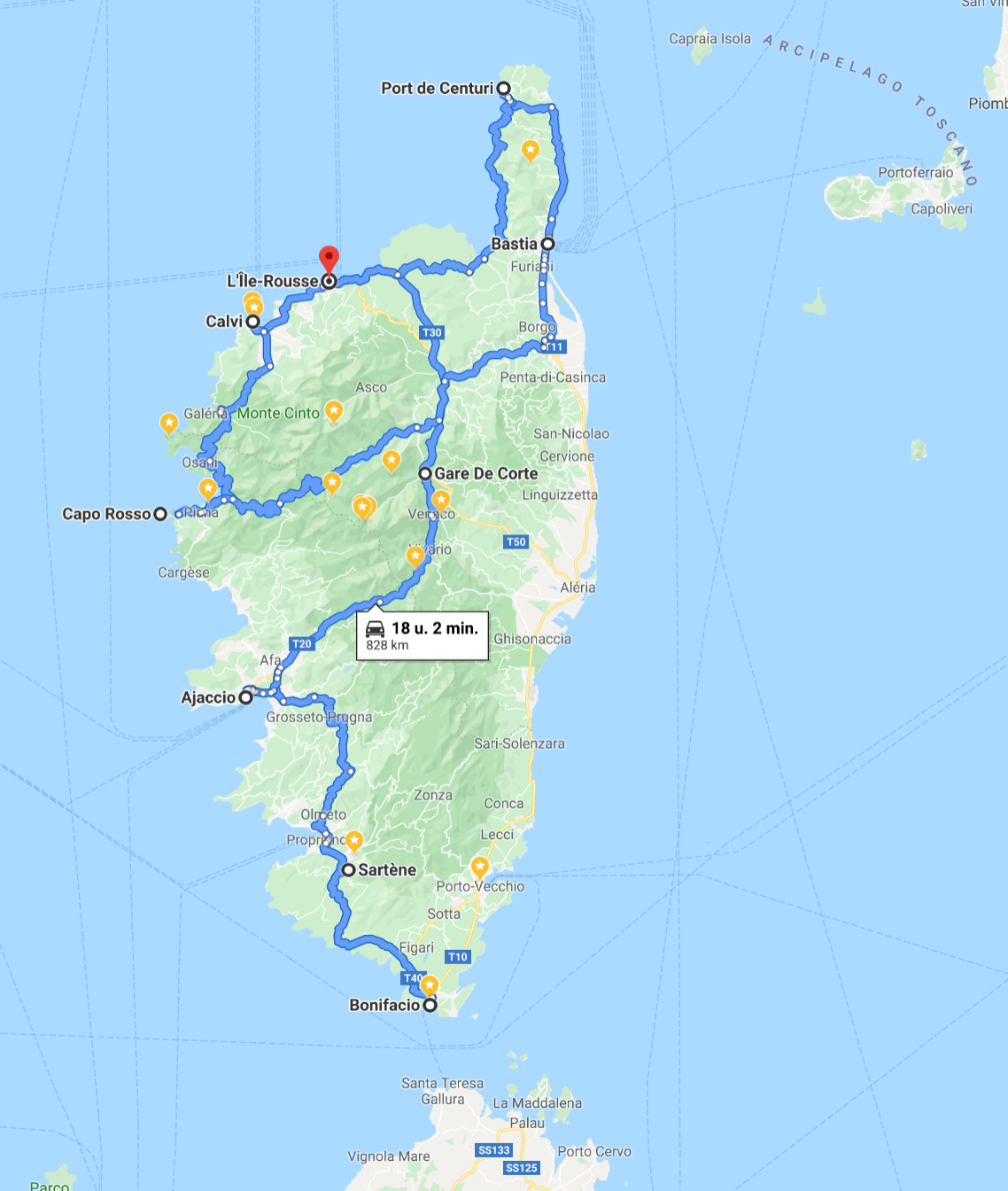
We did the South of the island by hitchhiking and hiking. We took a train to the inland where we hiked for multiple days, and than continued by train to Calvi. In Calvi we rented a car for a couple of days to visit the West and Cap Corse, which is more complicated in terms of public transport… and it allowed for a bit more efficient travelling than by hitchhiking.

Screen Shot 2019-10-19 at 08.12.32

Chapter 1: Arrival in Ajaccio

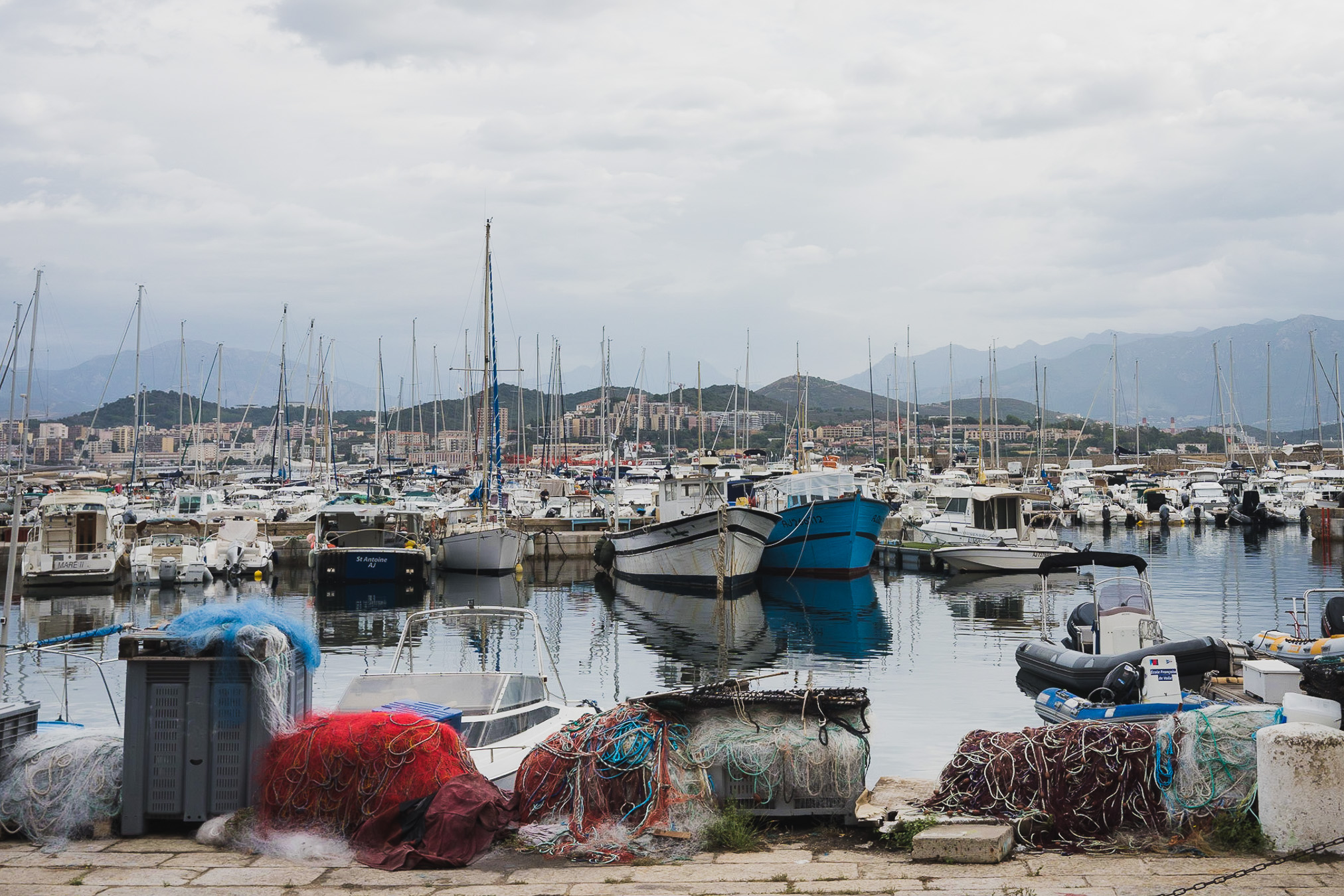
We arrived around 7h30 AM by boat from Marseille to Ajaccio. After a good night of sleep we decided we were ready for a good breakfast, a stroll in Ajaccio and some good hitchhiking to Sartène. Ajaccio has a nice small city center with a nice market place and a fishing harbour worth visiting.

Corsica_LL_09_DSC09024

Chapter 2: The south

(Day 1: Ajaccio – Sartène – Bonifacio; Day 2-3-4: Bonifacio)

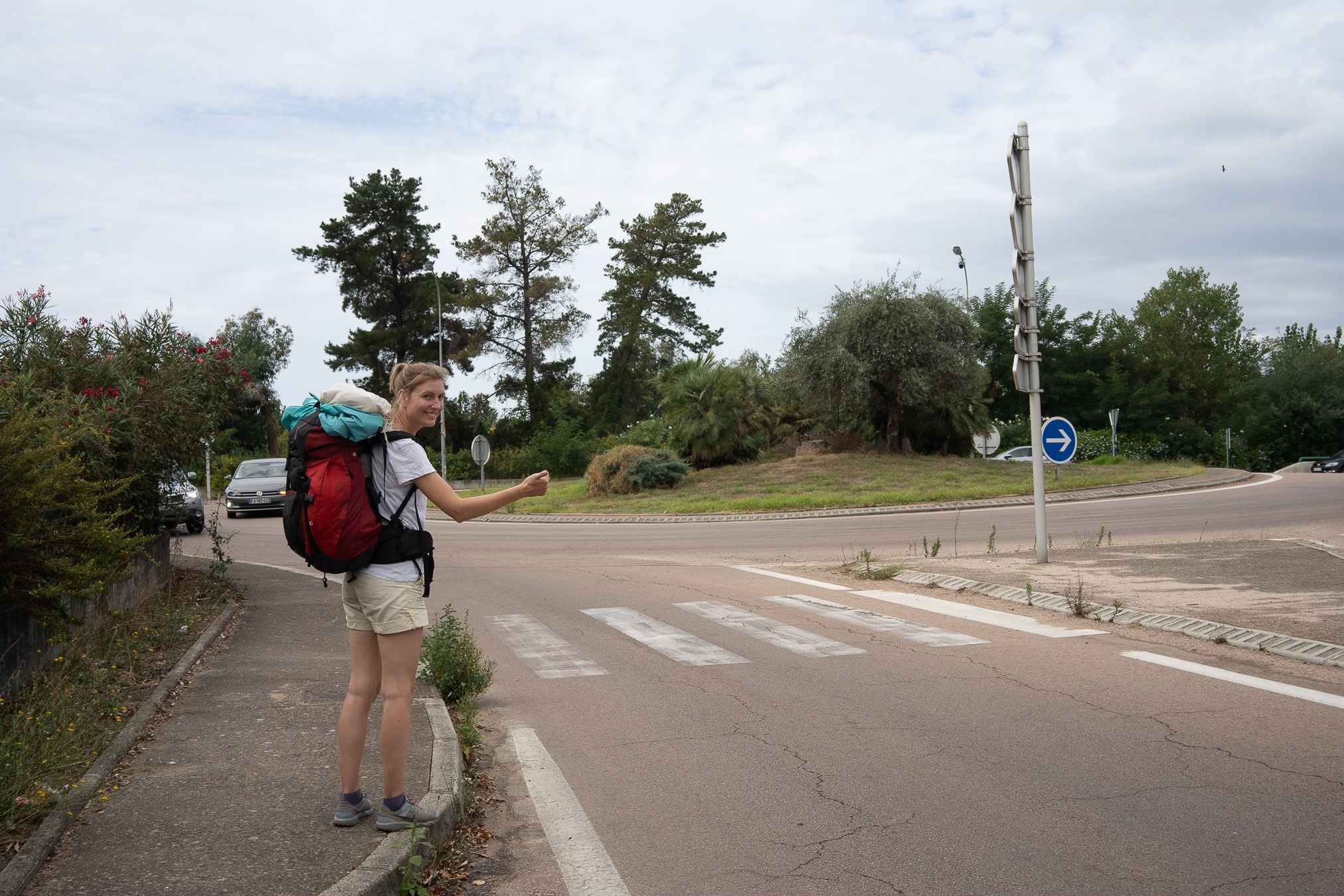
Contrary to what many people think, it is super easy to hitchhike. The drivers that took us along were each one of them so interesting and lovely that it really added an extra layer of enrichment to our trip. We never had to wait longer than 10-15 minutes and talked for hours with: a writer of police novels, a Parisian couple of pensioned real-estate experts, a theater couple, local kayak freak, … A nice and diverse set of local Corsicans and other tourists that shared tips and tricks and a bit of their life story.

Corsica_LL_10_DSC09049

Sartène is the perfect spot for a stop on the road, a stroll and a good lunch at L’arbousier.

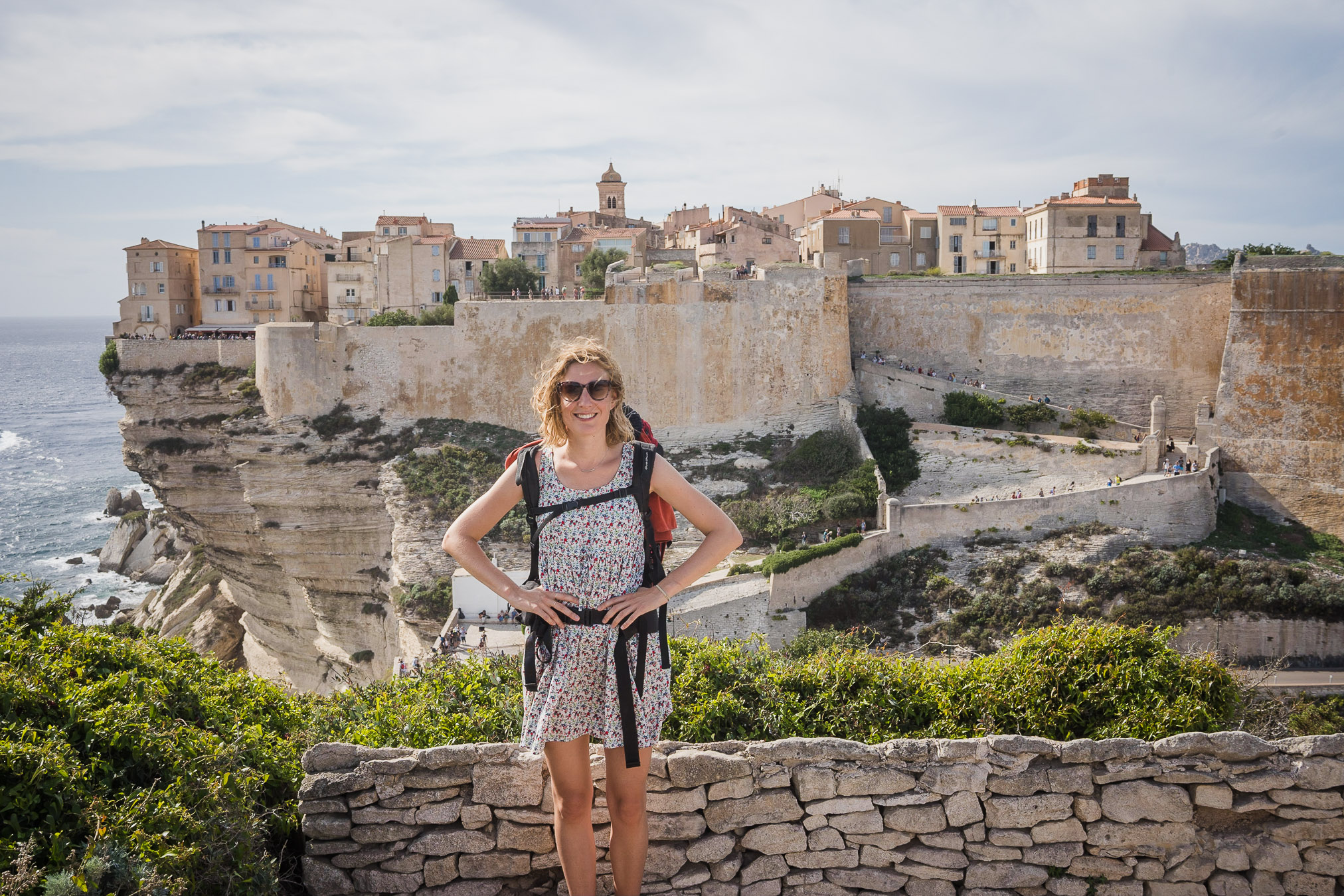
After stopping at some nice tropical beaches on the way, we arrived at Bonifacio. What a city. We camped at the local camping just before arriving at the harbour (not that good) and spent some time visiting the fortified city.

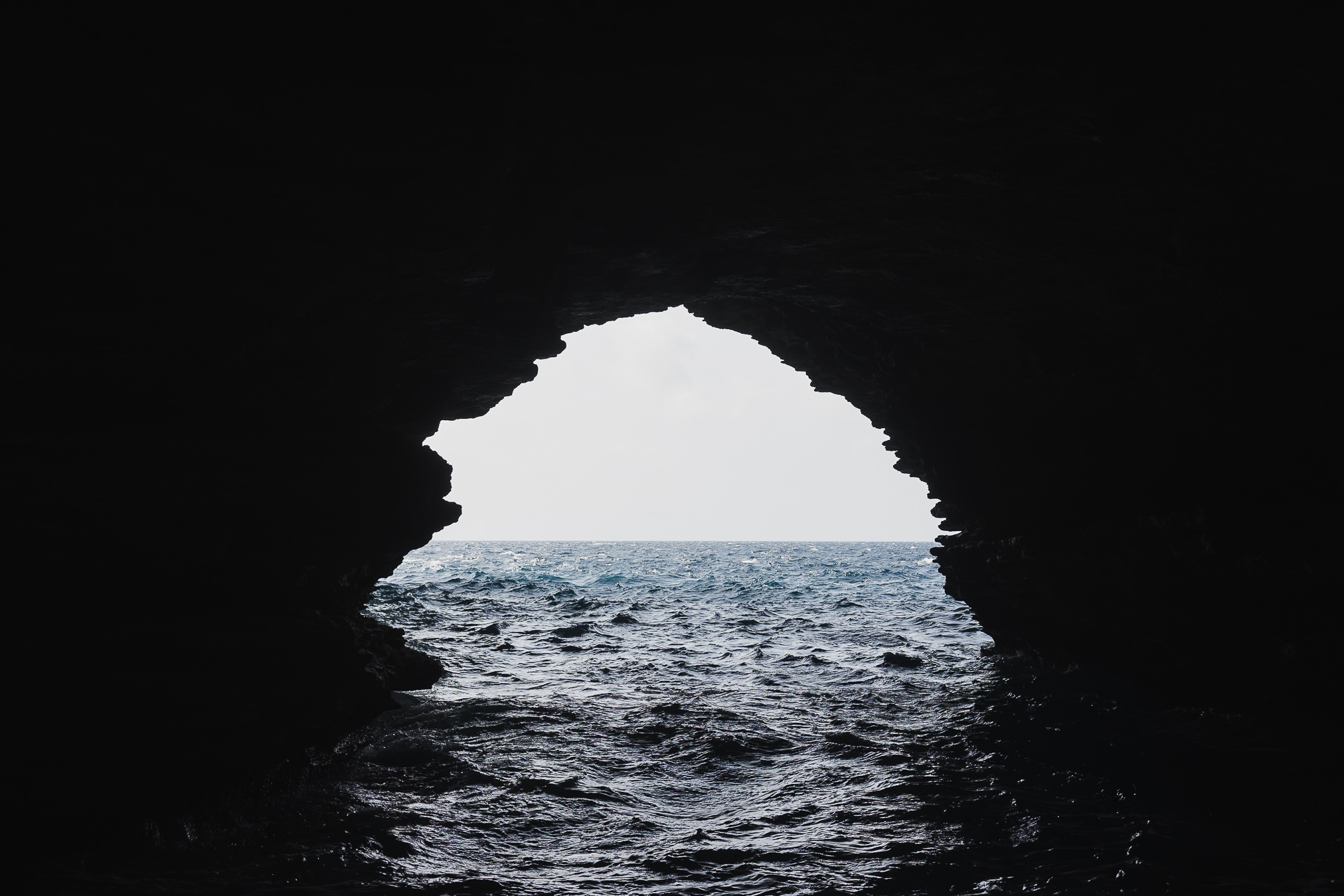
It’s touristy, but totally worth taking a tour at sea to visit some nearby caves and seeing the city from the water. So do spend some money on this.

Corsica_LL_13_DSC09132

Corsica_LL_14_DSC09139

The tiny beach (Sutta Rocca – hidden beach) just next to the village is good for a quick swim and some even more spectacular views on the rocks.

Corsica_LL_16_DSC09176

There’s plenty of good restaurants around… but there was one blast that truly amazed us due to the friendliness and the food quality: Lan’k. You need to take a reservation and bring some money (50 EUR/person for a starter, main and desert)… but if you are impressively lucky, like we were, you meet the most friendly people ever that suddenly decide to pay your whole bill without your notice.

Corsica_LL_20_DSC09239

Another good place to recommend, but in a less fancy location next to the harbour, is the ‘Kissing Pigs’. Here we had a great salad lunch. And after lunch we set off walking with all our stuff, to the next village.

Corsica_LL_22_DSC09255

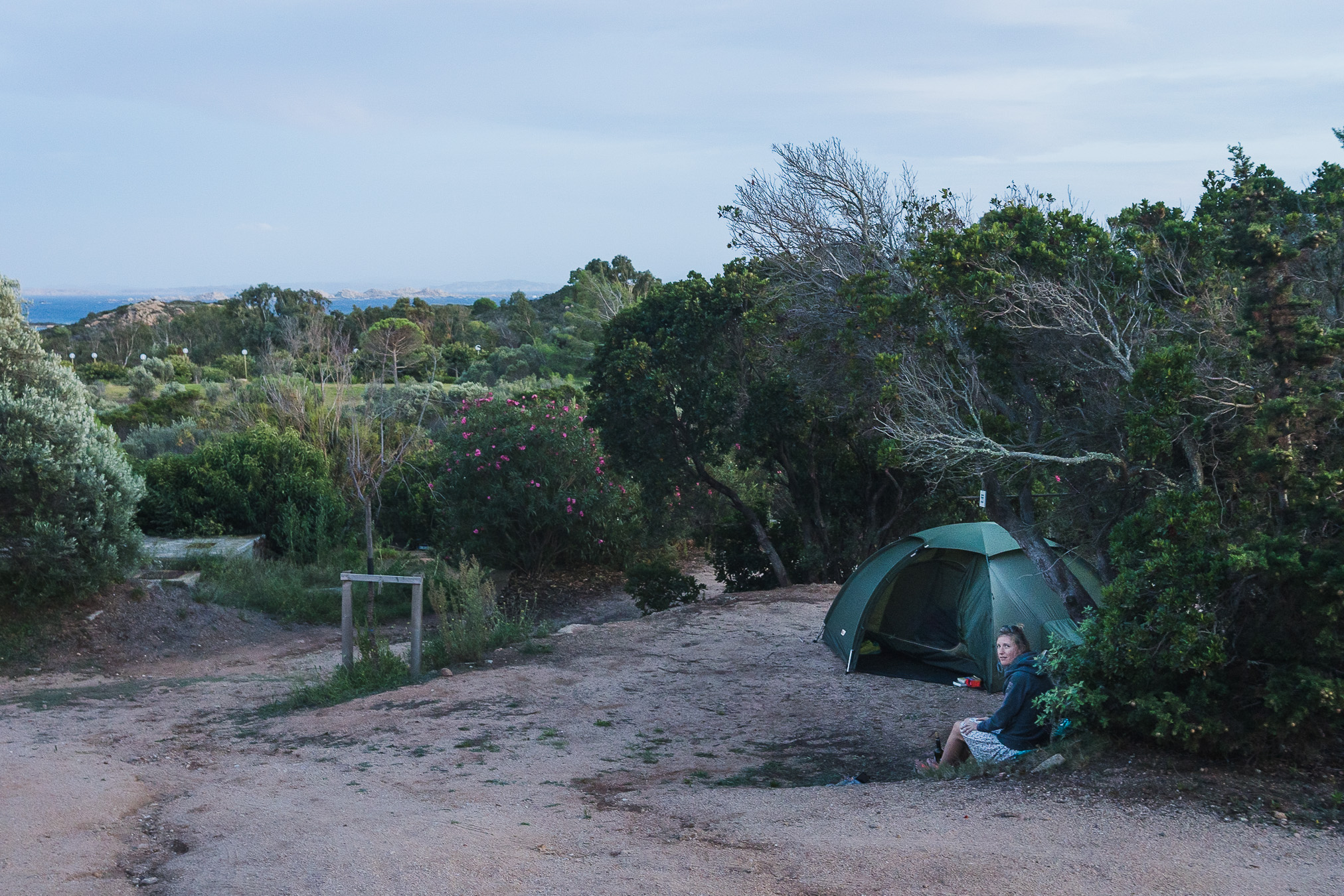
We found this impressive campsite ‘Camping des Iles’ where we stayed for multiple nights.  From there we did multiple hikes, a kayak tour, some swimming, book reading, etc. The kayak tour was a bit rough due to the strong wind, but we did manage to go to the close by island ‘Ile Piana’ and could catch some good waves to surf on with the kayak.

Corsica_LL_24_DSC09281

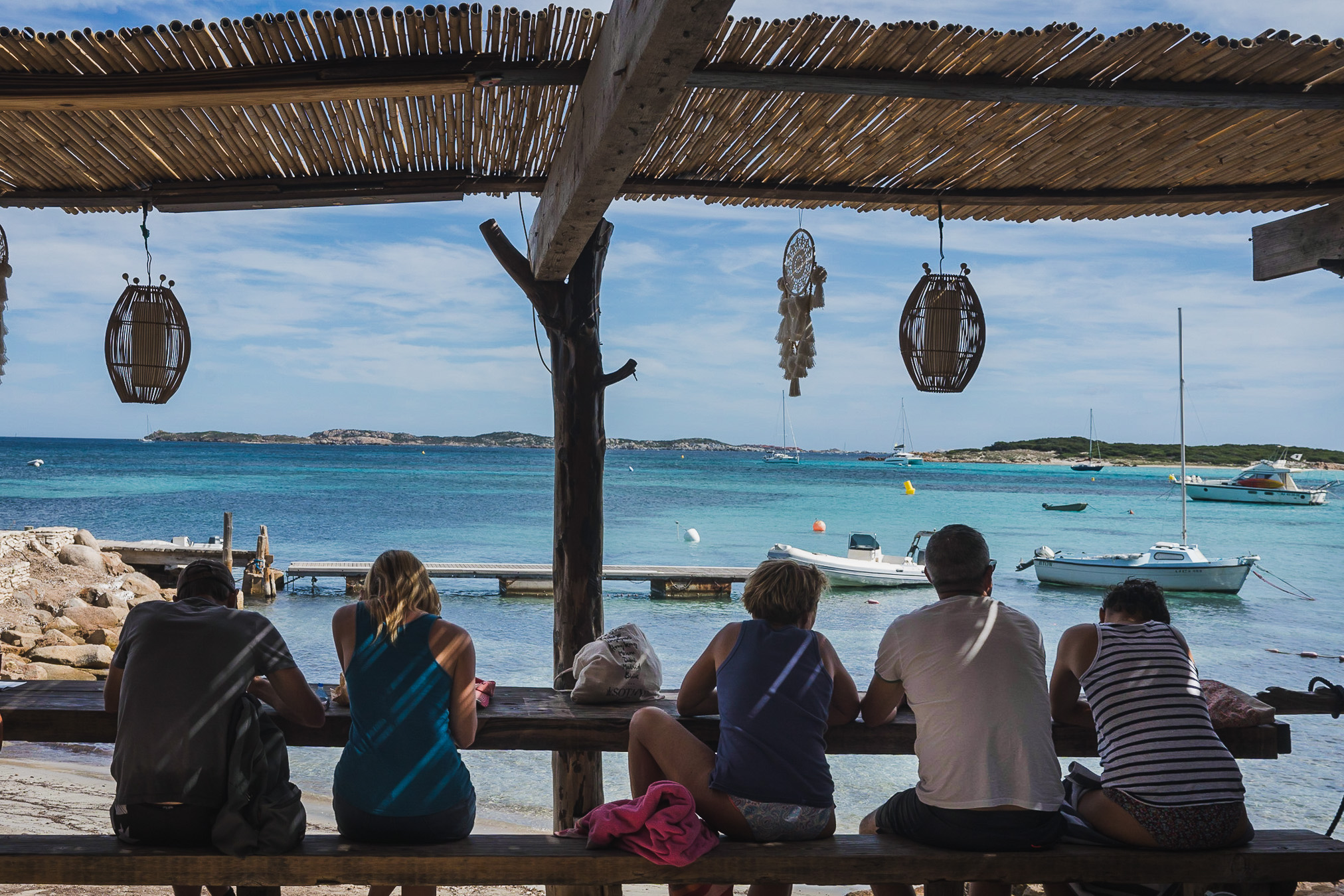
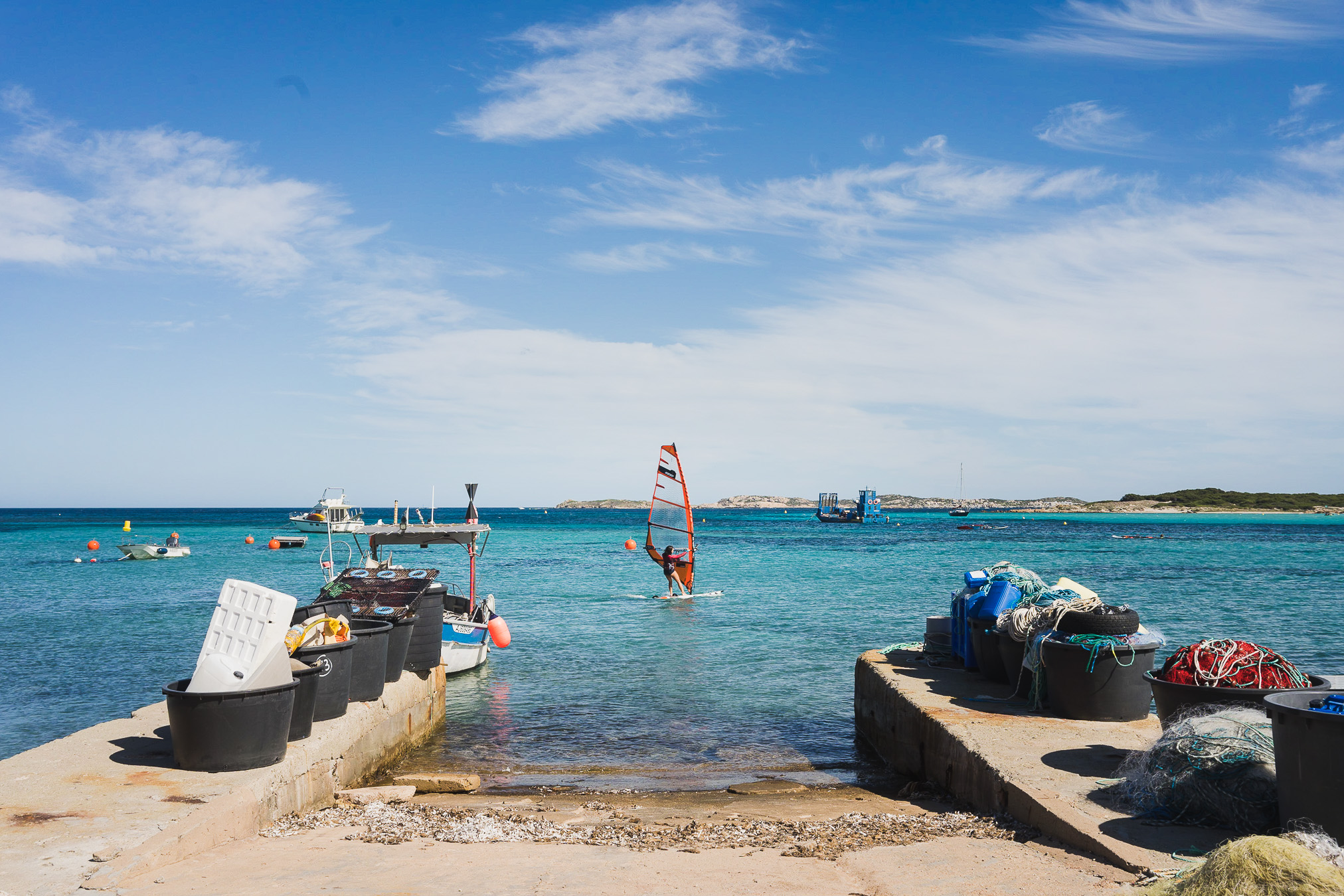
A lunch at ‘L’efet mer’ is a must do. The food is great and the views on the surfers and sailors on the blue water will entertain you.

Corsica_LL_25_DSC09286

Corsica_LL_26_DSC09287

Corsica_LL_27_DSC09301

Make sure to take the hikes to the beaches of Petite Spérone and the Grand Spérone. The hike itself is nice, and the white sandy beaches are good to take a swim. Do notice there is no shadow, shops, nor bars or anything. It’s completely desolated.

Corsica_LL_28_DSC09304

Chapter 3: The mountains

(Day 5: Bonifacio to Ajaccio by hitchhiking, Ajaccio to Corte by train; Day 6-7-8-9 hiking Mare e Mare and GR20; Day 9: from Corte to Calvi by train)

We hitchhiked back to Ajaccio, since in off-season there’s close to no busses in Corsica. The train system on the other hand is really good. You can buy your tickets in the railway station and there’s multiple trains per day going from Ajaccio to Calvi and to Bastia (with a transfer in the middle). We chose Corte as the base for our hiking trip and thus got out of the train there.

Corsica_LL_30_DSC09315

Corsica_LL_31_DSC09327

Corsica_LL_32_DSC09354

After an evening visit of Corte and a good night of sleep we set off in remote nature. Don’t underestimate and make sure you take enough pre-cautions such as food, water supplies, warm clothes, camping gear, good shoes, etc. It’s not just a random hike. We made our own loop by combining the Mare a Mare route withe the GR20 and then back down via the lake of Capitello and Melo lake.

Corsica_LL_35_DSC09414Corsica_LL_38_DSC09464

On the first day we followed the Mare a Mare route to the Refuge de la Sega. A good full day of hiking where we met close to no other people on the trails. There were a couple of wells so we could refill our bottles on the road.

Corsica_LL_39_DSC09480

Corsica_LL_40_DSC09484

At the refuge there were very few people since it was at the end of the season. We got the typical mountain food: starter with cheese, salad and bread and pasta for the main course. In the other refuges we also always got exactly the same food… so after four days we were totally saturated of this.

Corsica_LL_41_DSC09486

On the second day we continued until the Bergerie de Vaccaghia where we had a late lunch. From there we continued on the famous GR20 to refuge de Manganu, where we set camp for the night. On the GR20 there’s a lot more hikers, so even at the end of the season the campsite was rather full and we heard that all beds were booked.

Corsica_LL_42_DSC09492

Corsica_LL_43_DSC09522

Corsica_LL_44_DSC09527

Corsica_LL_46_DSC09556

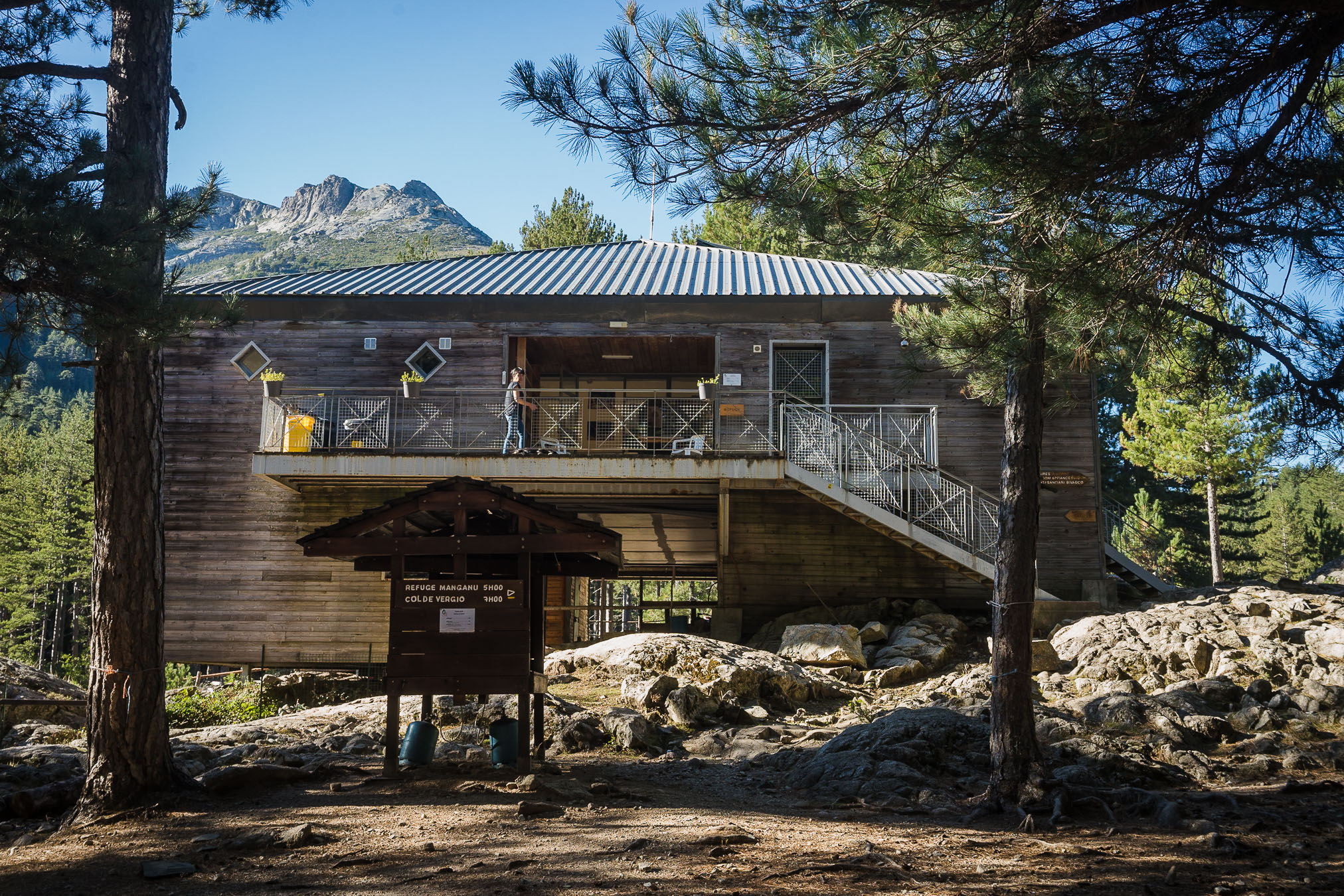
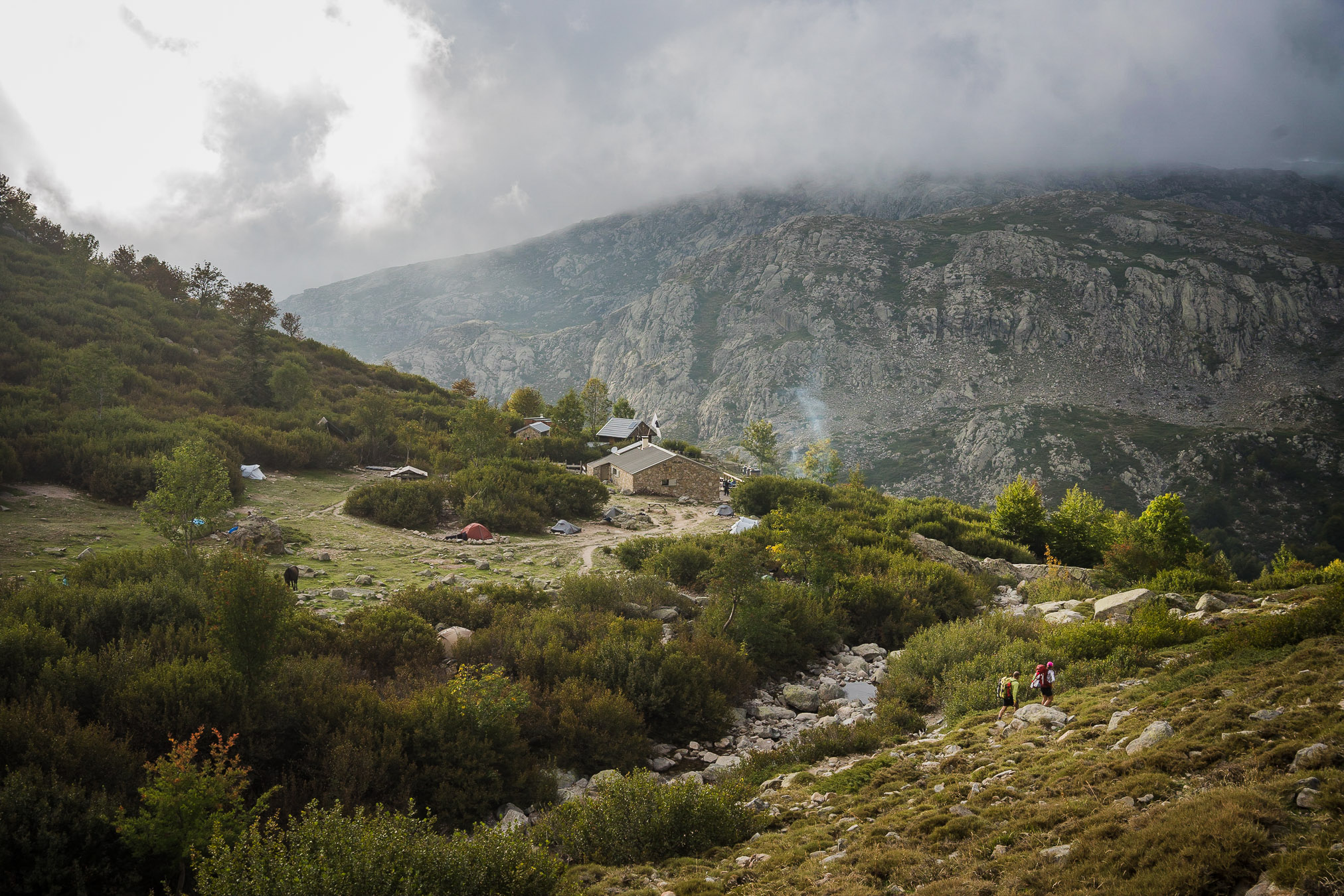
Below you can see refuge de Manganu and the campground around it. This was before most of the other hikers arrived and setup camp.Corsica_LL_47_DSC09564

On the third day we left our tent and heavy gear at the refuge de Manganu, and just made ourselves a daypack to hike to Lac de Nino and surroundings. With a book and a good picknick we had a bit of a more relaxing day.

Corsica_LL_48_DSC09591

Corsica_LL_49_DSC09602

Corsica_LL_51_DSC09609

Corsica_LL_52_DSC09619

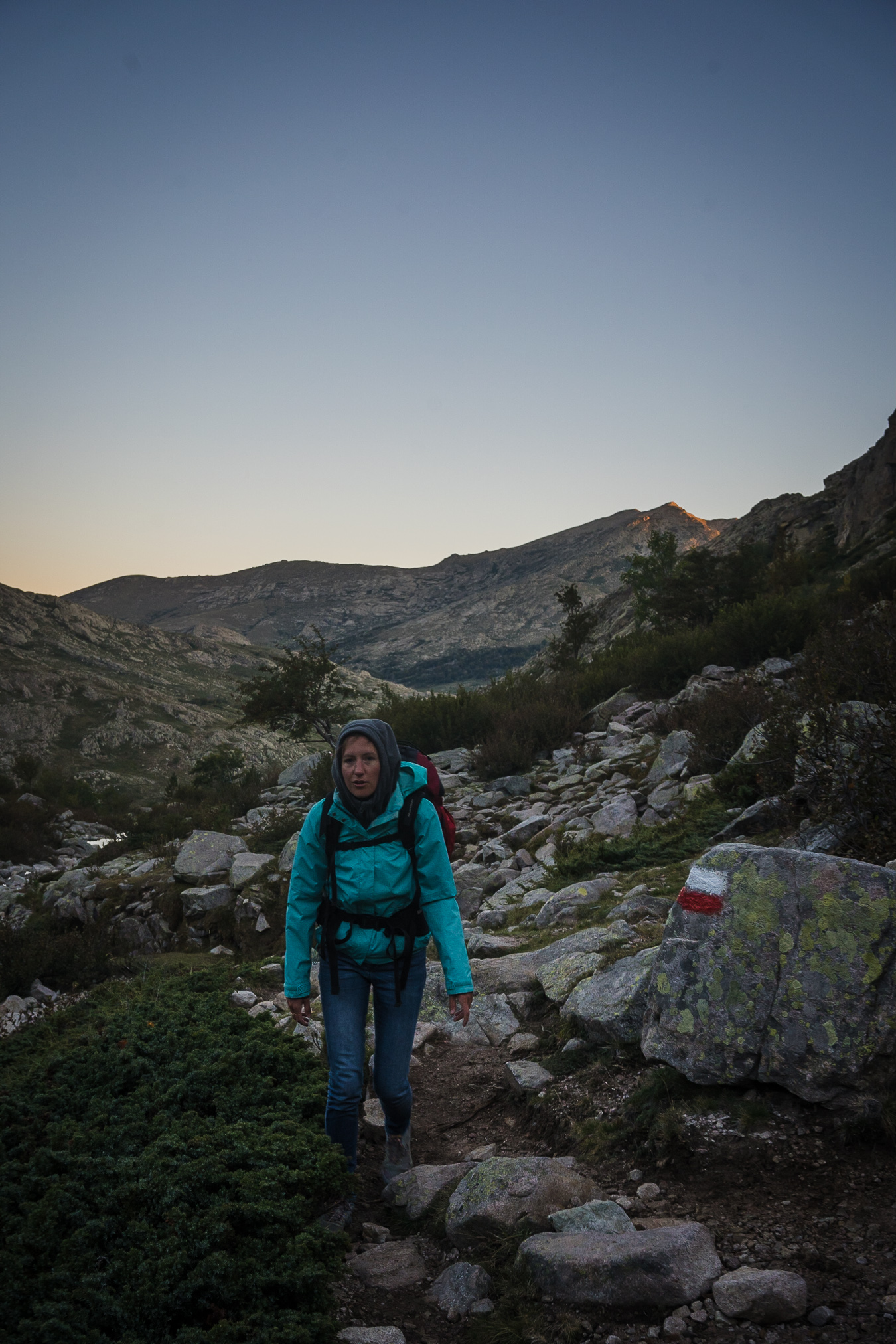
On the fourth day we woke up before sunrise to pack our tent and start early for the most technical hiking day. That way we were before most of the other hikers and could take our time and have a bit of space whenever we had to climb over dangerous bits of trail.

Corsica_LL_54_DSC09636

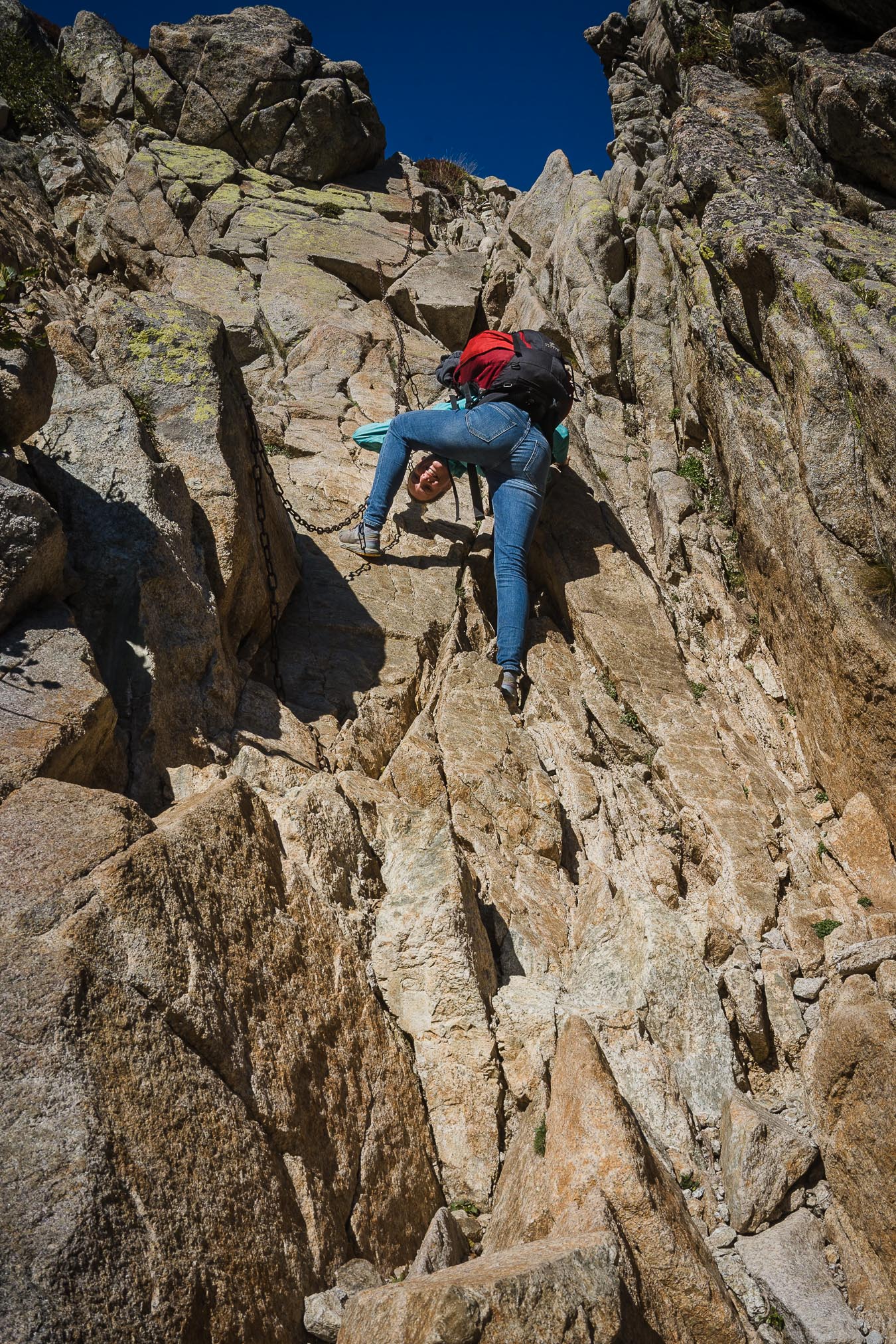
It was sure challenging multiple times and some slopes were rather steep with very deep gorges on the side. So I’dd rather not do this part of the GR20 with heavy rain or snow (which apparently does happen often, even sometimes during the summer!).

Corsica_LL_55_DSC09637

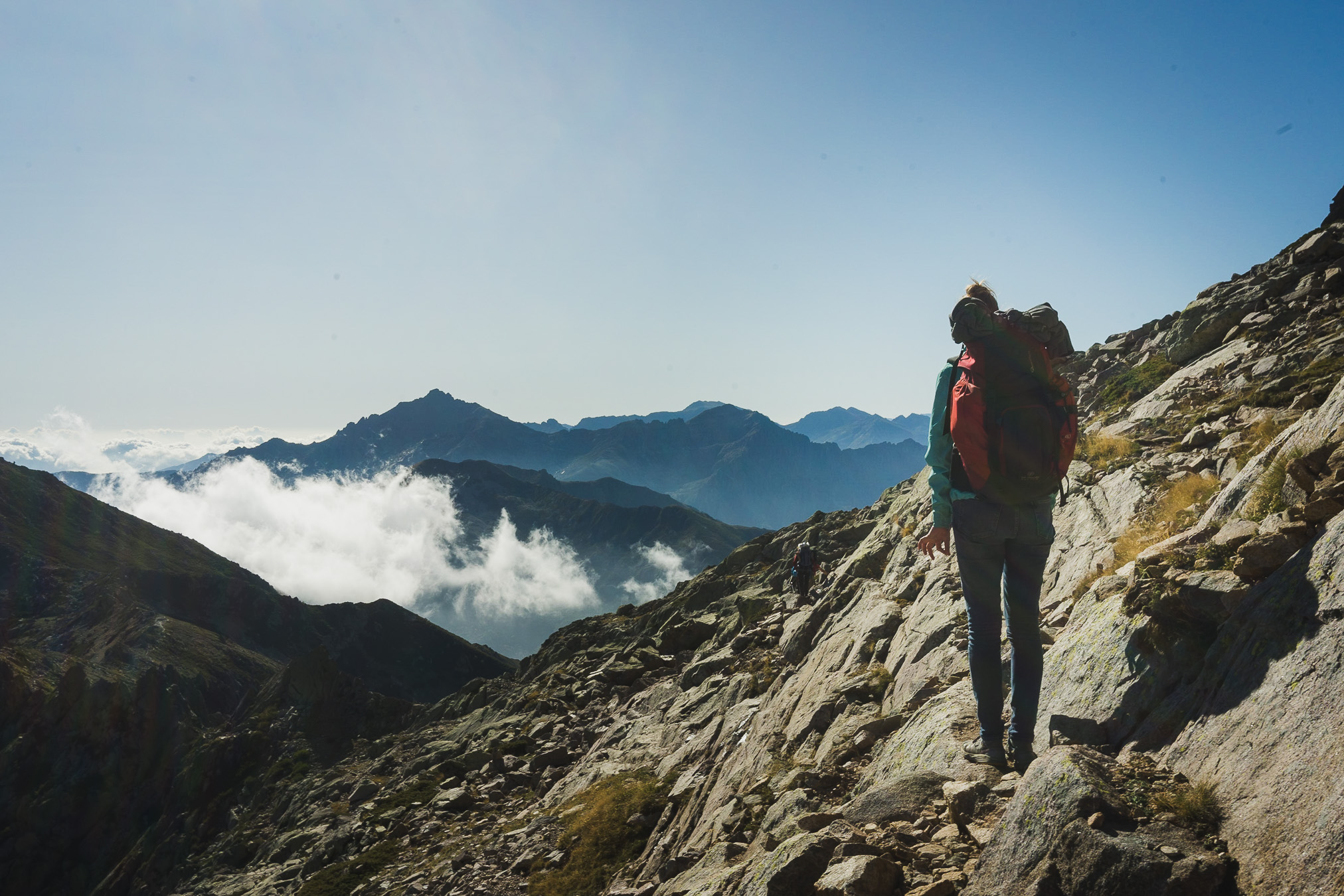
Reaching the mountain pass was impressive, and from there you have a view on the two big lakes far down the mountain: Lac de Capitello and Lac de Melo.

Corsica_LL_57_DSC09671

Corsica_LL_58_DSC09674

Corsica_LL_59_DSC09680

After four good days of hiking it was nice to go back to civilisation.

Chapter 4: The West

Calvi – Porto – Evisa

We took the train from Corte to Calvi and stayed the night at a good hotel with a nice swimming pool (Hotel Le Saint Erasme). Close by we found a must-go restaurant: U Fanale. The menu was not that expensive and having a candle light dinner under the big tree on the terrace feels like true holidays.

Corsica_LL_61_DSC09728

With our rental car we drove to Porto Ota. There we stayed at another nice campsite Les Olivers. We took another boat trip from Porto Ota to see the nature park of Scandolla. This place can only be visited by boat since it is a nature reserve where no people are allowed in.

Corsica_LL_63_DSC09813

The day after we took a good hike to Capo Rosso. If I’m not mistaken it was 2 to 3 hours to get to the famous Genua tower.

Corsica_LL_65_DSC09898

Corsica_LL_66_DSC09902

Corsica_LL_67_DSC09923-SmartPreview-Pano

Corsica_LL_68_DSC09938

To then drive to Cap Corse we chose to cross the island and spend the night in the small mountain village of Evisa. We stayed at hotel Aitone… which was as friendly and funny as the Fawlty Towers hotel you know from the old days on BBC.

Corsica_LL_71_DSC09990

Chapter 5: Cap Corse

We saw Cap Corse as a good road trip of two days, where we crossed for Evisa to Cap Corse to Nonza and Ile-Rousse.

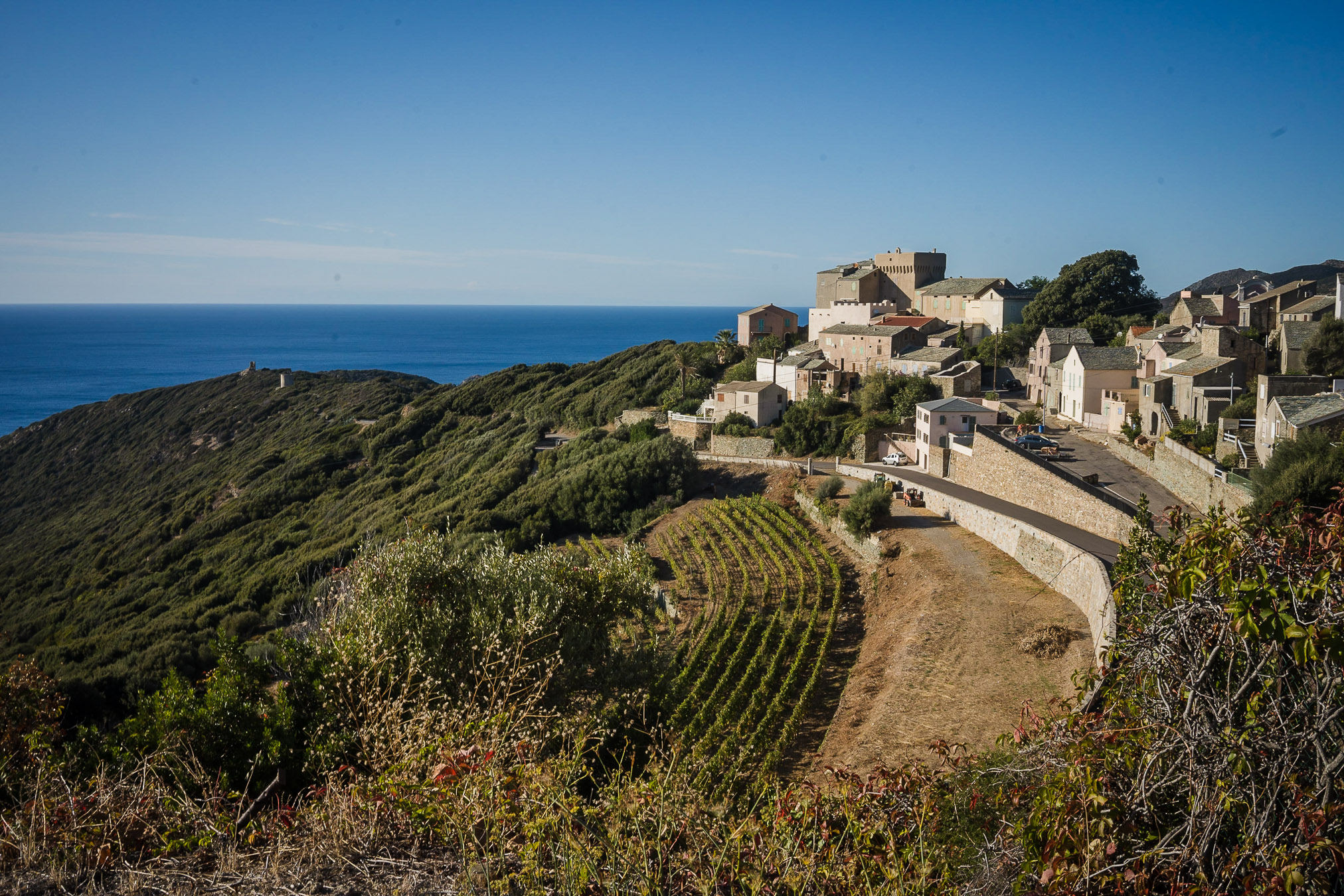
On the road it was our turn to take some (local Corsican) hitchhikers and get to know the small villages in the mountains around Sisco. Strolling around we visited the small roads, huge villa-like family graveyards and enjoyed the views on the sea.

Corsica_LL_72_DSC00025

Corsica_LL_73_DSC00028

Corsica_LL_74_DSC00063

Afterwards we took a bigger hike at Plage de Tamarone and had a good salad lunch at ‘Sporting bar’ under the plants in the harbour of Centuri. We took another walk in the village of Pecorile.

After multiple hours of driving we finished our day in Nonza. We stayed at a superb small bed and breakfast called Casa Lisa. This was by far the most beautiful Corsican house we stayed at during our trip. We had a small sandwich/cheese platter dinner with the locals on the cosy terrace of Cafe De La Tour. During the season the restaurant of La Sassa is supposed to be a good one with impressive views… but that one was already closed for winter at the end of September.

Corsica_LL_75_DSC00083

Corsica_LL_77_DSC00100

After breakfast on the terrace of the B&B we continued to Saint-Florent for lunch in La Vista (the city itself is not that special). In Ile-Rousse we did a bit of walking and had some good food at L’Escale.

Chapter 6: The boat

To go back to Marseille the next day we took the night ferry again. The famous Corsica Ferries and Corsica Linea boats go up and down between mainland France and Corsica (and some from Italy). They go extra slow so that you have enough time to take dinner on the boat in the evening, can have a good night of sleep in one of the cabins and have an early breakfast before arriving.

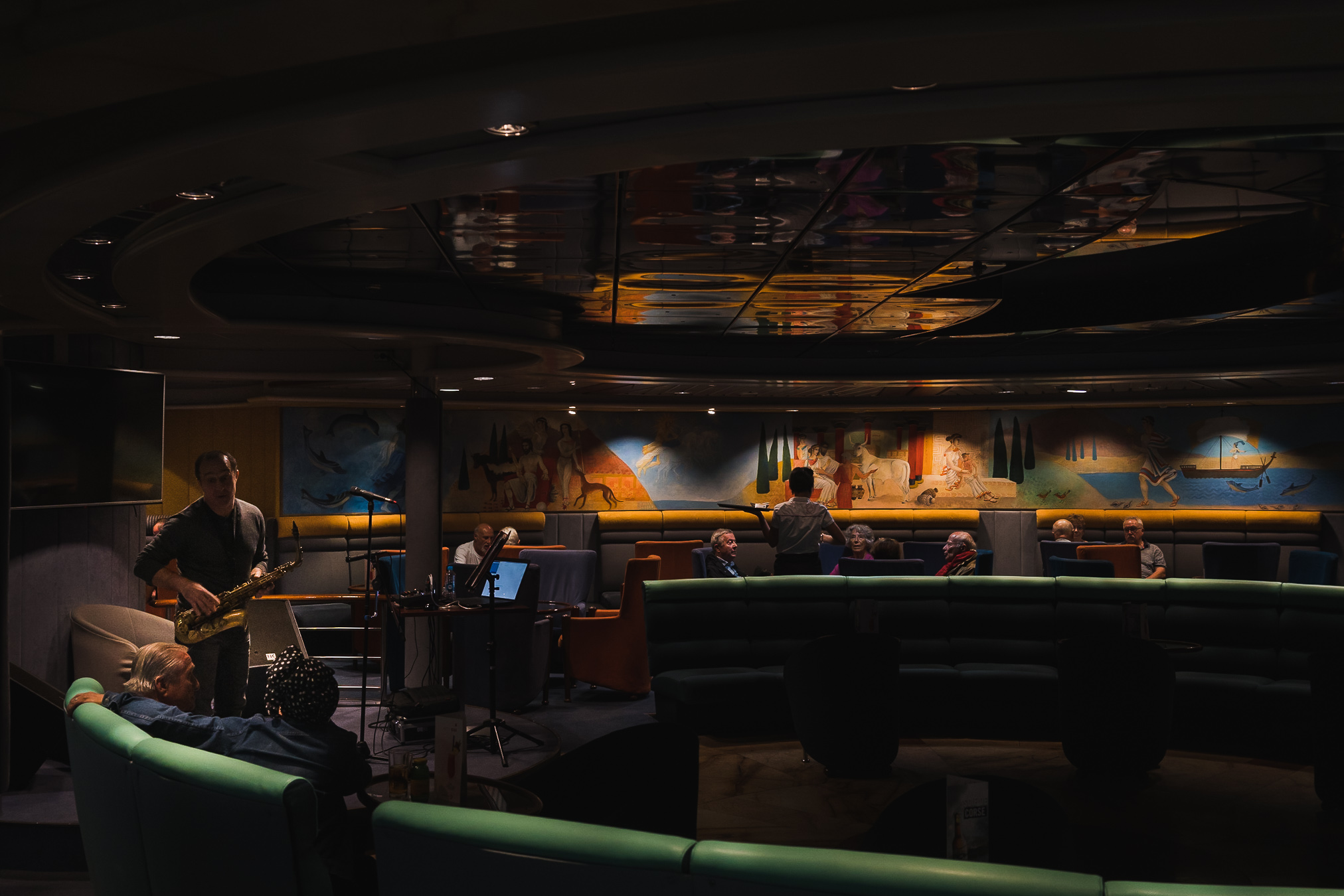
Try to imagine a completely out of date interior, possibly a live bar with maritime copper elements and foreign soldiers drinking cocktails or whiskey at the bar. The impressive charm of long lost days of glory is endless on board of these boats.

Corsica_LL_01_DSC08869

We are still waiting to get a 220 EUR refund of the taxi we had to urgently take from Ile-Rousse to Bastia… They decided to change the hour AND city of where the ferry would leave, because of weather conditions. They send us an email a couple of hours before (that we did not see on time) and they did not call us at all. They arranged a taxi for us that they promised to pay back… but so far they decline to pay back.

Corsica_LL_79_DSC00124

Corsica_LL_05_DSC08953

We took some drinks, but preferred our own fancy picknick with good bread, houmousse, olives, cheese and wine over the average but overpriced boat meals. So make sure to buy some good quality food before boarding.

We booked a cabin for 2 with a bathroom and shower…and honestly, you have all the comfort you need. Just make sure to take your earplugs since the boat engines or vibrations can be heard at night.

Corsica_LL_80_DSC00165

Nothing nicer than an early sunrise at sea after a good night of sleep.

Corsica_LL_07_DSC08969


Biketravel from Ieper to Boulogne-s-Mer

Looking for a nice bike trip to the sea? The roads from Ieper to Boulogne-sur-Mer take you through flanders fields, green valleys and impressive views on the sea. We took this trip together with Louis’ cousin Olivier whom grew up in Poperinge.

On Friday evening we took a direct train from Brussels-South station to Ieper. If you take a regular bike you just need to pay a 4 EUR ticket for your bicycle and try to catch the train responsible to see where you could best park your bike. In the newer trains there’s a dedicated spot with a special door for bikes and wheelchairs only, in older trains you might have to lift your bike up high and park it in the entrance of the train.

To go from Ieper to our camping spot on the Kemmelberg we took some detours, drove through the village of Kemmel, the park with the city hall and had dinner on the terrace of De Hollemeersch. We pitched our tent into the wild and enjoyed a good night of sleep (50°46’29.9″N 2°48’05.9″E).

DSC02257

On saturday morning we bought our breakfast in the old bakery “d’ovetote” in Dranouter, where they still make bread in a wood based oven. And of we went into France: Belle, Hazebroek, Ebblingem, next to the water to Arques, a flat tier and then to Saint-Omer for lunch in the rue Louis Martel.

DSC02322

After that the trip continued through the fields and woods all the way to the coast of Boulogne-sur-Mer via Coulomby and Bournonville. This route was mainly on double roads where you can advance well, but you share them with quite some cars. So for the way back we proposed another (way more calm road).

DSC02408

DSC02364

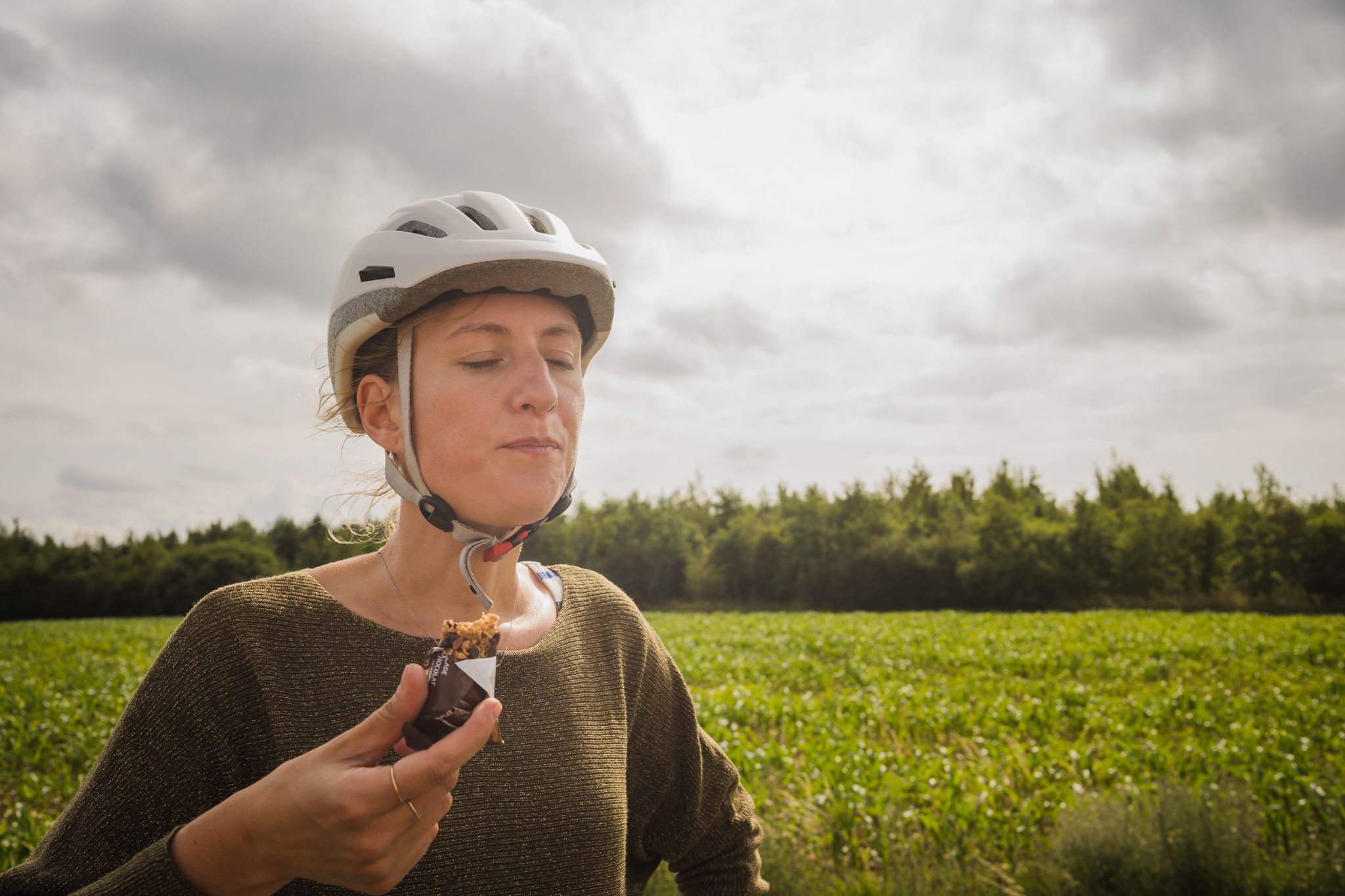
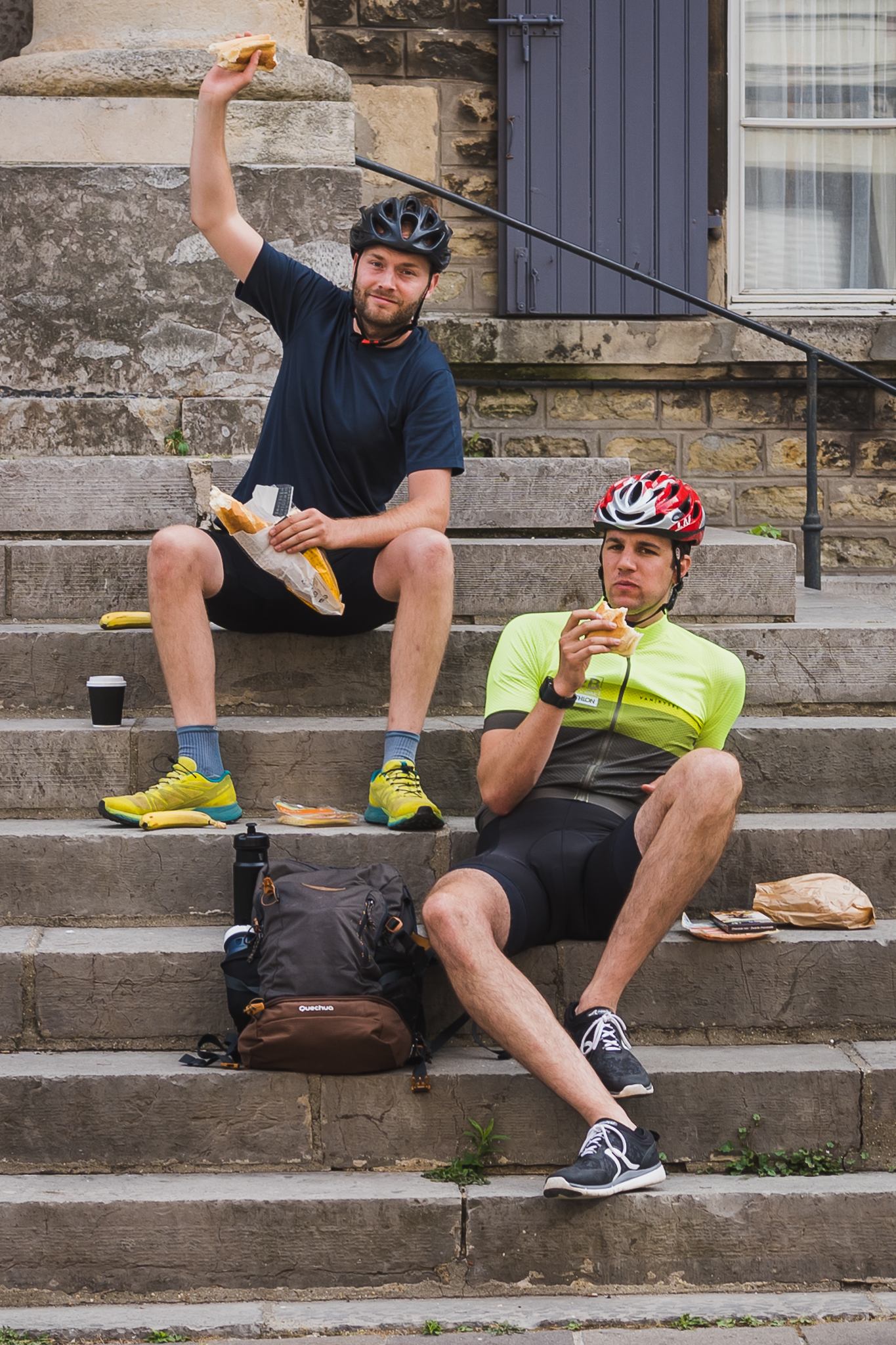
A good brake to eat bananas + muesli bars and drink liters of water is of course mandatory. And Tine was enjoying it!

DSC02385

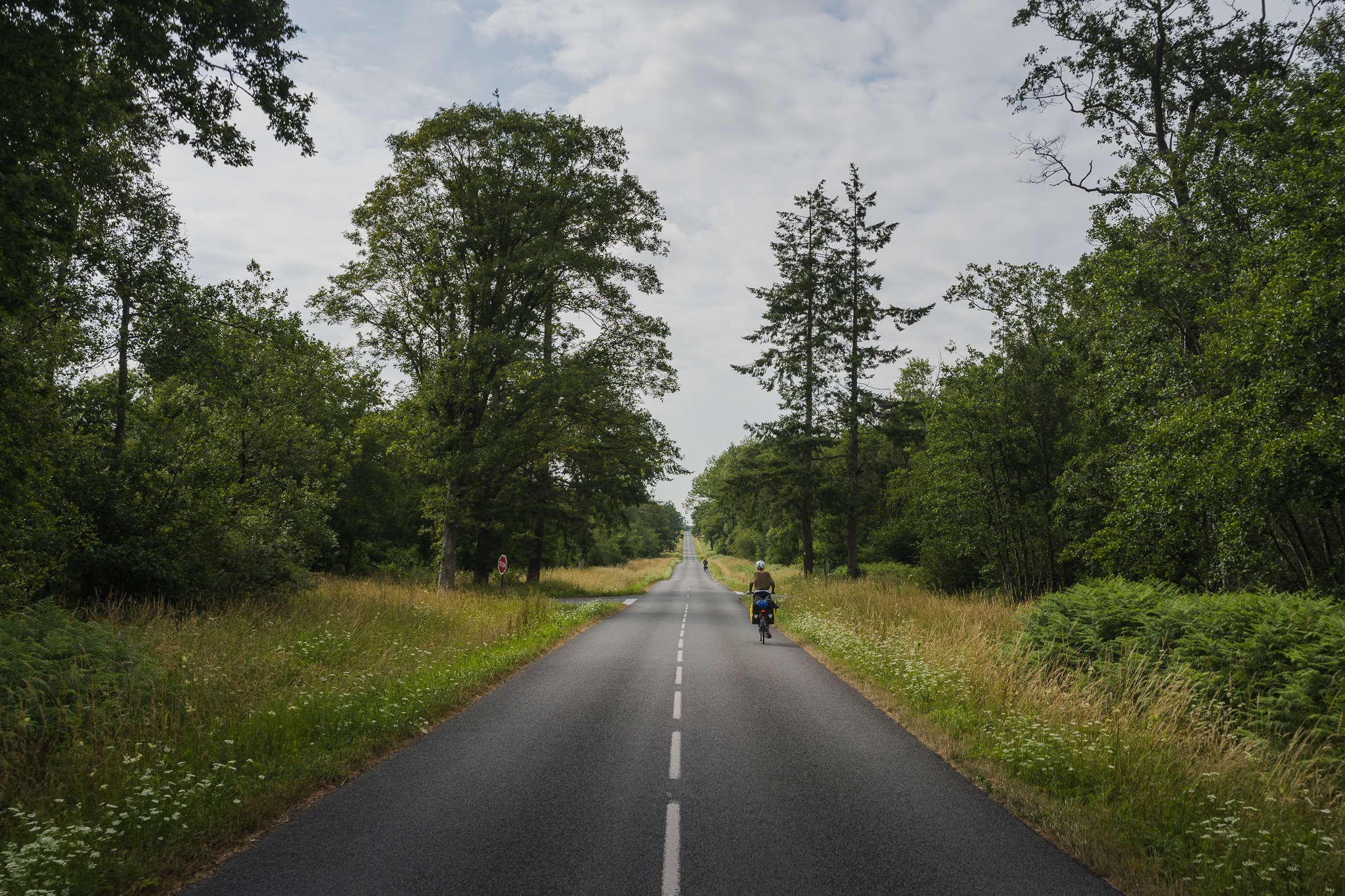
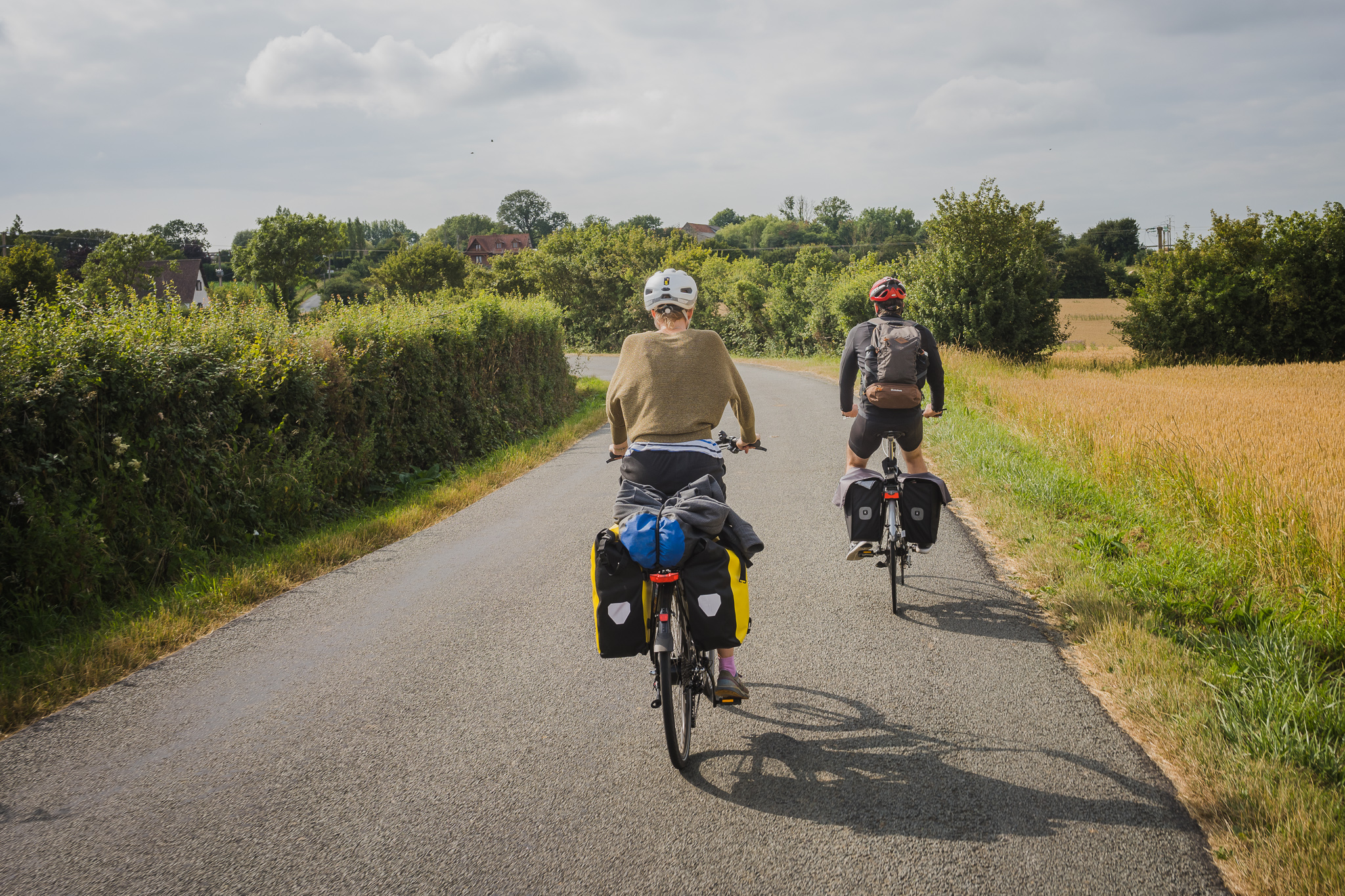
Since we did not really do a lot of preparatory route planning, we searched on google maps on the way where we could take the smaller routes and enjoy driving through the fields, in between the typical hedges next to the road.

DSC02392

And while approaching Boulogne-sur-Mer the impressive tower of the cathedral is welcoming you. Just before reaching it you enter the fortified city center into the narrow streets. It’s a beautiful old city center worth taking the time to visit.

DSC02419

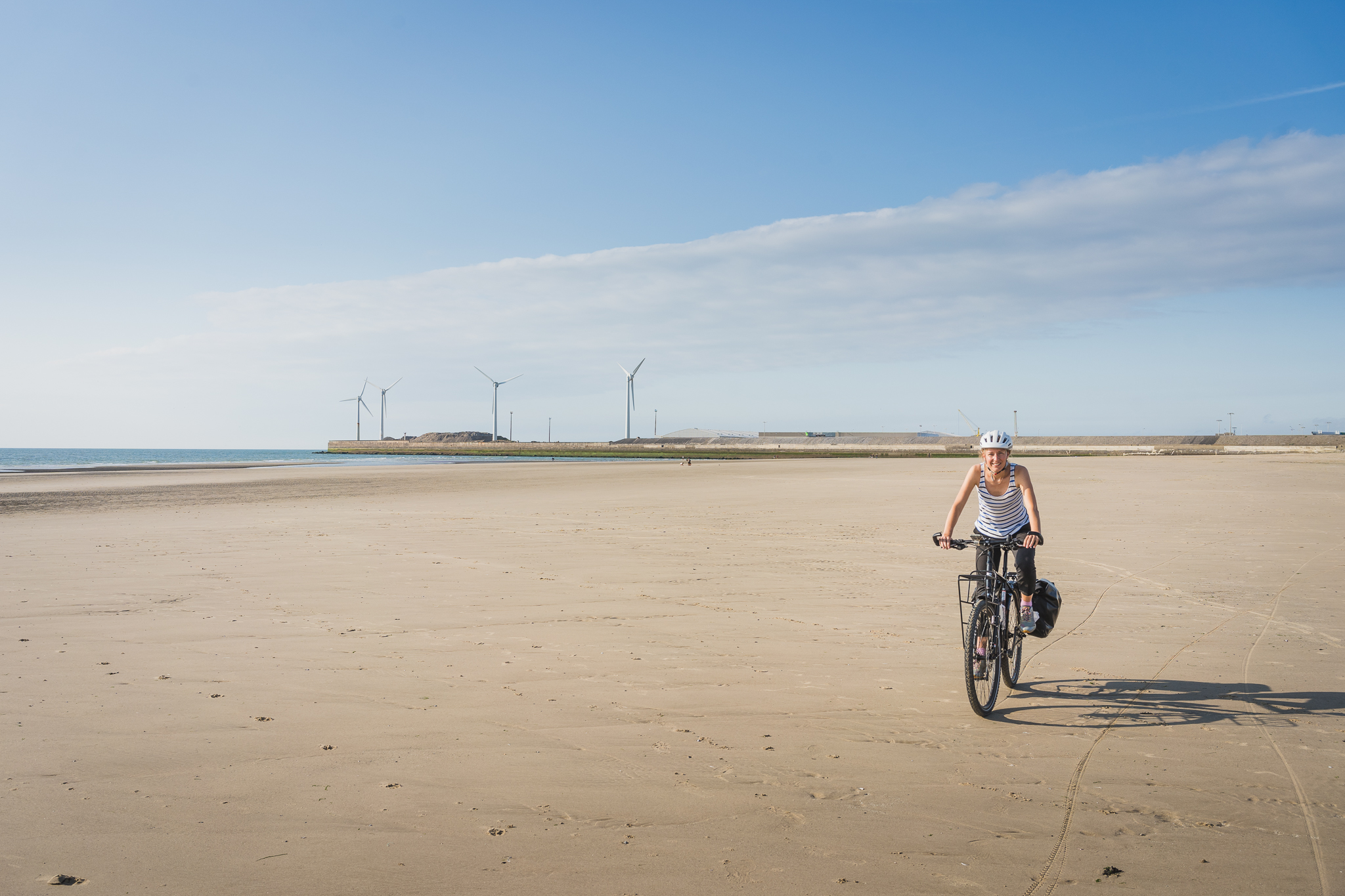
…but since we wanted to camp we did not stay there, but continued another couple of kilometers to camping Phare d’Opale Tohapi. The road google maps sent us to, did not exist, so we headed to the beach to drive (big tires) / pull (thin tires) our bikes to the next road.

DSC02434DSC02436

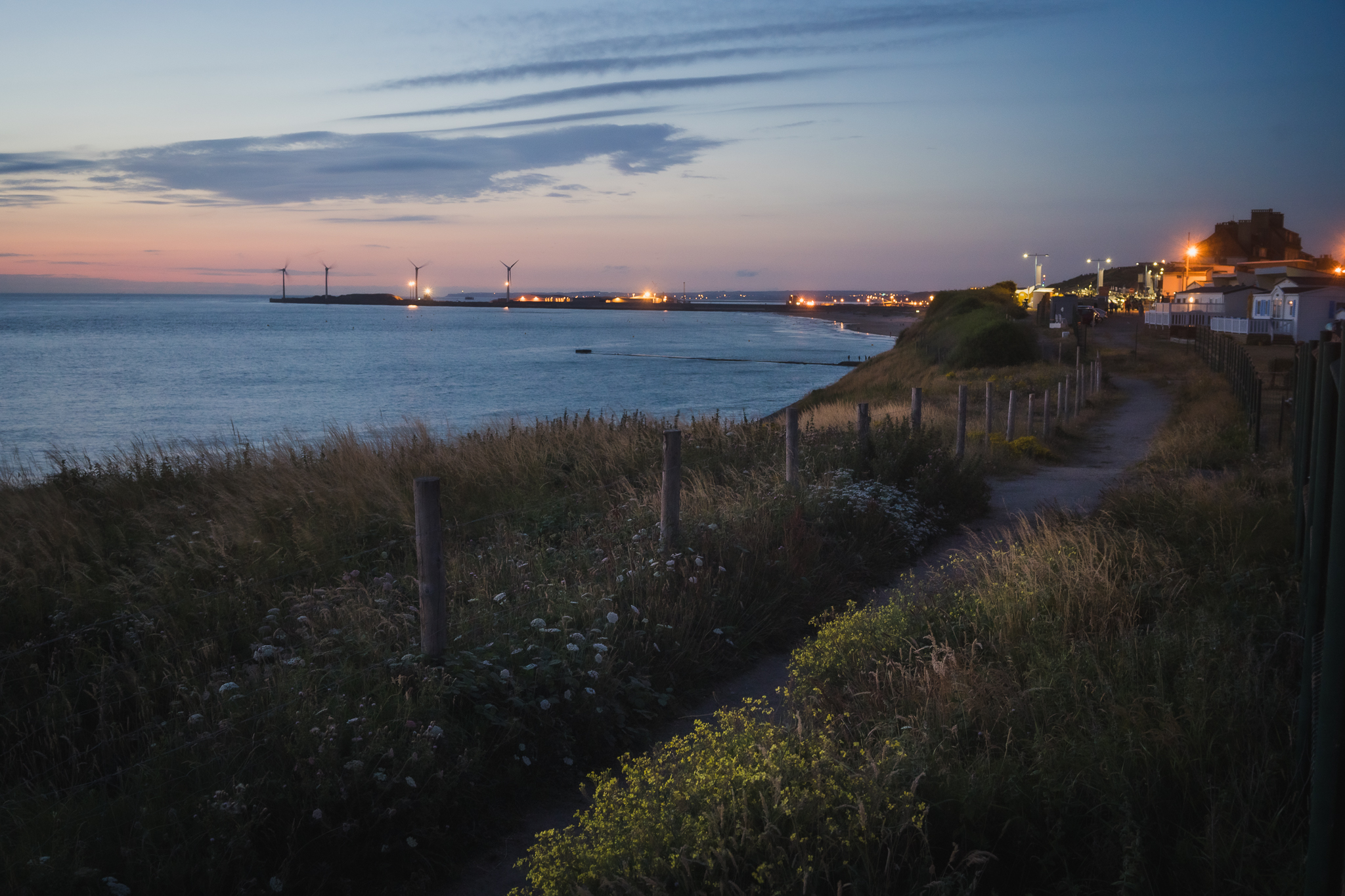
The campground itself is rather a trailer park, so nothing special, but on the side there’s some camping spots with a 5-star view to the sea and village (picture below). Good enough for a safe camping spot and a good shower. After a little more than 110km we pitched the tent, skipped the shower and went for aperitif!

DSC02517

The village of Le Portel is not the most beautiful one, based on a meters high concrete dyke that could survive every climate change water rise, but it had some good restaurants and nice atmosphere.

DSC02461

The seafood restaurant to go to is “Le Portelois”, it has a cosy terrace on the dyke and good food! No tourist trap here.

DSC02482

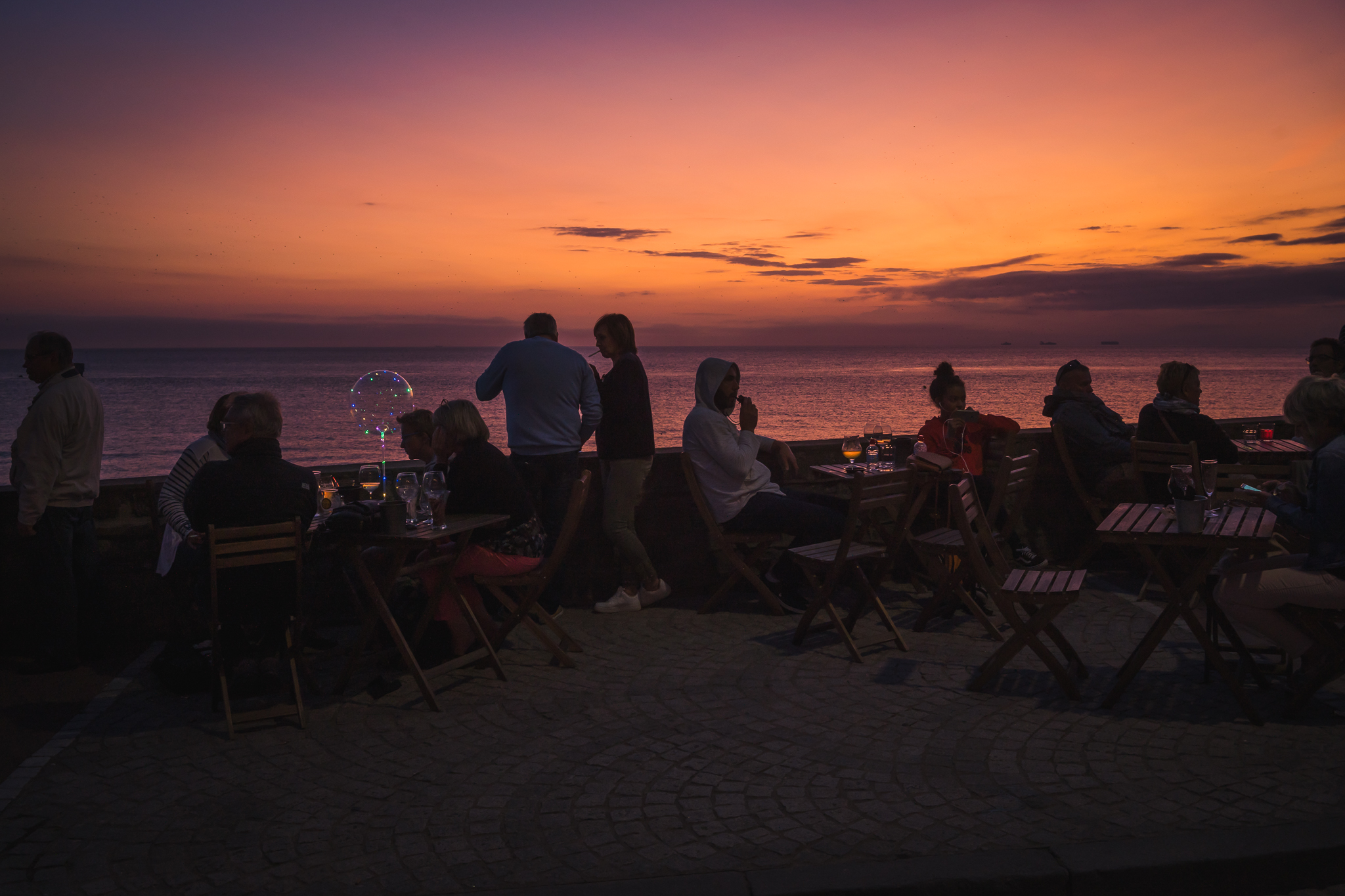
By coincidence we were there on the evening before the 14th of July festivities, and thus shared the village with thousands of other French people that were celebrating.

DSC02494DSC02544

It seems like 14th of July (Bastille day – the French national holiday) is celebrated as intense as new year, with impressive fireworks that lasted way too long.

DSC02603

On Sunday morning we bought a good baguette and cheese to have breakfast in the old city center of Boulogne-sur-Mer. Tine had her coffee, and so we were well prepared for another 100km back to Poperinge.

DSC02642

We were expecting google maps to send us back on roads with cars like the day before, but we got a slower and way more beautiful route proposed. It was a blast: small grass and stone paths through fields and valleys, from village to village! In short we took the following route. Passing by Liques, Tournehem-sur-la-Hem, Nordausques, Volkerinkhove, Wormhout, Herzeele, and Houtkerke on the border between France and Belgium.

We celebrated 14th of July with free lunch and beer from the villagers of Tournehem-sur-la-Hem.

DSC02674

A good drinking / evacuation break once in a while, combined with a short prayer on the road, gave us enough energy to continue.

DSC02759

We never saw more flemish lion flags than in the North of France, also called “Flandres”. All the villages there have really flemish names. The older local villagers in that part of France speak West-Flemish and French, a very odd thing to discover. And no better place to discover this than with a Picon in the bar of Gisele in Houtkerke. The bar got stuck in time somewhere in the fifties.  The owner is more than 80 years old and only speaks french patois or West-Flemish.

DSC02789

DSC02792

After a good lemonade we hit the road to Poperinge and finished our trip by taking the train back to Brussels later that evening. A nice and intense weekend. Don’t make this your first bike-tour, but if you’re used to some cycling this is an impressive trip!

DSC02799