Inspiration for local low carbon adventures in Europe: Travelling by train, bike, walking, kayak and other alternatives. From micro-adventures to big adventures. Most trips are focused around our hometown Brussels, but can certainly be reached or done from other locations as well.
Dreaming of visiting Venice while keeping an eye on your carbon footprint? We did just that!
The best way to get to Venice is by traveling with European Sleeper, which runs twice a week in February and March 2025 and provides a romantic and sustainable way to start your Italian adventure.
When we went in February 2024, the European Sleeper did not yet go to Venice… so we switched trains in Paris and Milan. The journey takes a full day, but I filled it with work, reading, and admiring the Alps and countryside views making a perfect blend of productivity and relaxation.
Venice in February can be surprisingly calm and less crowded. Despite some cold and foggy days, we enjoyed plenty of sunshine, making our visit magical.
Day 1: Arrival and stroll in the neighborhood
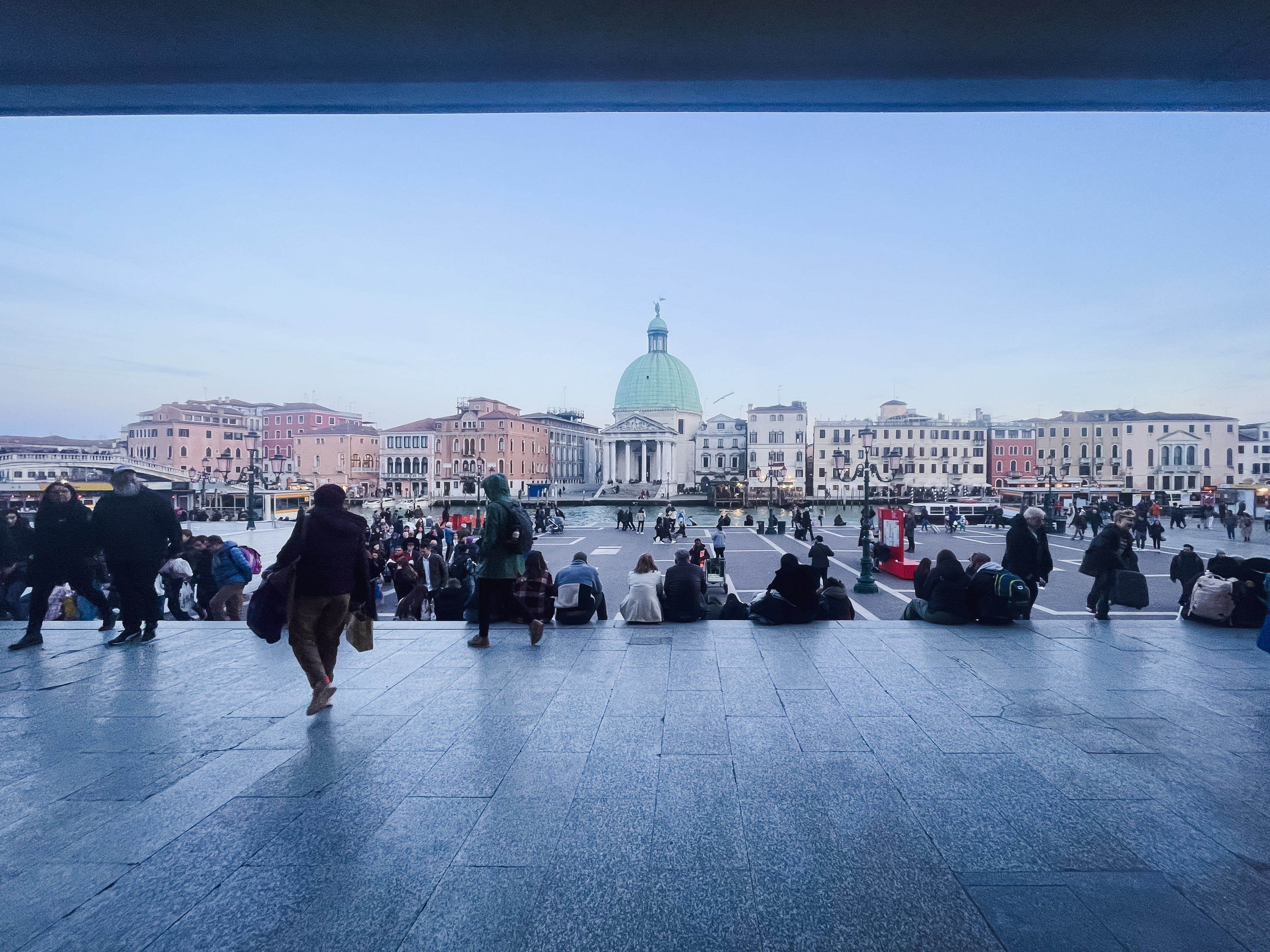
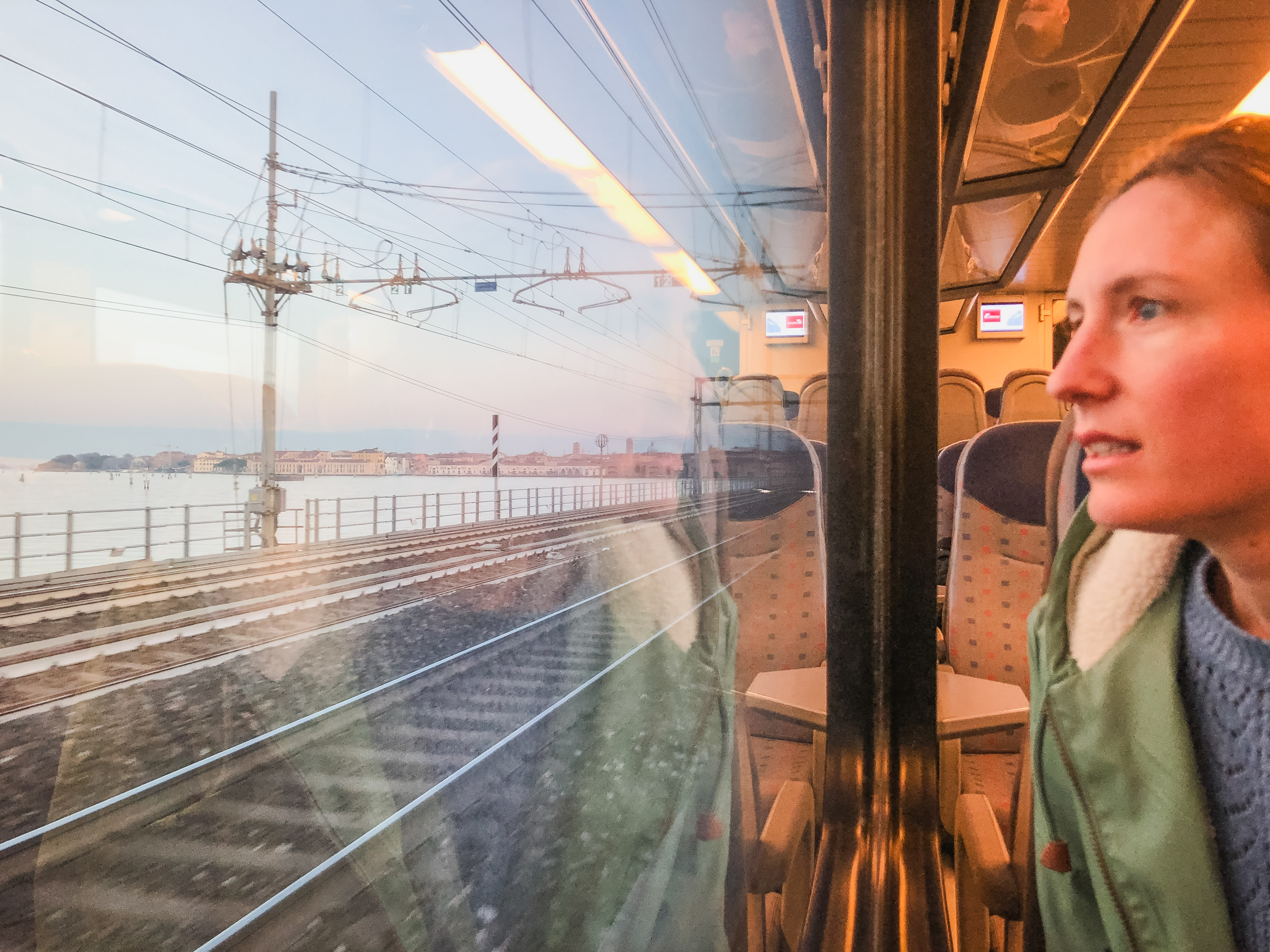
We arrived in Venice by train from Bassano del Grappa and were treated to an amazing view straight from the moment we left the train station.
While sitting on the train to Venice, we booked a last-minute promo at the Canal Grande Hotel for just 100 euros per night. We’ve found that waiting until after 16:00 on the day of arrival to book can yield great deals by checking prices on Google.
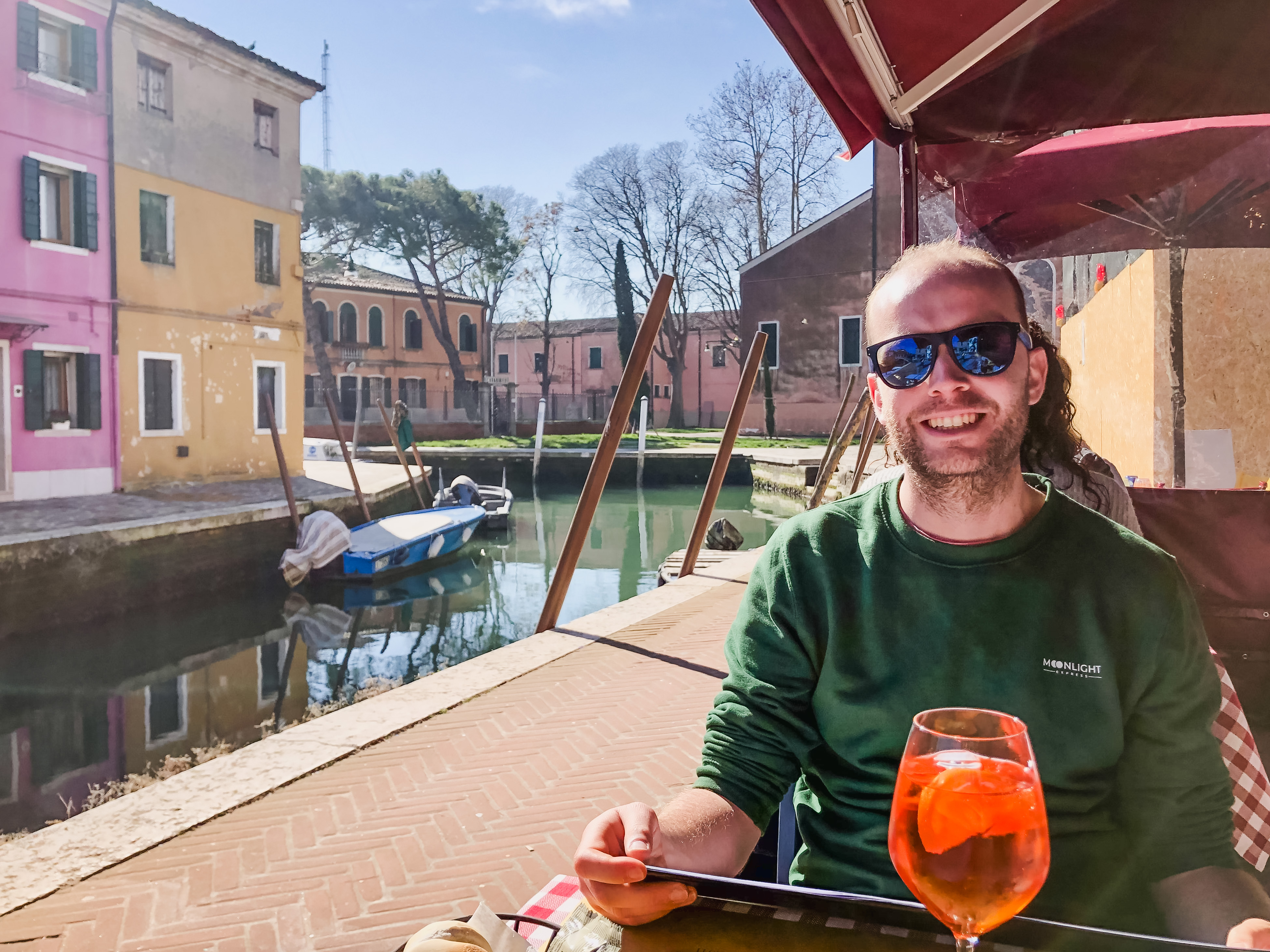
Just randomly strolling around in Venice is probably the best way to enjoy the architecture and views. We started the evening with an Aperol and aperitivo in Arcicchetti Bakaro and went for a restaurant after since it was a little too cold to stay outside all evening.
Day 2: Exploring Murano and Burano
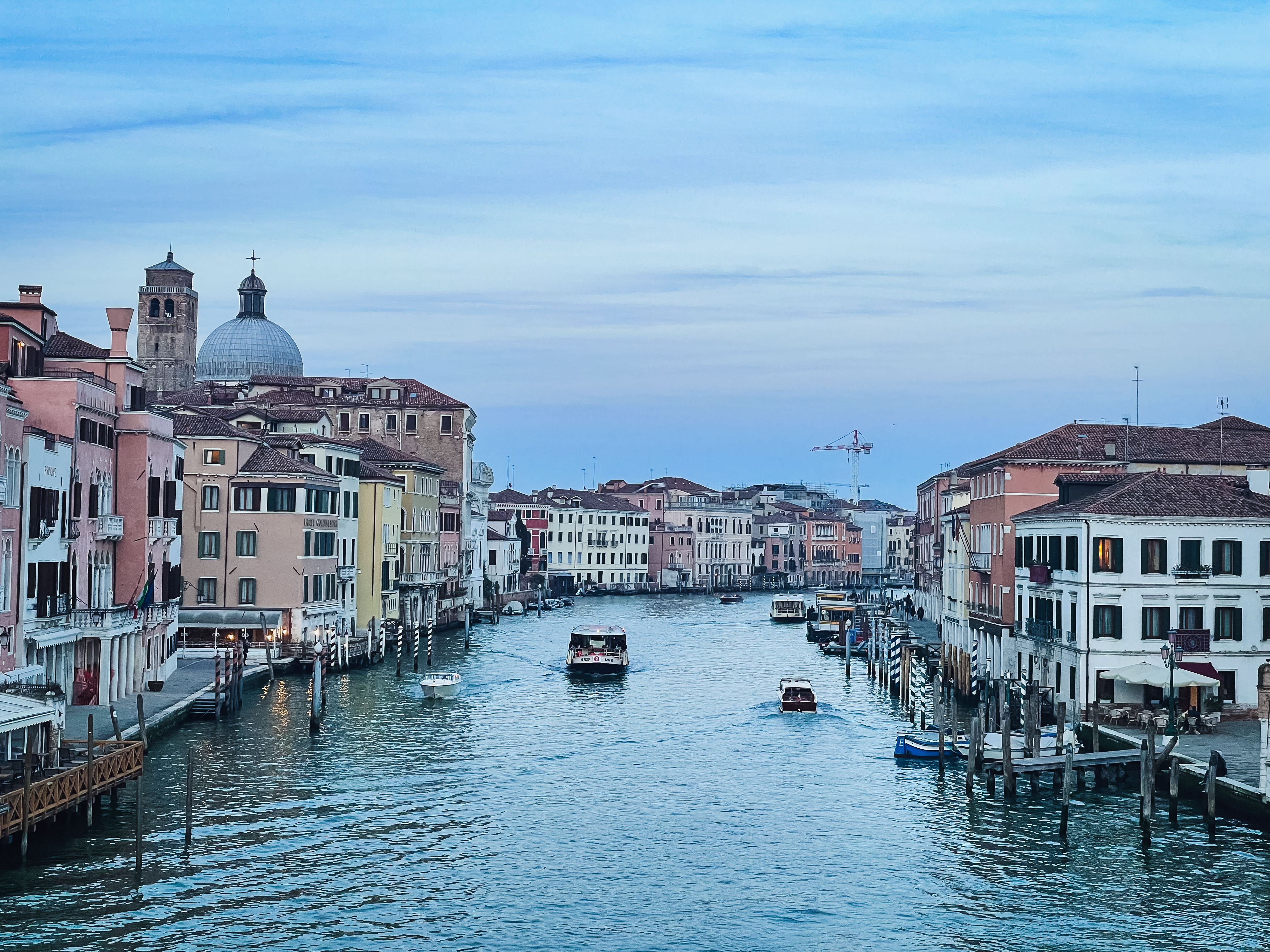
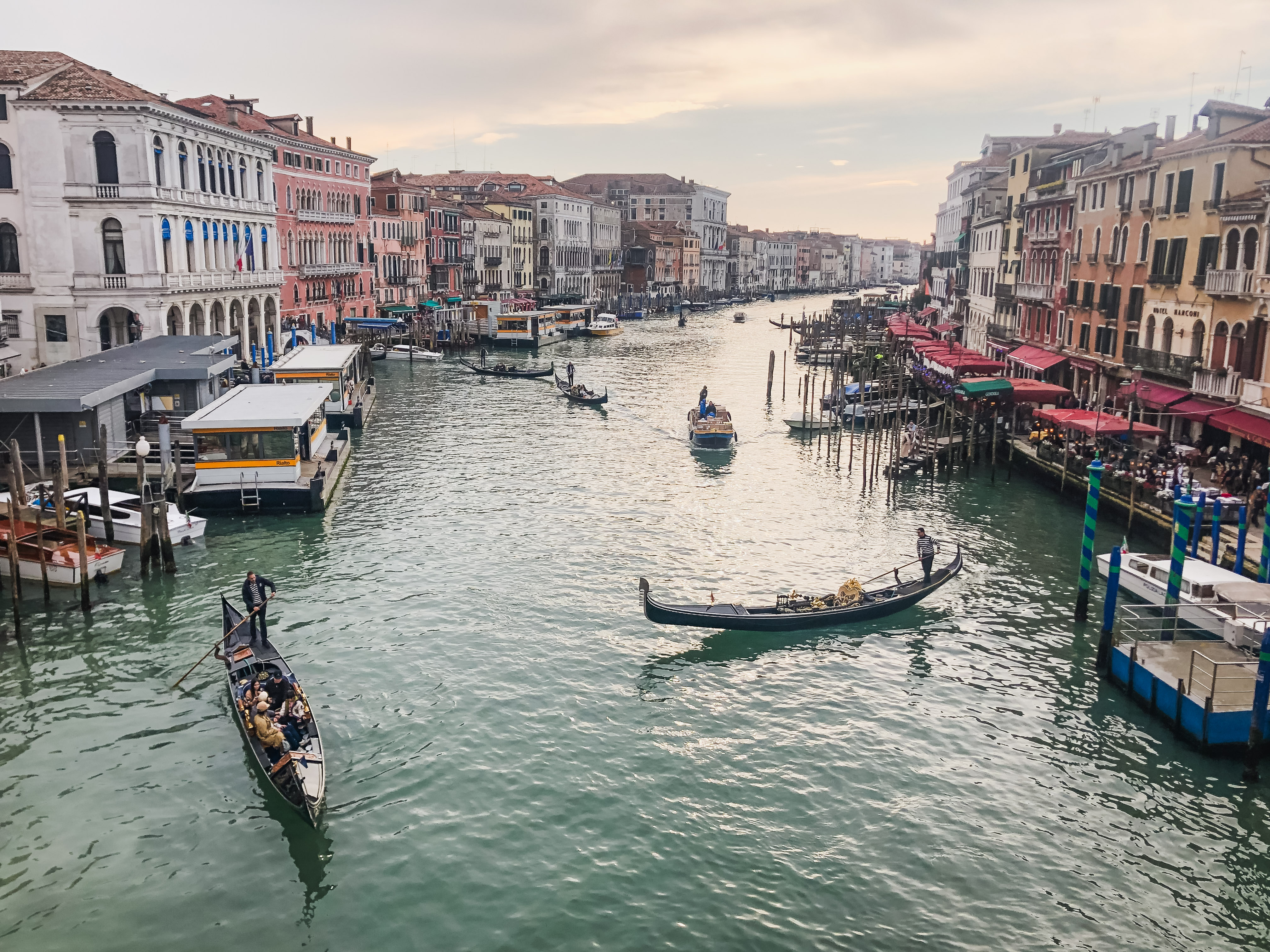
Our second day started with breakfast on the little terrace of the hotel overlooking the Canal Grande.
Just after we left on a hotel-organized visit to a glass workshop on Murano Island. We were picked up by a taxi boat right at the hotel, adding a touch of luxury to our morning. Watching glass artisans in action brought the island’s rich history to life. This visit and boat ride was totally free, but of course they like it if you buy a souvenir… but to be honest, we did not see any glass work that we liked and could easily transport home, and the workshop did not mind either so it seemed.
From Murano, we took a bus boat to Burano, known for its colorful houses and charming streets. Lunch at Osteria Cicchetteria de Gigetto was a delightful experience. We highly recommend getting a multi-day boat pass, which made hopping between islands convenient and cost-effective.
Day 3: Doge’s Palace, San Marco, and San Giorgio Maggiore
Before breakfast I started with an early morning run in the completely desolated narrow streets of Venice. For anyone capable of getting out of bed early, it gives such a curious and different view to the city life if you get to see the locals at 6 or 7am.
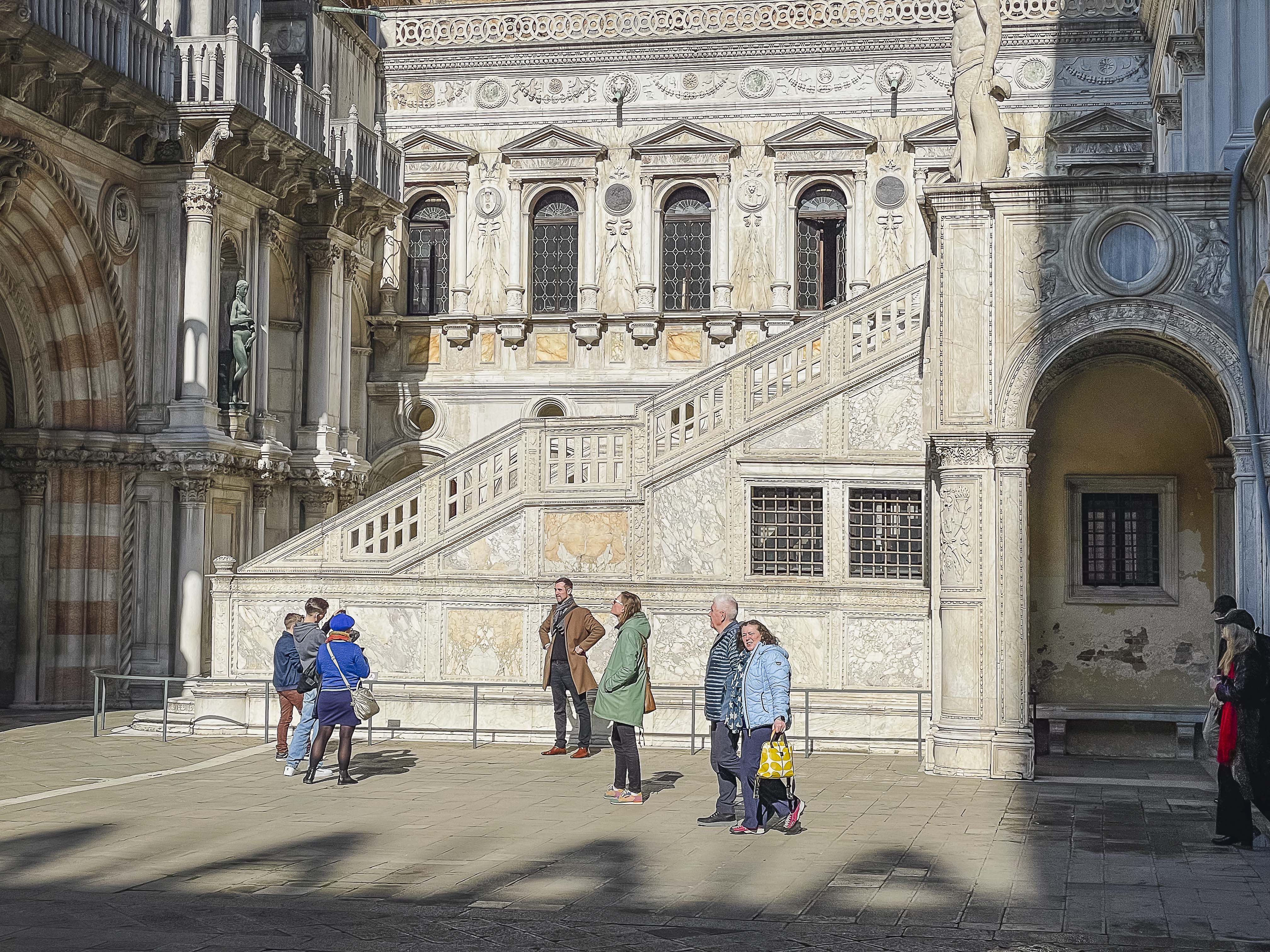
We visited the Doge’s Palace at San Marco in the morning. Make sure to reserve your tickets in advance. The grandeur of the palace was absolutely worth queuing.
Afterward, we enjoyed lunch on the terrace of Ombra del Leone, with plenty of sunshine and views of Canal Grande.
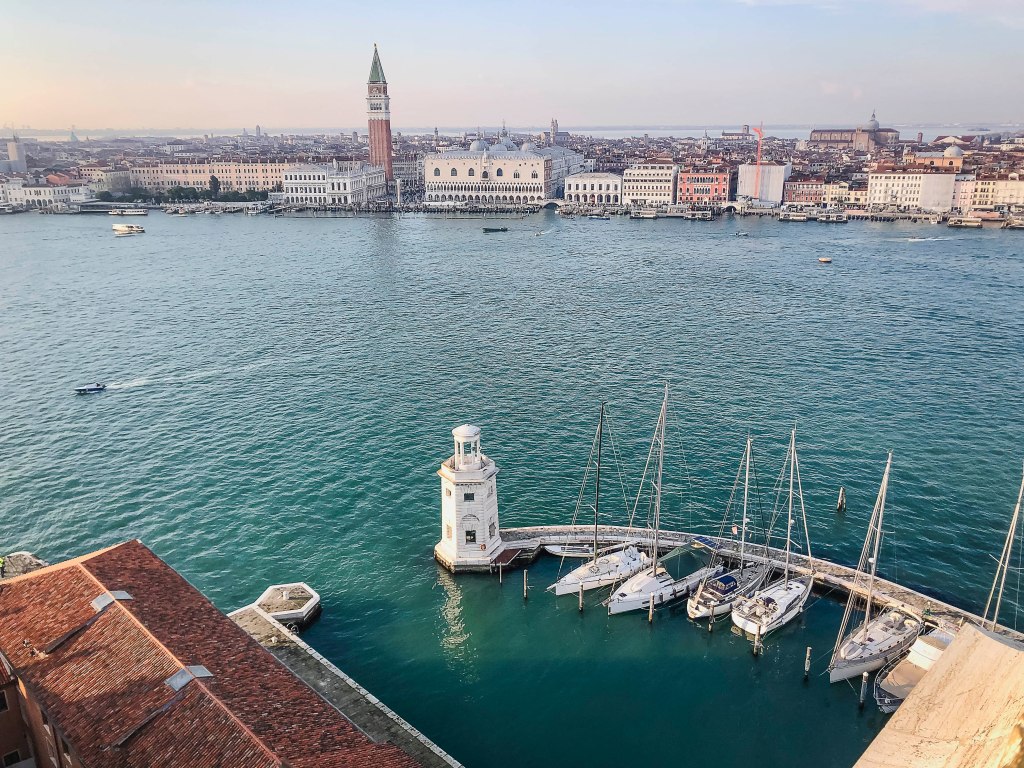
The afternoon was spent visiting San Giorgio Maggiore, where we climbed the tower for breathtaking panoramic views of Venice. The contrast between the busy San Marco and the tranquil San Giorgio was certainly a highlight of our trip.
Dining Highlights
Since good food makes a good mood:
Il Refettorio: For an Italian dinner experience, reservations are a must.
Ombra del Leone: Perfect for its terrace with a view of the Canal Grande, offering good food at reasonable prices.
Arcicchetti Bakaro: A bar with delightful aperitivo food — an absolute must-visit!
Traveling by train allowed us to enjoy Venice’s charm in line with our personal travel habits. The boat rides, less crowded streets, and cultural depth of Venice in the off-season made our trip extraordinary. For couples looking to combine romance and sustainability, we highly recommend this Venetian itinerary.
Traveling with reusable diapers might seem daunting, but with the right approach, it can be both eco-friendly and manageable. We’ve had a mix of good and challenging experiences, and we’re here to share what we’ve learned to make your journey smoother.
We have made many trips with August during his first 2 years and always took reusable diapers: on a camper trip of 2 months to Spain and France, on our train adventure of a month in Sicily, on our cycling holidays through the Dolomites last summer,… It requires a bit of planning and reflection, but once you’re used to it it works well.
Our Favorite Reusable Diapers
Our top pick is the “Close Pop-in Bamboo Diaper”. These diapers are easy to wash and use, consisting of a bamboo layer, a water-absorbent insert, and waterproof over pants.
For soiled diapers: Simply toss the bamboo layer in the garbage.
For wet diapers: Wash and reuse the bamboo layer 3-4 times until it’s too decomposed.
Another setup we love:
“Bamboolik Cover Duo Snap” outer pants combined with “Anavy Bamboo Diaper with Velcro” and “TotsBots Bamboo Insert”.
Packing Tips
We typically prepare packaged layers in advance, taking 9-10 sets (3-4 diapers per day, adjusting as your child grows). For extra absorption at night, you can add a night booster like the “Close Pop-in Night Insert”.
Benefits and Practical Tips
Washing: Use a bit of eco soap to wash diapers in a lake, shower, washbasin, or toilet.
Drying: Lay them open in the sun or wind, or place them in a well-ventilated bicycle cart to dry.
Reuse: You can reuse the waterproof cover multiple times without washing if it remains clean.
Frequency: In hot weather, do not go longer than 2 days without washing. Use a washing machine every 3-5 days while on holiday.
Challenges & Solutions
Skin Irritation: In warm weather, humidity can irritate your child’s skin. Switch to disposable diapers (eco-friendly versions are available in most hypermarkets) if needed.
Smell: Carry a plastic bag for odor management.
Handling Poo: It’s not always pleasant to handle soiled diapers, but I (Louis) take on this task most often since I care most about the use of reusable diapers.
Additional Tips & Tricks
Wet Bags: Invest in wet bags to store dirty diapers until you can wash them.
Travel Size Detergent: Bring eco-friendly detergent in a travel size for easy washing on the go.
Disposal Liners: Use biodegradable liners inside the diapers to make cleaning easier.
Plan Ahead: Research your destinations for laundry facilities to ensure you can wash the diapers when needed.
We decided to embark on an eco-friendly family adventure to Sicily by train. Discovering a direct night train from Milan to Palermo and Catania, we decided to give it a try. The journey costs between €221 (going) and €206 (returning).
Day 1: Brussels to Milan
We started our journey from Brussels to Paris and then switched stations to travel onward to Milan. Here’s a cost breakdown of the first part:
Eurostar: Kept August on our lap, so no ticket needed.
French SNCF Trains: Used the “carte avantage adulte” discount.
Total Cost: €190 (Brussels-Paris) + €125 (Paris-Milan) = €157/person.
To kick off the trip in style, we had lunch at Le Train Bleu in Paris’s Gare de Lyon. The restaurant boasts a spectacular interior of the golden age of train travel. We discovered it by coincidence by hearing a waiter singing an opera song from the stairs in the station hall.
Our train from Paris to Milano arrived in Porto Garibaldi, and we still walked to Milano Central Station in the evening. We stayed at B&B Hotel Milano Aosta, conveniently near Milano Central Station, allowing us to leave our luggage the next day until our night train departure.
Day 2: Night Train to Sicily
On our second day, we explored Milan with breakfast on the hotel’s rooftop, a stroll around the city, lunch, and visits to Castello Sforzesco Park and the Leonardo da Vinci Museum of Science and Technology. August loved playing in the boats, trains, and helicopters, with plenty of kid-friendly activities.
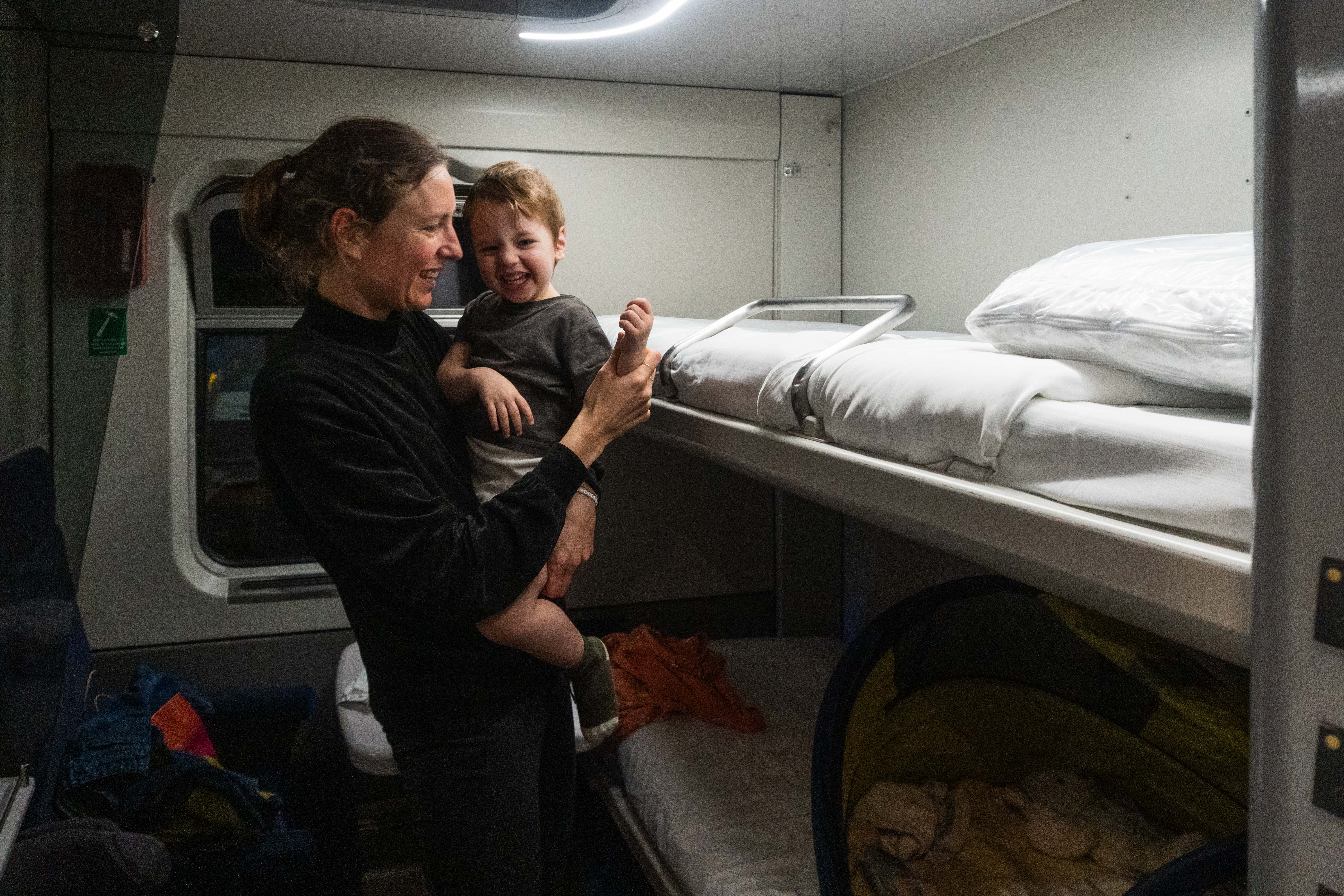
We booked a private car for our family: the “Vagone Letto Deluxe – Tripla Cabina Intera” for €198 in total, or €66 per person. Departure from Milano Centrale was at 20:10, arriving in Catania Centrale the next day by 14:32.
The scenic views along the Italian coast were breathtaking.
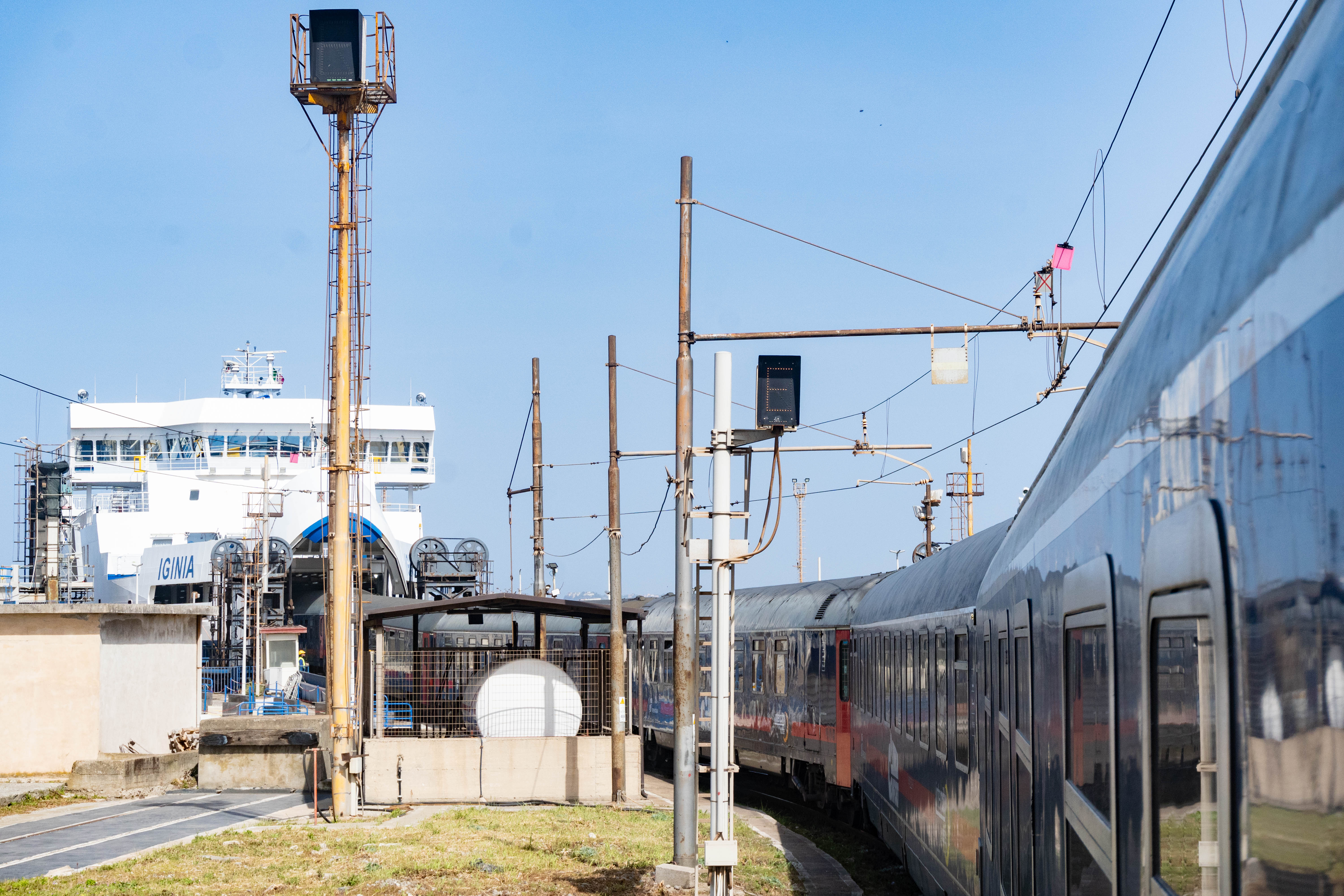
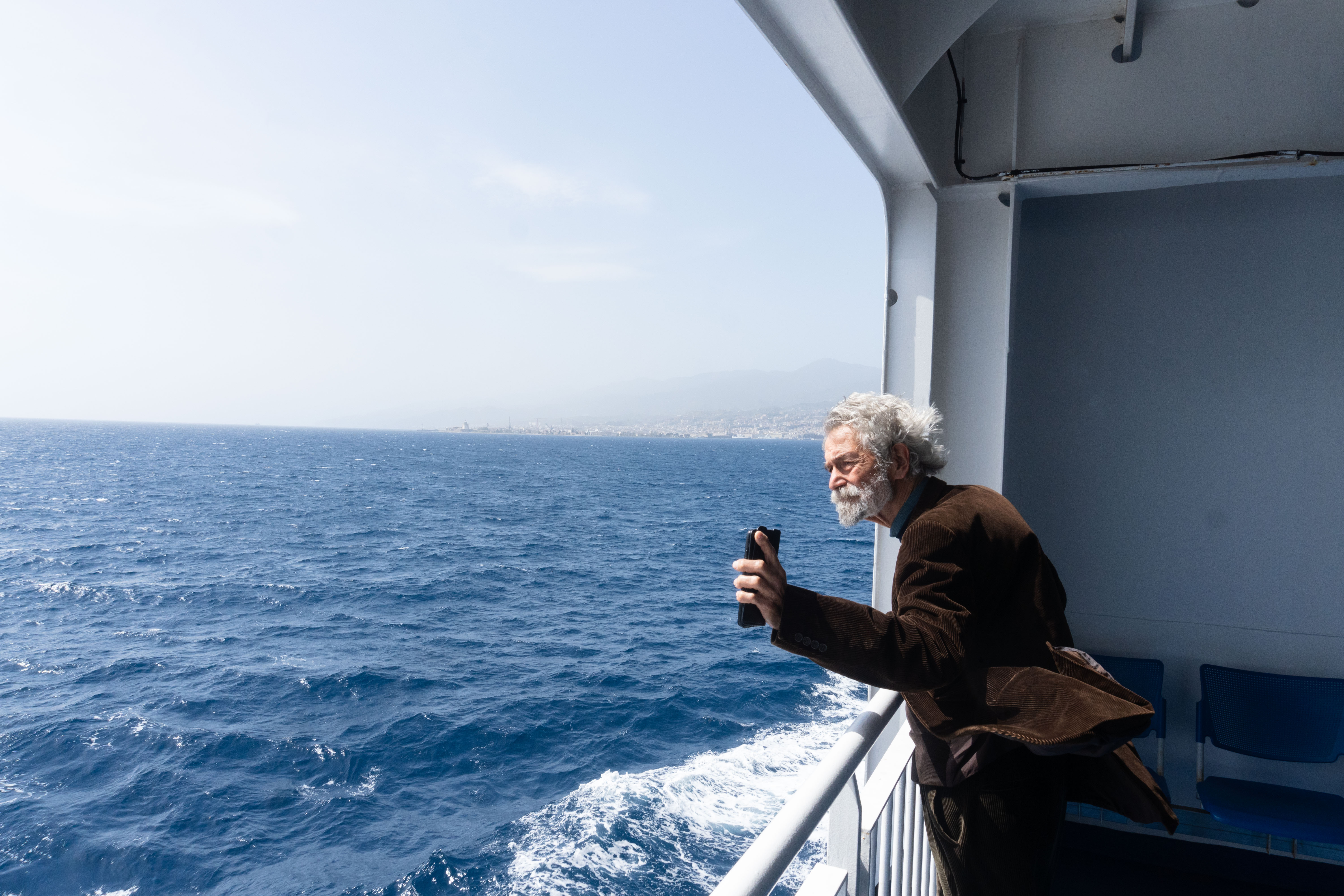
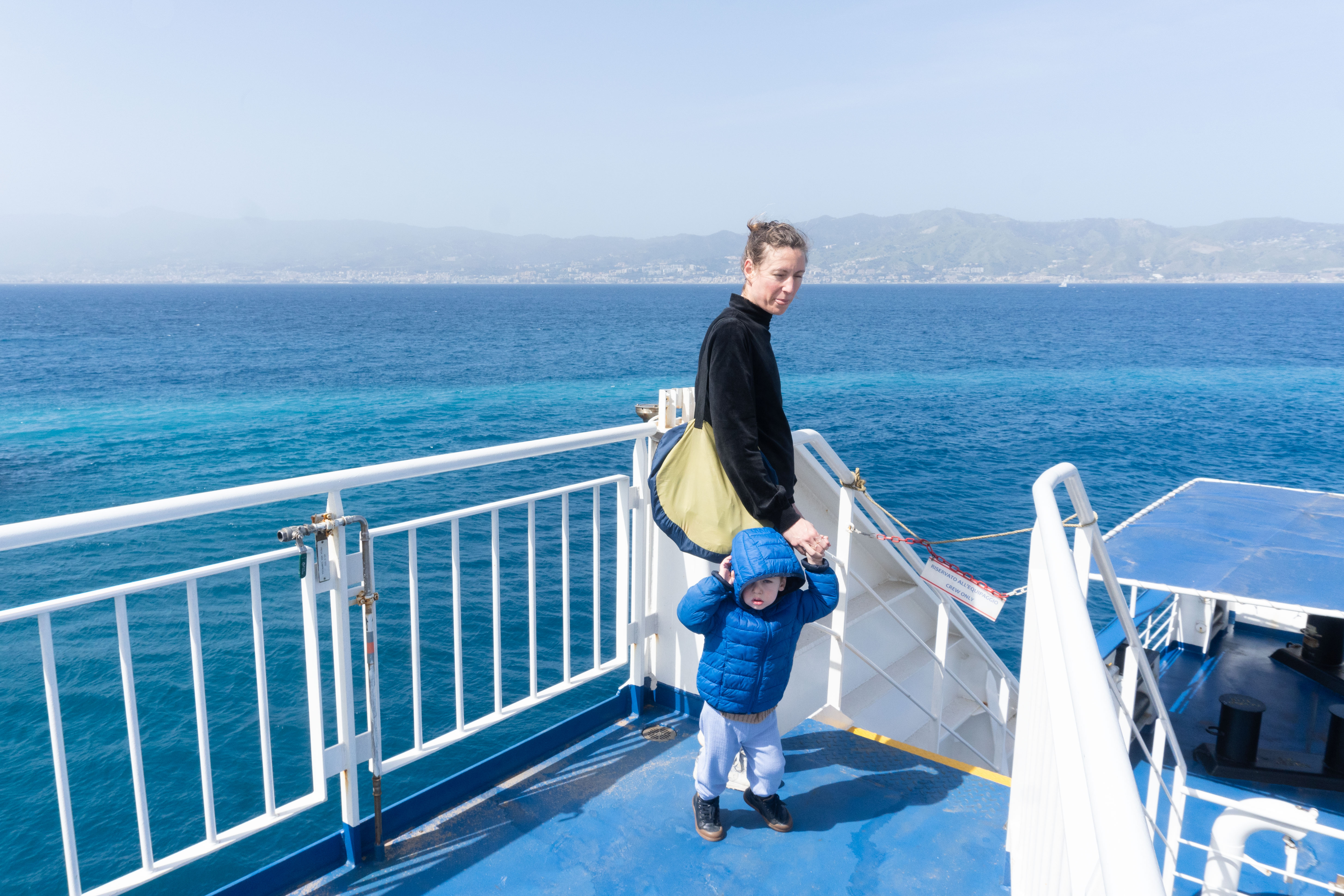
The most interesting part of the journey was in the late morning when the train was divided into sections of 3-4 cars and transported onto the ferry. You can leave most of your luggage in your coupé but take valuables with you when walking around the ship, as the cars stay open during the crossing.
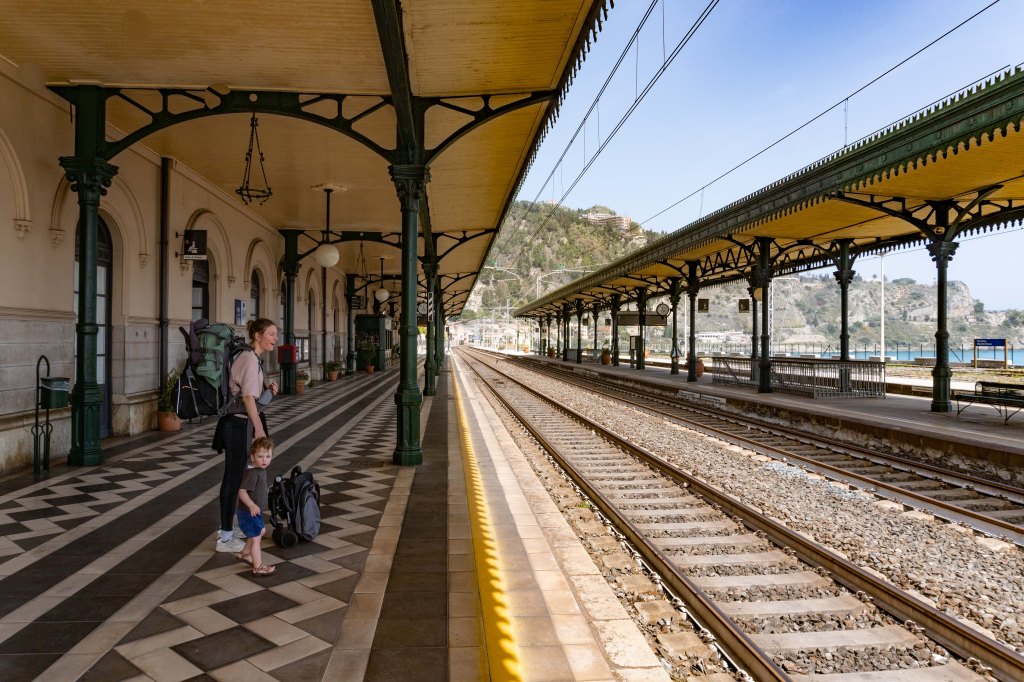
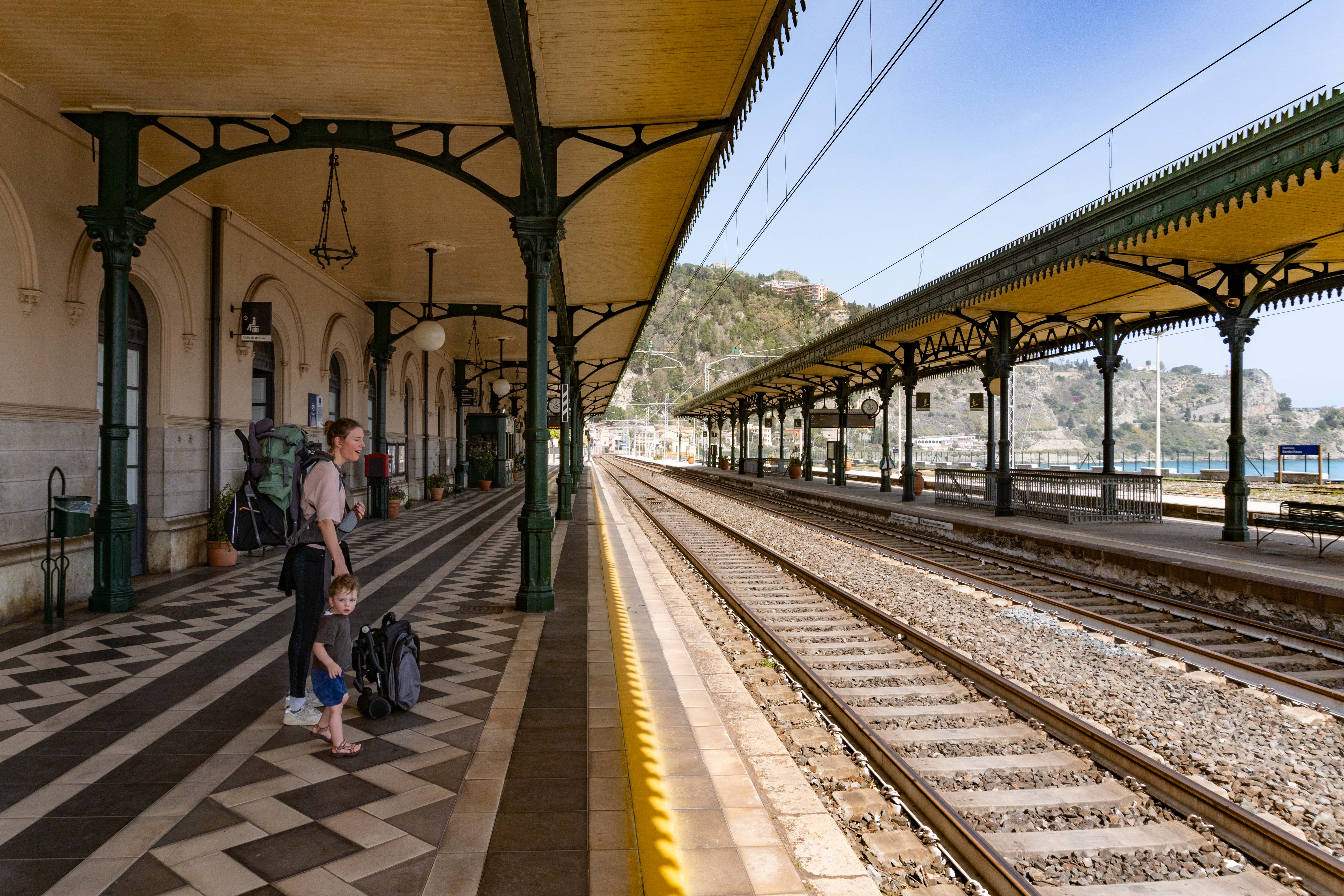
We opted to start our Sicilian adventure in Taormina, getting off the train around noon instead of the intended stop in Catania at 14:32.
Our full experience traveling around Sicily by train and bus for a month will be detailed in a separate blog post.
Return Trip
I traveled back by night train from Palermo directly to Milan, mirroring our trip to Sicily: Departure: Palermo Centrale at 12:58, Arrival: Milano Centrale at 10:10. Switching stations, having lunch and traveled on to Paris where I stayed for the night. I was back in Brussels on day-3 by 10 am.
Costs for the return journey:
Night Train: €45.
Train Milan-Paris: €62.
Train Paris-Brussels: €99.
Ecological Travel Tips for Train Travel with Kids
Pack food and drinks: Keep a variety of healthy snacks and drinks handy for the journey.
Entertainment: Bring books, coloring supplies, and small games to keep kids entertained.
Comfort Items: Pack comfort items like earplugs or sleeping tents for restful nights.
Frequent Breaks: Use long stops to stretch, walk around, and let kids burn off energy.
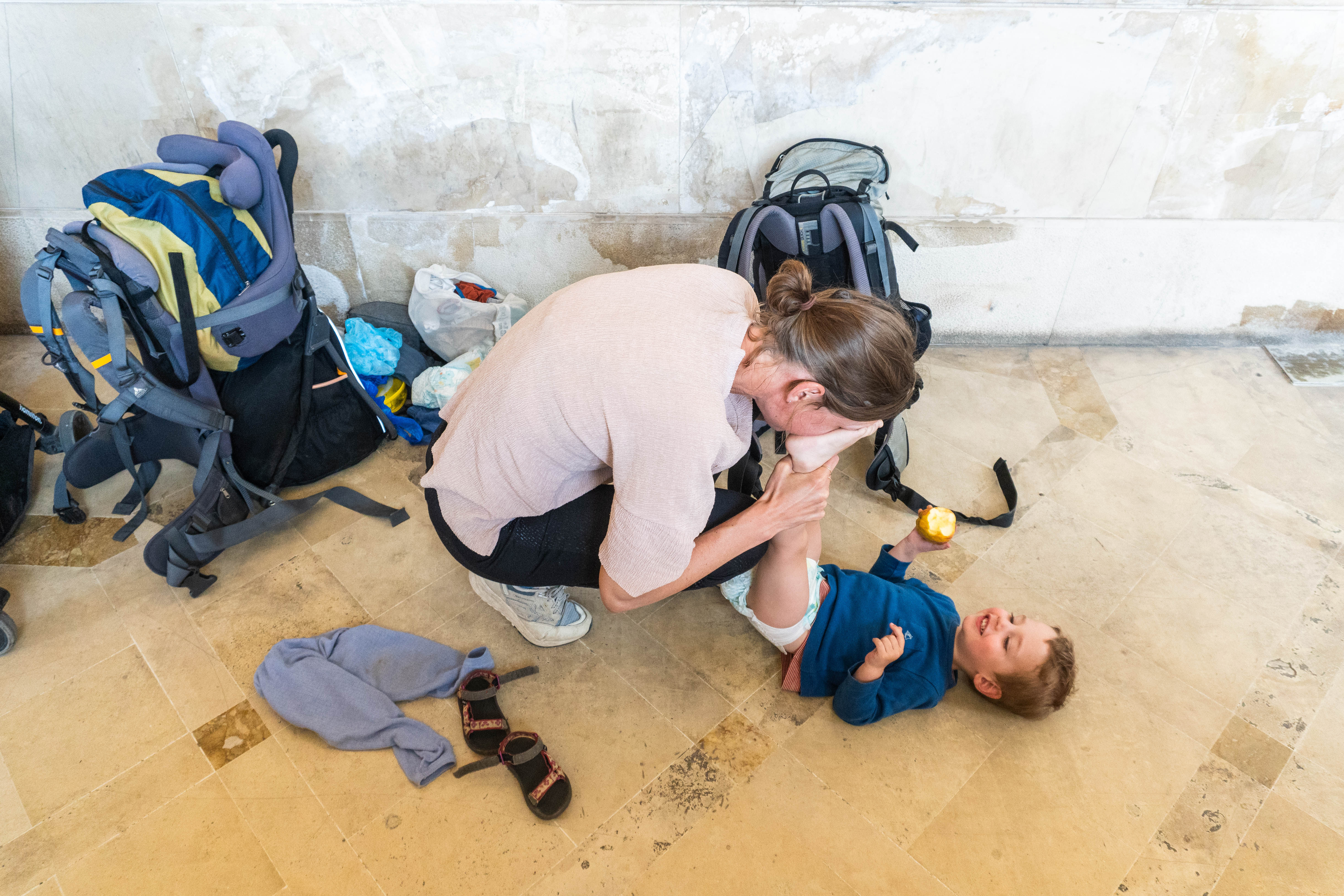
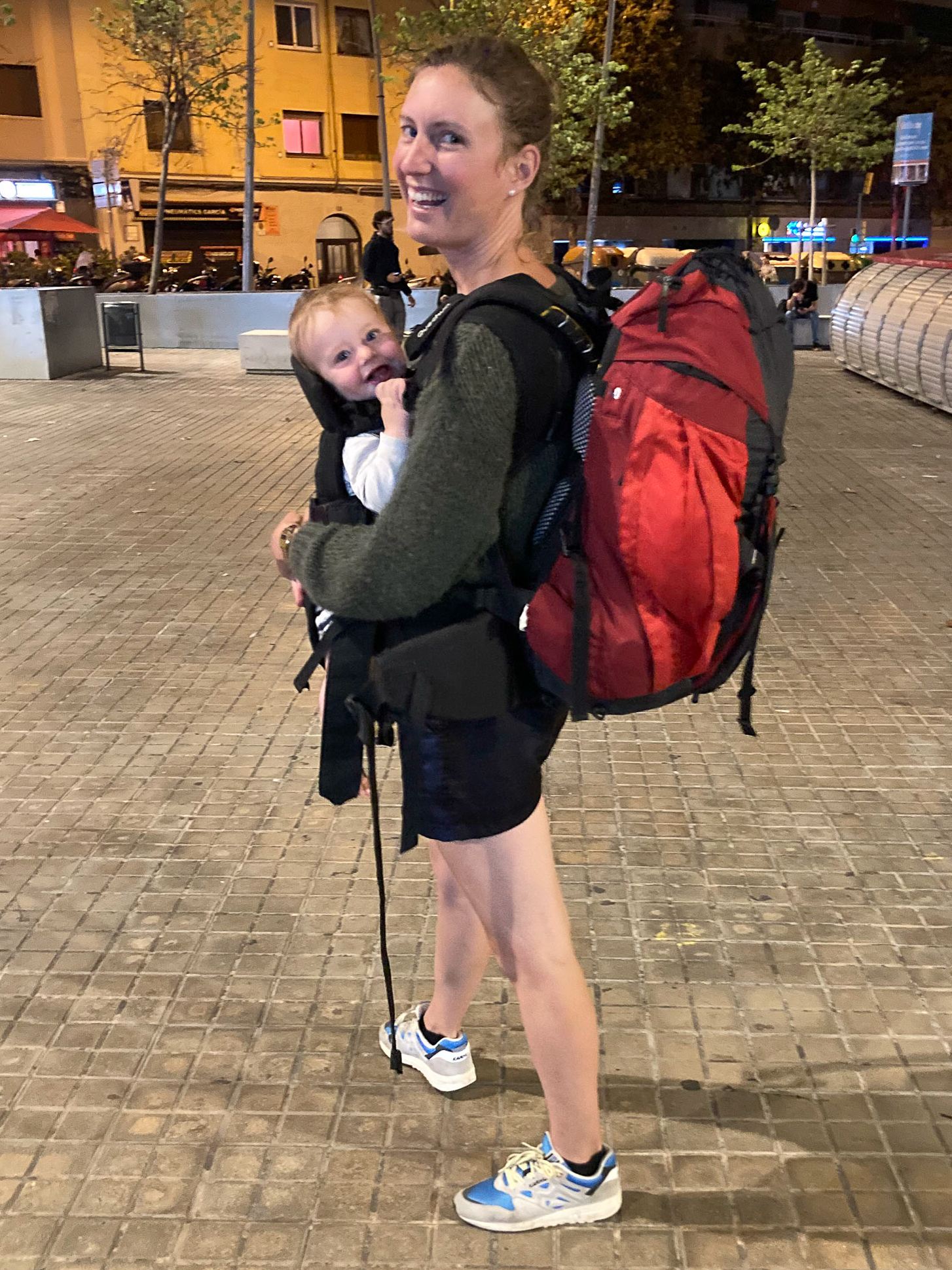
One big hiking backpack with all Tine and my clothes, books, laptop…
A child carrier backpack (Vaude / Deuter), also containing all clothes and supplies for August (incl diapers, milk powder,..)
The sleeping tent of August, containing his teddy bear and all sleeping stuff. If August was in his stroller, we would put this tent in the child carrier backpack where August normally sits.
Earlier this year, we embarked on a month-long journey to navigate some tough personal circumstances. Despite being a last-minute decision, it turned out to be a wise one. In this blog post, you’ll discover how we traveled with our 2-year-old without flying or taking a car for a full month, using only four light travel items.
Exploring Sicily Sustainably
While most people opt for rental cars to explore Sicily, we chose a more climate-friendly and adventurous route: public transport. Focusing on trains, boats, and buses when necessary, this mode of travel brought us joy and countless memorable experiences. We met locals, received insider tips, and embraced the slow travel mentality, allowing us to fully absorb and enjoy our surroundings.
We rarely booked local trains or buses in advance, buying our tickets at the station an hour or less before departure for very reasonable prices (10-40 euros per person max).
Balancing Work and Travel
Traveling for a month in the middle of the work season meant I had to keep an eye on some ongoing projects. We agreed that I would work two half-days per week. I reserved slots on Tuesday and Wednesday mornings, starting at 7:00 and working until 11:00 or 12:00 before joining Tine and August in our activities. The colleagues were informed, ensuring deliverables were ready by Monday evening so I could review and steer the projects during my dedicated work hours. This schedule allowed me to disconnect for five days each week and fully recharge for the next working slots.
Our Eco-Friendly Sicily Itinerary
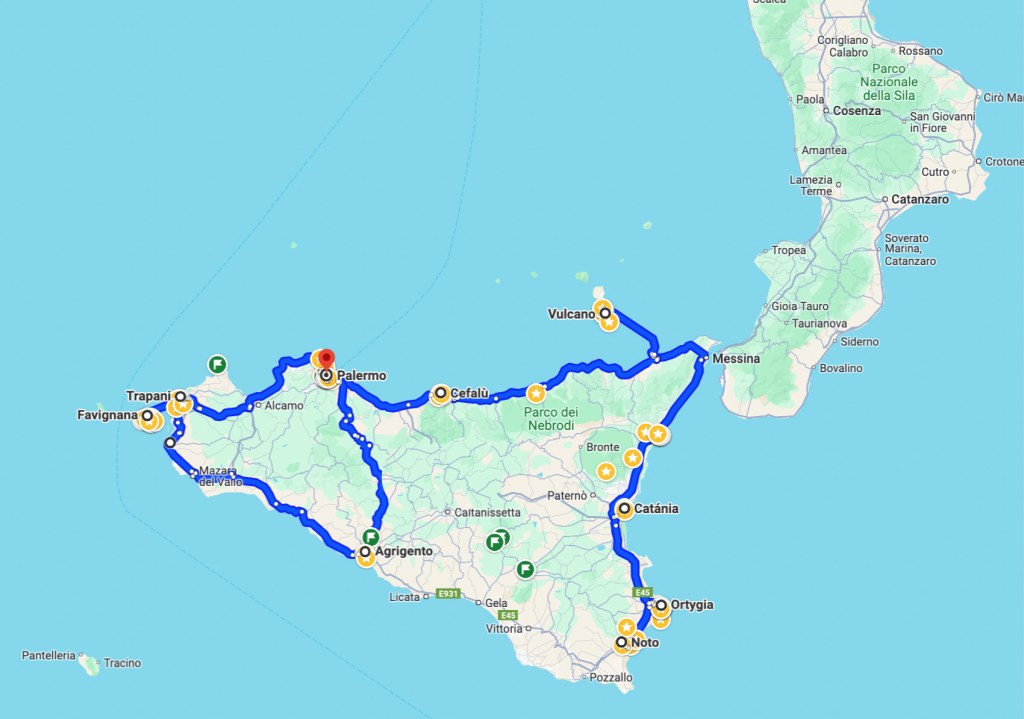
Our travel loop around Sicily included staying at least 2-3 days in each location. For detailed tips on traveling from Brussels to Sicily by train, check out our separate blog post (link here).
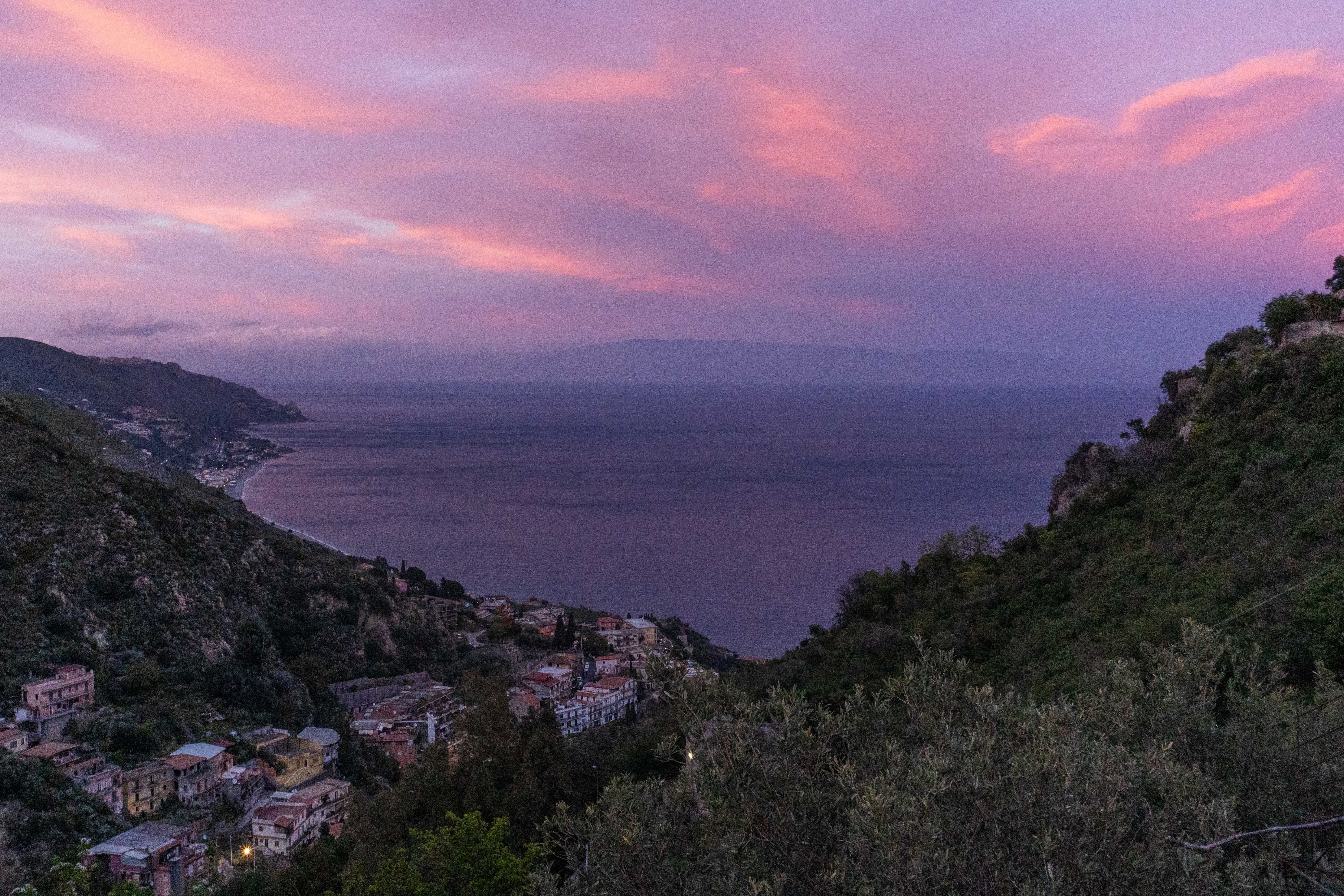
Taormina – Coastal mountain city with views of Etna
Catania – Busy city life
Etna – Impressive natural beauty
Catania – Train around Mt. Etna
Siracusa-Ortigia – Historic peninsula
Noto & Avola – Historic village in the hills
Vulcano – Volcanic island vibes
Cefalu – Luxury and historical charm
Palermo – Rich cultural life
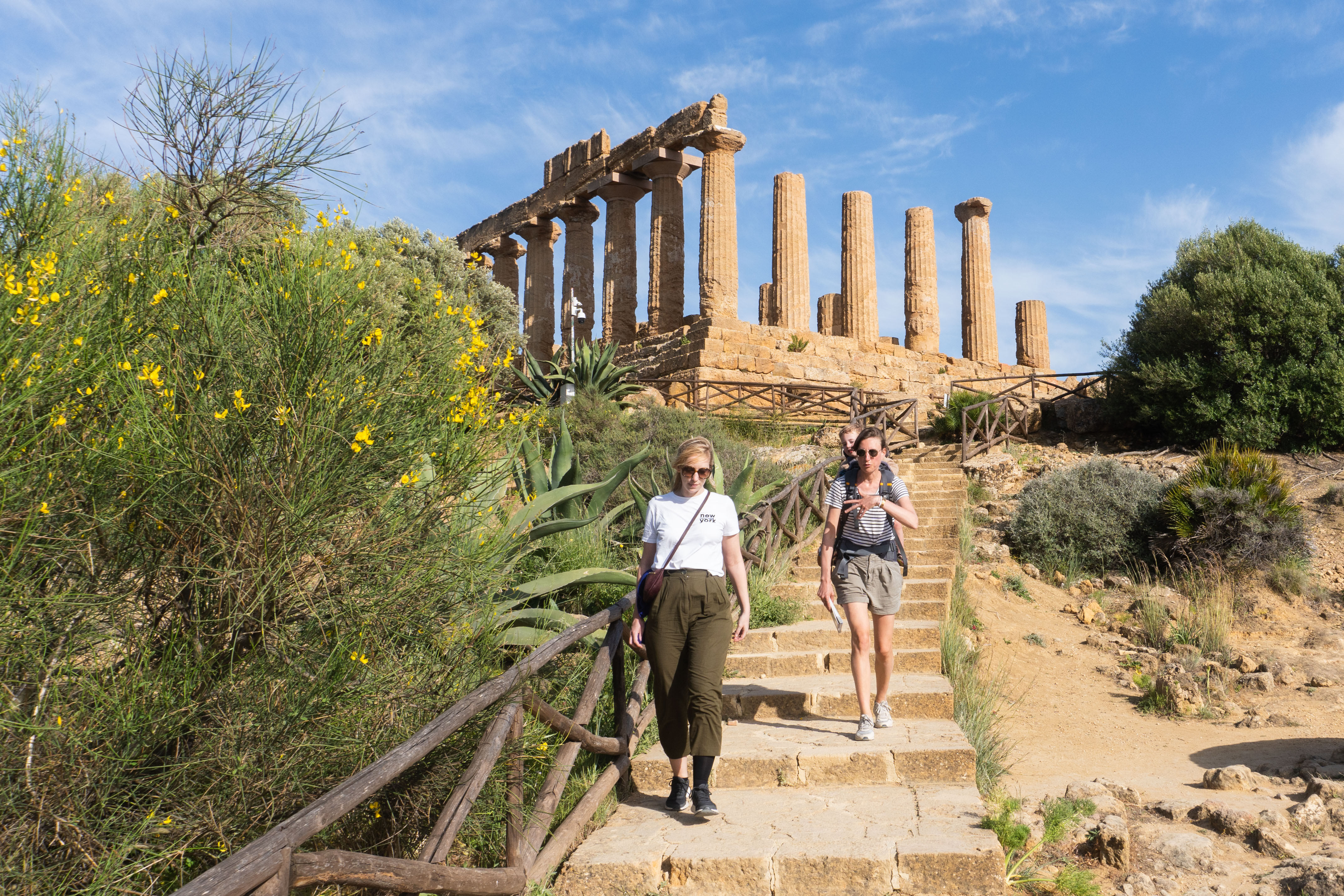
Agrigento – Ancient temples
Favignana Island – Nature and slow island life
Trapani – Historic city
Palermo – Preparing to return
Tips for Traveling Light with a Toddler
Traveling for a month without a car meant packing light was essential. We managed with:
One big hiking backpack for our clothes for a week, books, and toiletries.
A child carrier backpack for August’s clothes and supplies, including diapers and milk powder.
A sleeping tent for August, including his teddy bear.
A foldable stroller for easy carrying and occasional groceries.
Traveling in the low season allowed us to capitalize on last-minute hotel deals. We found great rates by booking after 16:00 on the same day. Starting our search at that time, we would call accommodations and negotiate prices, leading to stays ranging from 45 to 150 euros per night, including breakfast.
Highlights of Our Step-by-Step Itinerary
1. Taormina – Coastal mountain city with views of the Etna
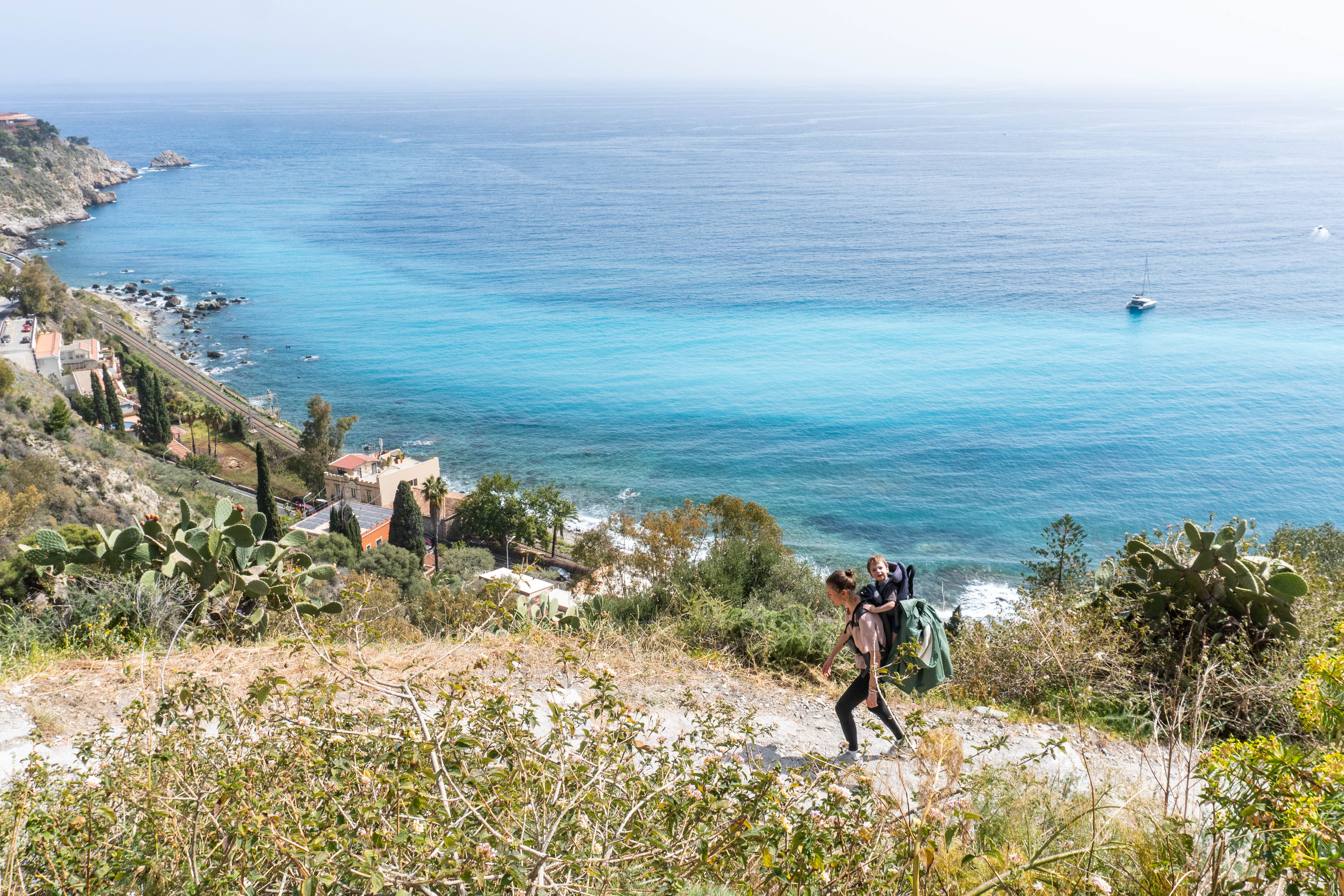
Transport & accommodation: We got off the night train from Milano in Taormina and hiked up the hill to the village, where we stayed at a B&B.
Activities: visit the Teatro Antico de Taormina, have an aperitif on the terrace of Belmond Grand Hotel Timeo or Piazza IX Aprile in front of the church. We hiked through a beautiful GR route to the neighboring village Castelmola, first passing a castle and the Chiesa Madonna della Rocca chappel, and on our way back we had dinner with spectacular views on the Etna in Al Saraceno
2. Catania – Busy city life
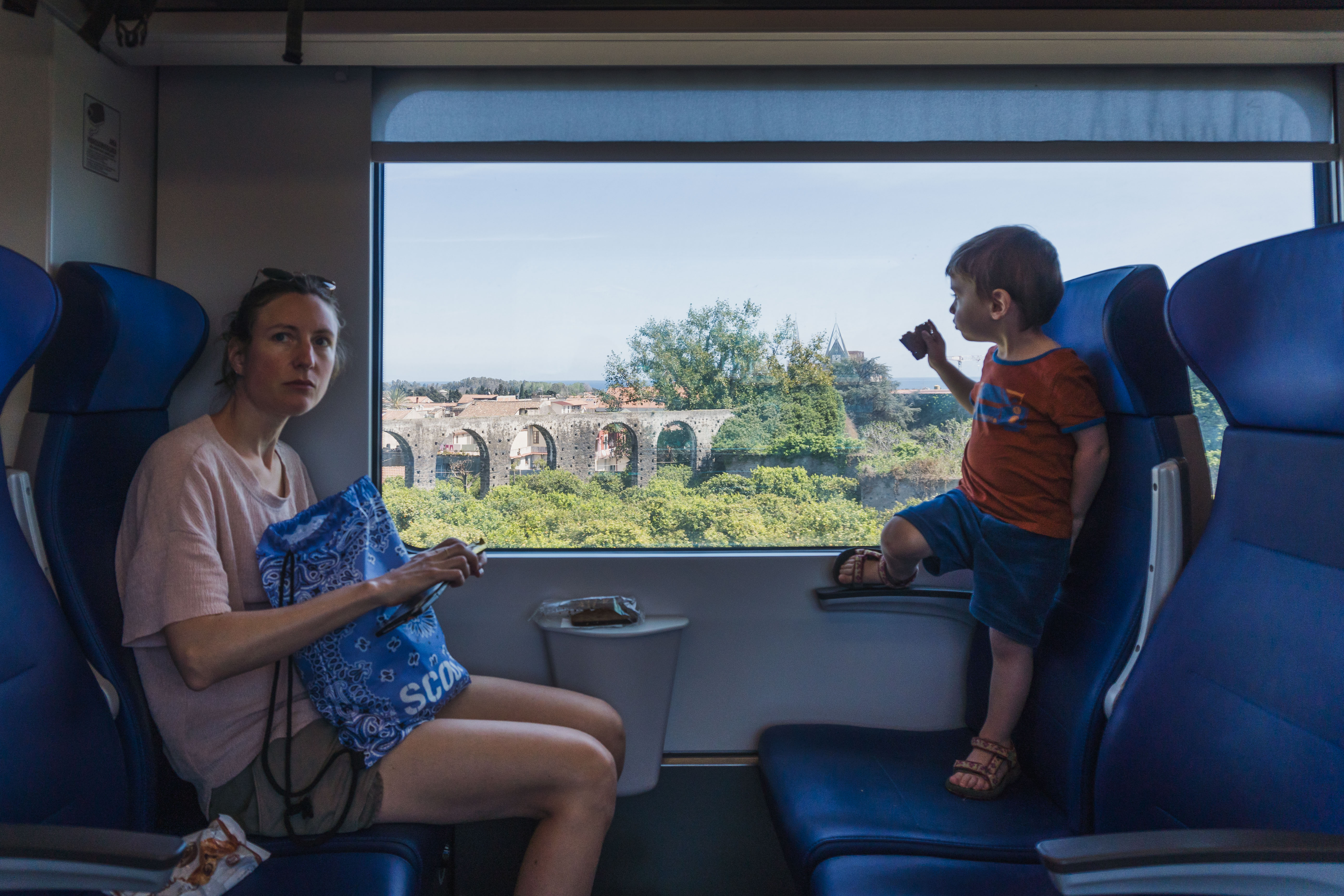
Transport & accommodation: We took the train from Taormina to Catania, with the only purpose of staying overnight and taking the normal bus to the Etna the next morning. There’s tours to visit the Etna, but they stay only a couple of hours, while we wanted to sleep on the Etna.
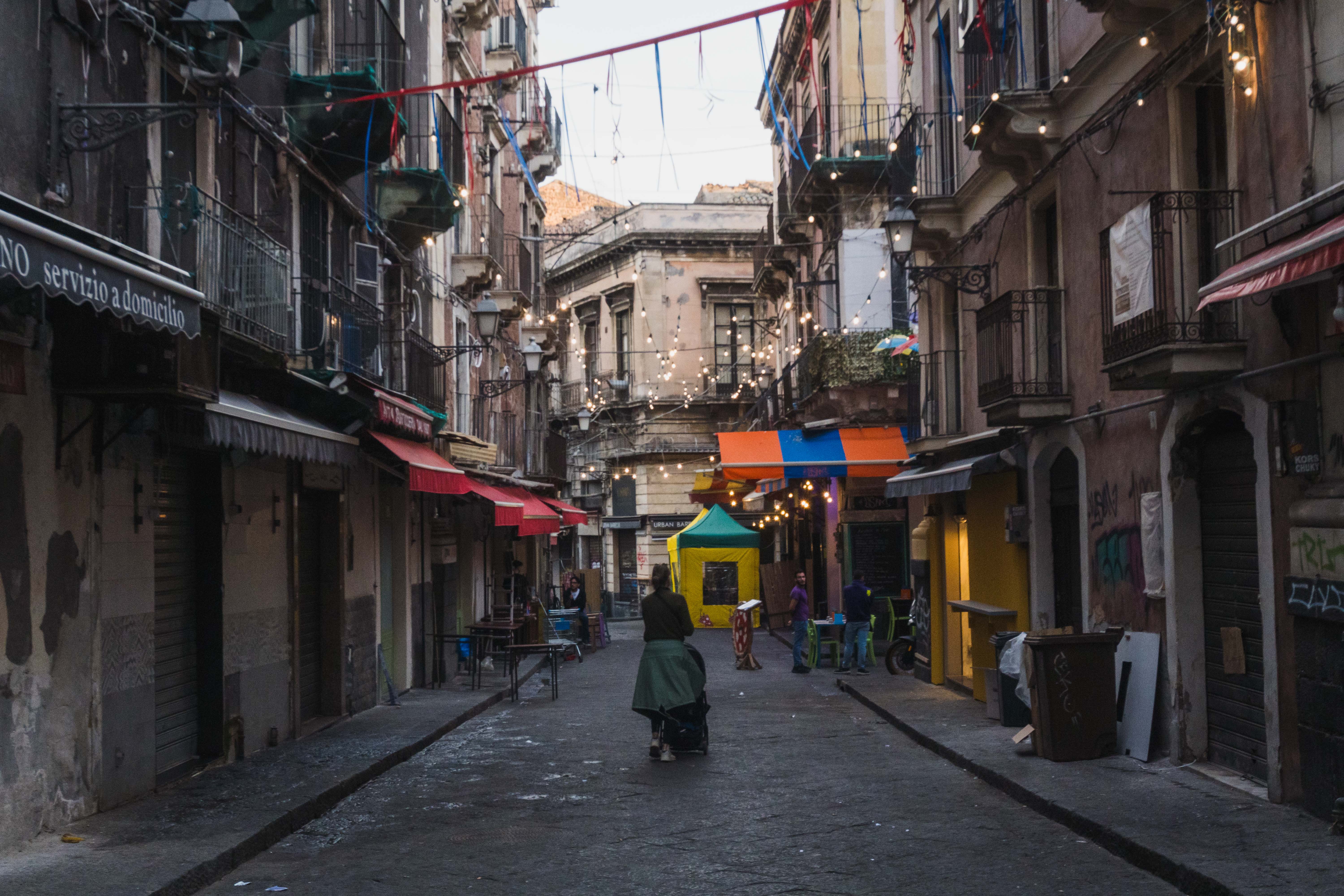
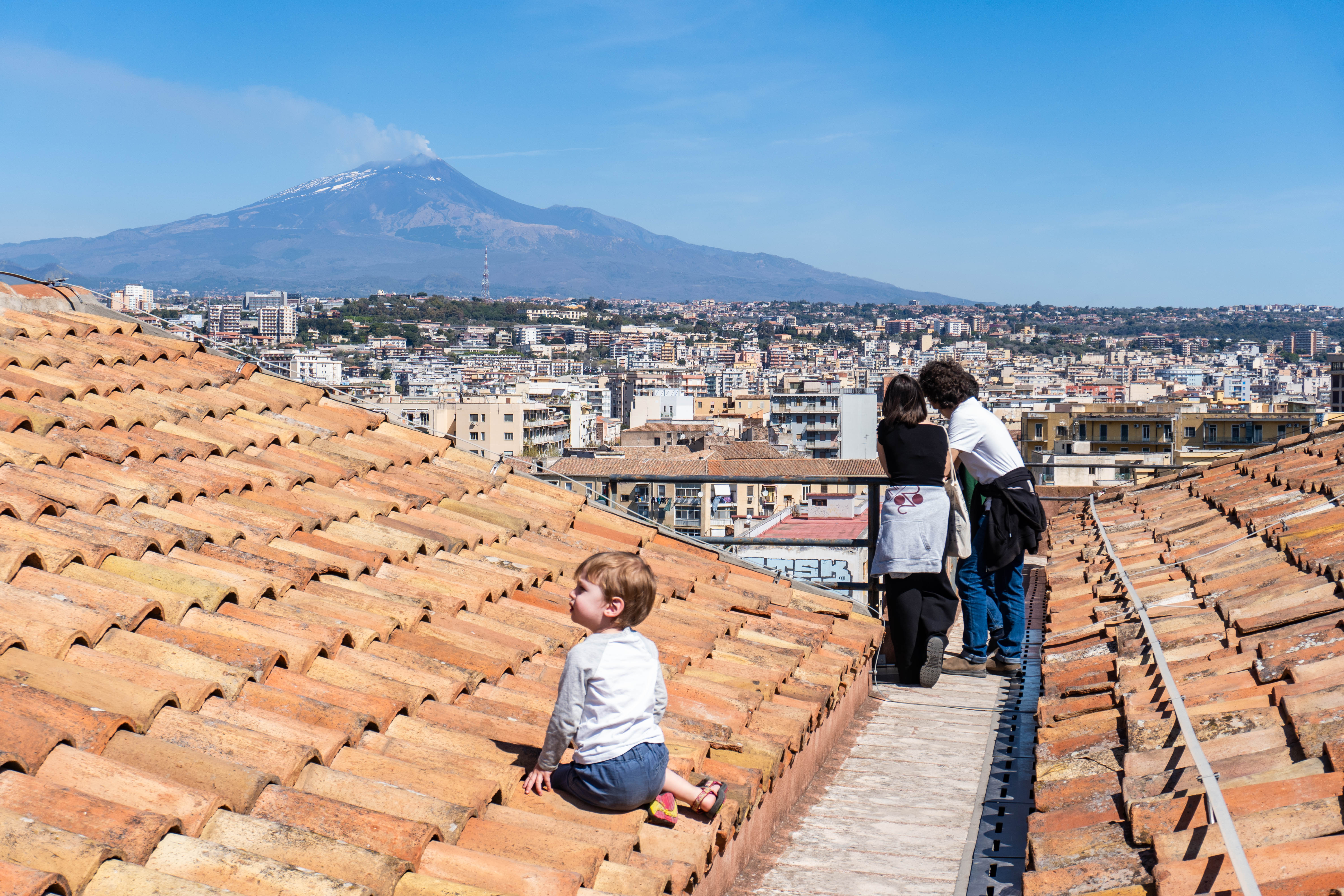
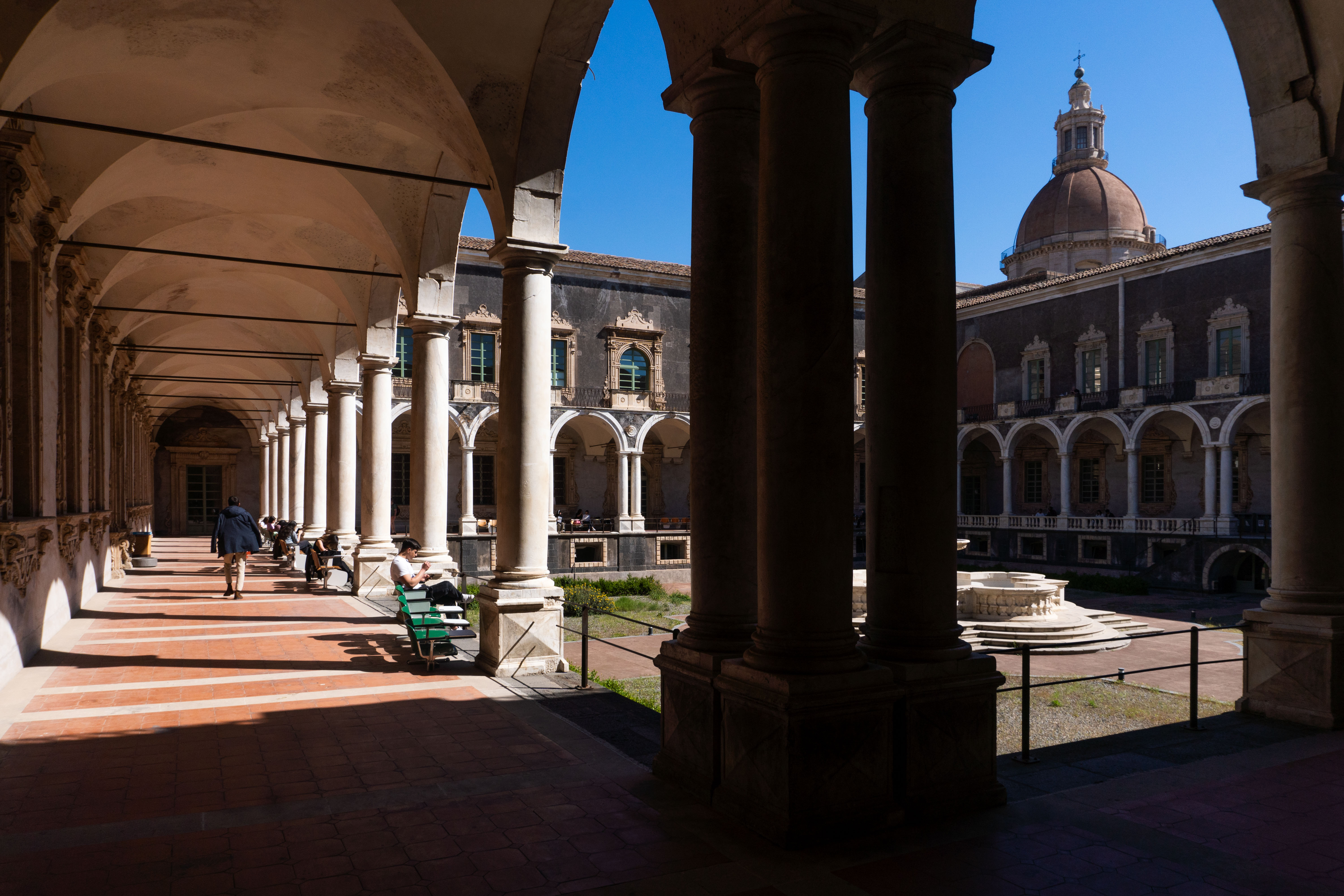
Activities: We visited the old city center with some beautiful historic buildings and had dinner there. Next to the usuals, our recommendations for Catania are the view from Chiesa della Badia di Sant’Agata church, the Benedictine Monastery of San Nicolò l’Arena, and the roof of the Chiesa di San Nicolò l’Arena just next to it. The Bellini Gardens with a viewpoint on the Etna were also definitely worth it, and we had lunch in a good Sicilian restaurant next to it called Putì
3. Etna – Impressive nature
Transport & accommodation: To take the regular bus to the Etna was quite an adventure. I went the day before, but could not book it. They told me to come back at 7 am to this bar called Nafè close to the central station, where they sold us the tickets, while the bus to Rifugio Sapienza was leaving at 8:30. There were more visitors than spots on the bus, so quite some people were disappointed and had to still book a tour to the Etna to get there. Hotel Villa Dorata was impressive, we only paid about 65 euros per night including a good breakfast, for a nice room with a mountain view.
Activities: there are different options, but you surely want to take the cable car up, and either do a small walk on your own or take a guided walk that you book at Etna Esagonal Trekking Tour next to the cable car. The two small old craters are also worth walking around as a start but are of course less spectacular
4. Catania – Train around Mt. Etna
Transport & accommodation: We fetched a ride back from the hotel to Catania with the lovely owners of the hotel on the Etna.
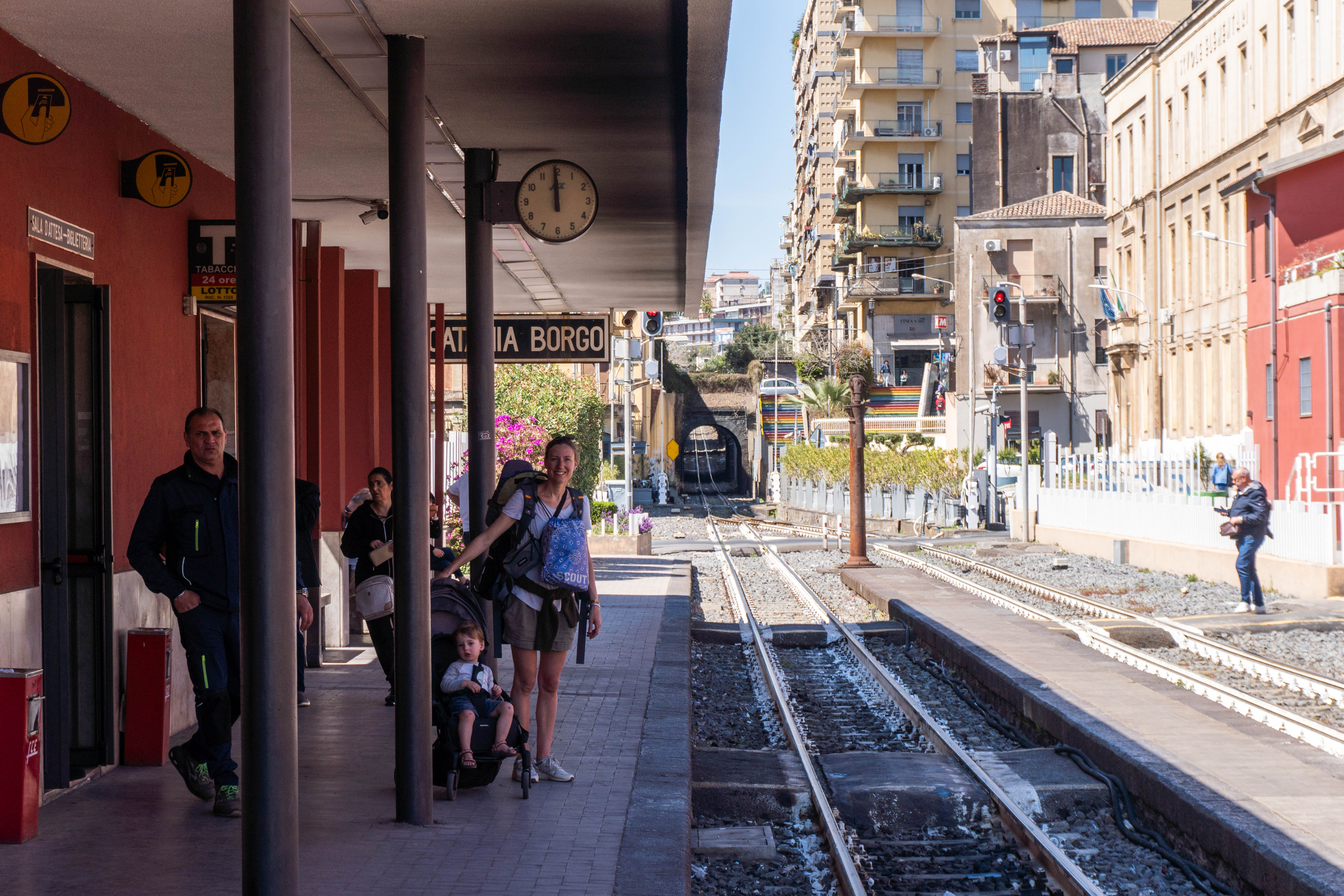
Activities: There’s a beautiful train driving around the Etna on weekdays and some weekend days (check the timetable!). They leave from Ferrovia Circumetnea Stazione Borgo. We got off the train in Randazzo for a walk but did the whole train ride in one day. If time allows, you can surely split it in two days as well. The train does not do a full circle, but you can switch stations at walking distance to catch the normal train back to Catania from Riposto. For more things to do, see 2. Catania busy city life.
5. Siracusa-Ortigia – Historic peninsula
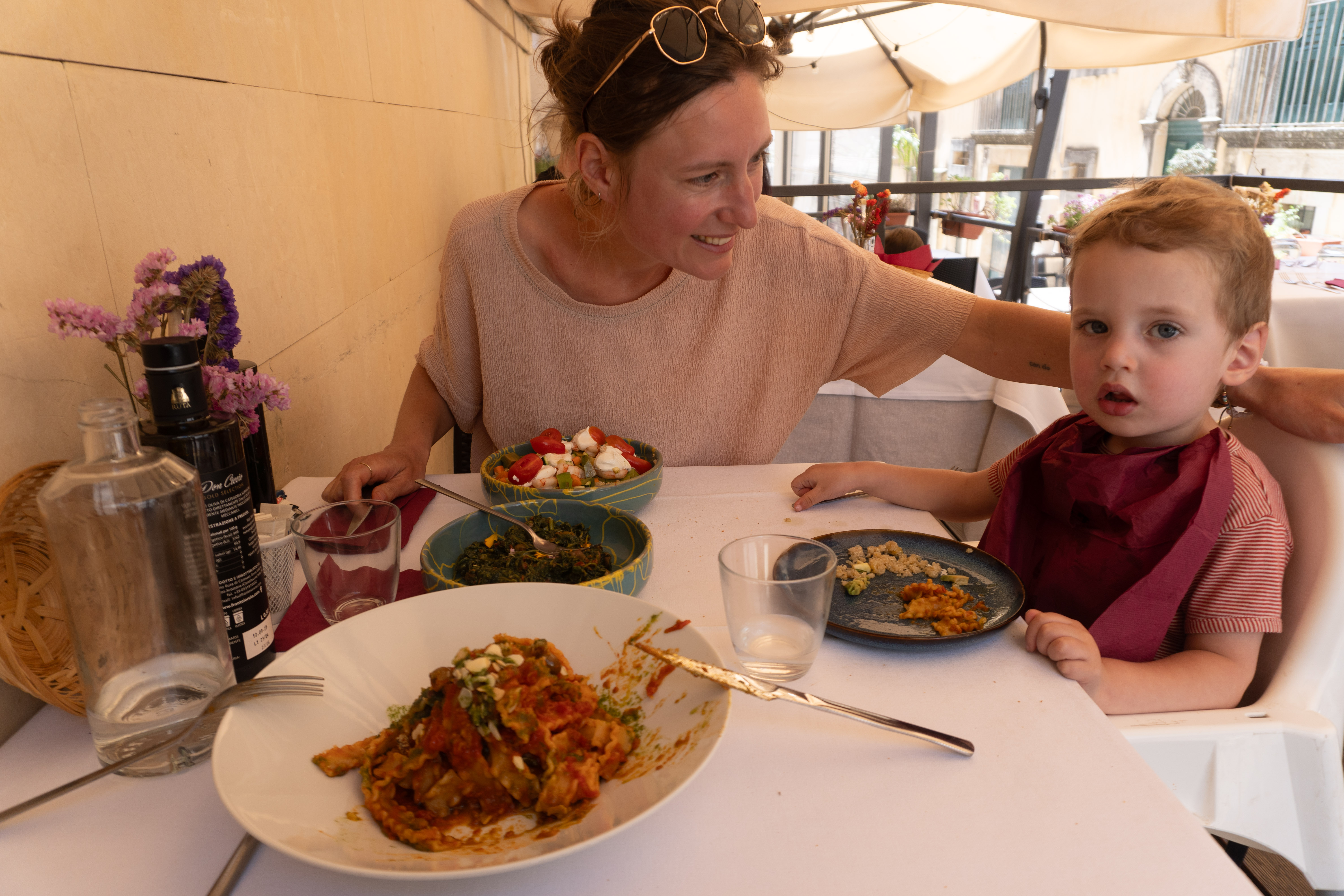
Transport & accommodation: We took a high-speed train from Riposto, after getting off the Ferrovia Circumetnea, to Siracusa. We stayed at Hotel Gran Bretagna with decent rates and a good breakfast. Some nice restaurant recommendations are Area M, aLevante, and A Putia
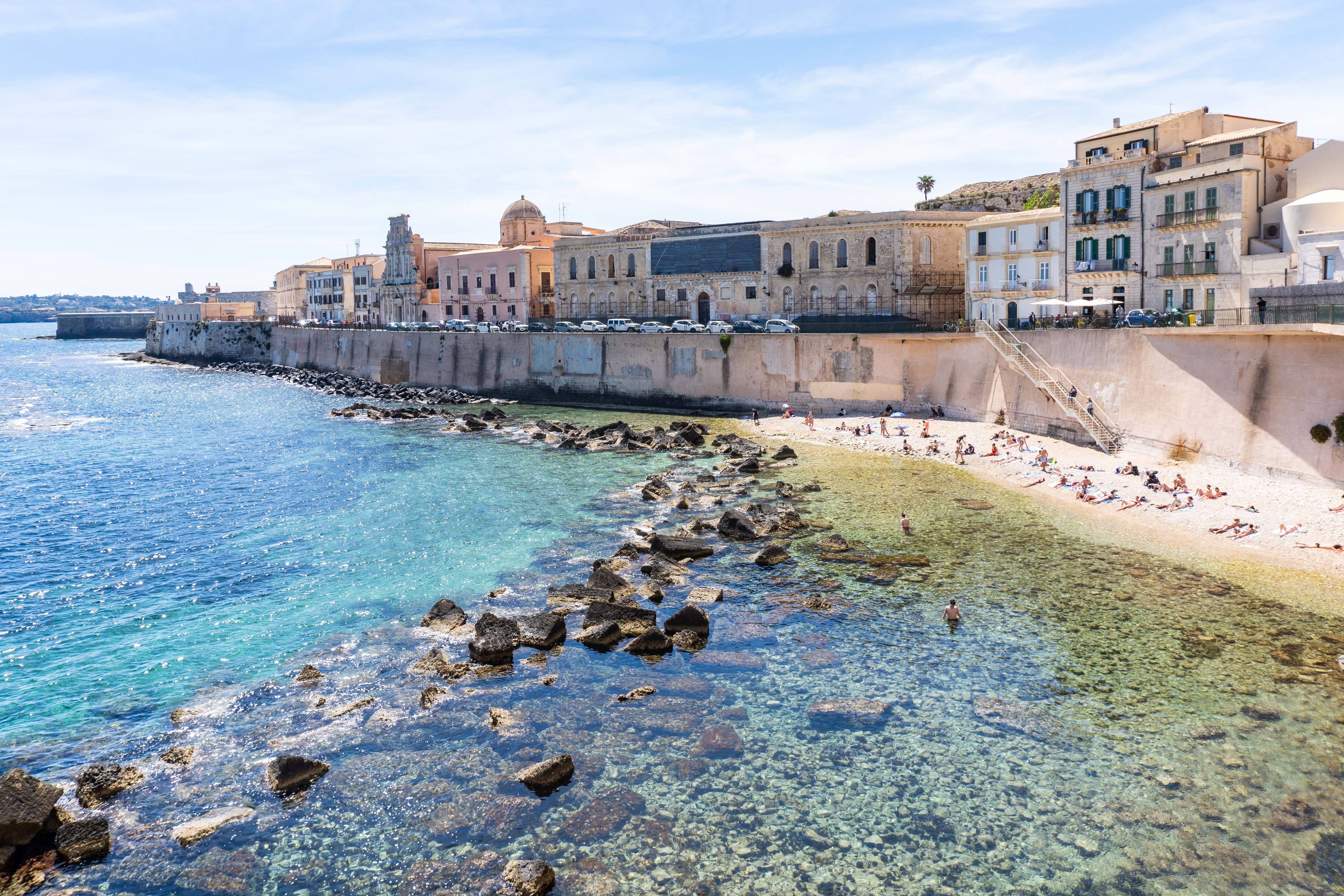
Activities: Siracusa and Ortigia are spectacular to hang around in the little old streets, and swim in the sea at one of the small beaches like Spiaggia di Fonte Aretusa or Cala Rossa Beach. A must-visit is the Parco Archeologico Neapolis with the Teatro Greco.
6. Noto & Avola – Historic village in the hills
Transport & accommodation: To go to Noto we took a bus from Siracusa station. We stayed at The Mandorleto Resort and B&B a “kind of” agriturismo along the way, but there’s ample accommodation in Noto as well. It was a very long hike of more than an hour to get to Noto or Avola, so this location was not ideal without a car. Nevertheless, we had a studio with a kitchenette for 45 euros per night, including a very decent breakfast. Price-quality it was spectacular ;-). We had a very good lunch in Nachè.
Activities: We hiked to Noto and visited the churches, took the little tourist train with August, went to the barber,… chill life in a spectacular historic setting. It’s worth visiting the rooftop of Chiesa di San Carlo al Corso. Tine did some running back, while I fetched a ride back with August to our B&B.
7. Vulcano – Vulcanic island vibes
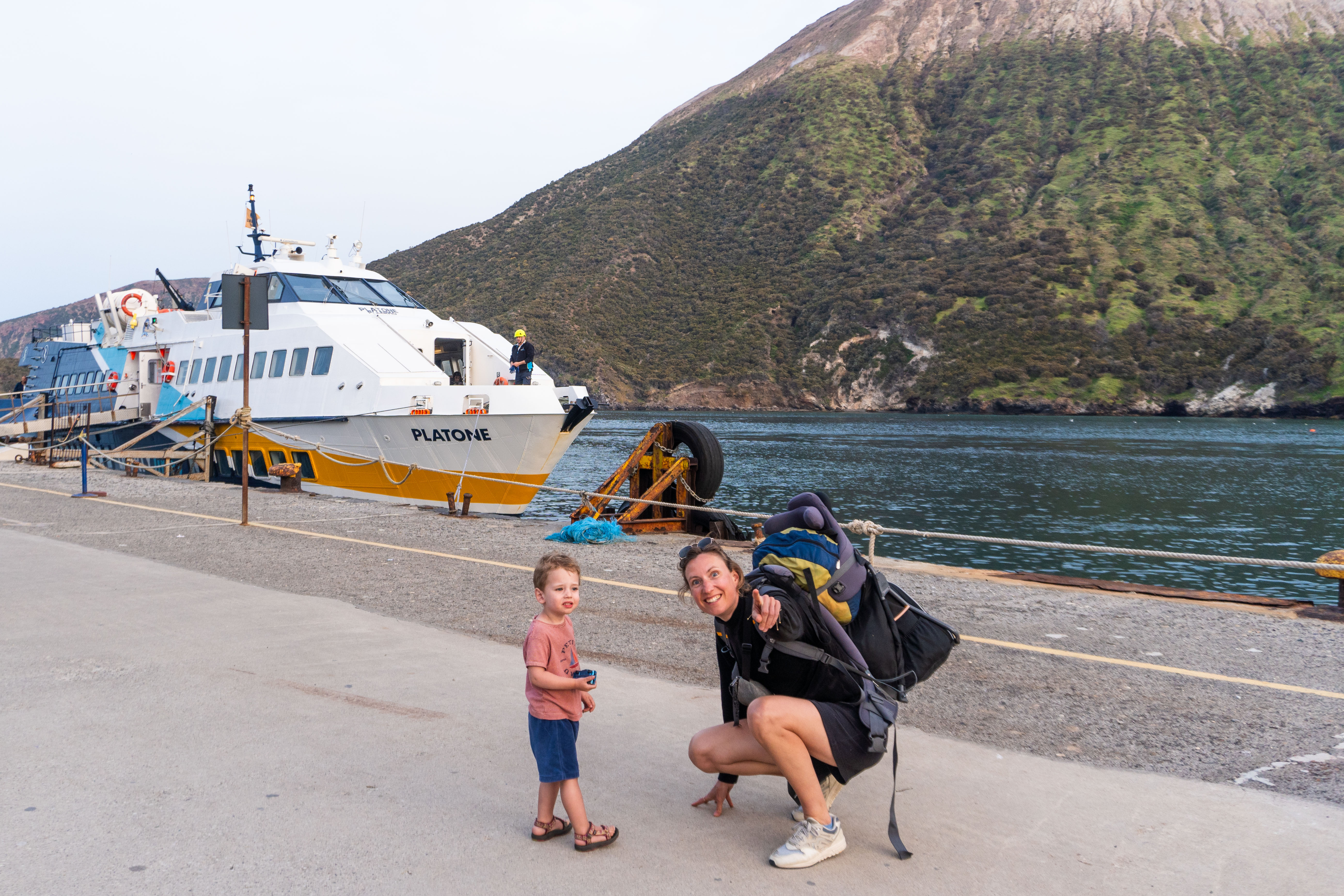
Transport & accommodation: To get from Avola to Vulcano is quite a journey. We took the bus bus from Avola to Siracusa, and the train from Siracusa to Messina… with a very very short transfer time of less than a minute we made it on the train to Milazzo from where we shared a taxi with other people heading from the railway station to the boat… and were just in time for the last boat to Vulcano! We booked the ferries online via our smartphone. We stayed a bit outside the center for a very affordable price in Holiday Eolie Village, but a bit more into the season, there are surely other places to stay with higher. In April most hotels were still closed.
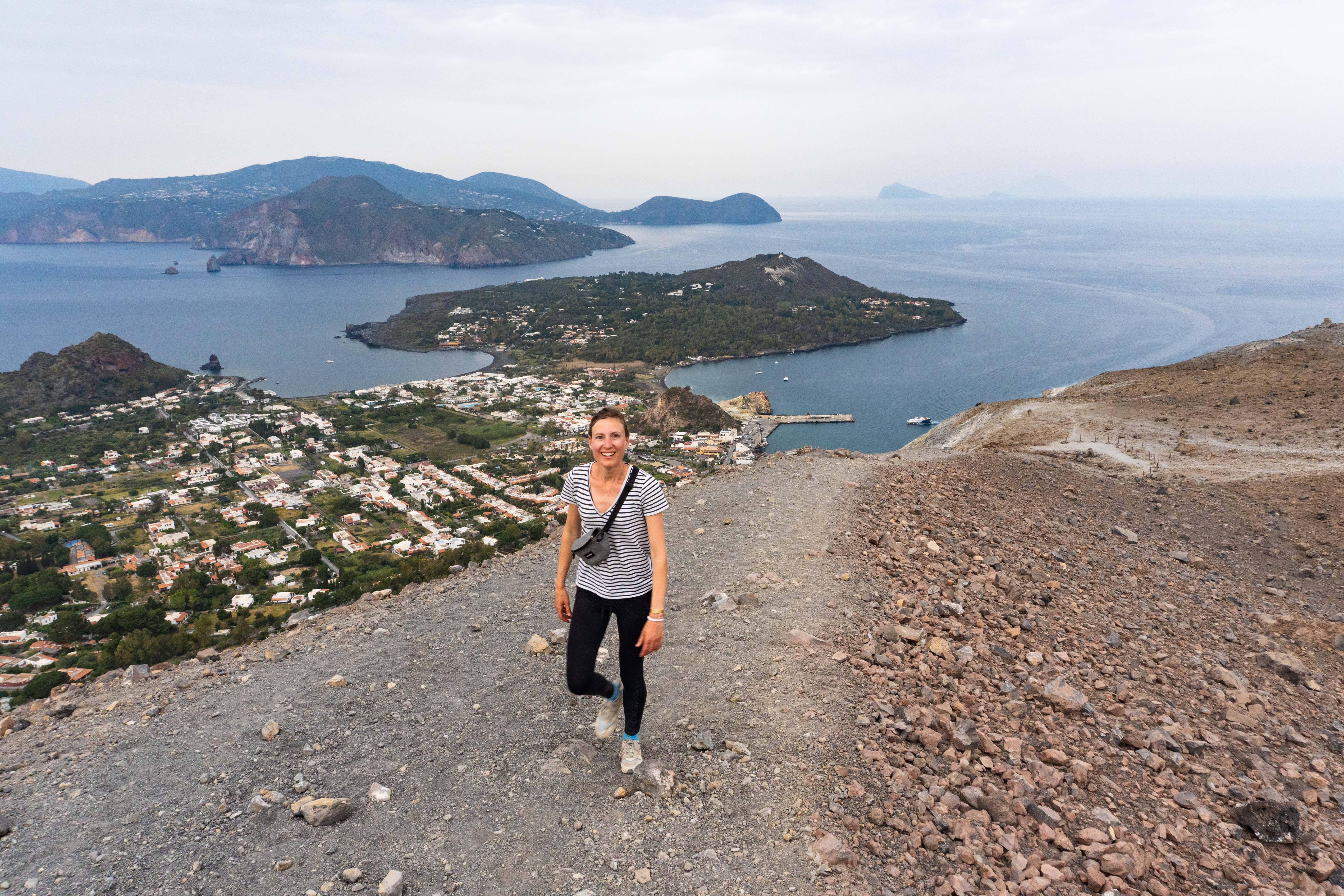
Activities: Vulcano is a beautiful island for swimming in la Baia Negra and hiking up the Vulcano volcano, which is possible on your own. Do check the traffic lights so you don’t get fined ;-). The island used to have hot springs in Spiaggia delle Acque Calde but these have been closed for construction permit reasons and “health reasons”. You can still swim in the sea in front of the hot springs and find some spots with warm water smelling like sulfur, but be aware it’s not very healthy to breath this mix of vulcanic gasses coming out of the water. We also rented a little car with an open roof for an hour to drive to Belvedere Capo Grillo.
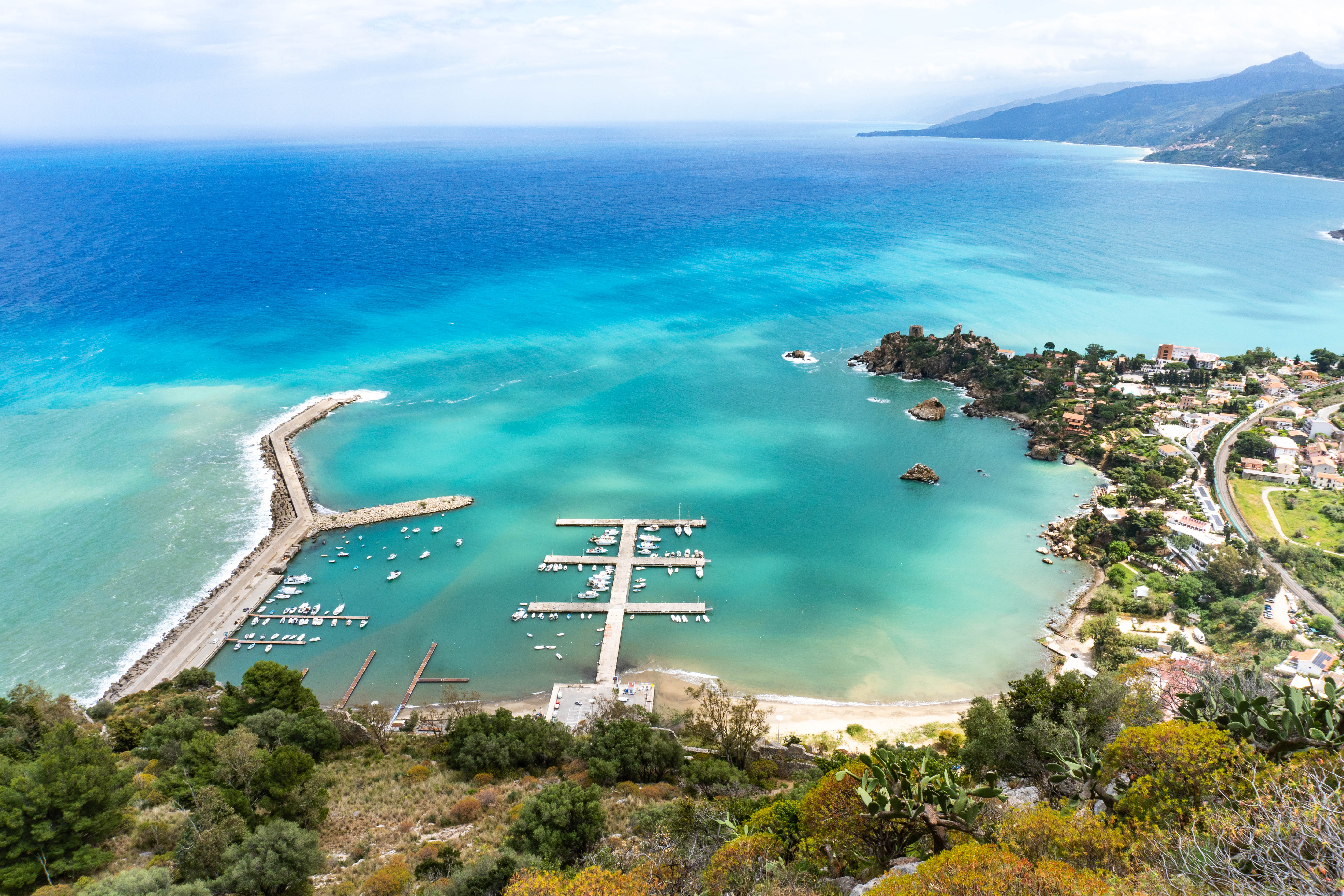
8. Cefalu – Luxury and history
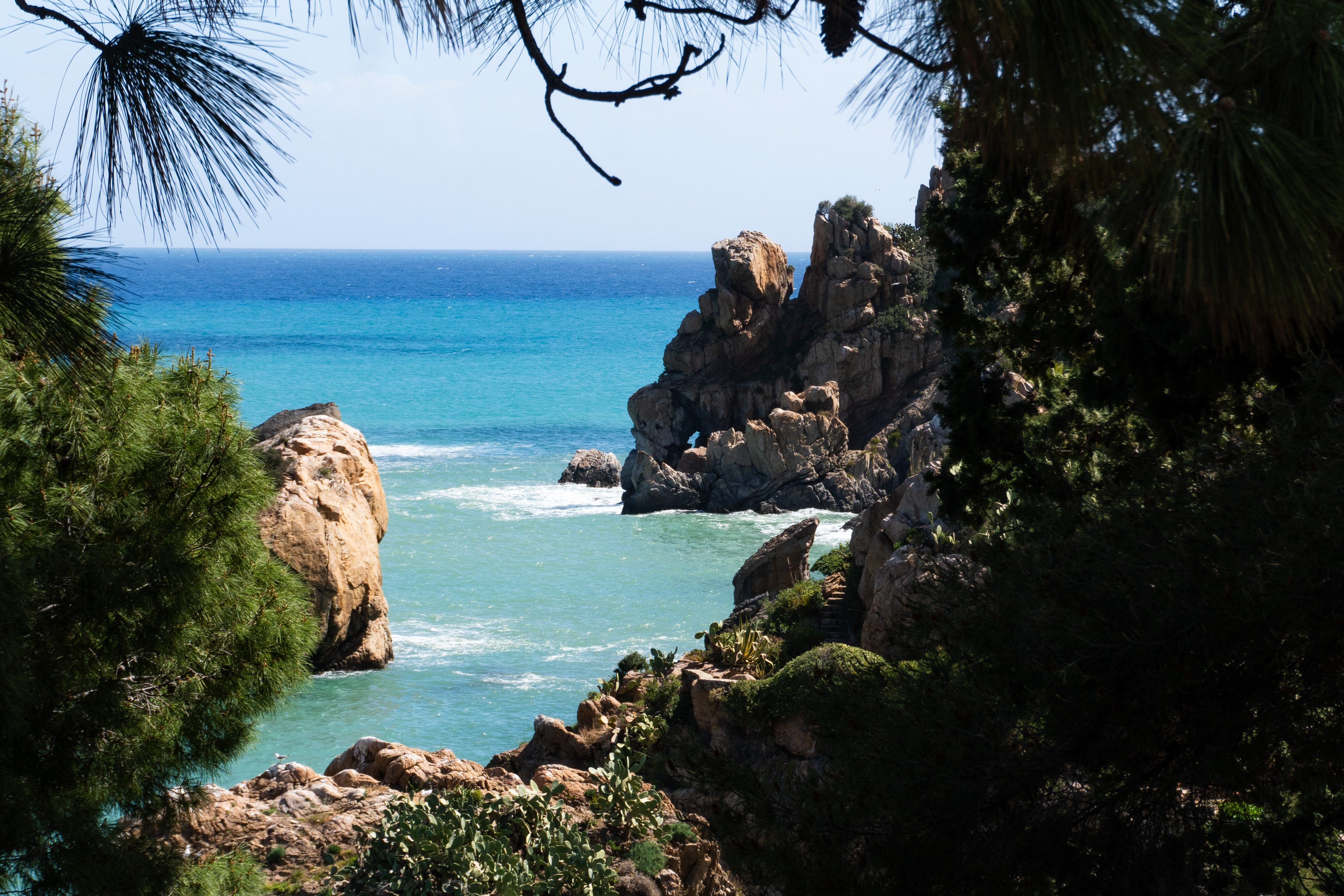
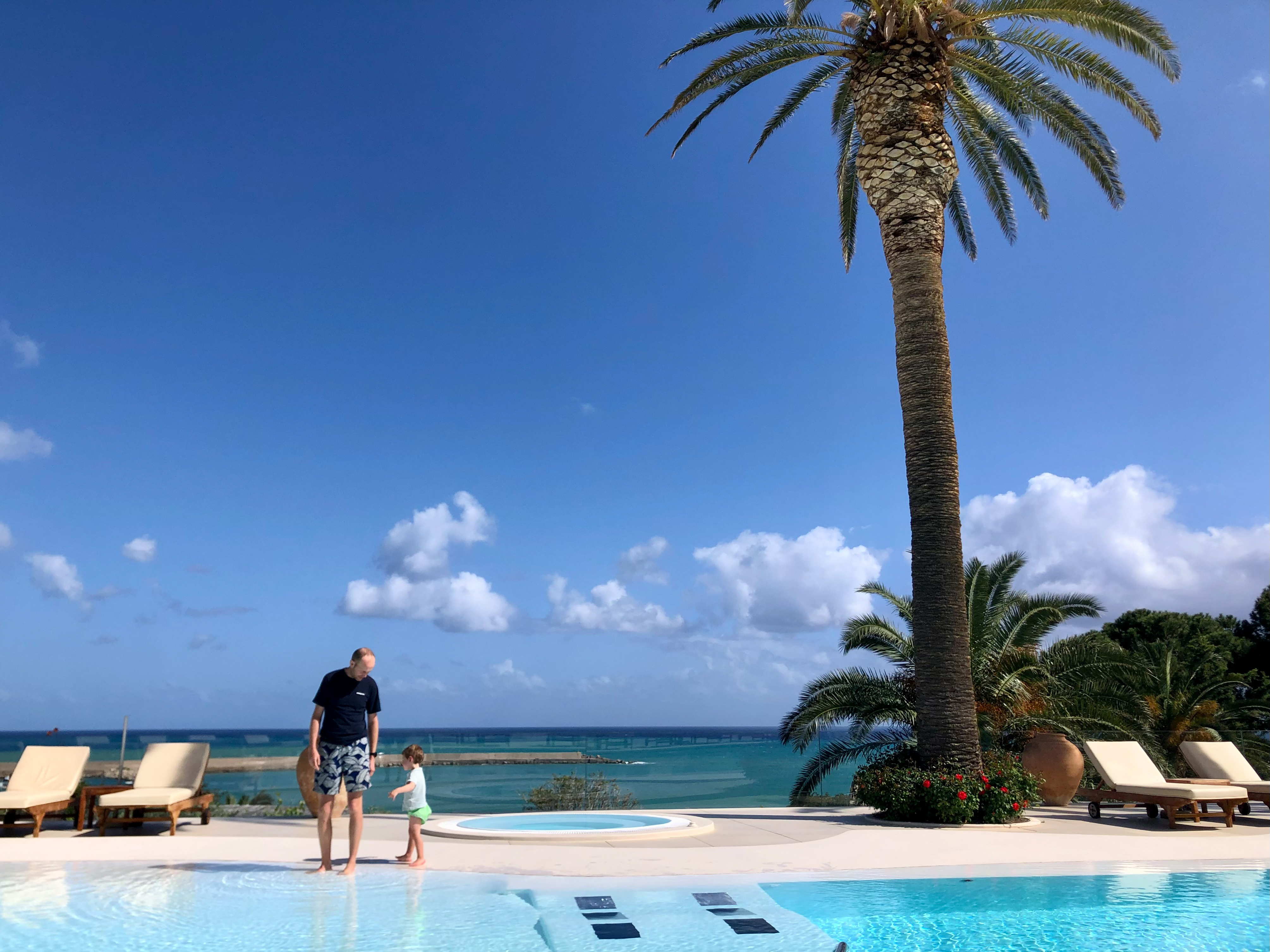
Transport & accommodation: A ferry, taxi, and train ride later we arrived in Cefalu. Since it was low season, we managed to book Hotel Le Calette for 150 euros per night. We got an amazing upgrade to one of the suites and stayed for 3 nights in a room that normally costs +1000 euros per night. The tricky consequence is that the restaurant in the hotel was quite exclusive with a dinner menu of 95 euros per person excluding drinks. But clearly, the whole experience was spectacular and the personnel was extremely friendly. We arrived in the rain and were welcomed with towels and a glass of champagne, we got private use of the spa for free for half an hour, and the breakfast was breathtaking,…
Activities: Cefalu is a beautiful village to stroll around. We climbed to the top of Castello di Cefalù and had picknick there, the small entrance fee was worth it.
9. Palermo – Rich cultural life
Transport & accommodation: Palermo is only a simple train ride away from Cefalu. In Cefalu we were joined by our friend Sarah, so we booked a super beautiful Airbnb “blue apartment” in the city center in the building above a bar called Ferramenta. As a recommendation for vegetarian brunch Ecologica bio shop & bistrò. For I Segreti del Chiostro, expect to queue for a while. Other nice places: Graziano al mare, Nautoscopio – NAUTO,
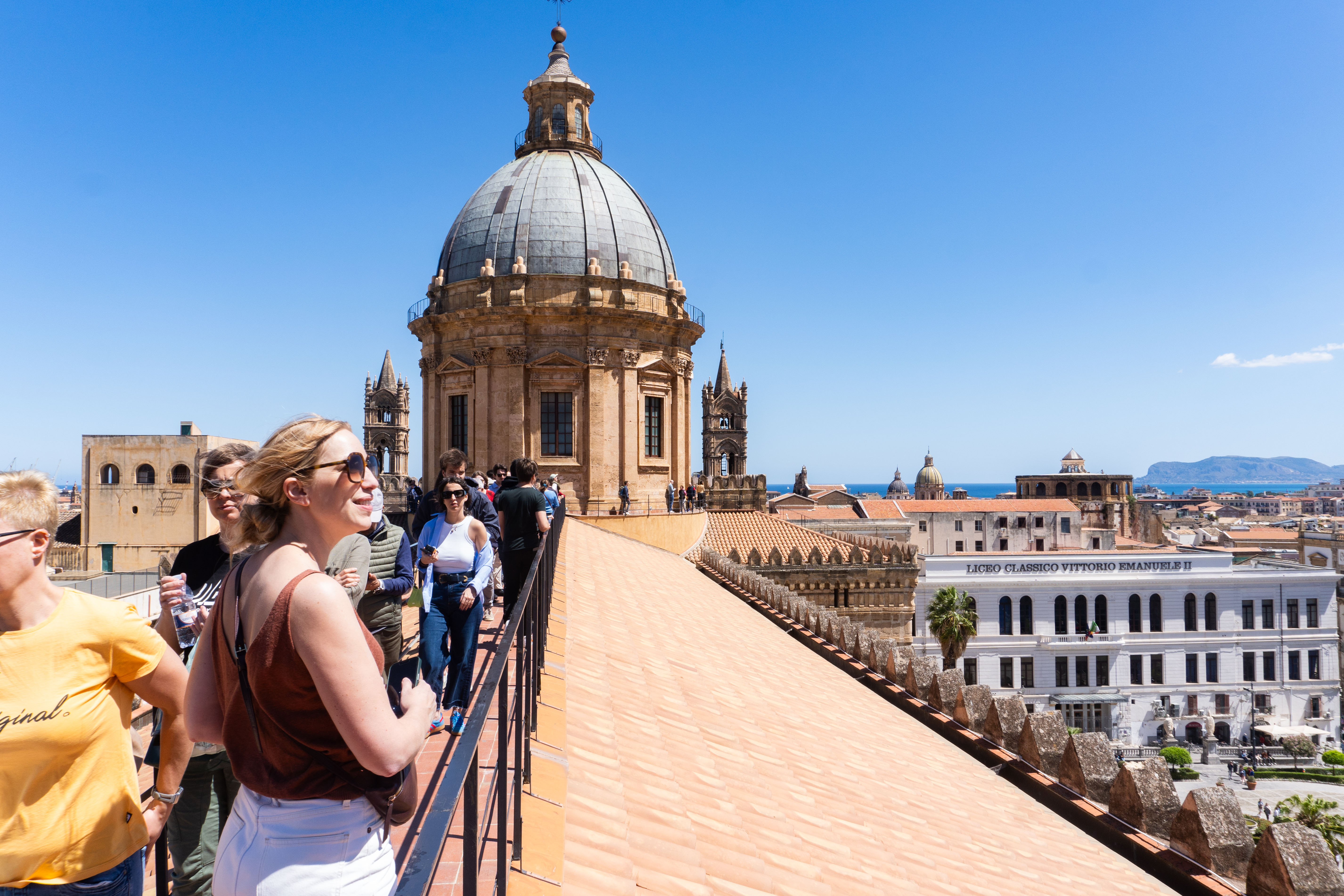
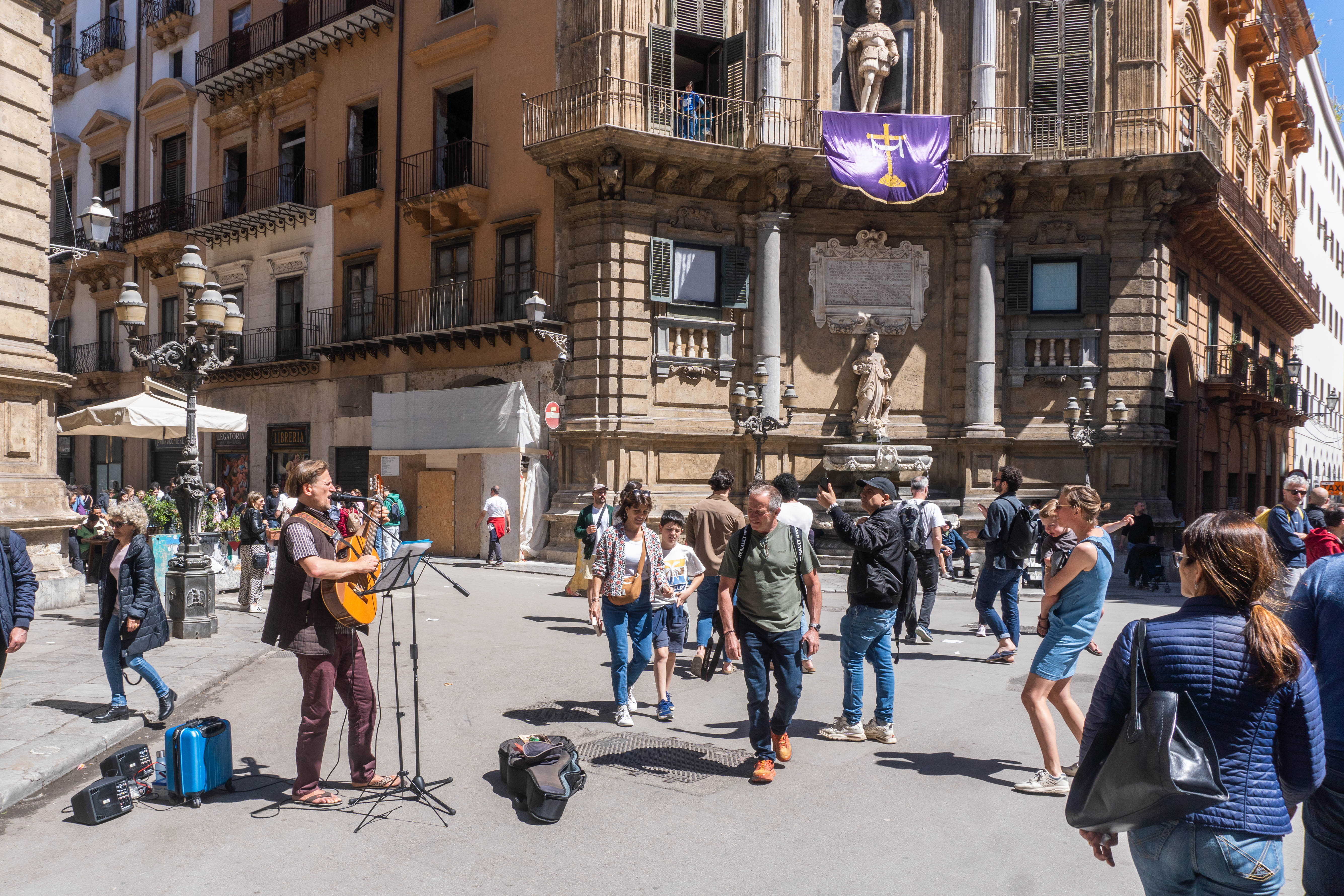
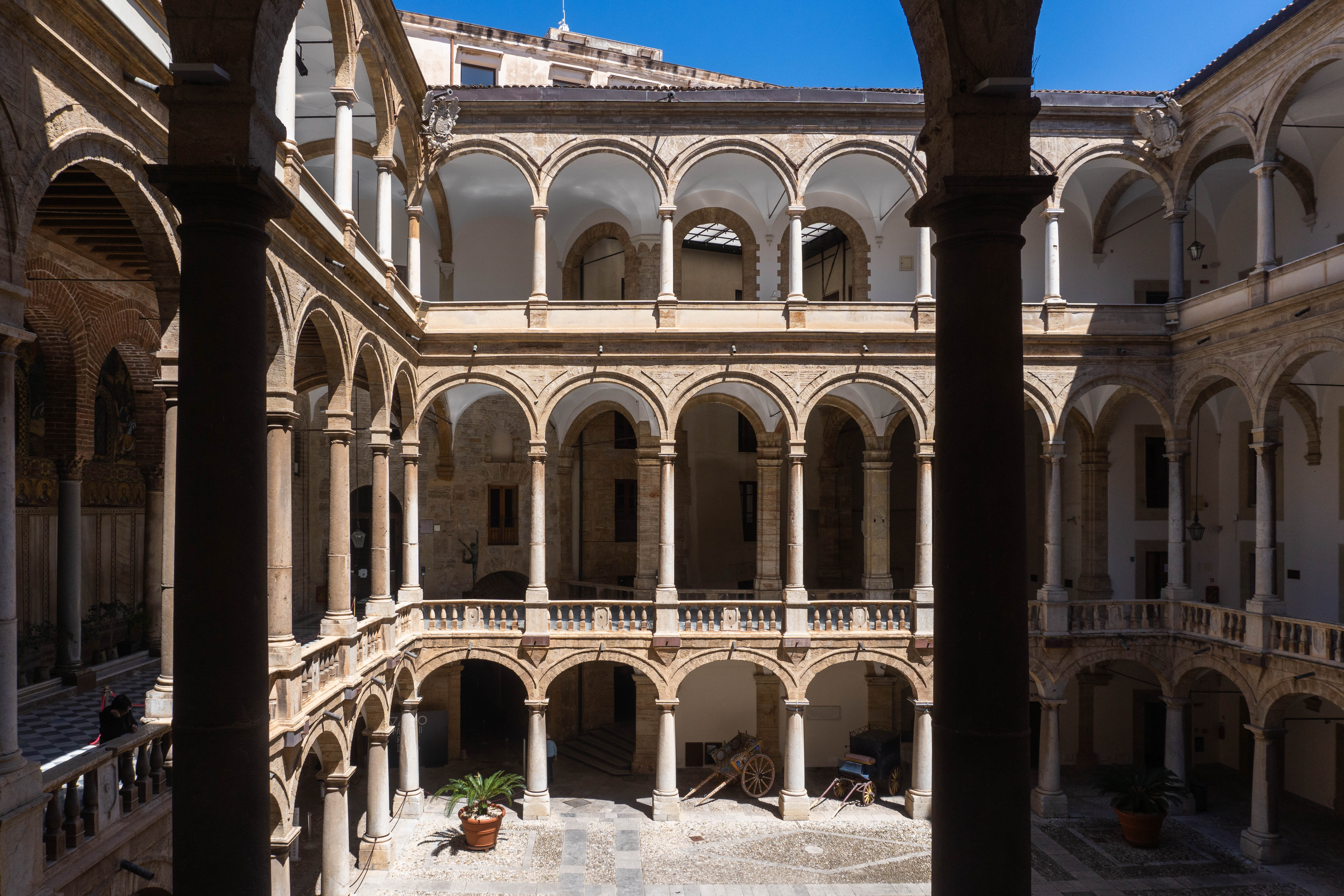
Activities: You can easily spend four days visiting Palermo. Our highlights were the Palazzo dei Normanni, going on the roof of Cattedrale di Palermo,Orto Botanico, the market around Chiesa del Carmine Maggiore
10. Agrigento – Ancient temples
Transport & accommodation: To get to Agrigento there’s a direct train from Palermo, with impressive views of the inland of Sicily. If you’re on time, try to book Hotel Villa Athena just next to the archeological site. For a good restaurant, reserve at Sala8.
Activities: The one main reason to come to Agrigento is the Valle dei Templi. Talking about impressive history, this is your thing. You can easily spend half a day strolling around. Make sure your phone is charged so you can listen to the audio guide. If you start on time, you have the chance to visit the gardens as well that seem very beautiful. We were just too late and the gardens had already closed. We also visited the Museo Archeologico Regionale the next morning, which put a lot of good context to the overall site and history of the excavations.
11. Favignana island – Nature and slow island life
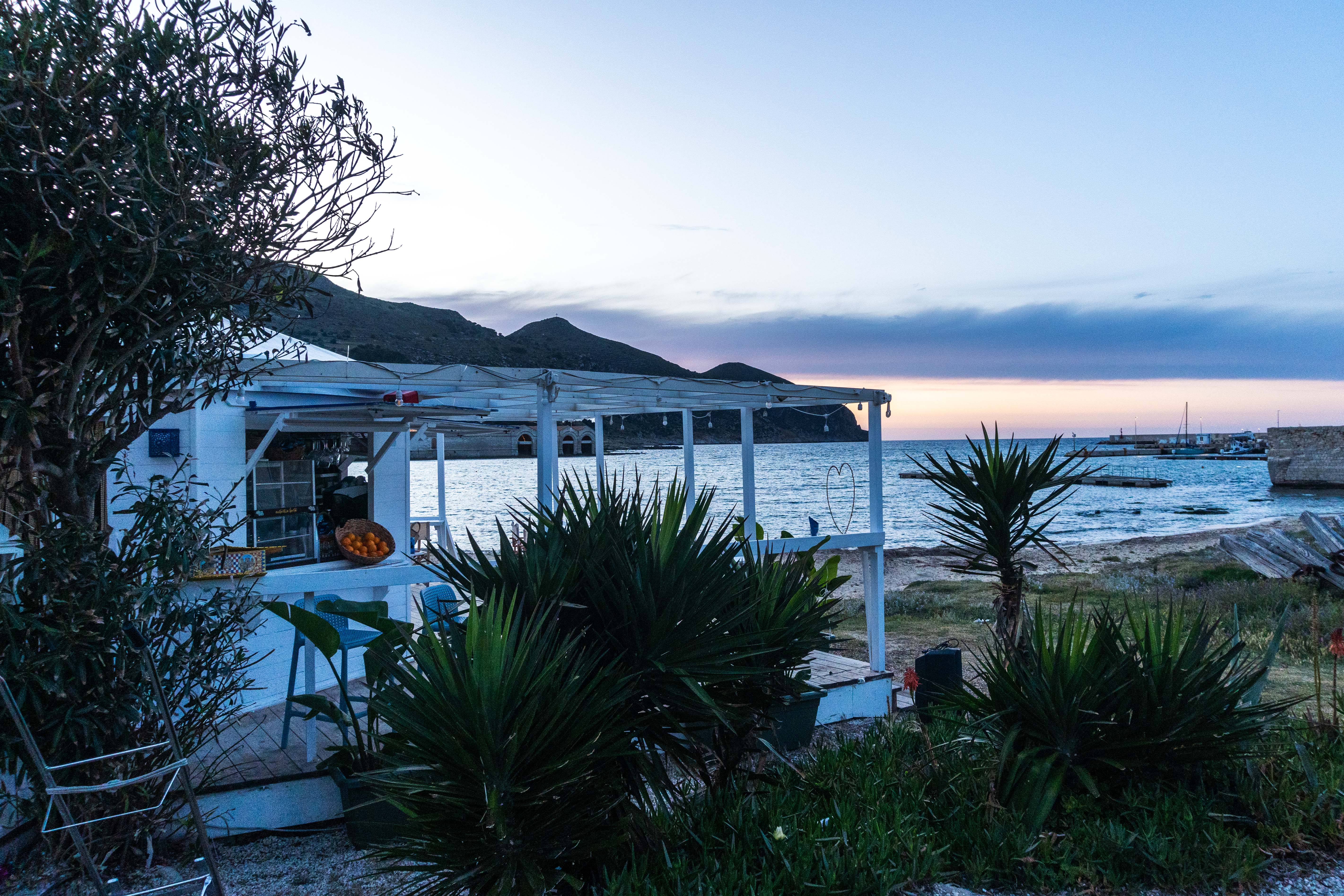
Transport & accommodation: We took the bus from Agrigento to Marsala, which was a bit of an adventure. It was very unclear how to buy the tickets, and in the end, we paid in SAIS Trasporti Biglietteria Agrigento even though we were traveling with another bus company. The bus dropped us off in another location than foreseen, on the outskirts next to a hospital. From there we had to hitchhike to the port to catch our boat to Trapani. We booked the ferries online via our smartphone. Have breakfast in Bar Europa, lunch in Magneva, and dinner in Osteria del Sotto Sale.
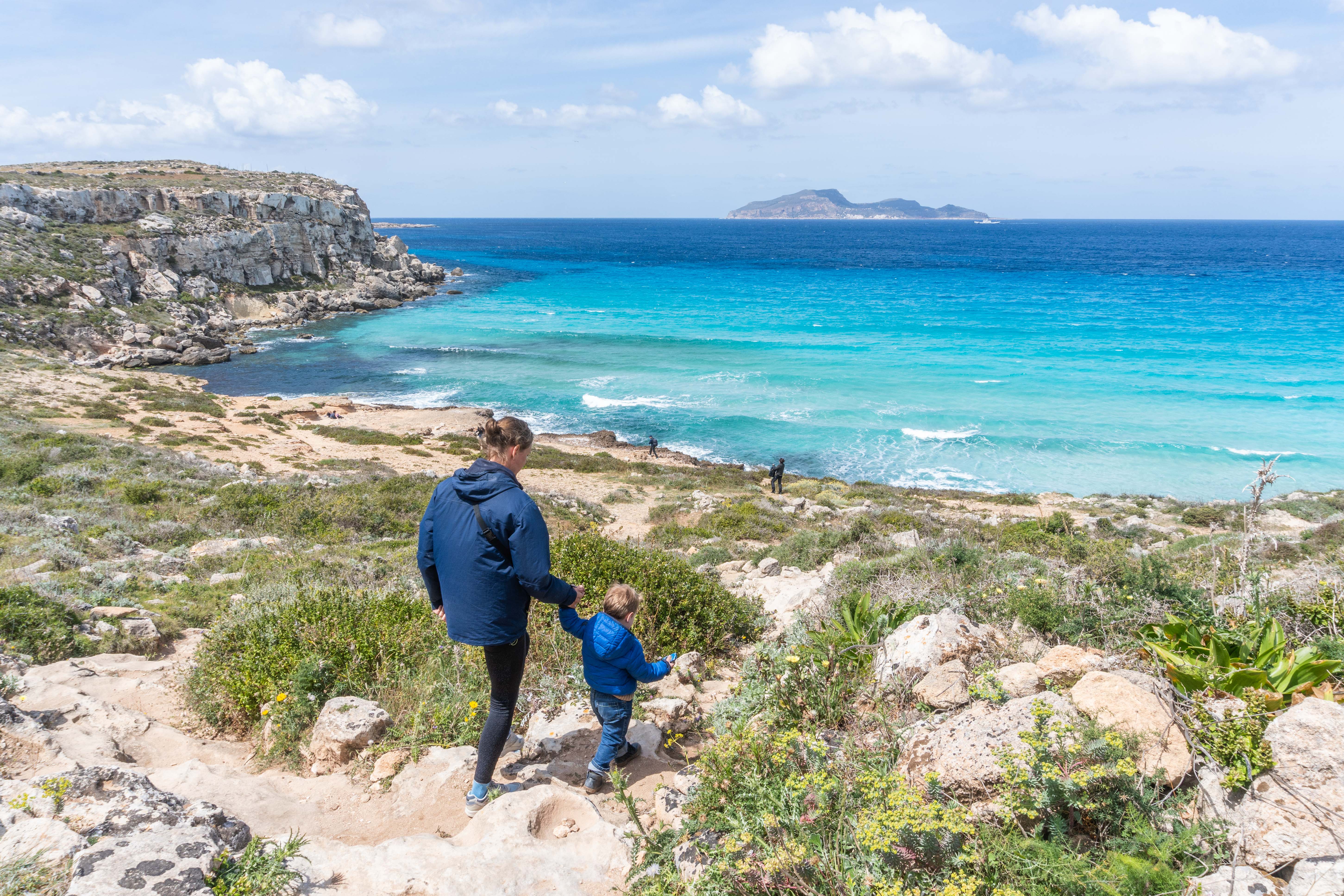
Activities: on Favignana, we went swimming in Cala Rossa, Spiaggia Bue Marino and we visited the old site of the former tuna factory Ex Stabilimento Florio delle Tonnare di Favignana, the city museum Palazzo Florio house. We also rented bikes and cycled around the island while visiting the Giardino dell’Impossibile, a lovely garden constructed at the bottom of the old stone quarries with an audio tour all around the gardens. We also recommend climbing up to Castello di Santa Caterina.
12. Trapani – Historic city
Transport & accommodation: We took the ferry from Favignana to Trapani. Tine stayed for two nights in an Airbnb, while I left a day earlier to catch the night train from Palermo to Milano.
Activities: The city is beautiful, with its esplanade where we had dinner with sunset views in MOAI Sunset Restaurant. In the morning I went running to visit the salt planes of Saline di Trapani.
13. Palermo – Preparing to go back
Transport & accommodation: I took the bus from Trapani to Palermo, there’s multiple buses per day, so I took one where I would be on time to still stroll around the market streets, buy some food and drinks and have an extensive lunch before boarding the night train to Milano.
Final Thoughts
Our month-long, car-free journey around Sicily was an enriching experience, filled with cultural encounters and beautiful landscapes. We hope our eco-friendly travel tips inspire you and your family to enjoy similar adventures!
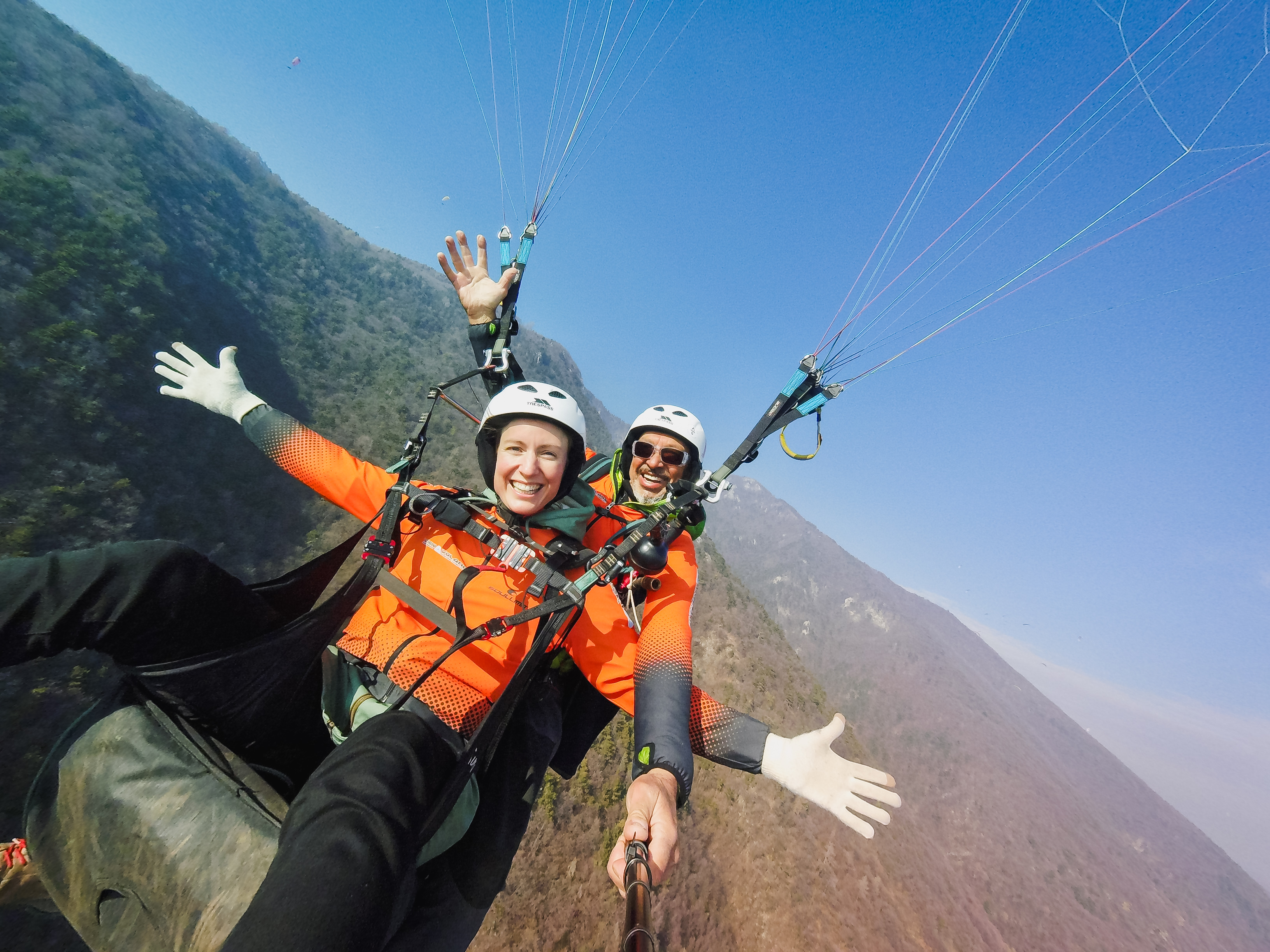
Many people dream of flying, and there are various ways to achieve it: skydiving, getting a helicopter license, obtaining your Private Pilot License, or learning to fly a glider or paraglider. Paragliding is one of the most eco-friendly and cost-effective ways to experience the thrill of flight by consuming the least fossil fuels.
My Paragliding Journey
I had dreamt of paragliding for years. To start, I took “ground handling” courses with Airsport.com in the Ardennes. After three sessions and the instructor’s approval, I booked a week to take my first real flights.
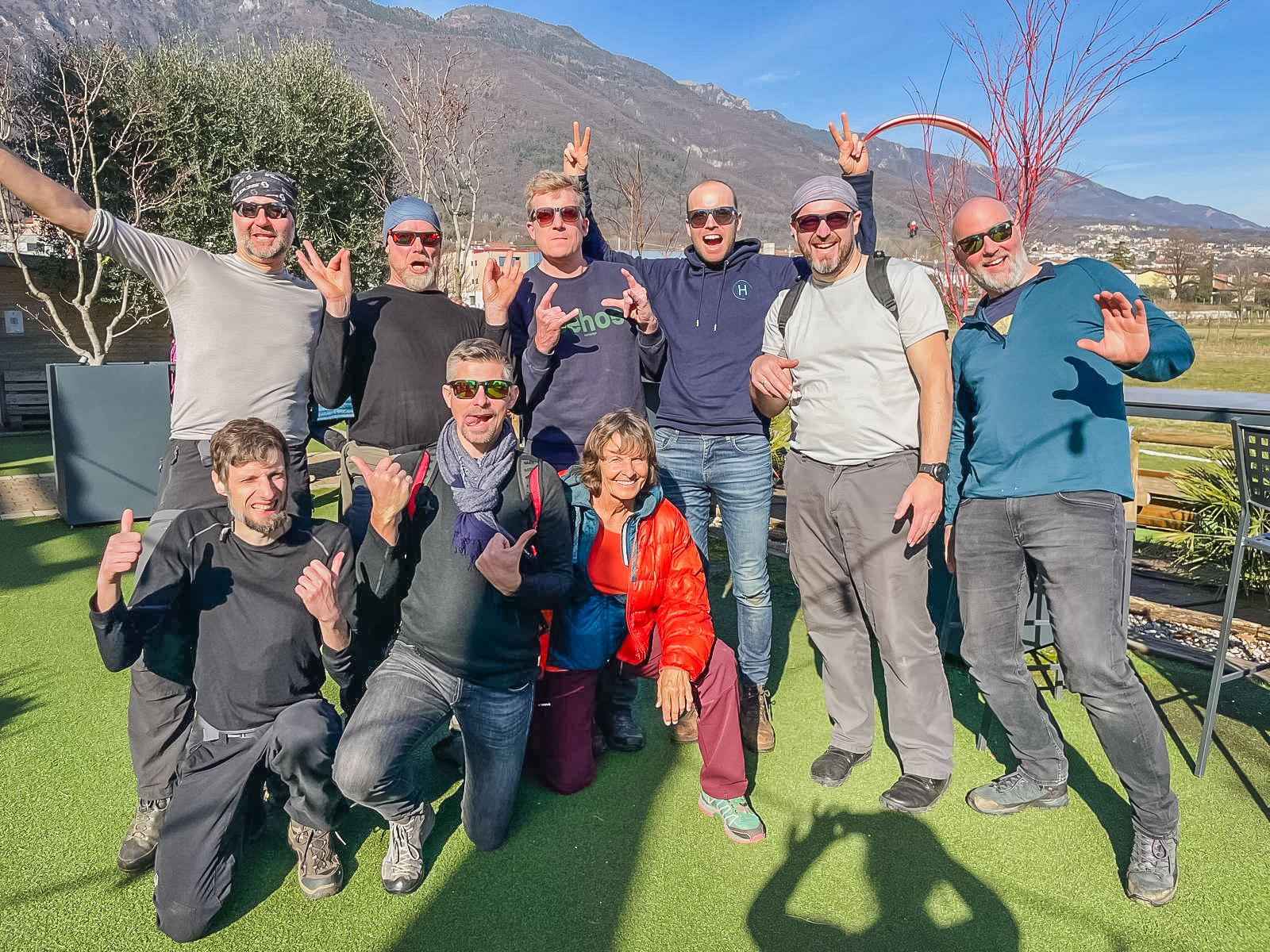
That week was incredible! We had the best teachers—Jeff, Christa, and Robin from Airsport. The weather was perfect for beginners, and our group was eager to maximize our flying time. The result? Seventeen solo flights in just one week! We practiced many safety exercises and built our confidence and wing-handling skills step by step.
Why Treviso and Bassano del Grappa
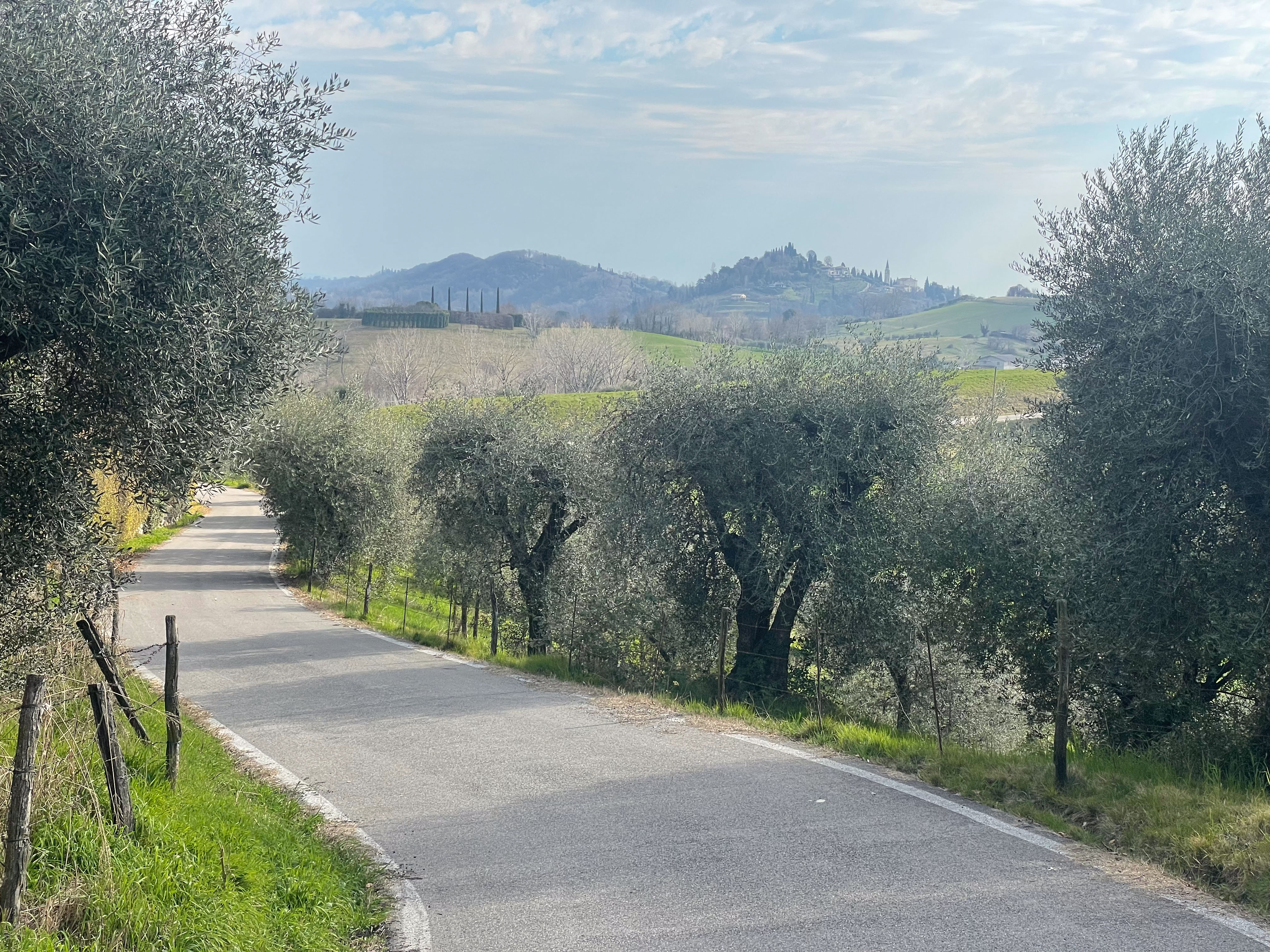
Treviso, near Bassano del Grappa, is an ideal spot for learning paragliding. It’s popular with schools year-round due to its good weather conditions and four different take-off locations catering to different skill levels and two major landing sites. Our flights started at Decollo Metri 700 and Tapetti take-off.
Schools: Multiple schools offer paragliding lessons here. Ensure you choose one that teaches in a language you’re comfortable with. Airsport and Paragliding België Holland are great options if you’re based in Belgium or The Netherlands and speak Dutch.
Duo flights: While Tine was not taking a paragliding course, she could just book a duo flight on the spot by asking around and enjoy the views and thrills of flying as well.
Transport: We carpooled with the Airsport school van to reach Bassano del Grappa. On the way back, I took the train from Bassano del Grappa to Milano, then to Paris and Brussels. Be prepared for last-minute changes based on the weather, with final decisions made the Wednesday before departure.
Accommodation: We stayed at Tillys Locanda, a cozy place aligned with our paragliding school. There’s also a campground for campers in the village and other good hotel options like Garden Relais.
Local Logistics: A van is necessary to transport to the different starting locations. Some paragliding spots in Spain, France, and Switzerland offer cable cars to return to the top, making it an even more environmentally friendly sport.
Additional Activities in the Region
We visited in February, and the weather was fantastic. Besides paragliding, the surroundings are perfect for:
Hiking: Beautiful trails for all skill levels.
Cycling: Scenic routes through picturesque landscapes.
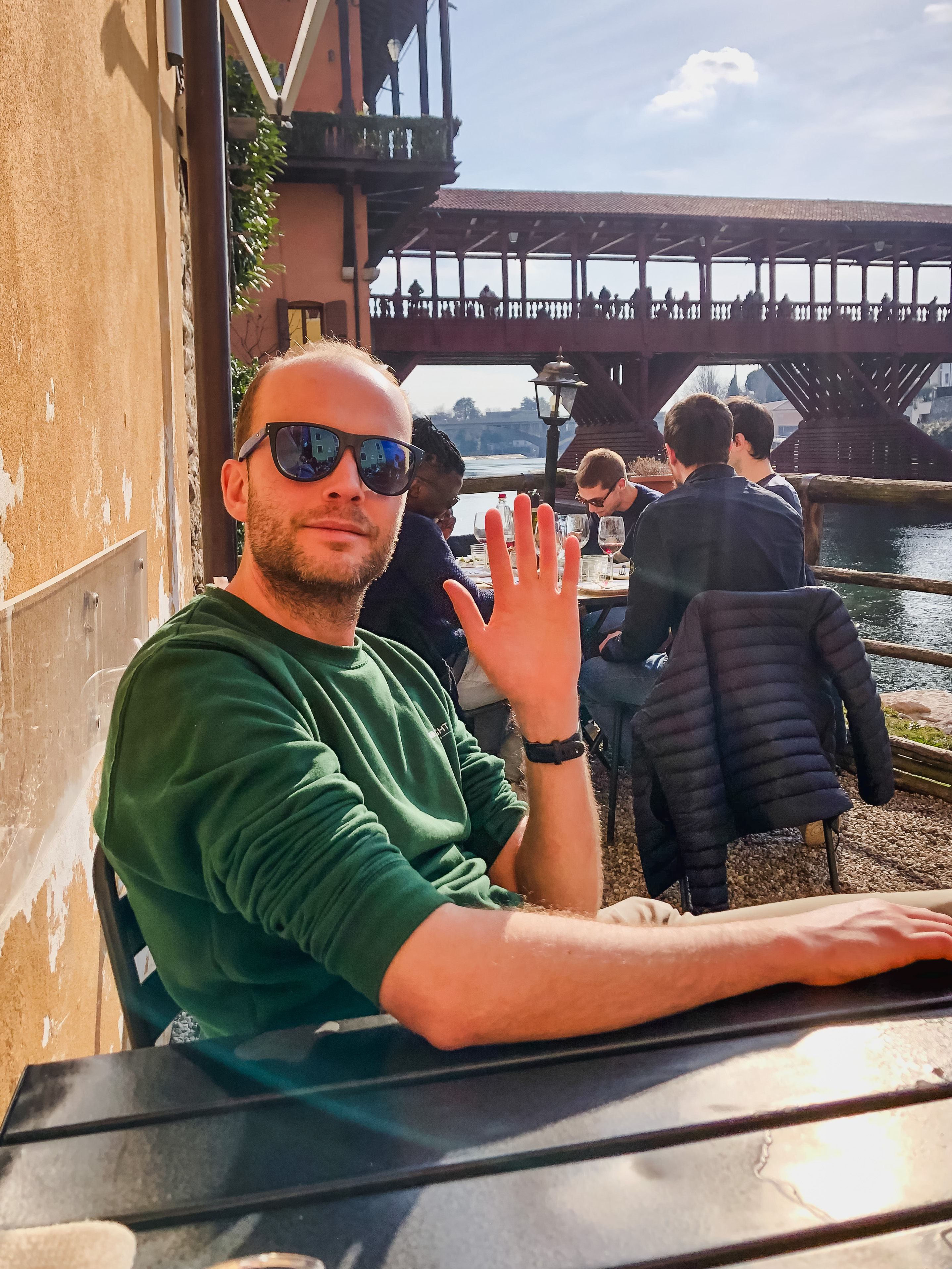
Culture: Visit the iconic bridge of Bassano del Grappa, the Palazzo Roberti bookshop and explore local historical sites. Have lunch on the terrace of Danieli.
We also combined this trip with a long weekend in Venice—stay tuned for another blog post on that adventure!
Experience the Magic of Prague’s Culture and Historic Charm
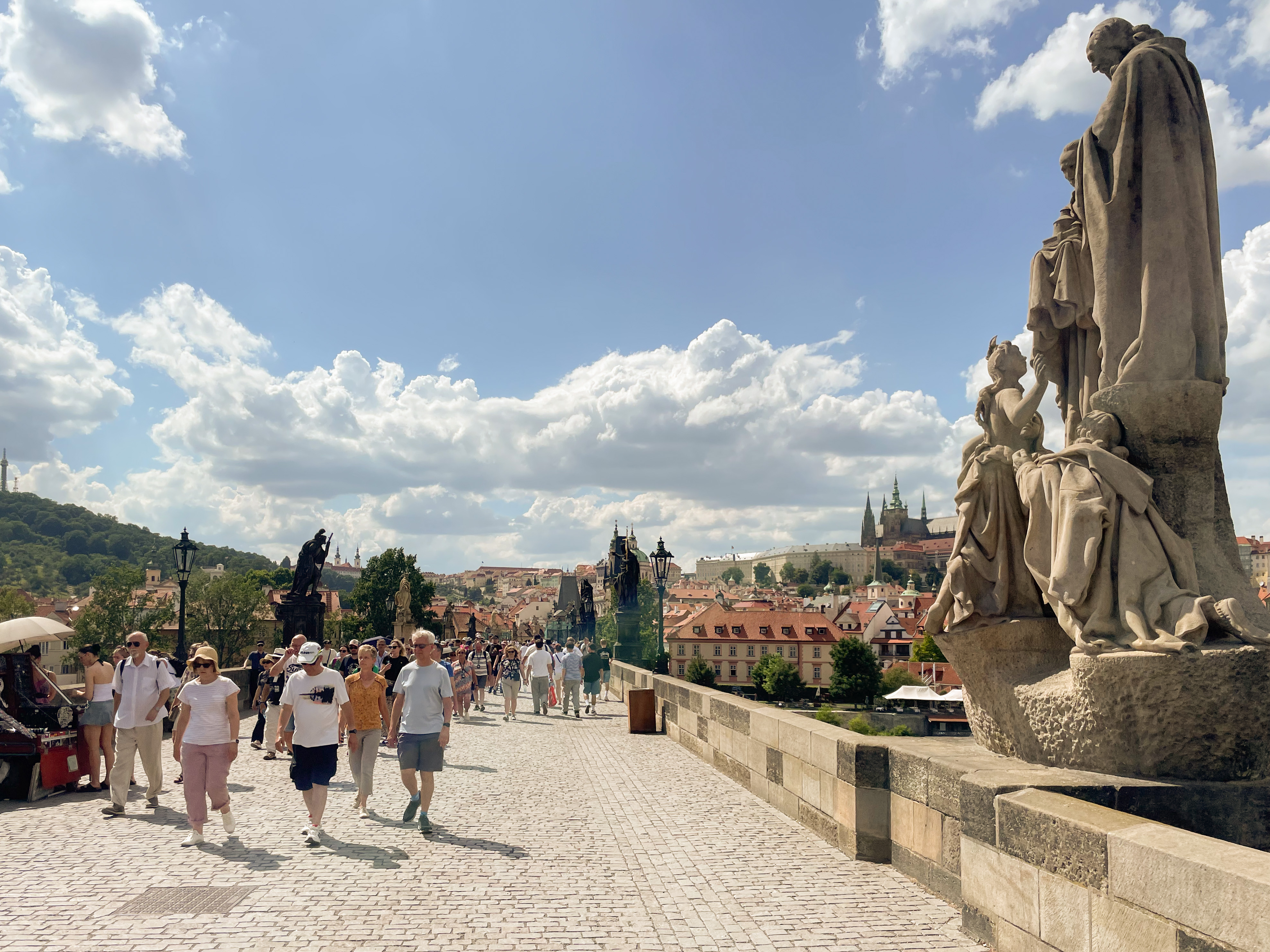
I’ve visited Prague multiple times before, but there’s always something new to discover that keeps the city intriguing. Next time I visit with my family, we’ll spend some time on Park Legií Island and explore the magnificent Prague Castle.
Day 1: Departure from Brussels
19:22: Board the European Sleeper night train in Brussels, Antwerp, or from the Netherlands, heading directly to Berlin and Prague.
Accommodation: I stayed in a 5-bed couchette on the train for around €125-€150 one way.
Day 2: Exploring Prague
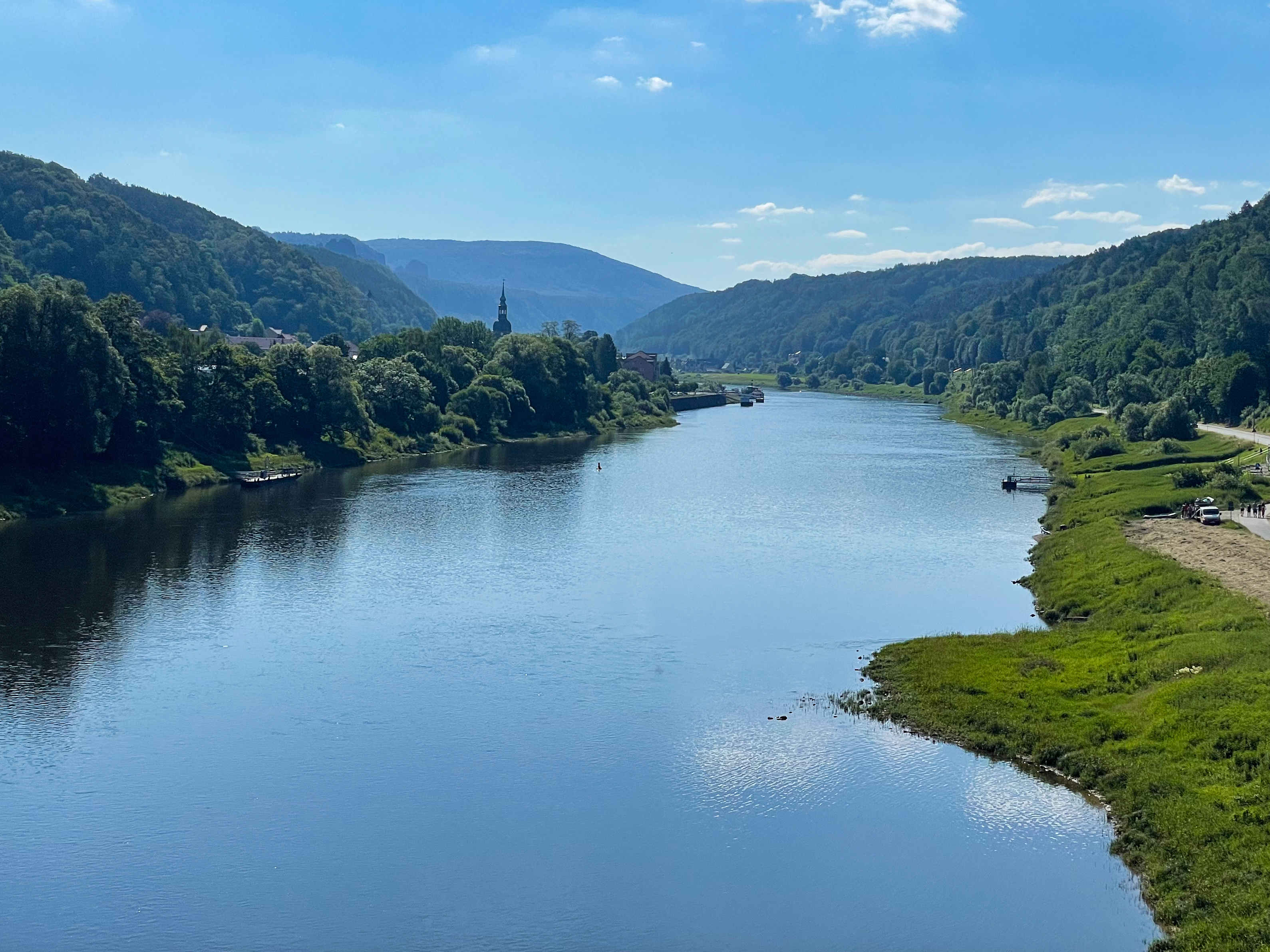
10:56: Arrival at Praha main station after a scenic train ride with impressive views of the Elbe River and surrounding nature. After arrival I dropped my luggage at the hotel.
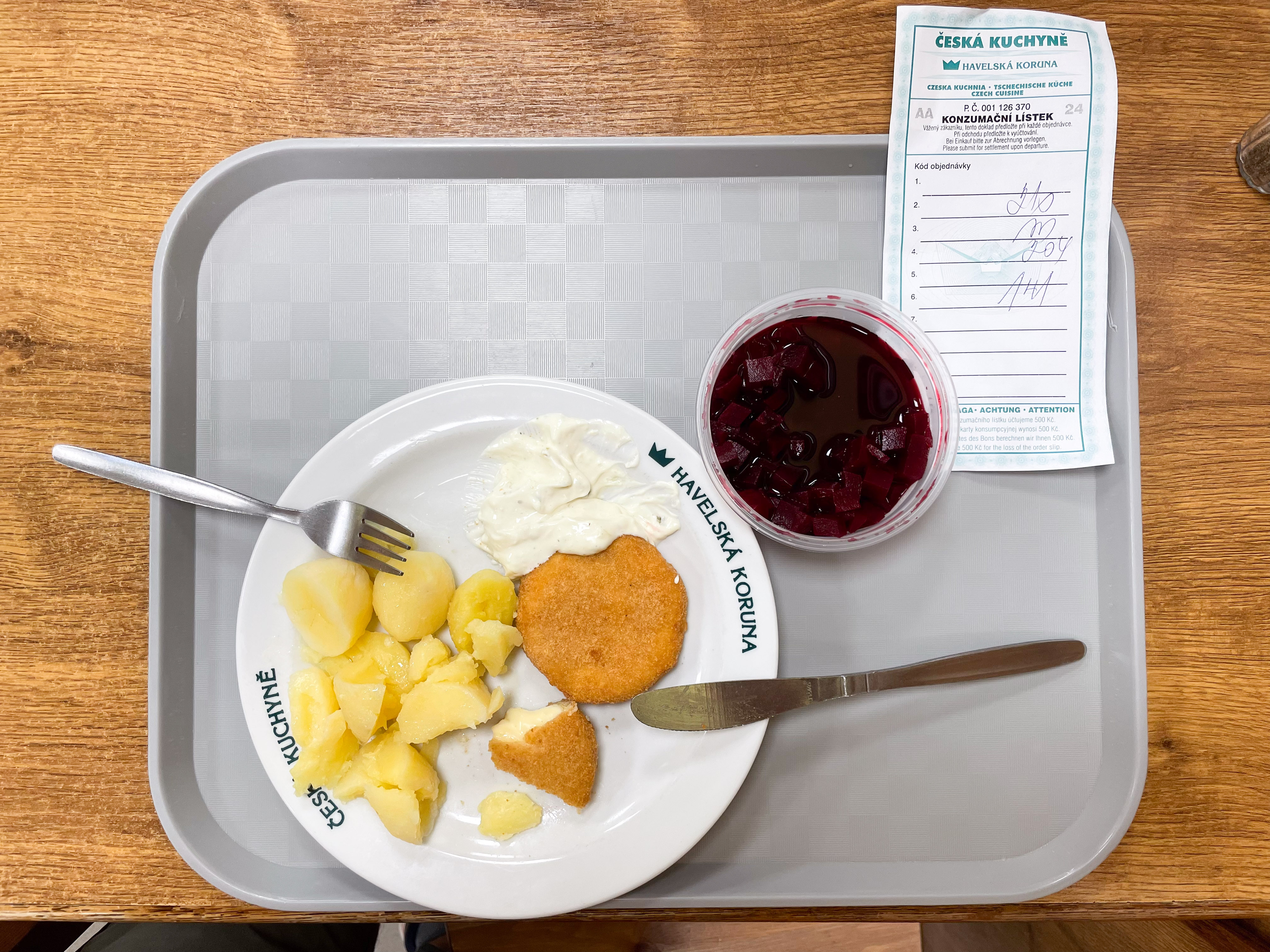
Lunch: For a culinary adventure, head to Havelská Koruna for a traditional Czech lunch.
Petřín Tower: Take the tram uphill to Petřín Park, then climb the stairs up Petřín Tower for breathtaking views of the city. It’s a nice activity to do towards sunset.
Prague Castle: Although I didn’t have time to visit the castle due to work appointments, it’s highly recommended. Even without paying for entry, you can see a lot by strolling around the grounds.
Dinner: Enjoy a delicious meal at the vegetarian restaurant Lehká Hlava.
Accommodation: I stayed at Hotel Metropolitan Old Town, a decent hotel costing €90 for a single room, with a rooftop bar and a good breakfast. I also considered spending a bit more on the Prague Carlo IV hotel, but finally decided to opt for a more central location and the rooftop.
Day 3: More Adventures in Prague
Morning Run: Along the Elbe River and through the Old Town.
Museum: After breakfast, I visited the House at the Stone Bell, where a modern art exhibition called “Group Therapy” was displayed. The museum offers a rich exhibition with social relevance, embracing Czech socialism history, rightist movements, LGBTQ+ awareness, and more.
Photo Exhibition: Later, I visited the Leica Gallery Prague for a fascinating photo exhibition.
Tea Time: Before heading back, me and a travel friend had tea at the beautiful bar in the former bank hall of Hotel NH Collection Prague Carlo IV—just a 5-minute walk from the main station. The drinks are priced similarly to those in the station but with a much better atmosphere.
18:04: Board the train leaving Prague main station to return to Brussels, arriving the next day at 9:27.
Activities for Kids in Prague
Petřín Hill and Observatory: Climb Petřín Hill via the funicular railway, perfect for an eco-friendly trip. Kids will love the Mirror Maze and the miniature Eiffel Tower!
Letná Park: Rent bikes or have a picnic with stunning views of the Vltava River and Prague’s skyline.
Vyšehrad: A historical fort with large green spaces, perfect for children to run around and enjoy nature.
Party Train to/from Prague
This trip was extra special—a 50th birthday party for one of the co-founders and some other employees took place on the ride from Prague back to Brussels! 🥳✨
If you’re planning something extraordinary with a larger group of friends (40-700 people), consider booking the party coaches from European Sleeper. It will be a train ride to remember!
Highlights:
Celebrate in Style: Imagine having an entire train coach dedicated to dancing and celebrating. The party train transforms your journey into an unforgettable event, filling the hours with joy and camaraderie.
Convenient and Eco-Friendly: Traveling by train is not only convenient but also a more environmentally friendly choice.
A couple of weeks ago, I discovered an impressive piece of nature only a night train away from Brussels—perfect for a long weekend trip immersed in breathtaking landscapes.
Have you ever heard about the National Park Sächsische Schweiz?
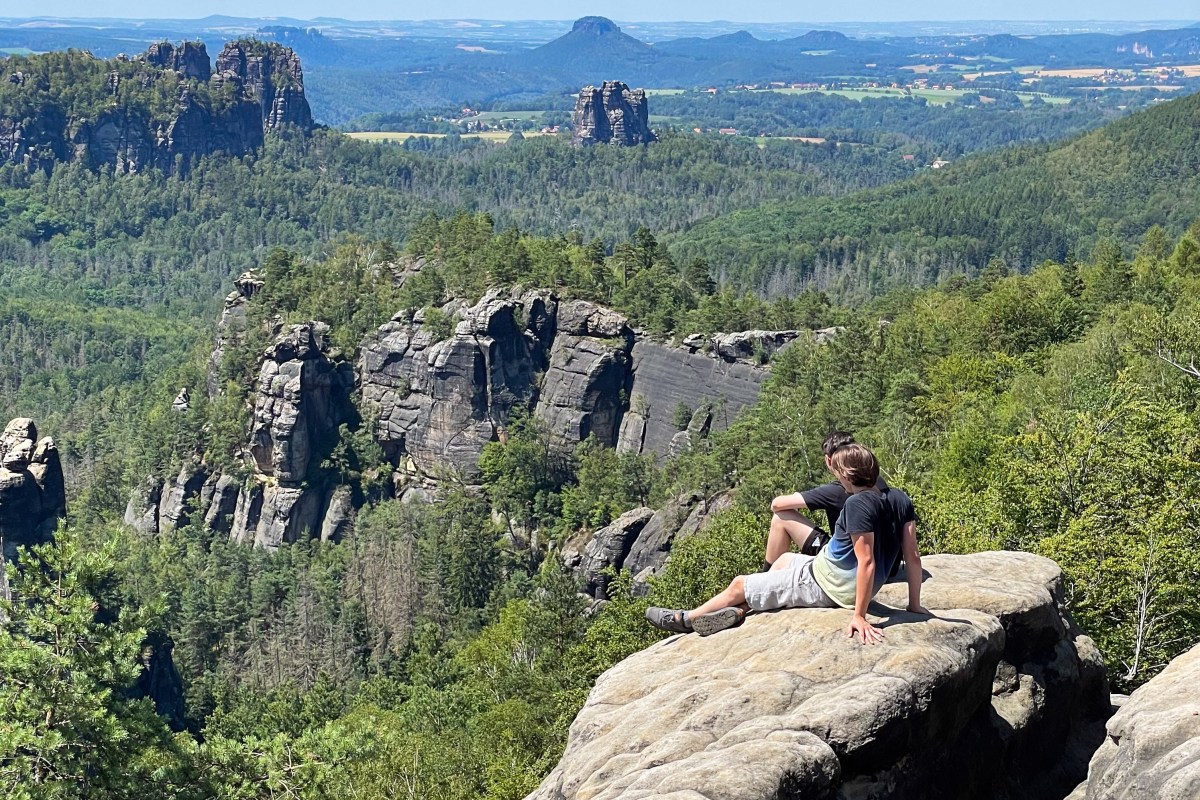
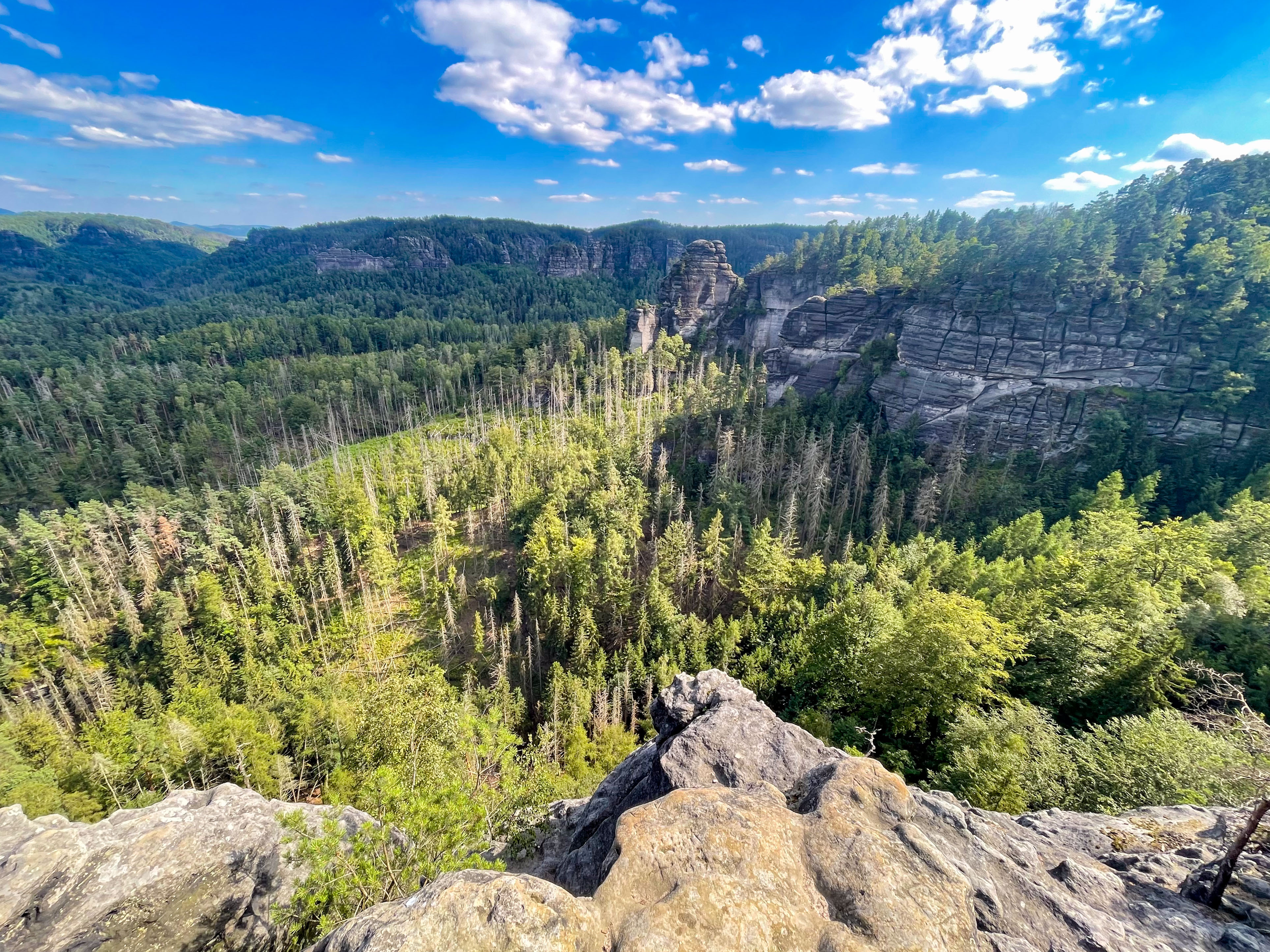
It’s a vast, mountainous forest filled with dramatic rock formations and stunning views at the German-Czech border. Let me take you there for a moment!
Family-Friendly Adventures and Thrilling Hikes
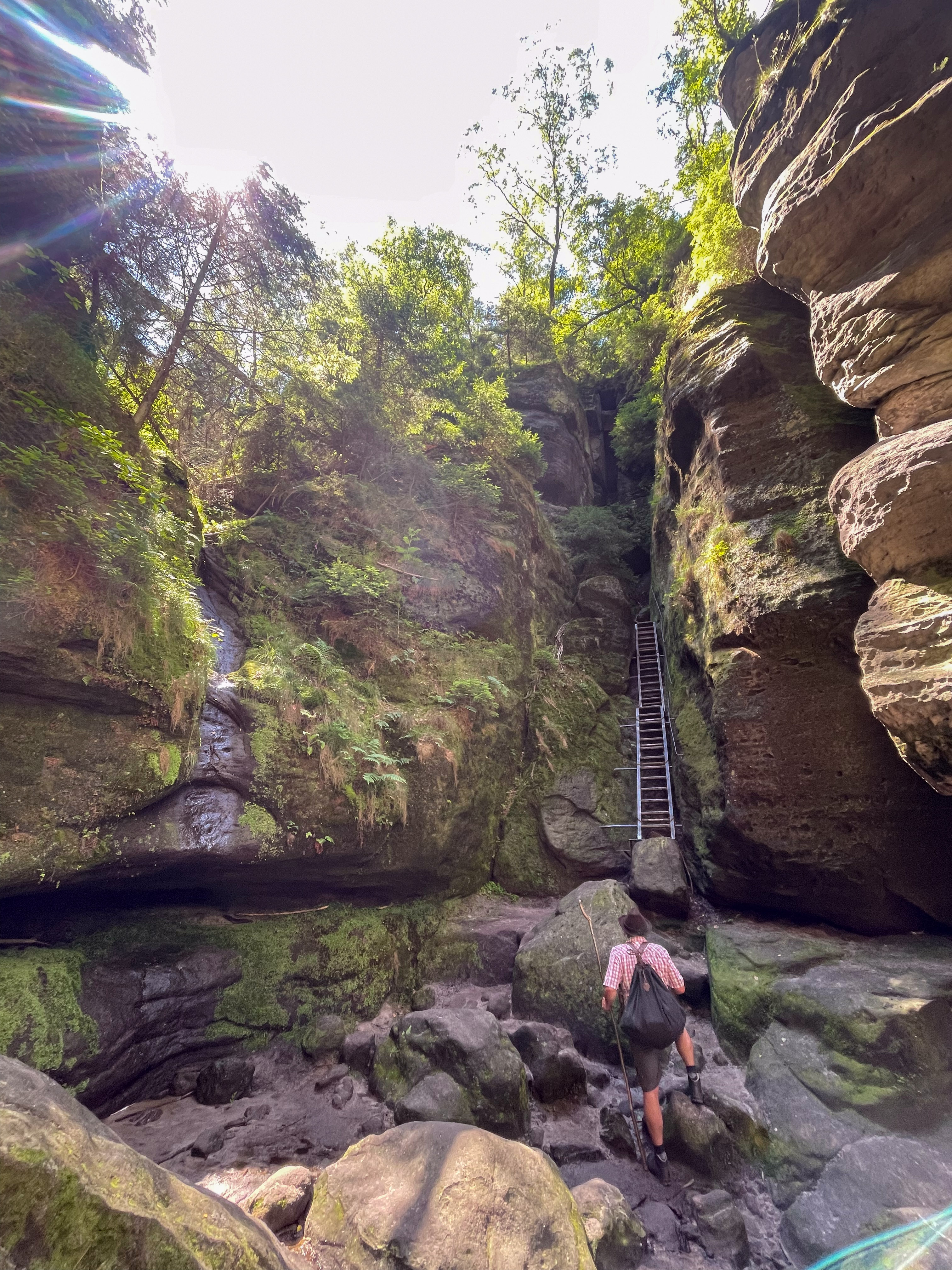
Visiting with Kids: There are plenty of charming, family-friendly routes to enjoy with the little ones. However, for those who crave adventure, I took a more challenging trail featuring metal ladders, narrow passages, and dramatic cliffs. No climbing gear is required! Here’s the GPX track I followed: Komoot Track
Safety Tips: If you choose one of the family routes, always keep your kids close, especially at the viewpoints. There are no fences, so hand-holding is essential.
Another great way to explore the park is by cycling—just remember to park your bike and take small hikes to reach those breathtaking viewpoints.
I took the walk during a Tuesday in June and was hoping to refill my water at a bar in the park… but found a closed door. Quite a disappointment since I finished my water at noon and did a detour of an hour hoping to refill at the refuge that was closed.
My 3-Day Ecological Travel Itinerary
Day 1: Departure from Brussels
19:22: Board the European Sleeper night train, heading to Bad Schandau.
Accommodation: I stayed in a 5-bed couchette for around €125-€150 one way.
Day 2: Arrival and Hiking
08:30: Arrive in Bad Schandau and grab picnic supplies at the railway station or supermarket accross the water.
Hike: An 8-hour hike through stunning spots like Carolafelsen,Panorama Heringsgrund and Goldsteinaussicht.
Accommodation: Found a cozy €35 cabin including breakfast at Zur alten Schule. Cancelled my €150 hotel room—great value for money!
Dinner: Enjoyed a vegetarian 4-course menu at Bio-Restaurant StrandGut.
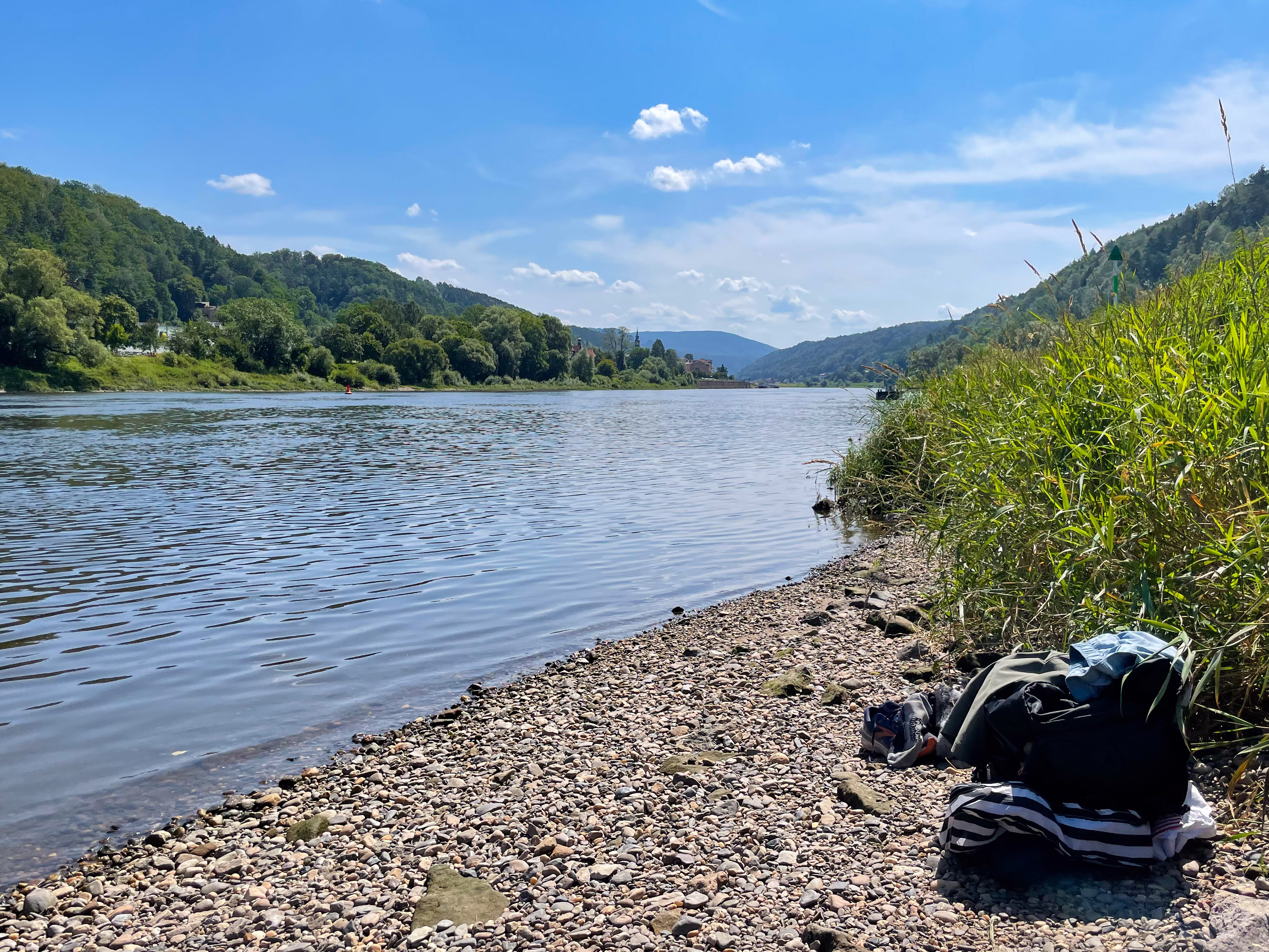
Swim: After dinner I took a swim in the Elbe a couple of meters downstream from where the little ferry leaves. Beware there’s quite some current, which can be dangerous… but also nice so you can swim against the current and stay in the same spot for as long as you want.
Day 3: More Adventures & Travel to Prague
Hiking: Explored more of the park, with options including hiking, canoeing on the Elbe, and the tram ride into the forest. I took the ferry to cross the Elbe and hiked for an hour and a half from Schmilka to Bad Schandau’s railway station where I started the journey.
Swim: To cool down before getting into the train, I took another swim at the small Canoe beach just in front of the railway station.
Travel: Took the train to Prague, but you can also return to Brussels at 19:59, arriving at 9:30 the next day.
Schmilka is a tiny but beautiful village positioning itself as eco-village. There are multiple biological hotels and restaurants, a biological educational garden along the Elbe, eco-sauna, and hot-tubs, … we found the concept to be very appealing. Nevertheless, most of the initiative is driven by one entrepreneur that supposedly owns 40 of the 80 houses in the village, where he made hotel rooms or houses for tourism purposes. Still, its inspiring to see the business model seems to work.
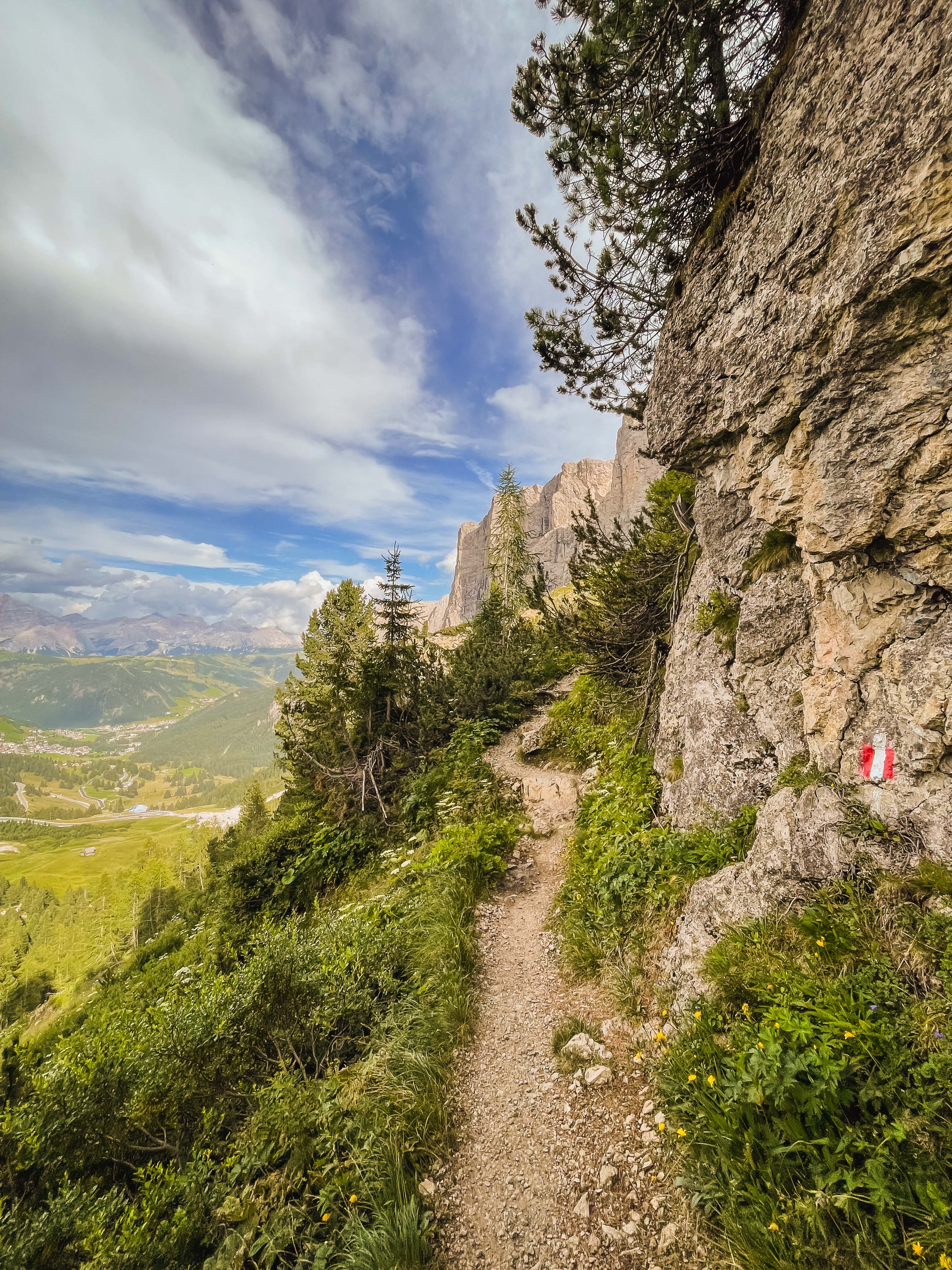
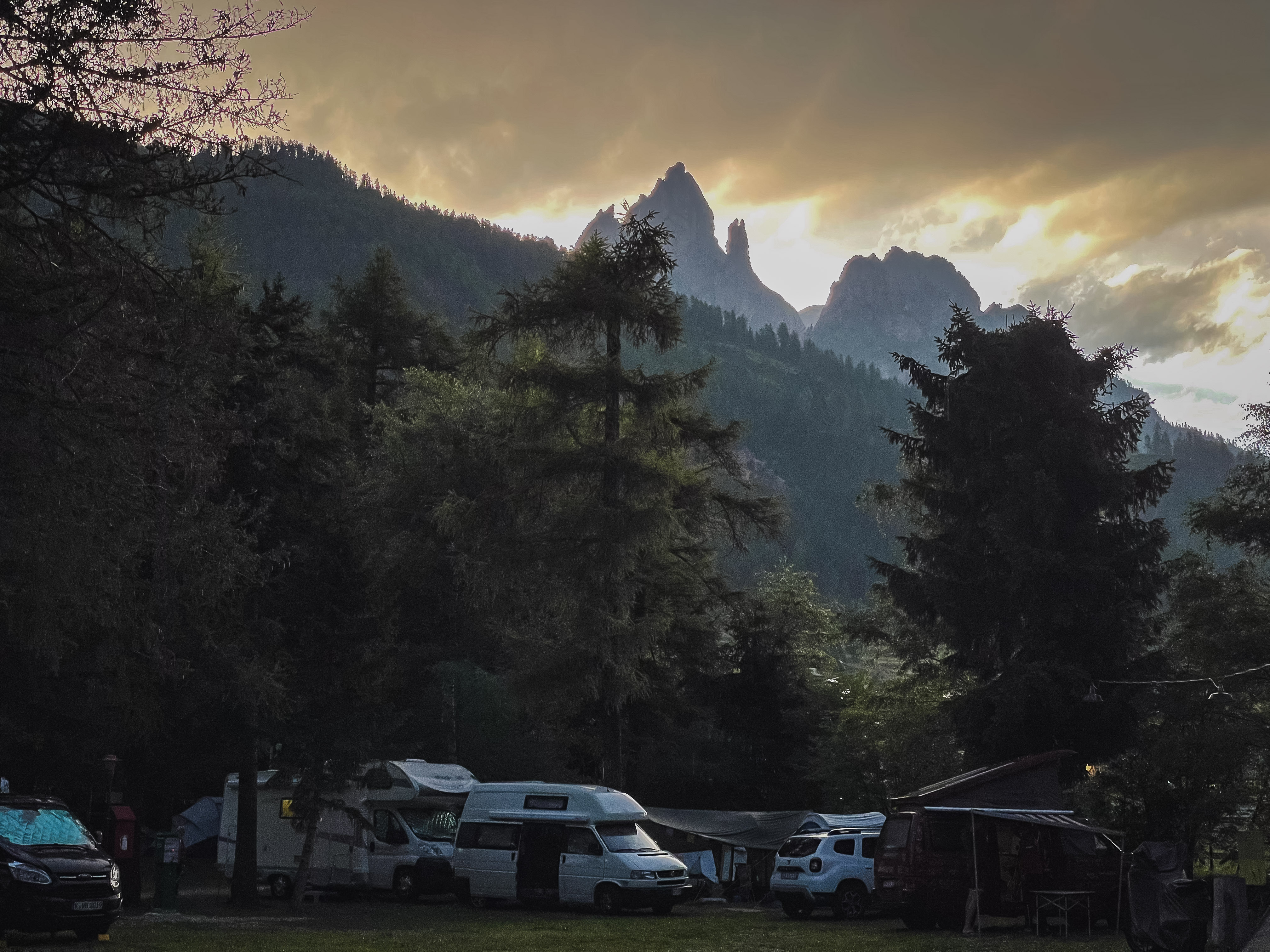
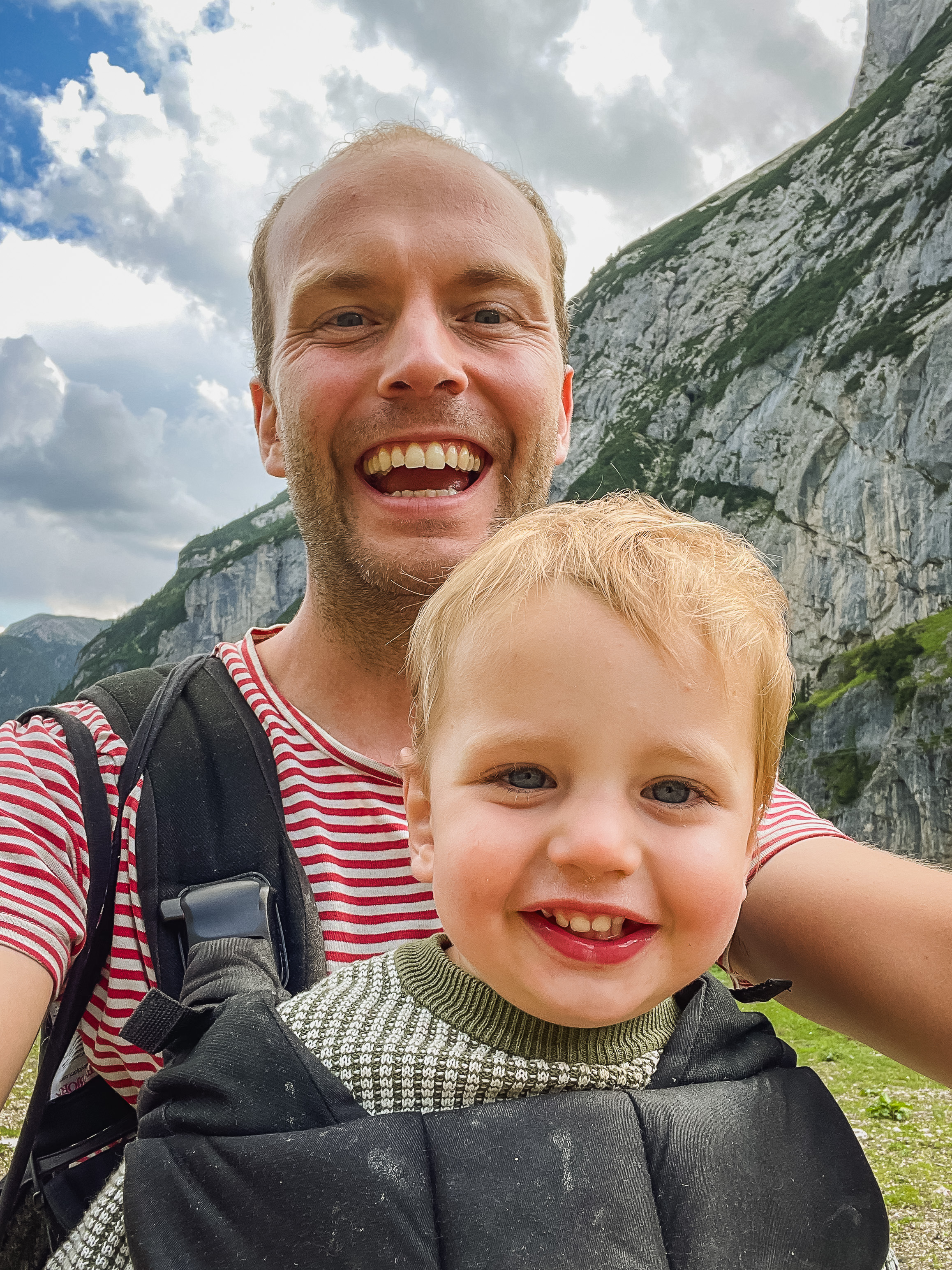
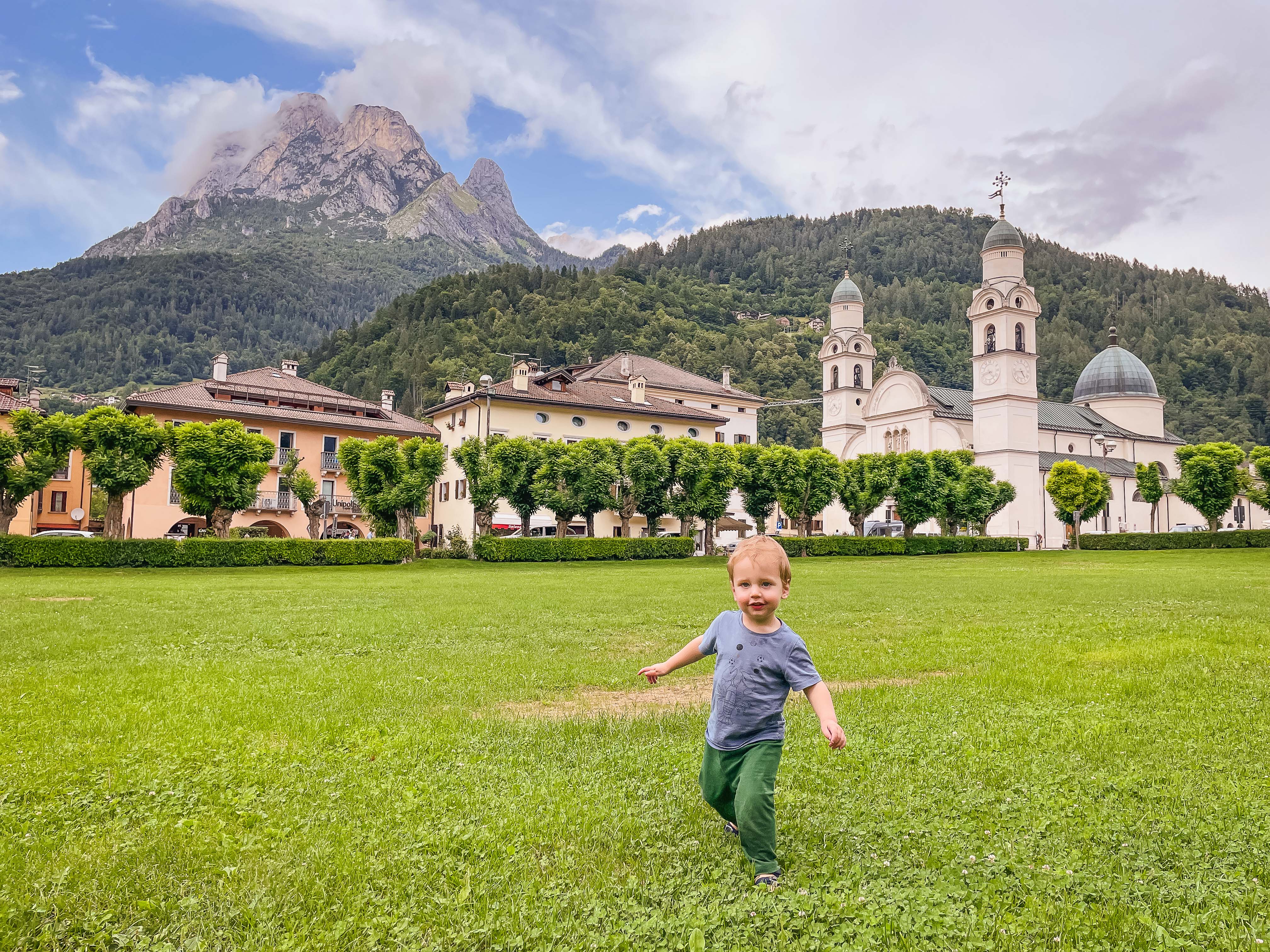
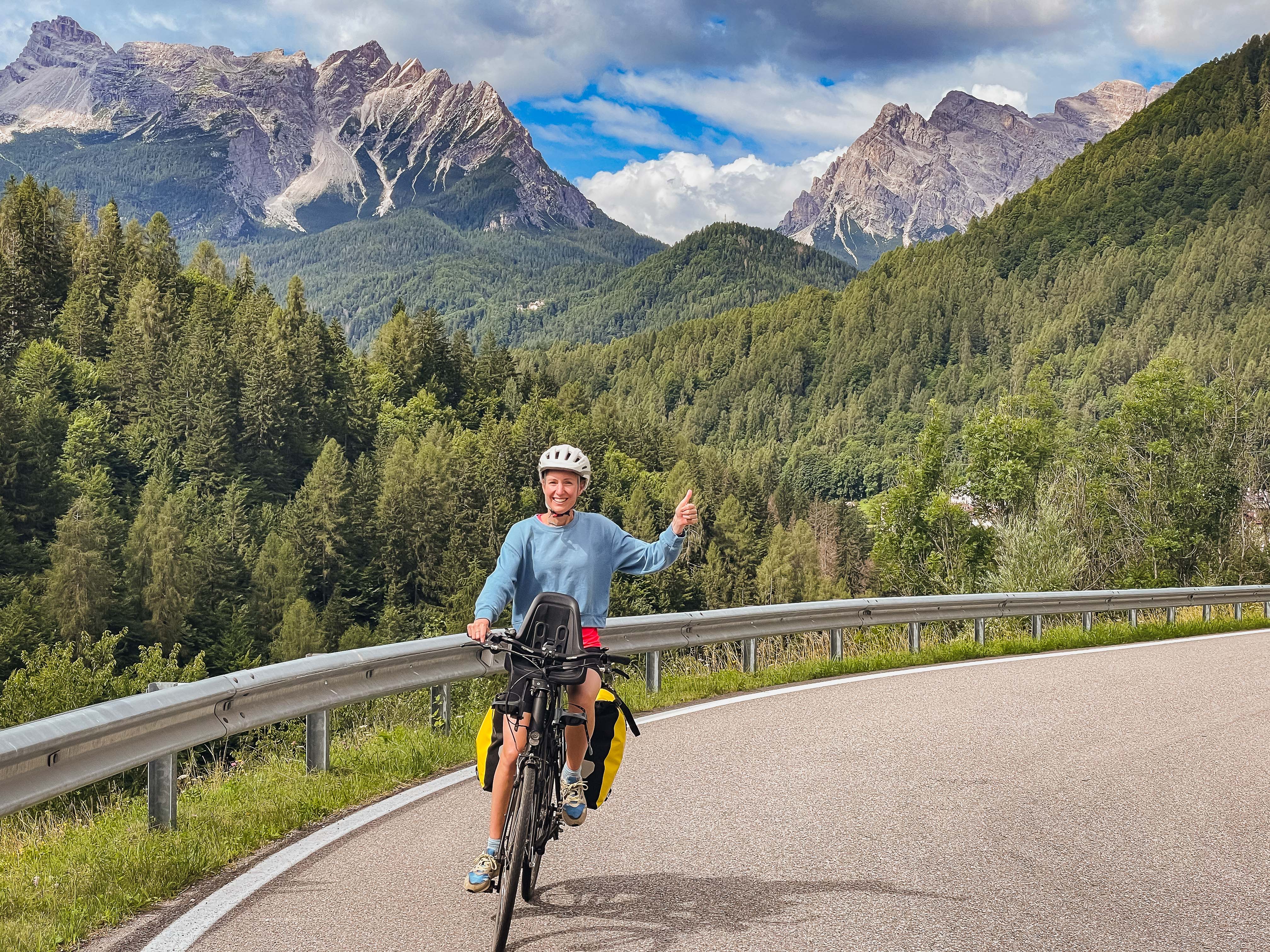
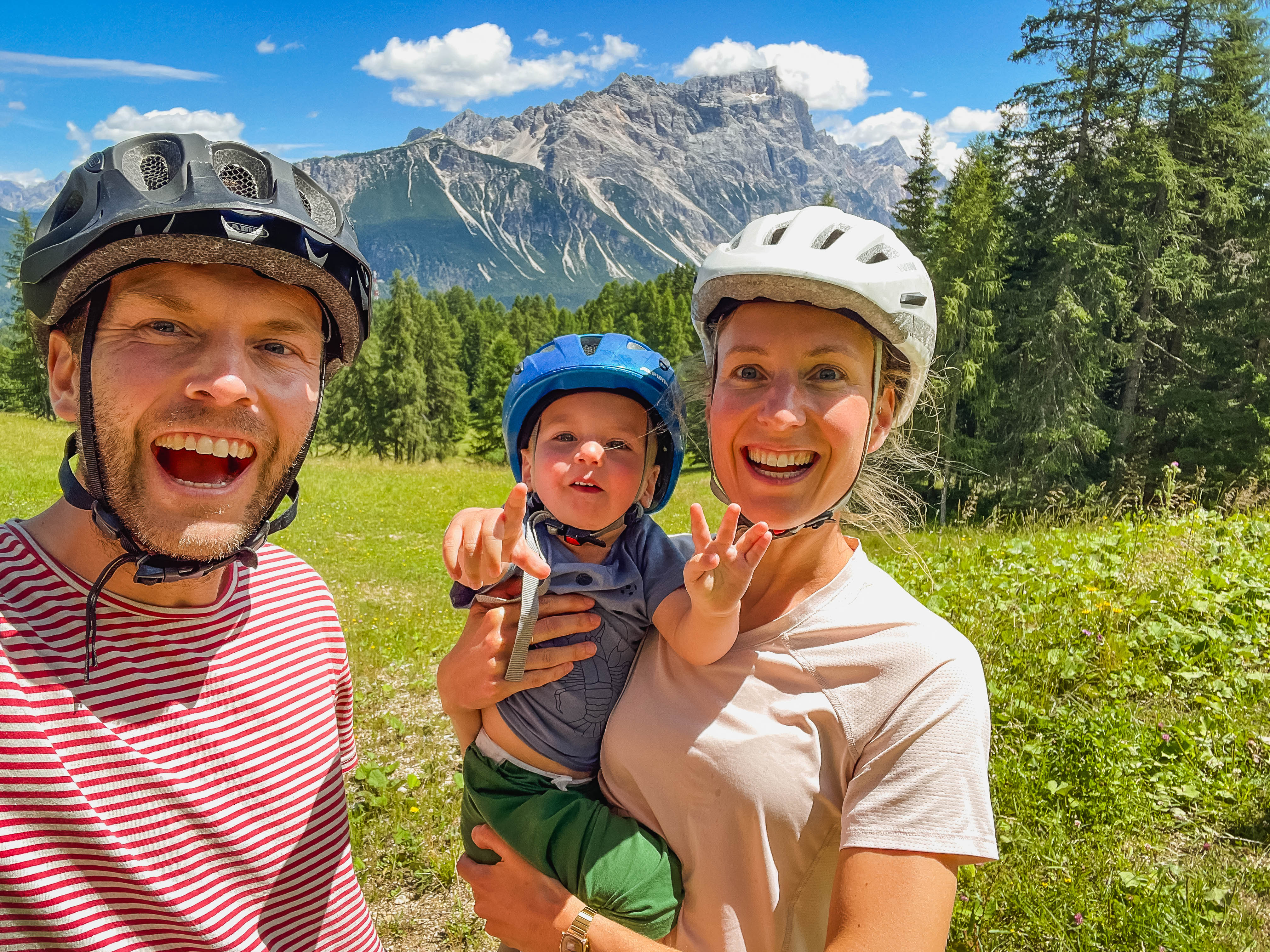
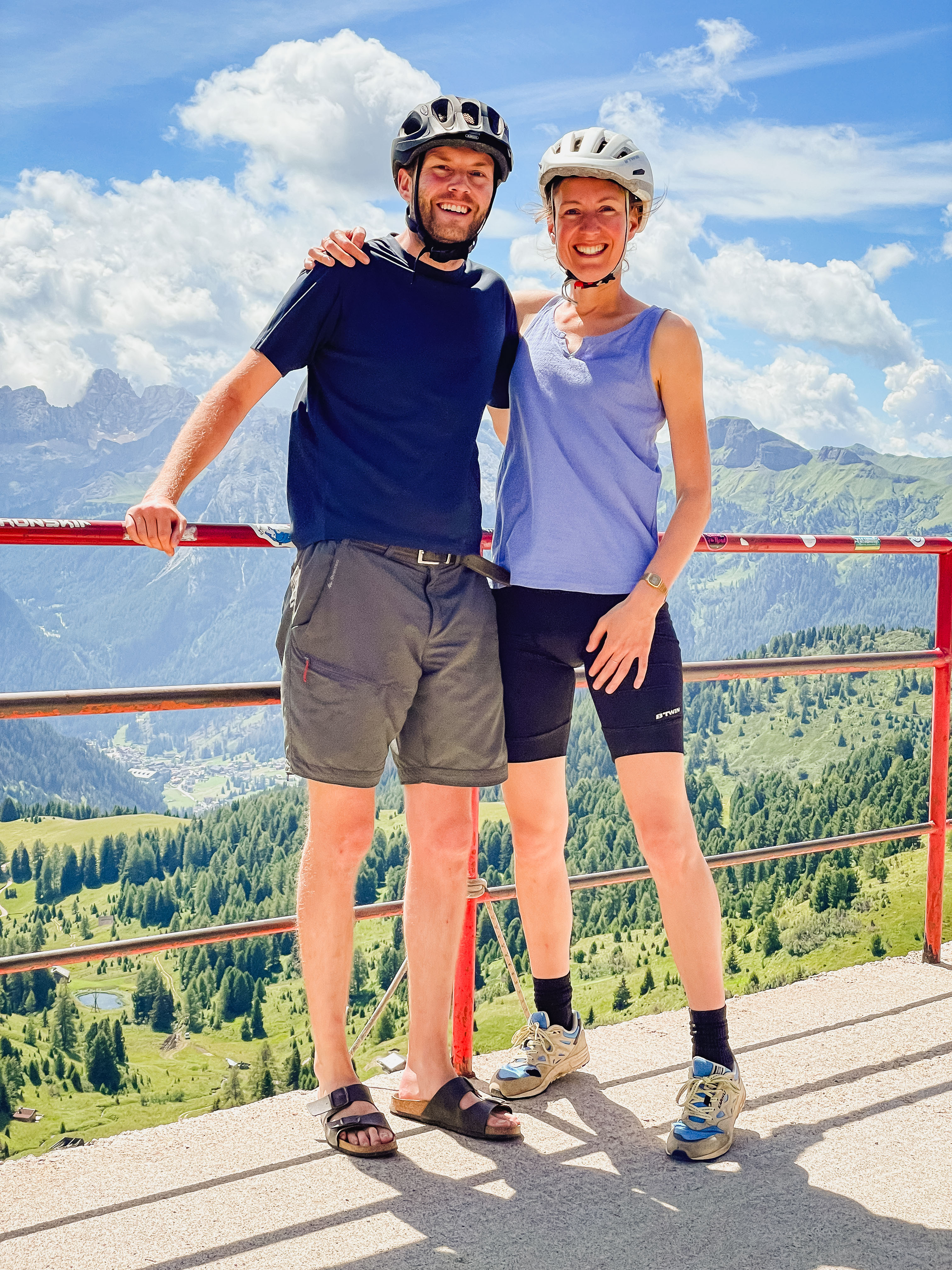
The best memories are made in nature. Spending time slow-traveling with our toddler in the Dolomites was amazing. When researching for this trip, I stumbled upon someone making this comparison list: Himalaya – Andes – Dolomites. I had to laugh since I thought it was slightly exaggerated to put the Dolomites on that list… but after the trip, we fully agreed!
This post is split in 4 parts:
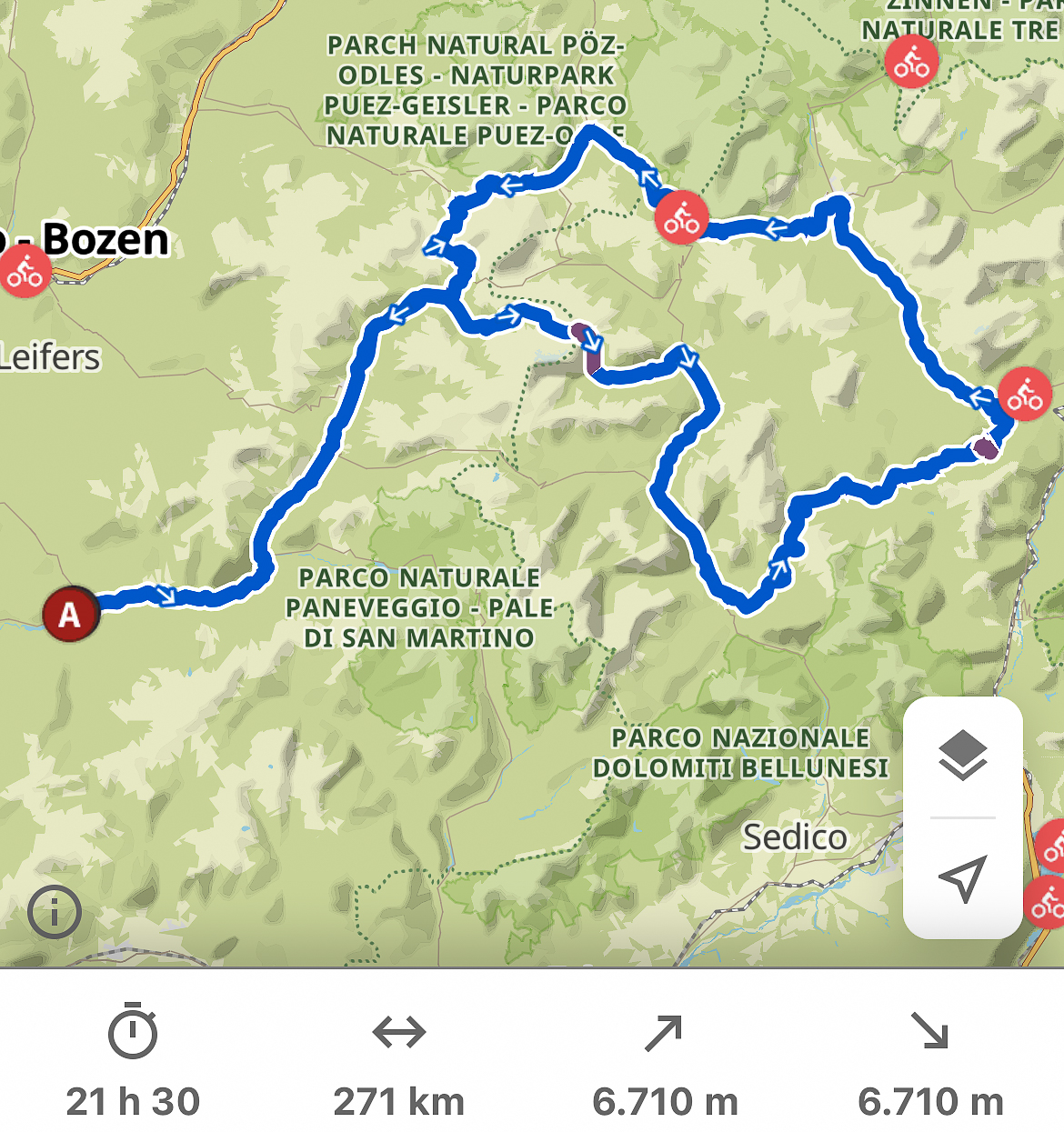
The route through the dolomites
Musts when cycling with kids
Our daily routine while cycling
A day-by-day detail of the itinerary
1. The route through the Dolomites
We traveled by bike a couple of times before, e.g. during our summer trip along the Rhine and through the Black Forest, but never with August. In this post, you’ll find some honest parenting details on how we survived this trip with our 2-year old.
Disclaimer 1: Doing this beautiful bicycle trip with a kid is ABSOLUTELY IMPOSSIBLE without an electric bike! There were many moments when we had a tough time cycling up the passes, even with help of our electric engine. At moments, we would get out of battery and sweat or hardly make it up the 1000m climb.
Disclaimer 2: we did not find a train alternative to get to the Dolomites with our two-year-old todler & two adults; two electric bicycles; a bike trailer and camping gear for all of us. Without a toddler and bike trailer it would have been possible to get to Bolsano and start cycling from there, so let me know if you are planning to do so!
For the route we practically merged the below two routes to create a loop and get back to where we left the car: Dolomites from West to East and Dolomites from East to West (returning via different valleys). We switched from the first to the second route in Cortina.
2. Musts when cycling with kids
If you’re planning to go on a cycling trip with a toddler, this is what you certainly need, on top of the usual kids’ stuff that you would take on any trip:
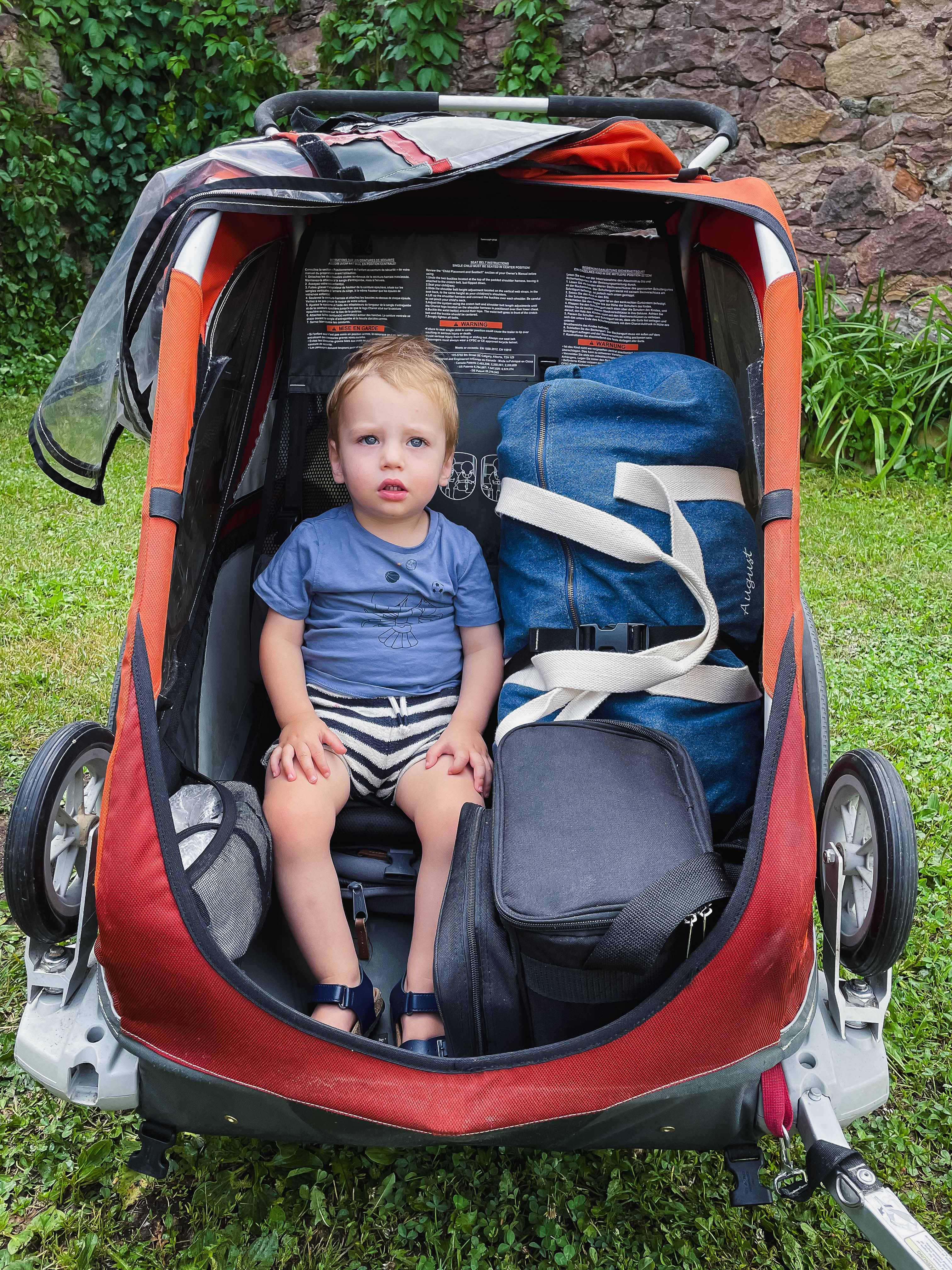
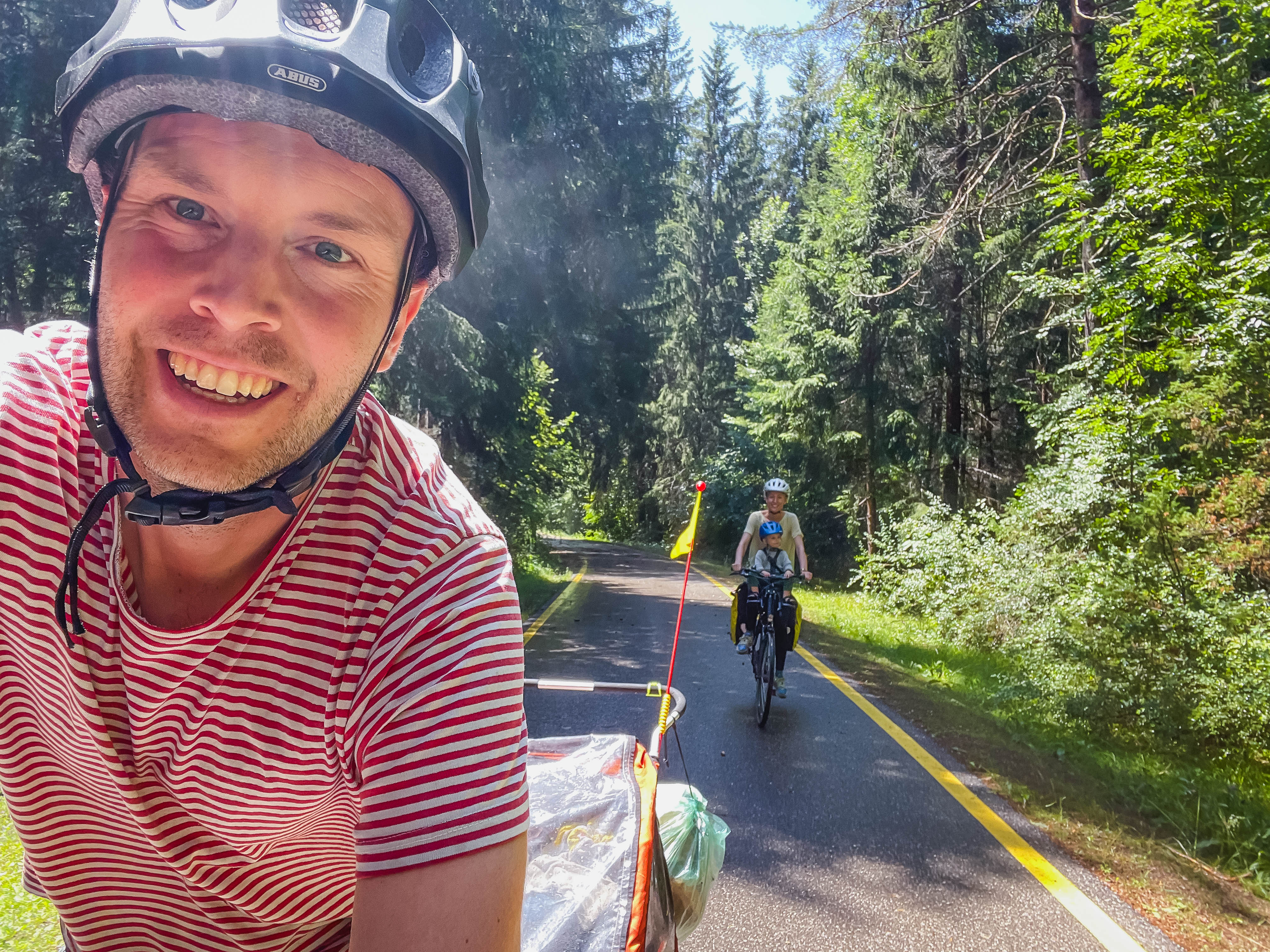
Seat & bike trailer: Bring both a child seat in the front and a Thule bike trailer behind one of the bikes. We switched all the time since sitting in the front allows us to look around, sitting in the back is more for playing and taking a nap.
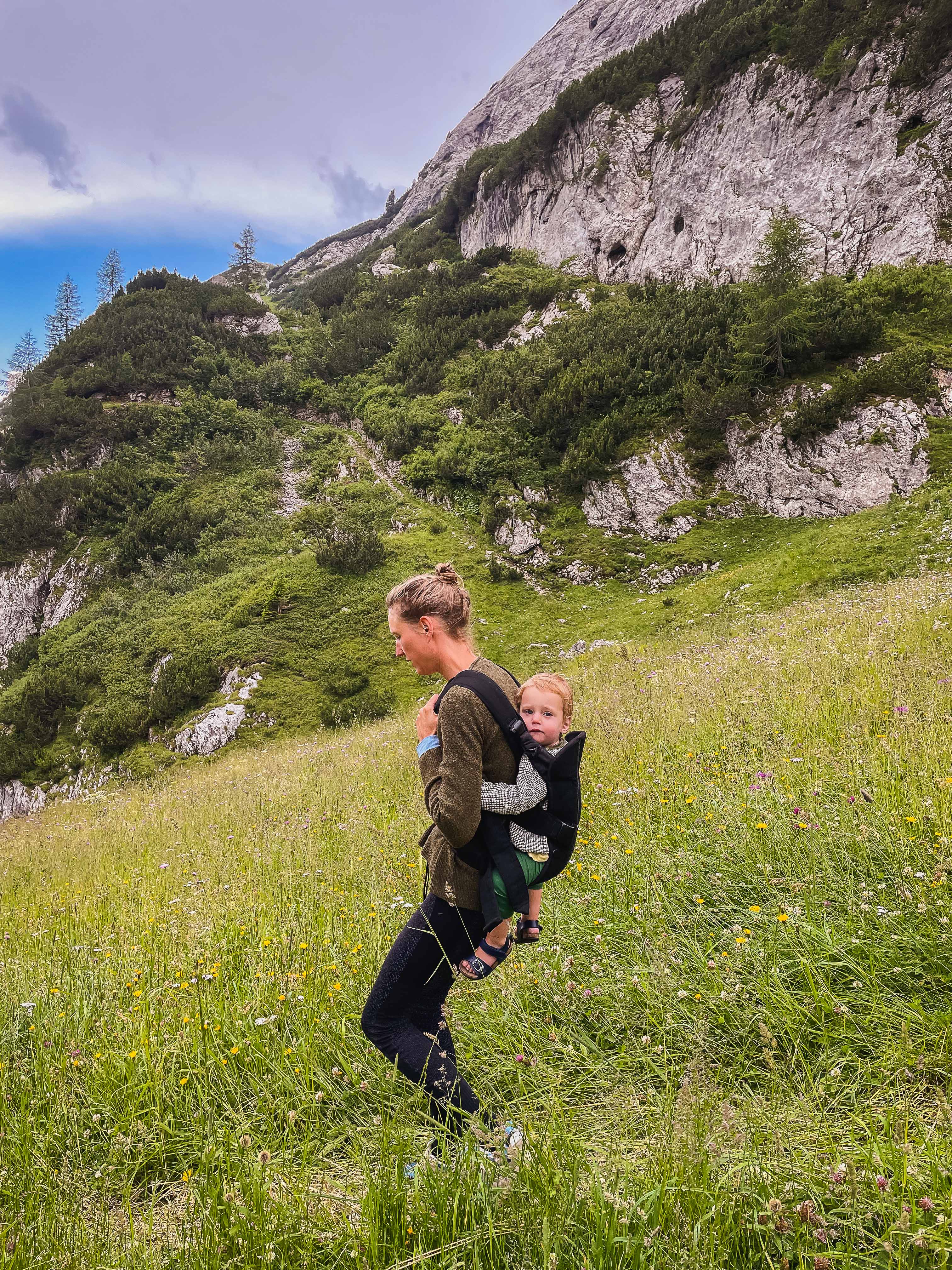
Baby carrier: Take a light baby carrier backpack for short hikes in the mountains where the bike trailer cannot be used as a stroller
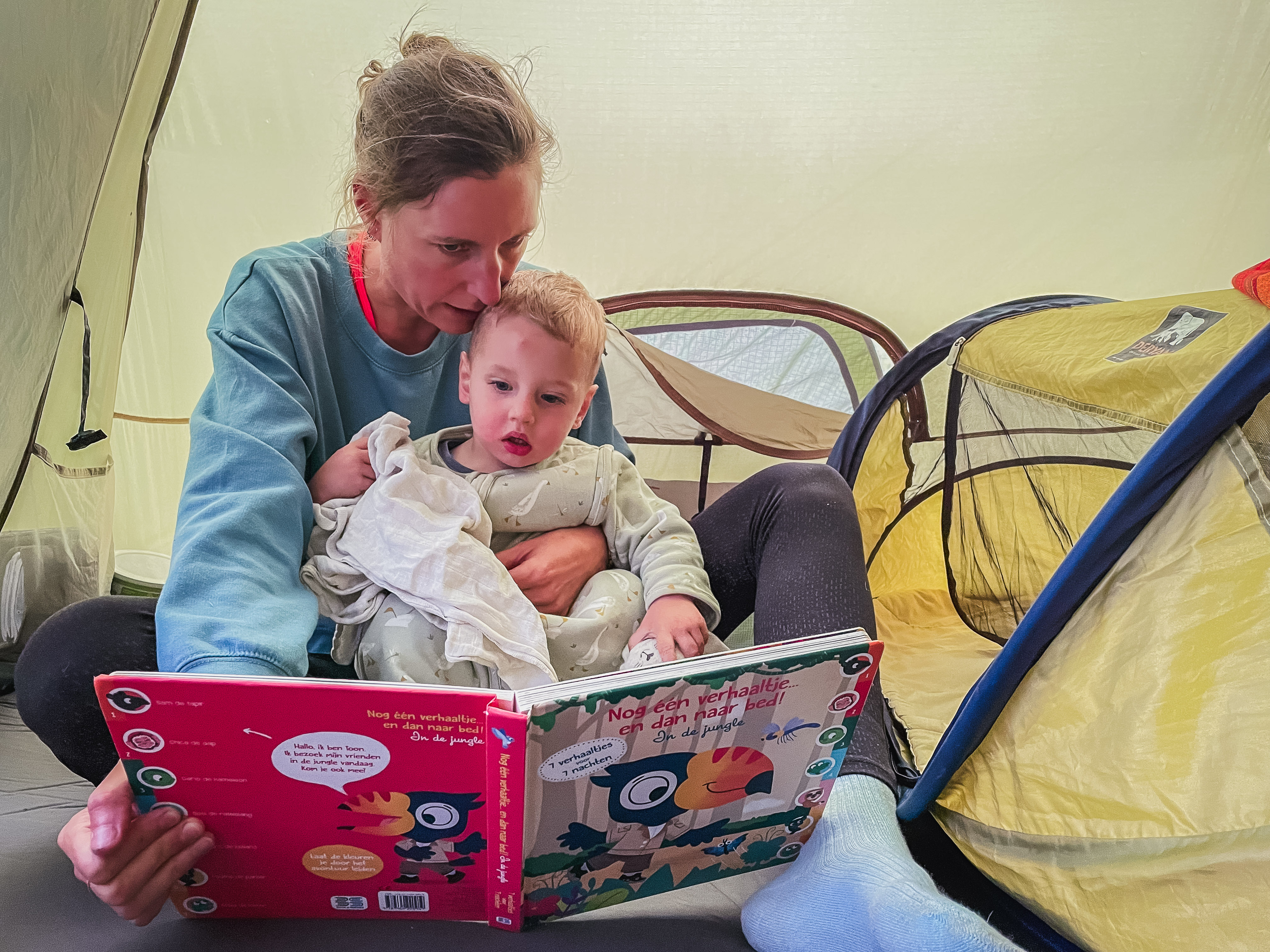
Baby sleep tent: We put the little tent inside our tent at our feet at night time. He got so used to it that he sleeps as well in the tent as in his bed at home. See the third tip for more details on our previous post on kids on trains where we tell you a little more about the tent.
While cycling, our typical day routine with 2-year-old August would be as follows:
5:30-6:30 Louis sneaks out of the room, goes running, reading a book, journaling
7:30-8:00 Wake up & milk for August (he drinks his milk cold – makes life easy while camping), get ready for the day
8:00-9:30 Breakfast
9:30-10:00 Pack our stuff
10:00-11:30 Start cycling or if we stayed in the same location, one of us would take 2 hours of me-time and the other would make a hike. We often started with August in front of Tine’s bike so that August could look around (and does not yet fall asleep).
11:30-13:00 Give August his lunch while taking a break… change his diaper and then he slowly falls asleep in the bike trailer behind Louis’ bike around 12:00 or 12:30.
13:00-14:00 Tine & Louis have lunch while August is taking his nap – we take the bike trailer as a stroller onto the restaurant terrace. Warning: we had to be inventive to keep August out of the sun while sleeping…not easy when the roads are curved and the sun comes from a different side every couple of minutes. When he woke up after 2 hours nap we would give him some more of our food or fruit.
14:00-17:00 Visit or cycle: often we would either cycle a bit more, visit a city, do a hike in the mountains, or plan shifts taking me time to read/chill/write.
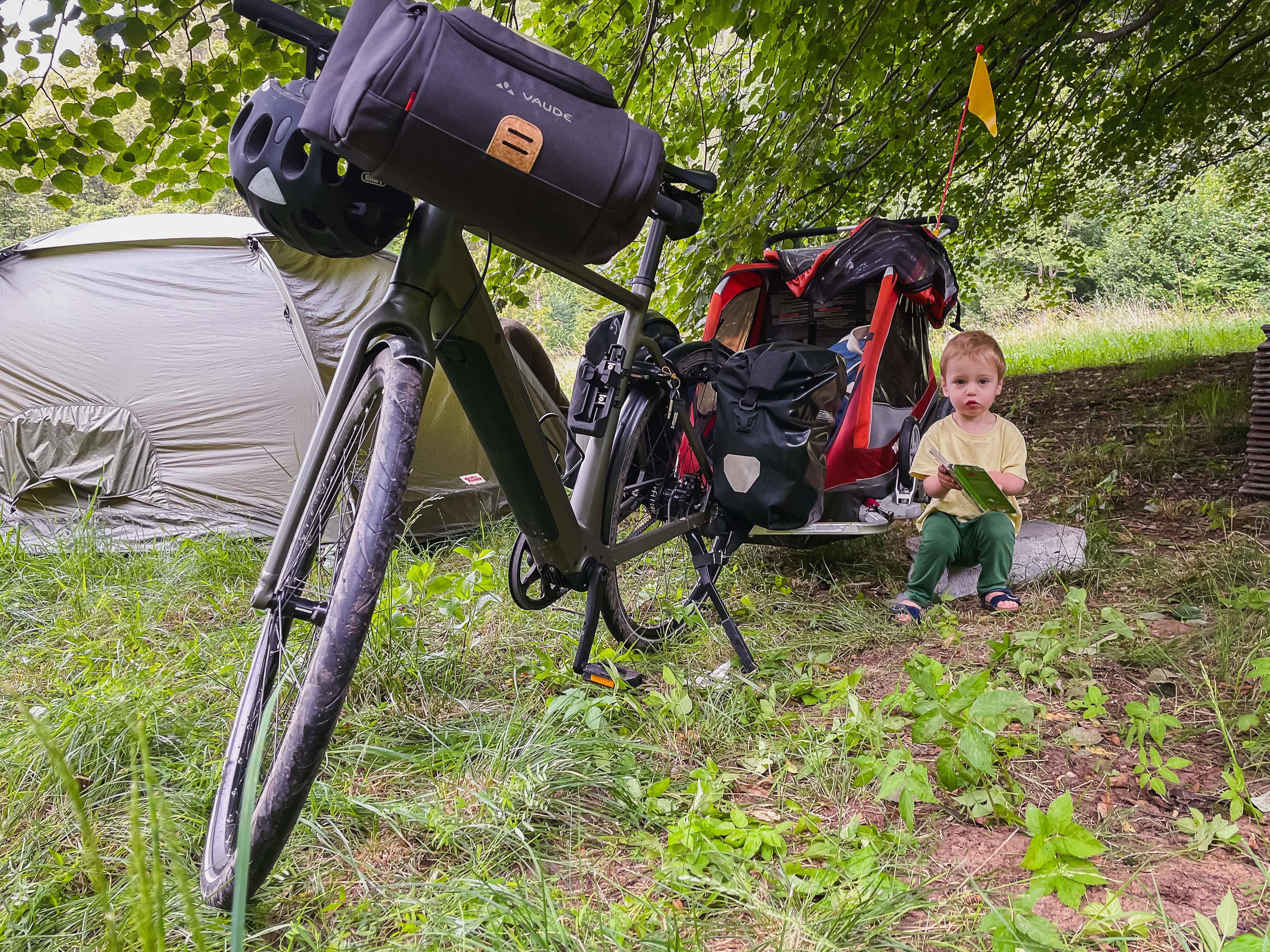
17:00-18:00 Find a good camping spot or hotel. We traveled in July and August which is high-season, but we did not reserve any hotel or campground in advance. We would often call the day itself either in the morning or sometimes just half an hour before knowing if we would make it to that city or want to stop earlier (in case of August being unhappy on the bicycle or bad weather).
18:00-19:30 Get installed, have dinner together or if there’s a nice restaurant in the hotel we would already give August his dinner and after that put our phones on WhatsApp as baby phone while August is sleeping and we’re having dinner. We would often wash out August’s re-usable diapers by hand in the shower, and let them dry during the day in the bike trailer. More on travelling with re-usable diapers in a seperate blogpost – coming up.
21:30-22:30 Tine & Louis sleeping time
Like what you read? Do yourself and us a pleasure by subscribing to our blog by leaving your email addres below:
4. A day-by-day detail of the itinerary
Day 1: start in Castello-Molina di Fiemmeto Pozza di Fassa
On the first day, we started slowly after having spent the night in Hotel Italia. We cycled past the waterfalls – Cascate dell’Avisio di Cavalese, where we had heavy rainfall and stopped cycling for an hour.
We booked an (expensive) camping in Pozza di Fassa: Camping Catinaccio Rosengarten. Since August went to bed around 19:30 we did not have the time to go to a restaurant and had takeaway pizza in front of our tent… in between two rainfalls.
Day 2: to Passo Fedaia
The second day started very beautifully, with views of impressive mountain ranges and a steep climb. We took a break to have lunch in the restaurant La Maison Fredarola while August was sleeping in his bike trailer.
When we wanted to hit the road for the second part of the climb and after having charged our batteries, we found Tine’s bike with a flat tire. When I pumped it up again we noticed it only went flat very slowly… so rather than spending an hour there trying to fix a flat tire of an electric bike, we inflated the tier every 20 minutes. With only a big hour of climbing the Passo Fedaia, we made it to Rifugio Capanna Bill. For the last part of the road we took a little closed-down road next to the hydro reservoir.
Day 3: we stayed at Passo Fedaia in Rifugio Capanna Bill
With beautiful mountains surrounding the Passo Fedaia, we decided to stay for two nights and go for some hikes. In the morning we took turns of 2 hours each to go for a hike with August while the other had some me-time. In the afternoon we took the cable car and went for a hike higher up. The Rifugio had a restaurant so we could have breakfast and dinner there. For lunch, we always had a good stack of food with us in our bags.
Day 4: to Agordo
And guess what… rather than fixing the flat tier, we decided to inflate it every 20 minutes and cycle to a bike repair shop where they fixed it for 10 euros. It saved us a lot of frustration and clumsyness on the road.
We had lunch in Agordo, visited the city, and decided to cycle a bit more uphill before searching for a camping spot in the wild. We were unlucky: The local multinational had organized their international family day in Agordo and fully booked all hotels in the surroundings. Our first pick to camp was in the garden of the school of a small village called La Valle Agordina. We filled our water bottles at the little fountain, and enjoyed the local playground, but we could not find any electricity to charge our bicycle batteries… and with more than 1000m climbing foreseen for the next day, we sure needed that.
After talking to some people in the village, they showed us their little forest and field where we could camp and offered to charge the batteries in their house. Tine had fun building a bonfire and August slept super well in his little tent, inside our bigger tent.
Day 5 to Villa Chele in Pralongo – Val di Zoldo
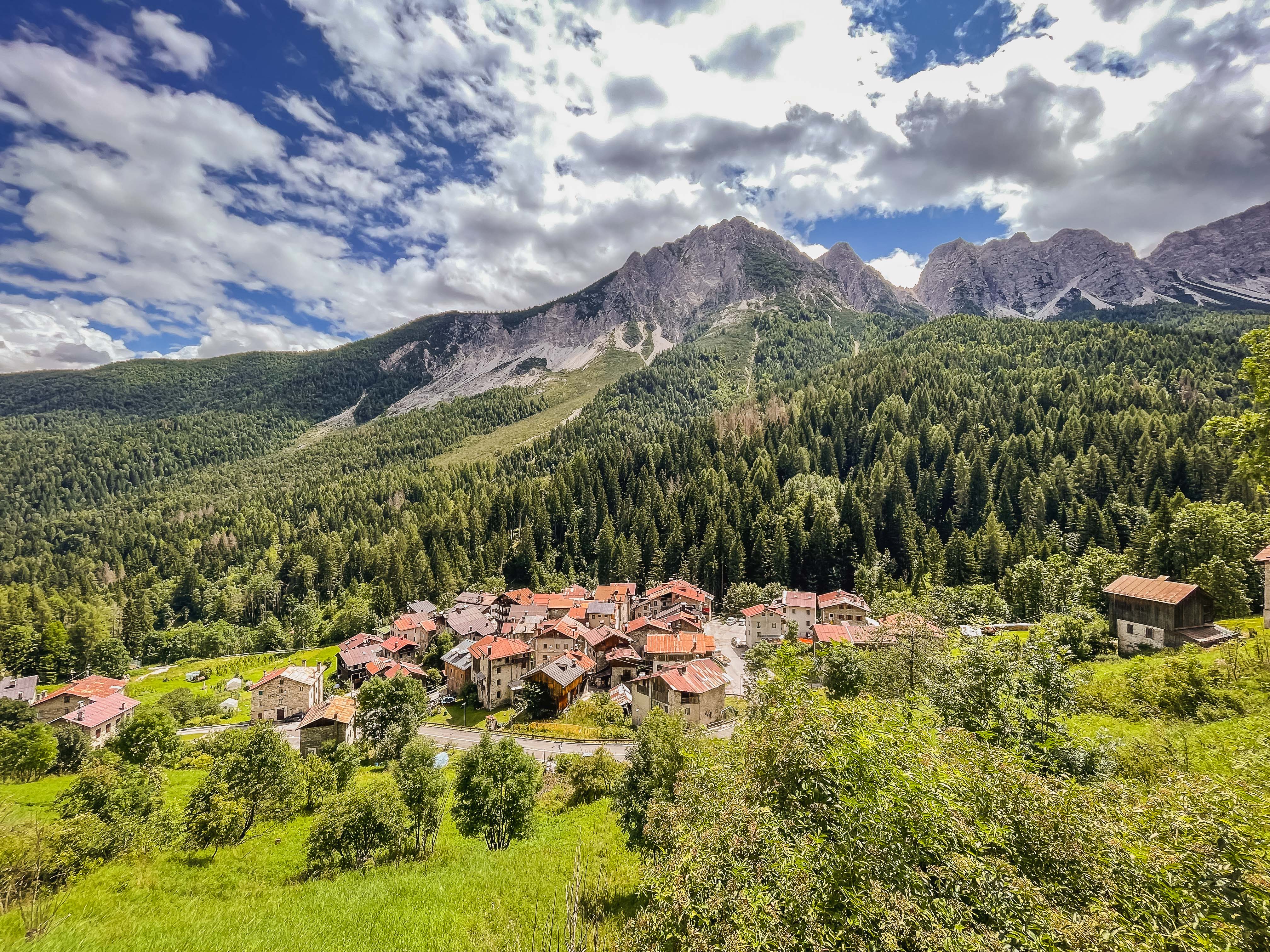
We climbed the mountain until Rifugio Passo Duran where we had lunch. We were rewarded by the impressive views of Chiesa, a beautiful old village with many charming wooden houses.
After that, we continued cycling downhill, with a small climb at the end to reach the charming room we booked with Louisa in Villa Chele. The host is amazing. She immediately volunteered to take care of August while we carried our bags up. We could do our laundry there and she borrowed us her hiking backpack for toddlers to do a bigger mountain hike.
We had dinner in Restaurant El Taier, a couple of 100 meters down from Villa Chele, and enjoyed the sunset from the hill next to the village.
Day 6 & 7 we stayed in Pralongo – Val di Zoldo
The next day she explained she had to take care of her grandkids in Belluno and that we could drive along to the city in her van… so we took a lovely road trip with sixty-something years old Louisa. We talked for hours, where she shared her interesting life story – from Argentina to Germany to Italy – travels by boat – falling in love – … An encounter with a woman full of wisdom. It gave us the perfect “Celestine prophecy” vibe full of magic. If you haven’t read the book yet: this is your call!
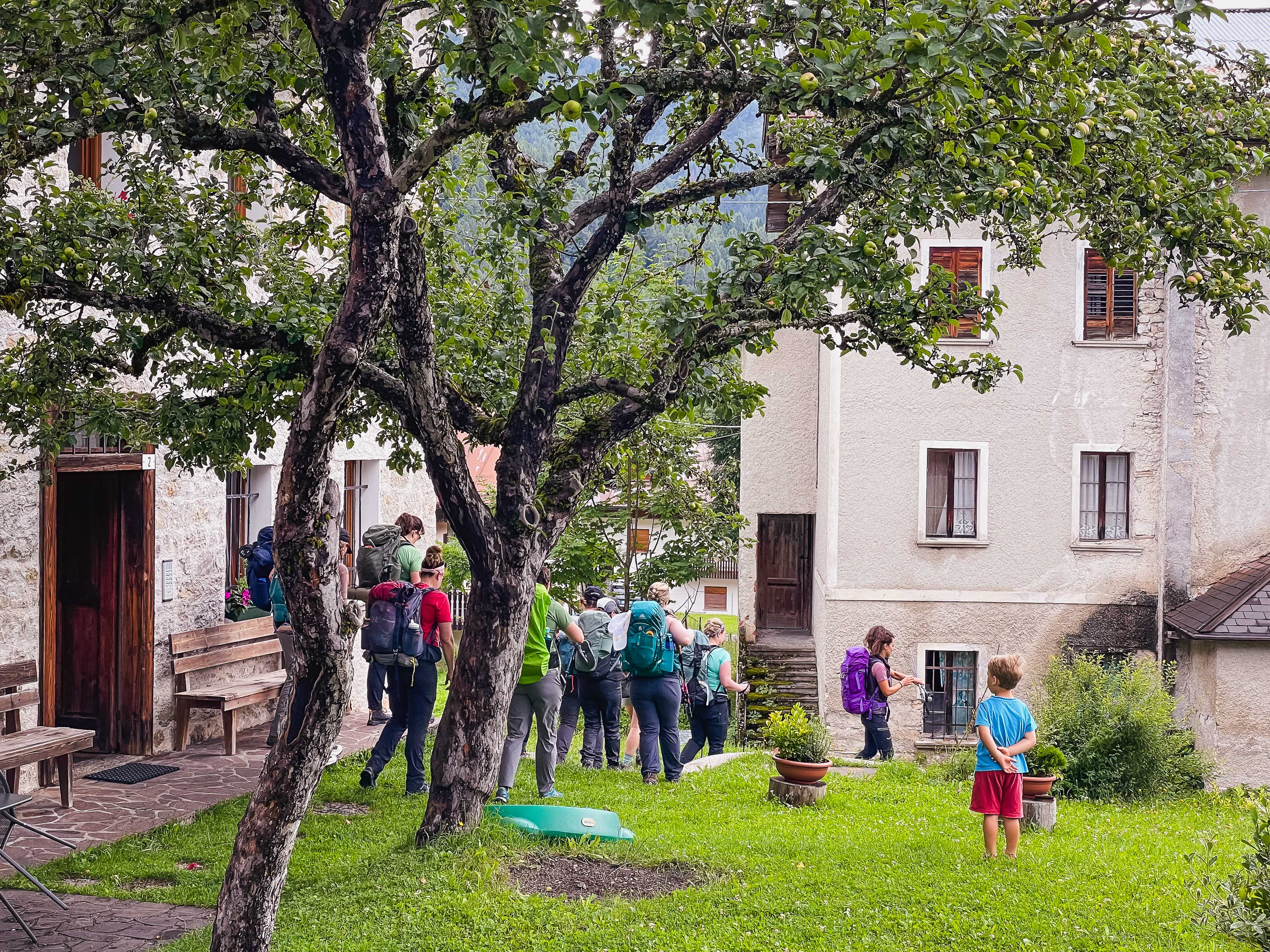
In the mornings, Louis would sneak out of the room and go for a long run in the mountains and read his book, while August and Tine would be calmly sleeping. On one of the mornings in Villa Chele a group of women hikers was preparing to head for the mountains, while one took out a box of cards called: “Nature meditation cards”. We bought the same deck and still enjoy it once in a while, a nice gift idea!
Day 8 to Cortina d’Ampezzo
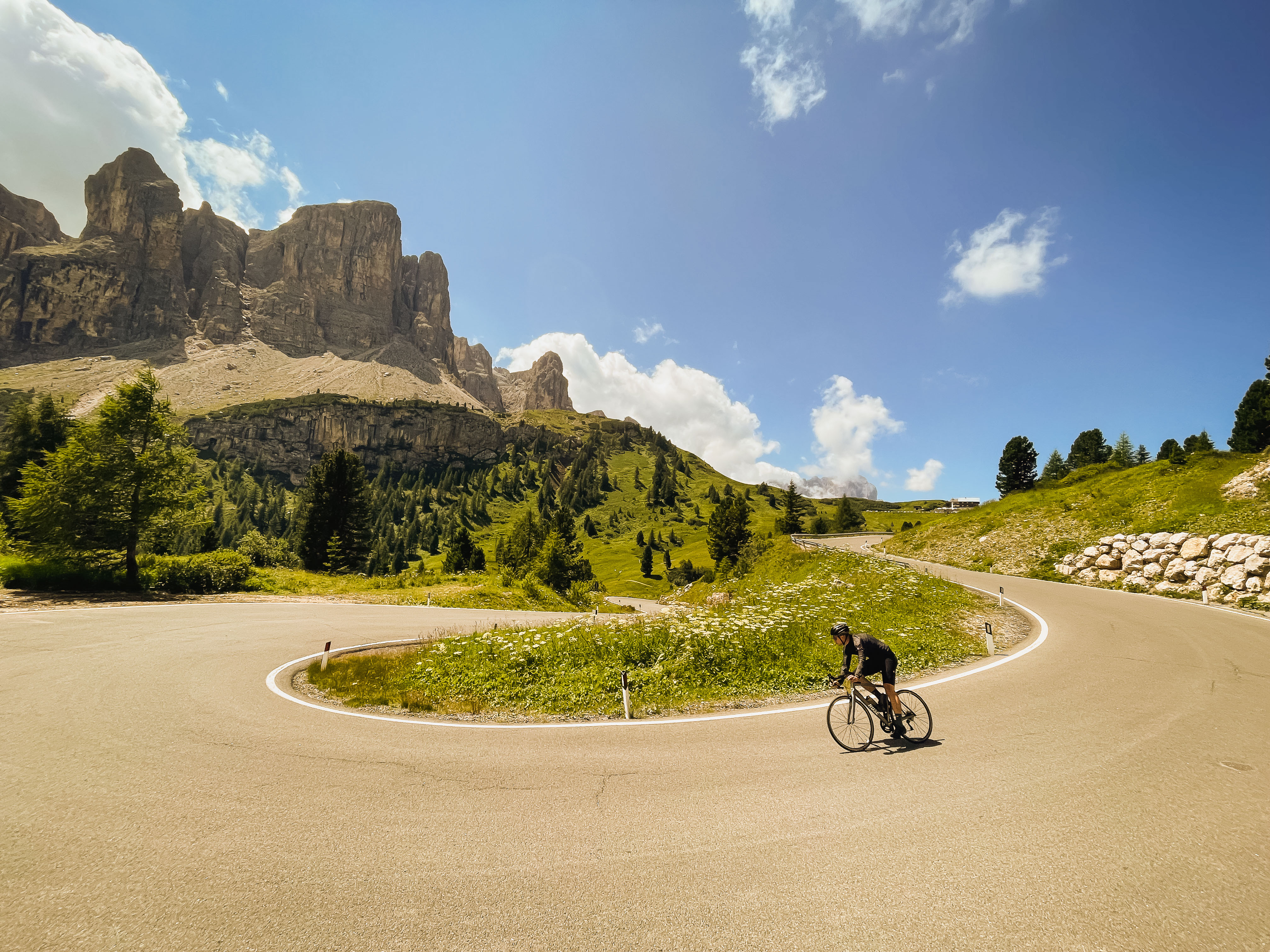
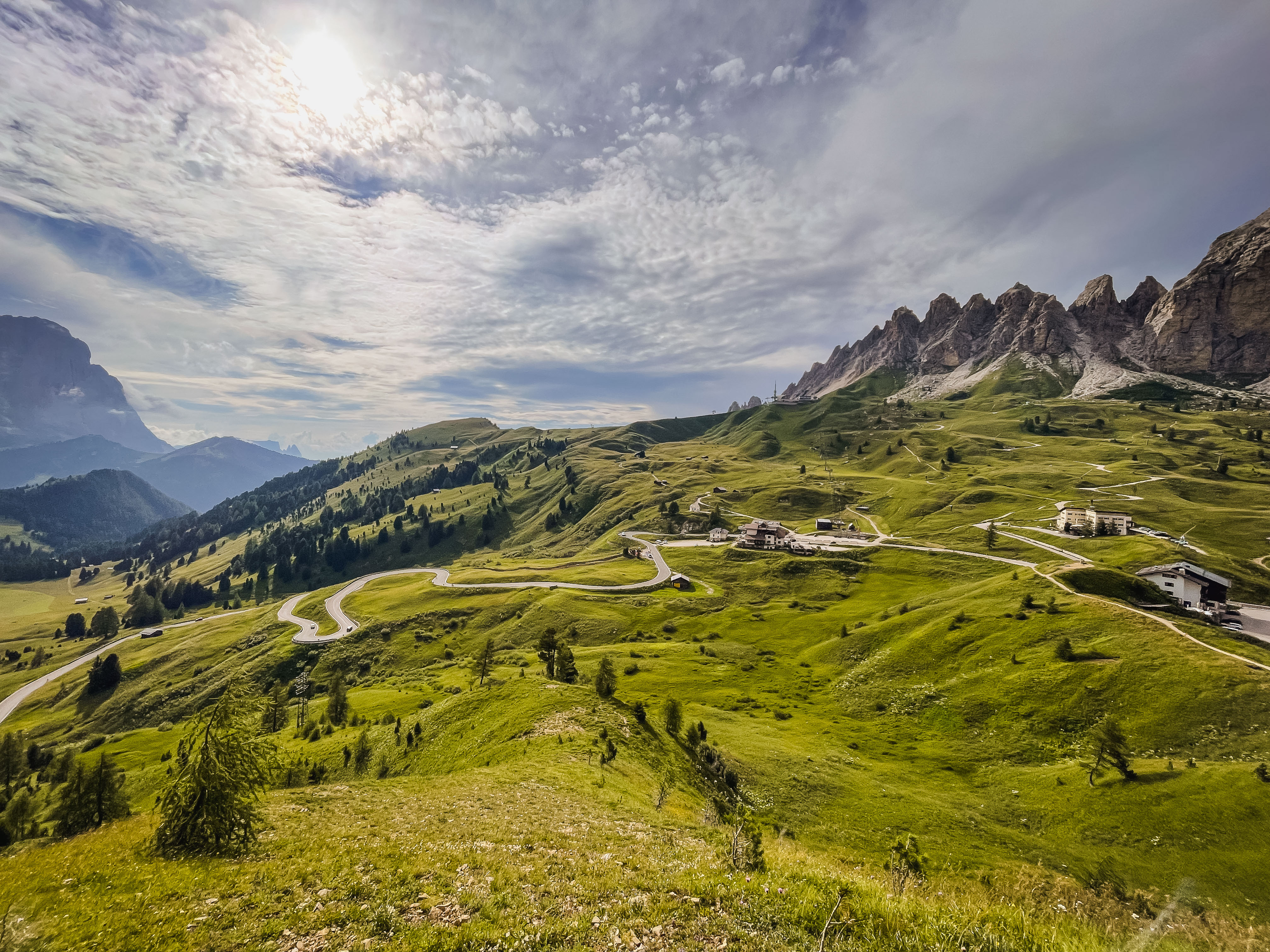
This was a legendary day: we had to take a good 1000m climb again, The majestic roughness of the mountains is impressive, and while cycling you have all the time to enjoy it and look around.
After that, we continued our trip to Cortina d’Ampezzo where we booked a camping ground. We had to go to Camping Cortina, because Camping Rocchetta was already fully booked. The latter is a nicer campground according to the reviews… but the Pizza at Camping Rocchetta was good and August enjoyed the playground a lot.
Day 9 to Cinque Torri and San Ciascian
Before continuing our trip, we visited Cortina and had breakfast there.
While climbing up the next col, the views over the Cortina valley are nice, so worth stopping for.
After a couple of hours, we reached the cable car to Cinque Torri. We did not plan all of this upfront, but when searching we saw that it was certainly worth going up for a hike around the rocks of Cinque Torri.
We continued cycling for a little while until we reached B&B Hotel Frohsinn for the night.
Day 10 to Passo Gardena
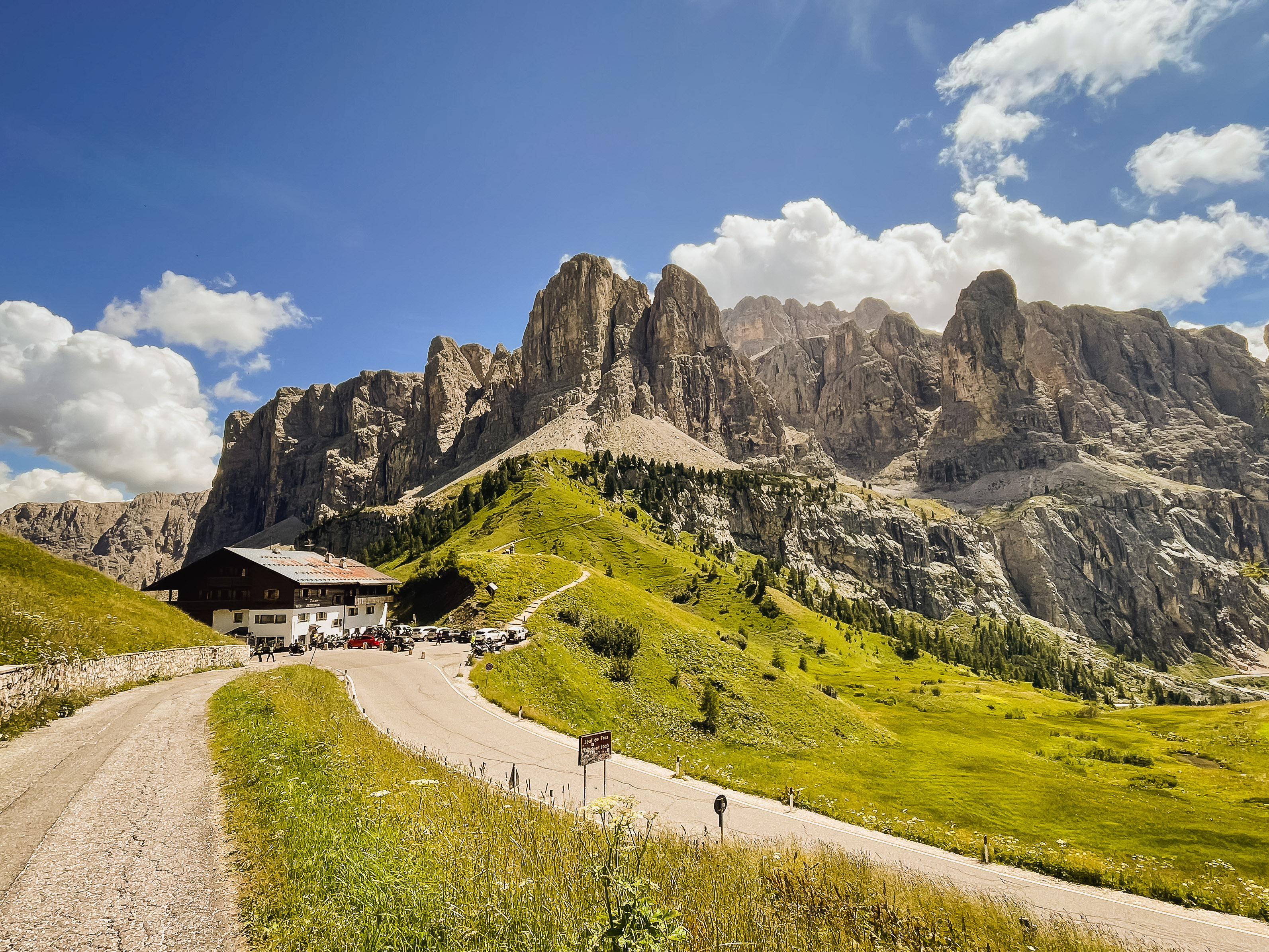
As we never knew what we would find on our route and had quite some flexibility in our schedule, we would never reserve any hotels or campgrounds in advance… so we were extremely happy to find a free room in Hotel Cir. A very nice place on top of the Passo Gardena, with a good restaurant, nice terras with relaxing chairs, and the most impressive views of the rocks around.
Day 11 we stayed in Passo Gardena – Hotel Cir
Since the hotel was so nice and nature so impressive, we decided to stay a second night and take the time to relax and take half a day of me time each, while the other would take care of August.
Day 12 to Moena
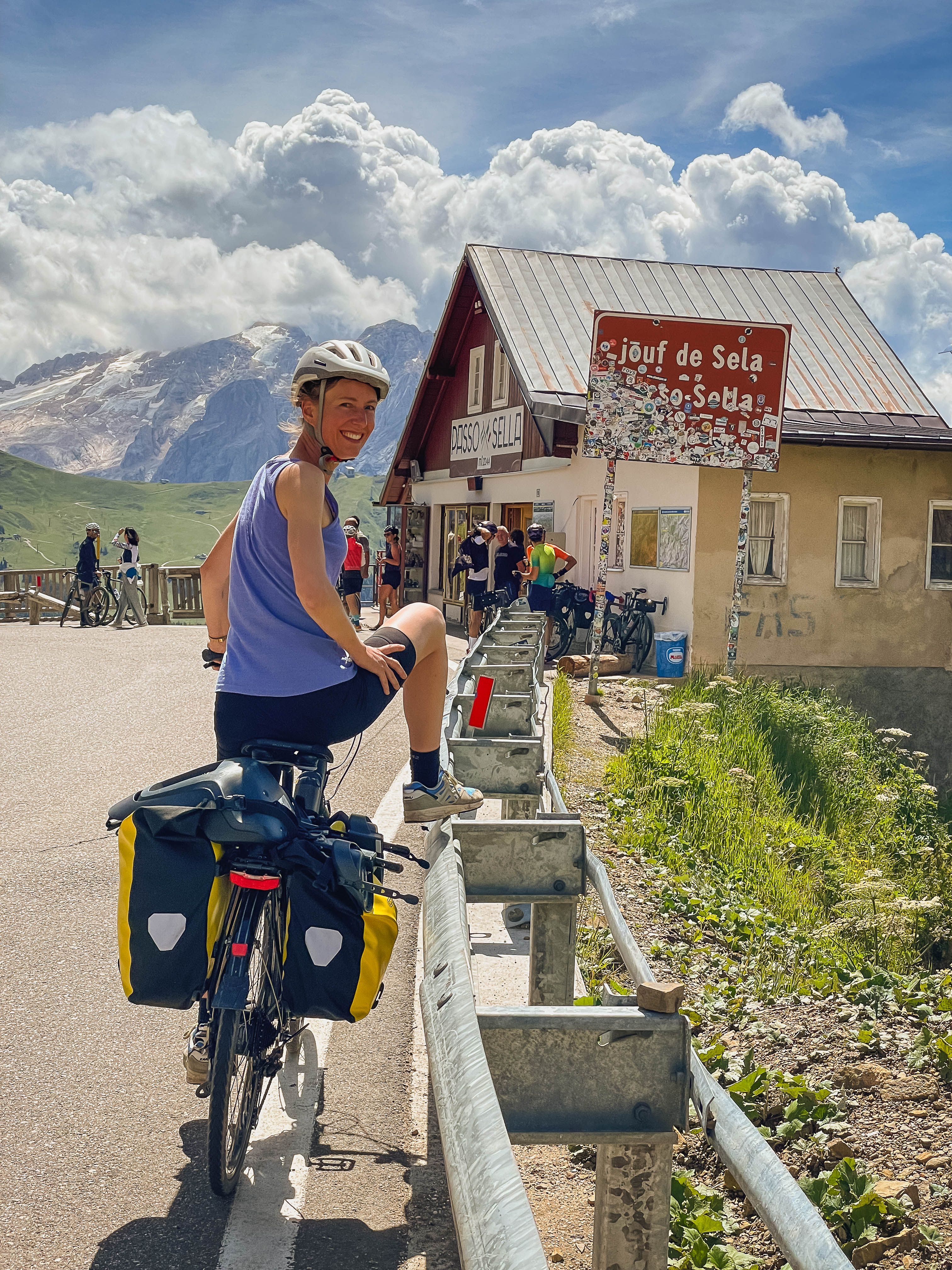
We climbed the Sella Pass before closing our loop through the Dolomites in Canazei, the city where we passed as well on our second day. That night we stayed in Hotel Catinaccio, a nostalgic hotel that had its best days… but the old charm was pretty funny and August enjoyed the pool a lot.
Day 13 to Castello di Fiemme
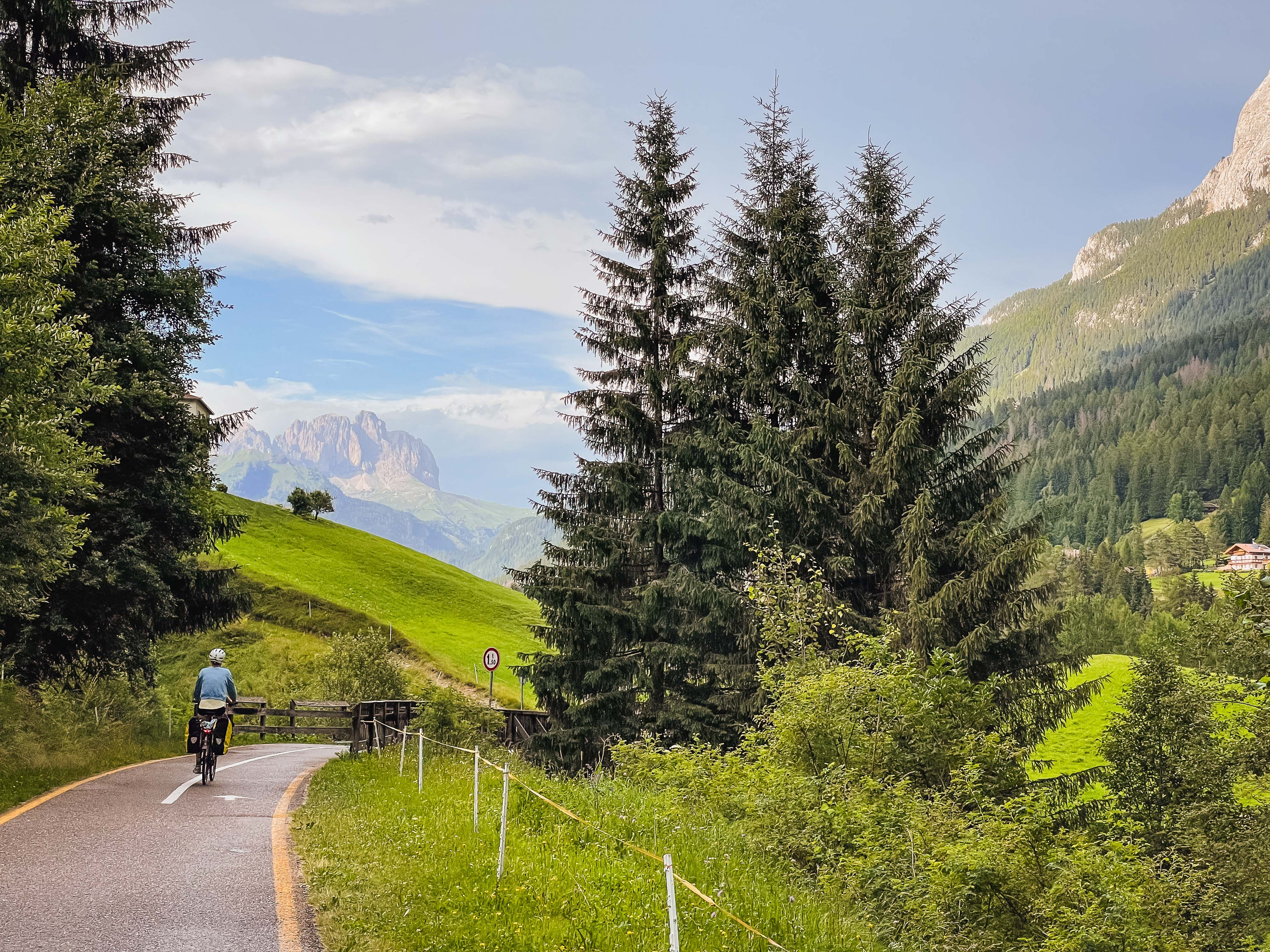
On our last day, we rolled down the hill, along the river with a day of fully separated cycling lanes to our start location. It was an easygoing day to close this beautiful trip through the Dolomites.
In case you are planning to take this trip, please reach out with any questions! It would be great if we could inspire others to have a similar adventure with their kids.
Now imagine you have to go to the Nordics for work in wintertime… the first thing to think about is: nature, freezing cold and saunas, no?
Train adventure
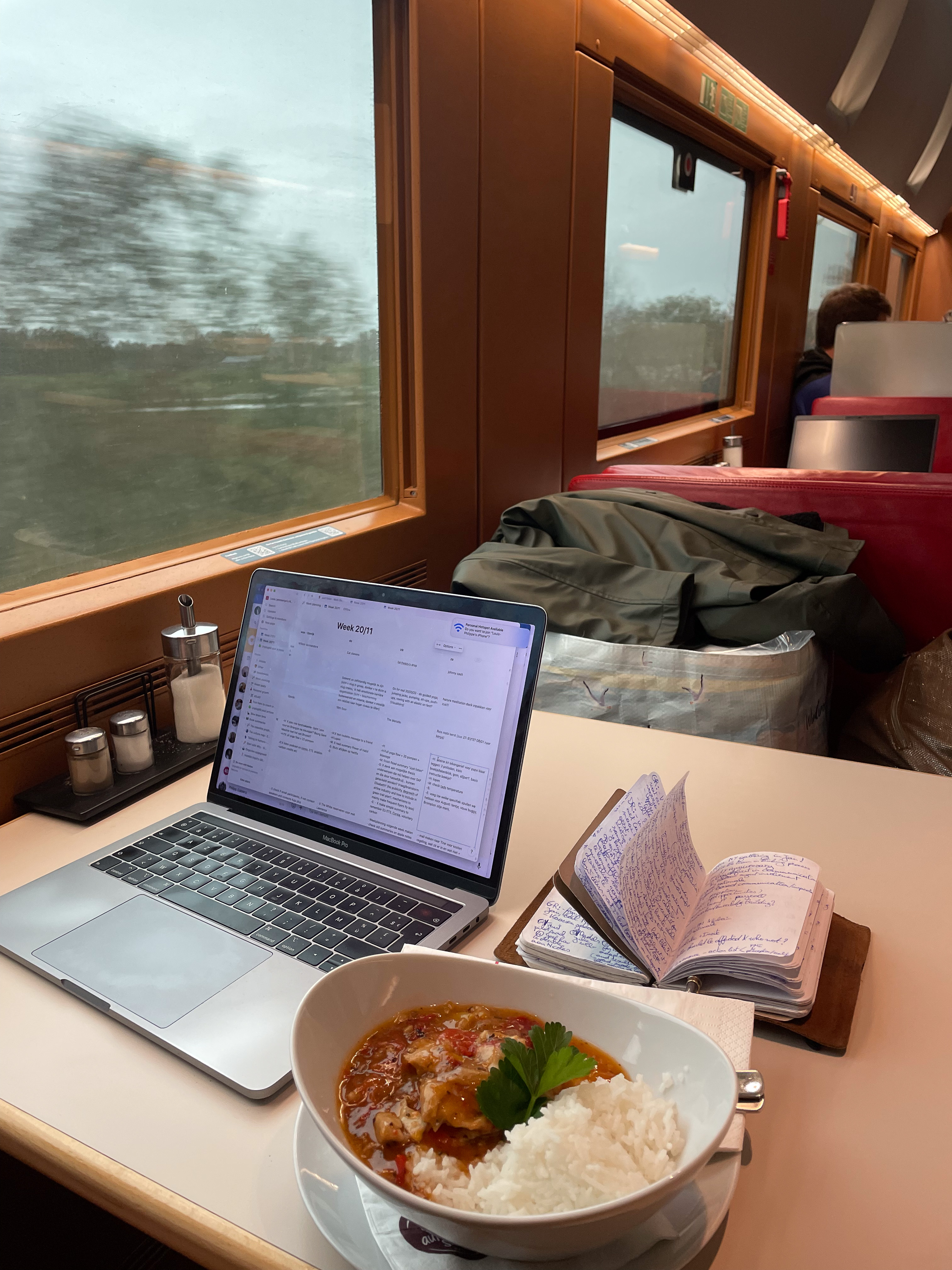
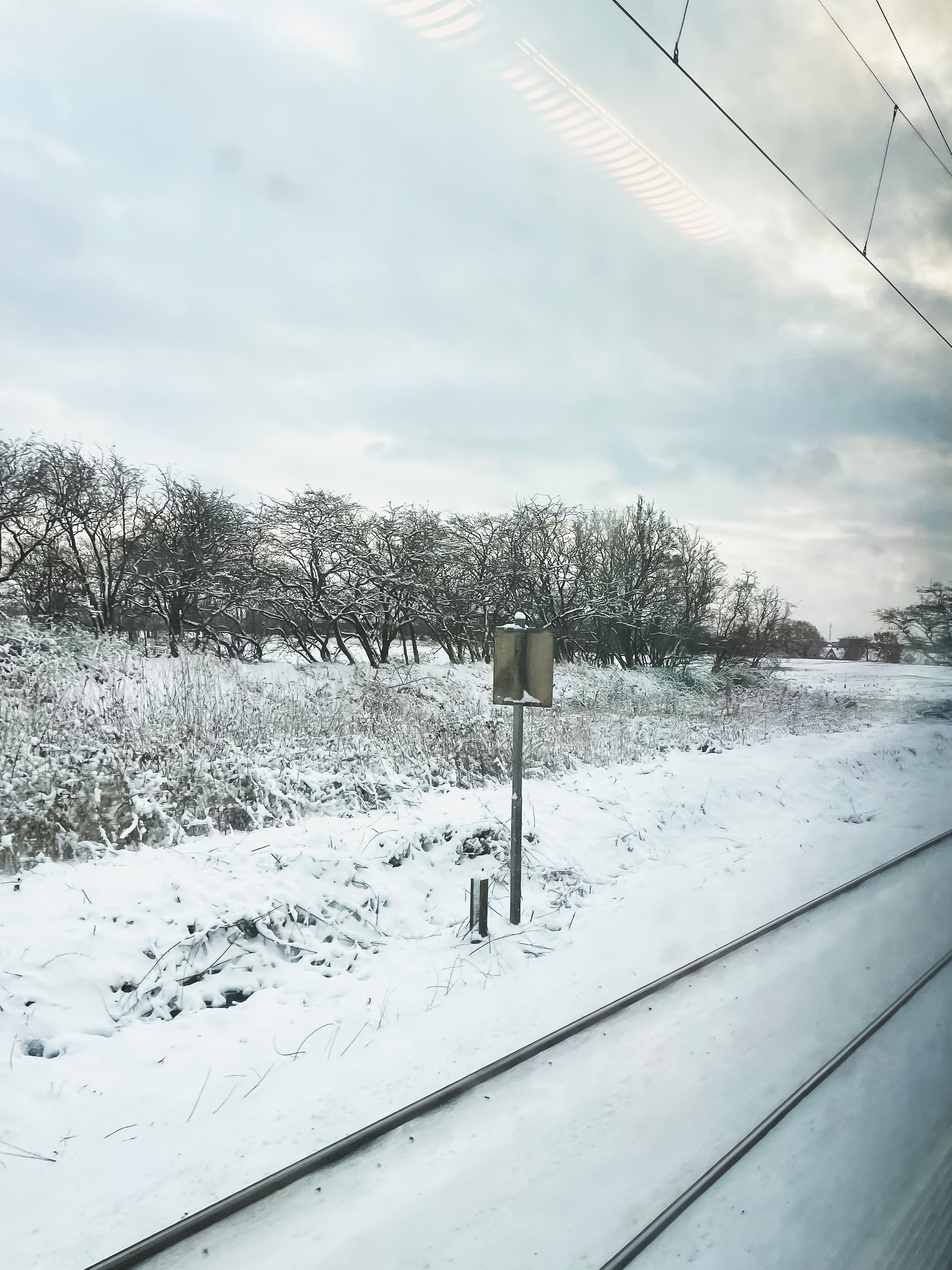
Traveling to Copenhagen by train is really easy and fairly cheap if you book a couple of weeks in advance. It cost me 219 euros for a return ticket in first class, which was only about 30 euros more expensive than in 2nd class. The most challenging part is getting your connections, given the fact that every single german train seems to have a delay. The nicest part is the cozy restaurant wagons with decent food options and a vegi offering. I can certainly recommend the vegetarian curry.
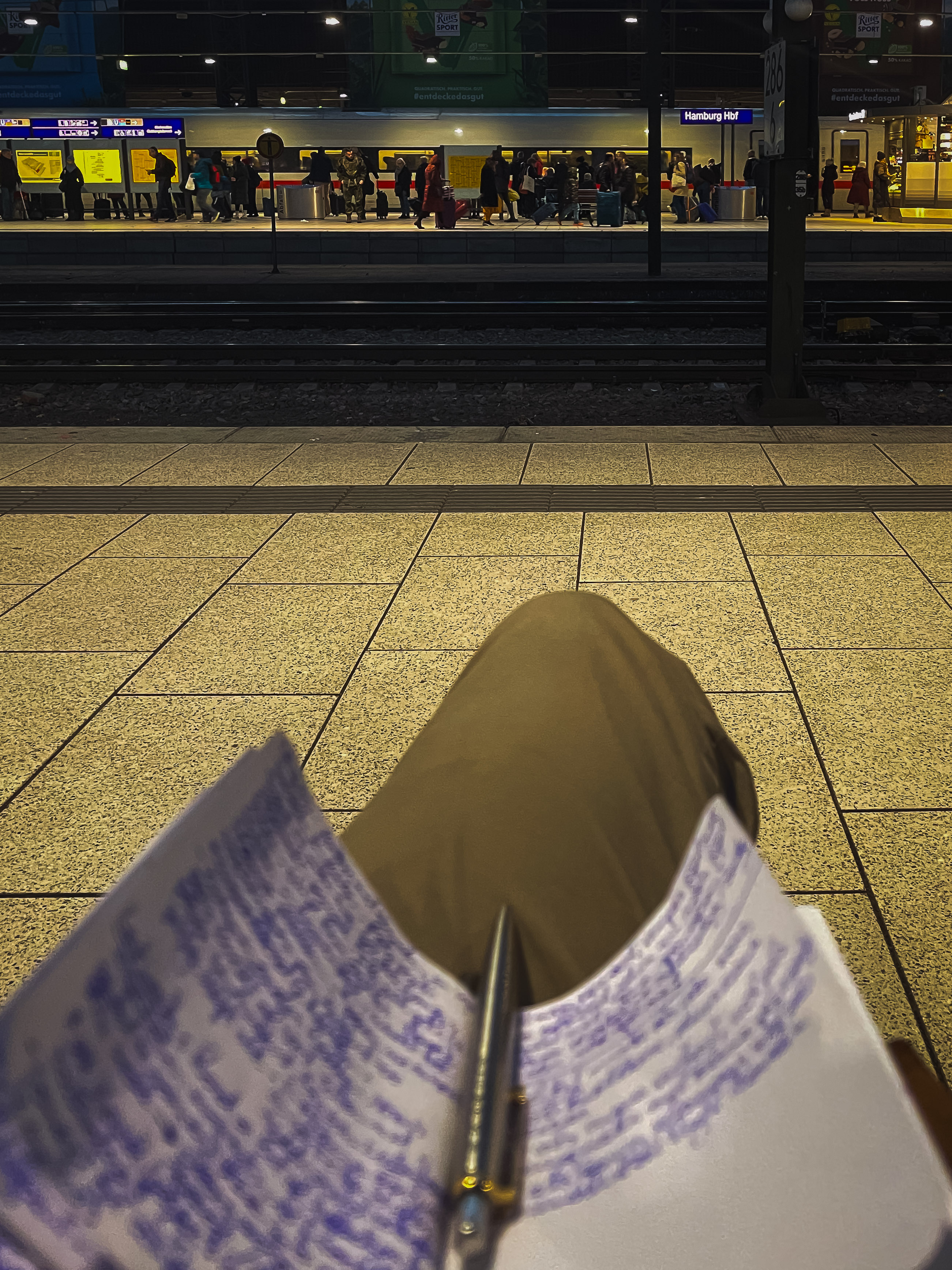
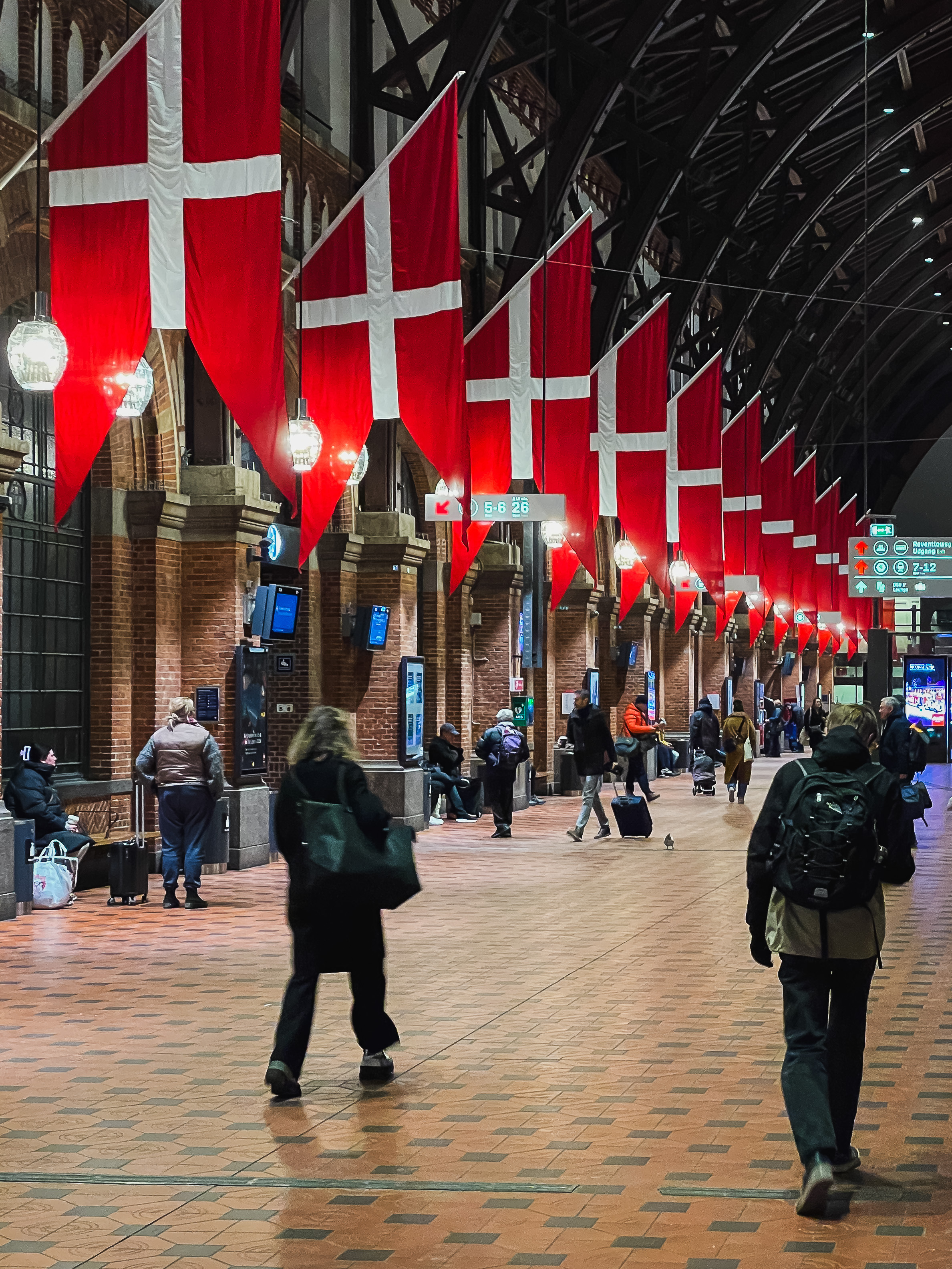
I left Brussels on Sunday morning around 8:30 in Brussels North Station, with a delay of half an hour. For my connection in Cologne, I had 2 hours, a nice buffer of which half was consumed. In Hamburg, I had 40 minutes. I arrived with about 20 minutes of delay, but my next train was also delayed… giving me again a nice buffer. No stress, since there’s almost always an alternative. You can take away your stress to already figure out your plan B in case you miss your connection. At 21:30 I arrived in Copenhagen’s main station in the freezing cold. The trip went smooth, both on the way going and on the way back, but I was happy that I consulted Seat61.com to get some recommendations and put the necessary time buffers in. On the way back I had two times 45 minutes only, but luckily the connecting trains were also always a bit delayed, so I did not miss any connection.
The Topsoe SAF conference was close to the station, so I took a room at Wide Hotel, a nice hotel around the corner. Since I was there for work, my days were pretty well filled with the conference and business diners and drinks in the evening.
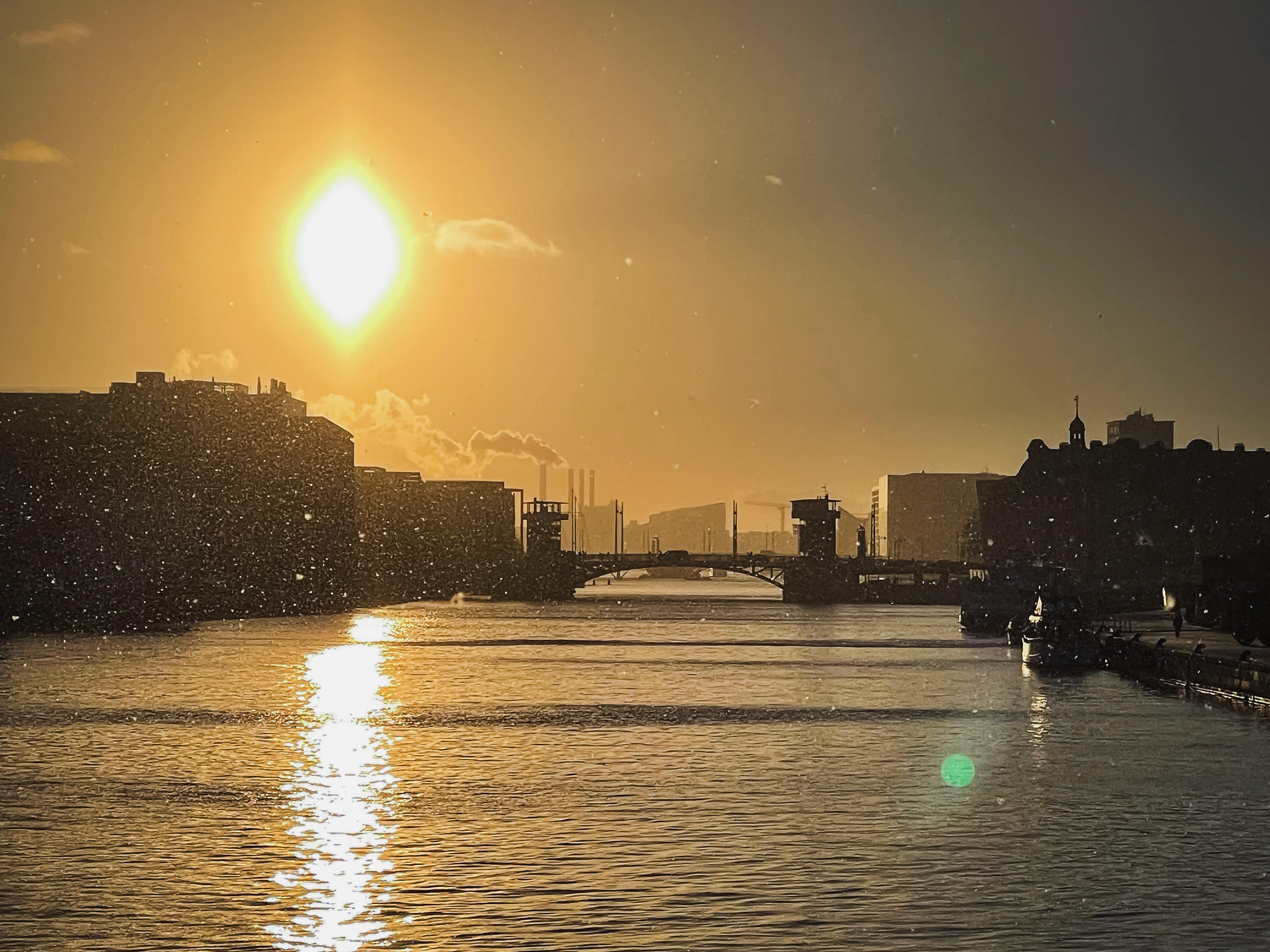
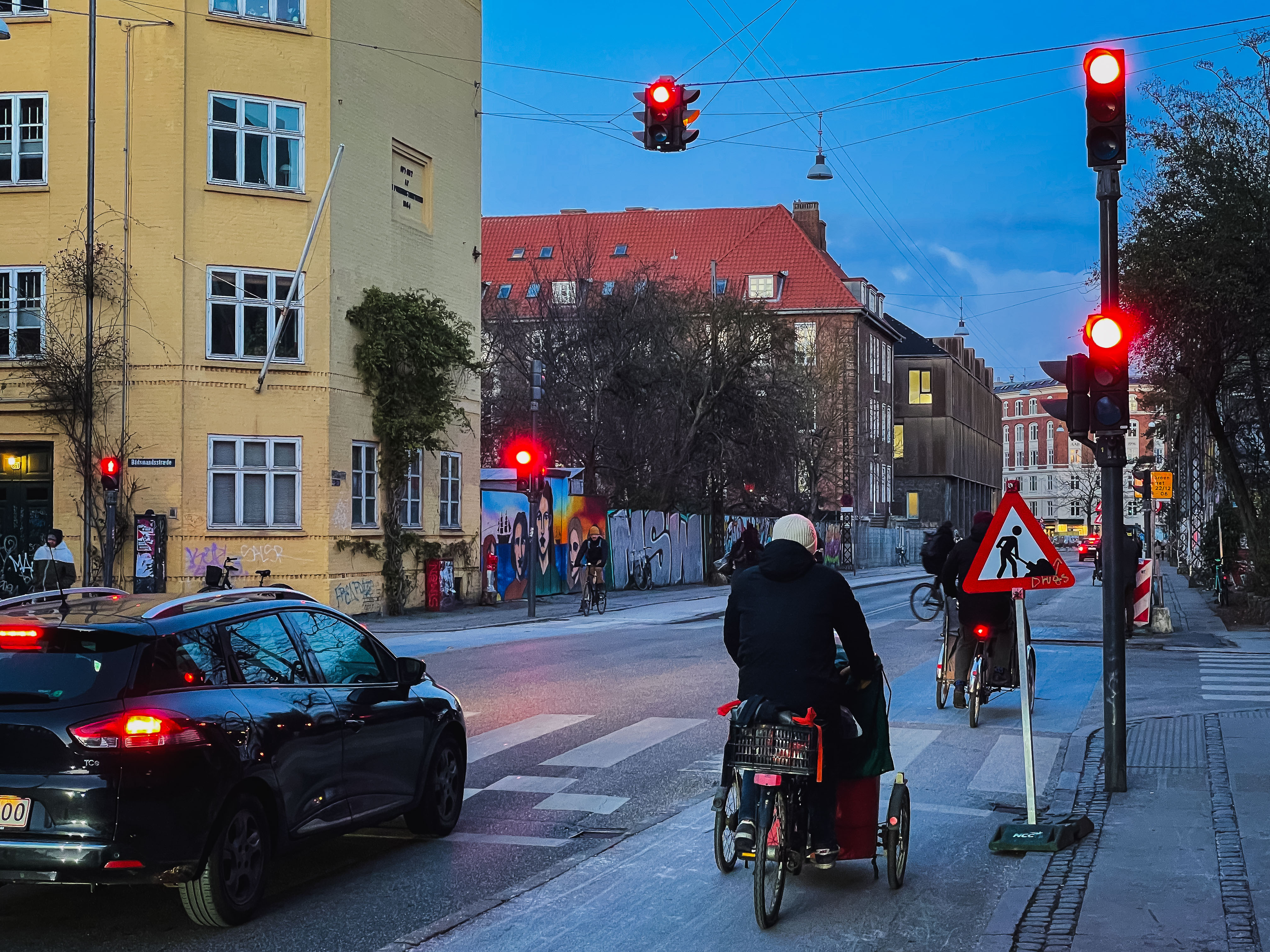
I discovered the city in the dark by running early in the morning and on Tuesday afternoon I did find a moment to discover Copenhagen. I walked around to see some highlights and searched for a good Sauna option that would meet my high expectations of what a Nordics adventure should look like. Some of the regular highlights were:
Nyhavn – with the traditional boats and colored houses
Rosenborg Slot
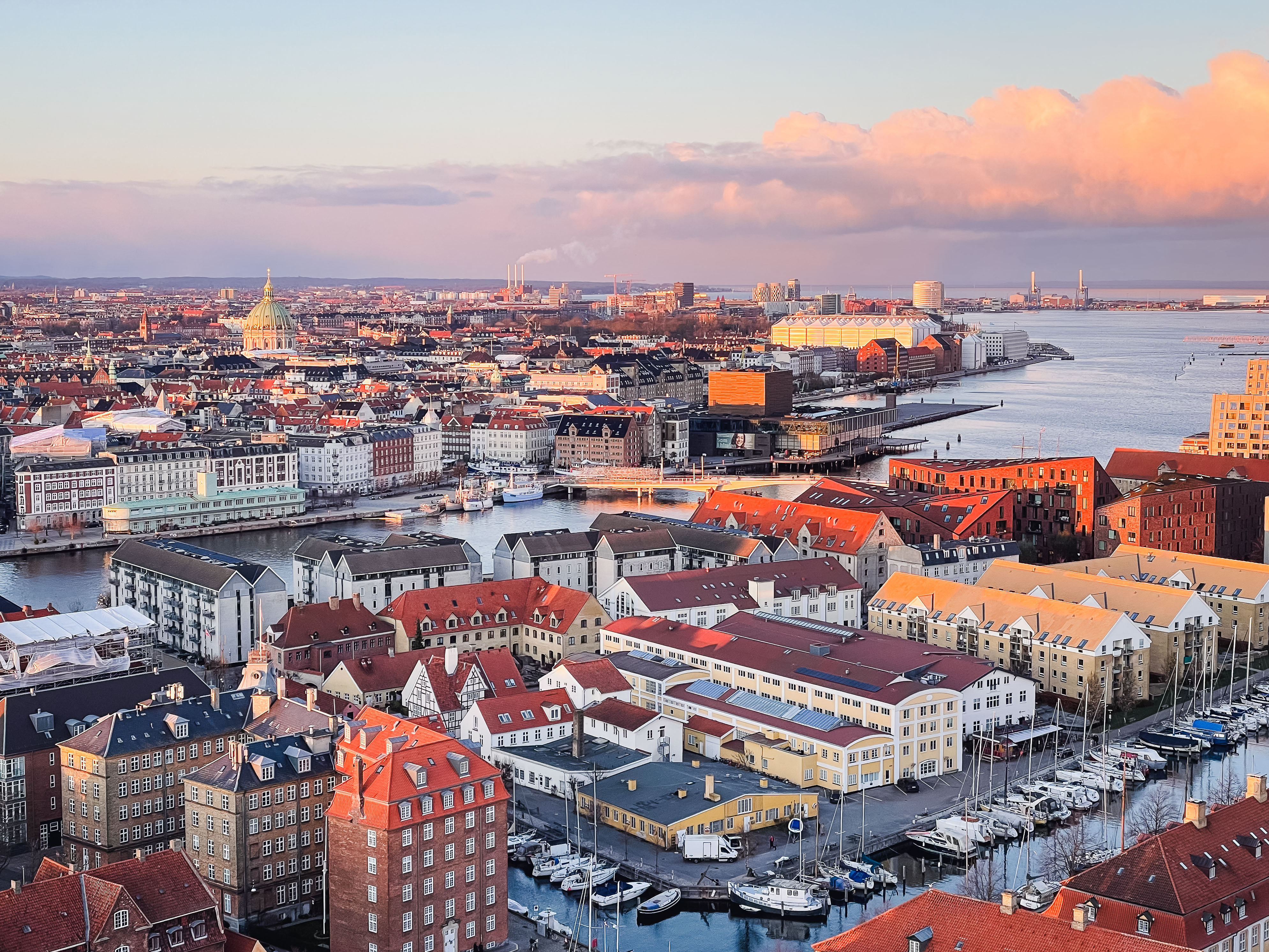
Vor Frelsers Kirke – Climb the stairs and get impressive views over the city (Every place I visit, I do. my best to find a good viewpoint by climbing a hill or a tower)
Christiania – known for its cozy atmosphere and hippie community (just skip the dodgy square where drugs are sold!)
City hall
Tivoli gardens
Mikkeler bar – my friend Mariano took me here… it’s a nice chain of cozy bars offering craft beers
The Sauna adventure.
While searching for sauna options in Copenhagen… I somehow stumbled upon a public bathhouse in Christiania. Now, for those who know what Christiania is… it’s a bit of an adventure to go to the local sauna. Walking in you get straight into the changing rooms where you pay 50 kr cash and get naked. Some easygoing guests are getting slightly high at the entrance in between two sauna sessions. There are no lockers so you put all your valuables in a paper bag, write your name on it and they put it in a drawer. You walk in through the fog and find some open showers, guests chilling on the benches, and a wooden sauna door. When walking in the nicely warm sauna, there are about 20 naked people, sometimes sweating in silence, sometimes having the craziest conversations about tattoos, nature, or life. I believe I will have to go back to the Nordics to get a typical sauna experience, but this one surely counts as an interesting one. It brought me in a similar vibe as in Suryalila, the yoga retreat we did in the South of Spain.
After the sauna, I had dinner in Morgenstedet, an extremely cozy vegetarian restaurant next door (also to be paid in cash).
My biggest gratitude goes to Jacques Fischbach for putting this small “Guide for First-timers” in the review on google maps: “-Entry is 50kr (around 6.7€), you can stay as long as you want – You need to pay in cash. (In case you need cash, there’s a “Nordea” ATM not far from Christianshavn Metro station. -You come in, take off your shoes, hang your clothes, and get naked (everybody is naked, no bathing suits allowed) -You pay and you can put your valuables in a bag and give it to the person behind the counter to store it for you (you write your name on the bag) Phones are not allowed inside, the best is if you just bring your wallet or even just the 50kr to not risk losing your valuables -There are a couple of hot showers and soap, and cold showers to cool off after the sauna -There is only one sauna, it’s about 80-90° Celsius, definitely hot enough, you can sit up on the benches or down if it’s too hot -You can bring a towel to sit on but most people don’t use one -You can pay 5 or 10kr for “Rasul”. This is a kind of mud that you can put on your skin for smoothness. It works like this: you buy the Rasul at the counter and take it with you into the sauna. (You need to go on the right side when you go into the sauna because with the Rasul it can get messy and they want to contain it to one side) When you start sweating you put the Rasul onto your whole body, just cream all your body parts in with it. After your sauna session, you go outside and you don’t wash it off immediately. You wait until it dries from the air (about 10-15 mins). Then you go wash it off completely for best results.“
Like what you read? Do yourself and us a pleasure by subscribing to our blog by leaving your email addres below:
Our 5 tips & tricks for train travel with babies or toddlers:
Plan for the worst
Bring a light foldable stroller – fold before boarding
Bring a sleeping tent
Walk around – benefit from the freedom
Pack ultralight
—————————-
1. Plan for the worst
You need to come well prepared for all needs your kid might have along the journey: bring water, milk powder, food, fruit, extra diapers, fresh clothes, toilet paper, a light book, and some small toys,… and think about how you are going to easily access it on a shaky driving train, assuming there’s nowhere to heat food, now baby table or nothing. Mentally prepare yourself for some serious struggle. But to be clear: I rather have to take care of a kid for a full day in a driving train than in a driving car!
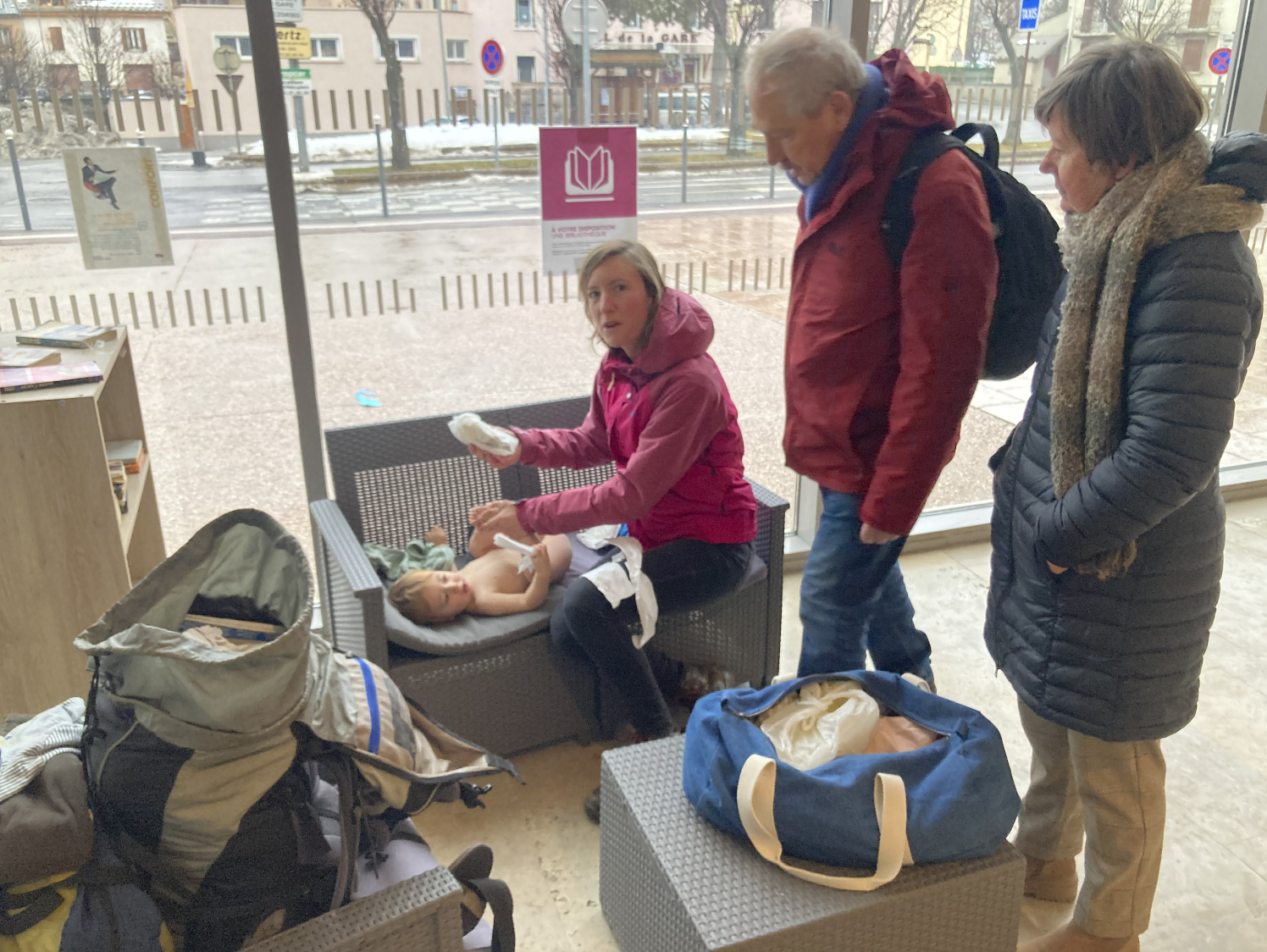
-> Think: exploded diaper while traveling alone in an old train… sh*t on your hands, his clothes… you’re happy if you have toilet paper at hand, and can access everything with one hand (pinning your little one to the train seat with the other hand) and asking for the help of the 2 grandmothers in your coupé.
2. Bring a light foldable stroller – fold it before boarding
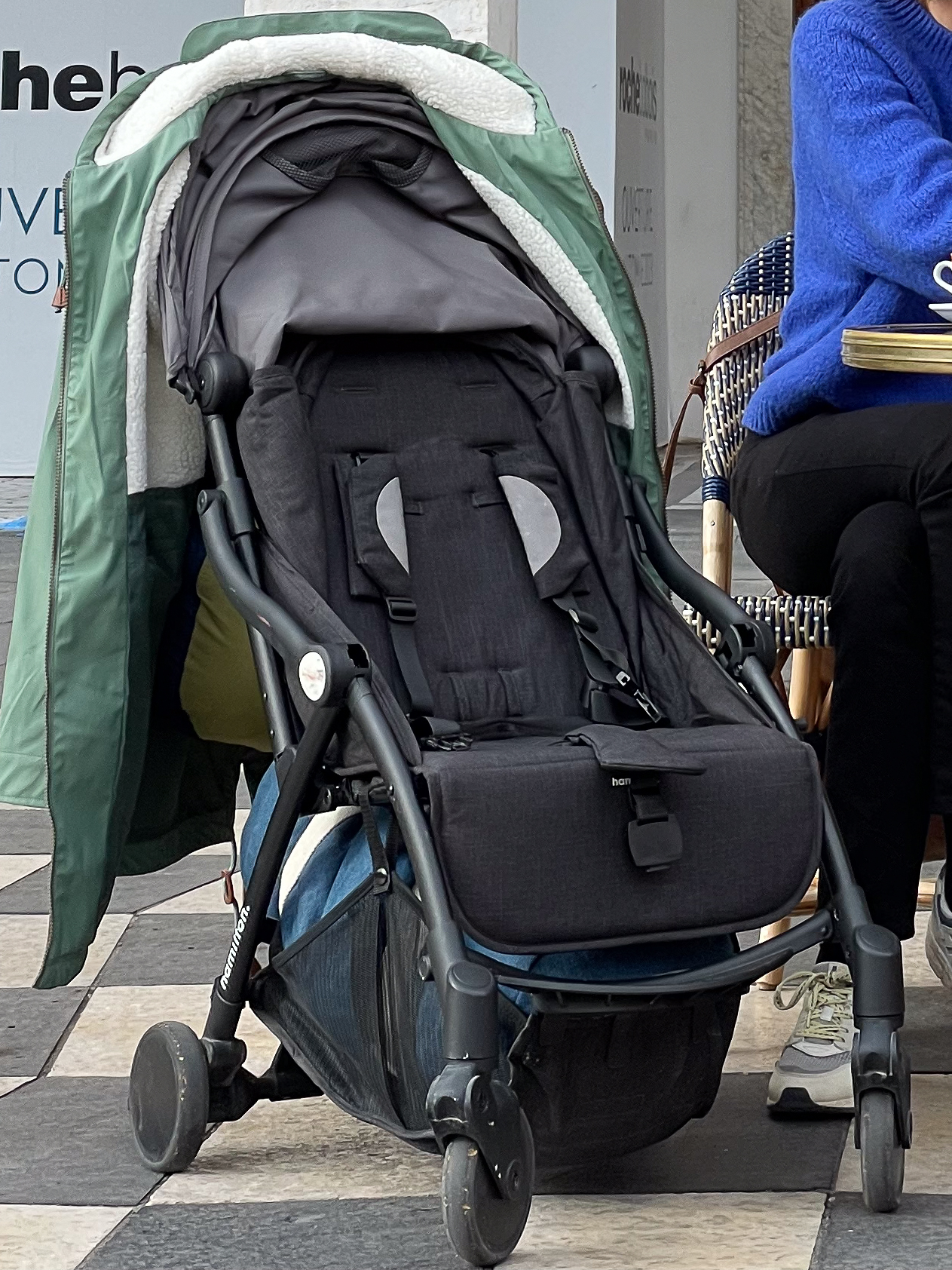
Big strollers are a pain on almost every train, no matter if it’s the Belgian IC trains, the high-speed trains of Eurostar, or the night trains with extra small passageways. You need to invest in a (second-hand) light compact travel stroller like Yoyo or Hamilton by Yoop… or the old-school foldable strollers.
For departure, you want to fold on the platform. It’s not always easy to hold a kid and your luggage, but on most international trains boarding is stressful and you don’t have the space nor time on board of the train to take your kid and luggage out of the stroller. For arrival you can already prepare and if space allows prepare before getting off.
-> We bought our Hamilton by Yoop S1 second-hand via Facebook marketplace, the day before leaving on our night train trip to Nice earlier this year. It folds nicely and is small so you can store it above the seats. We stored a soft bag that holds all the stuff of August under the stroller, easy to take out when folding and always accessible. Read more about our night train trip with August here.
3. Bring a sleeping tent
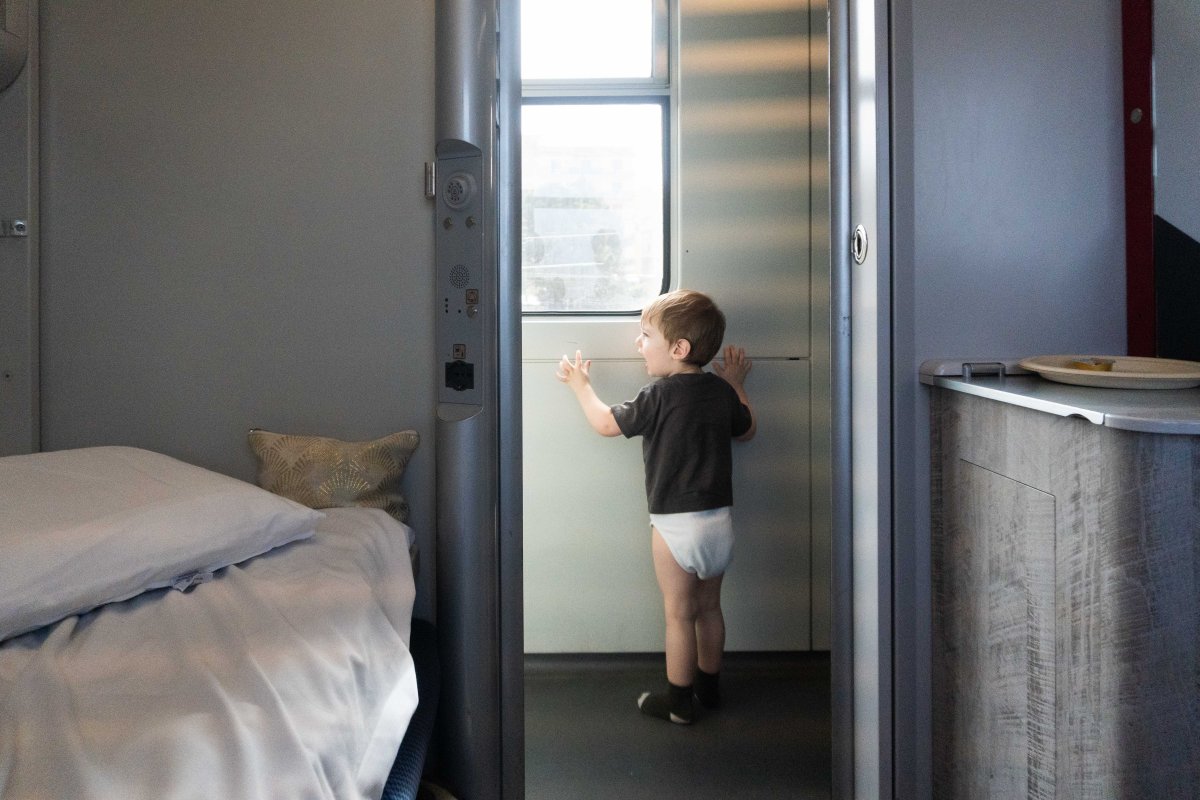
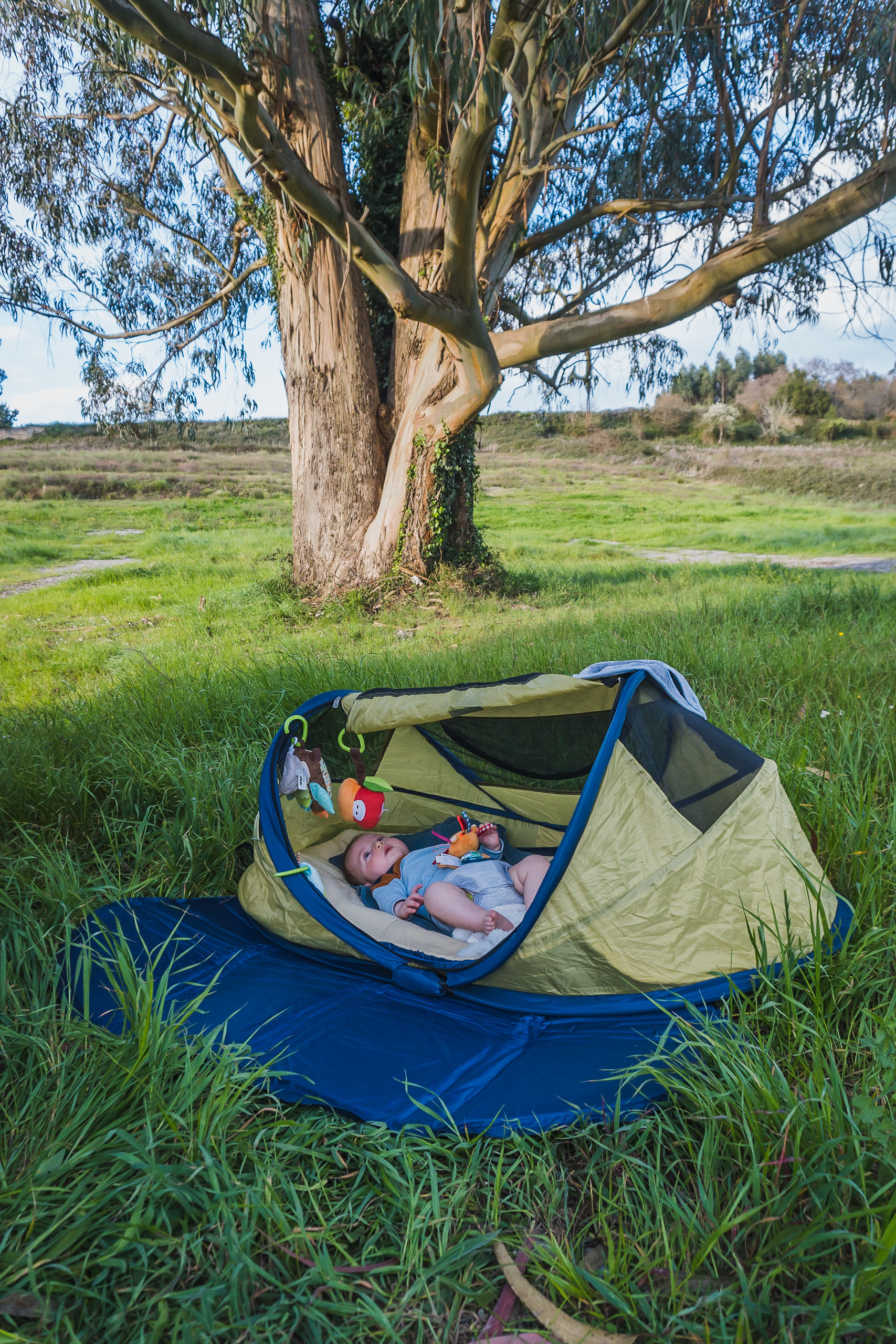
Instead of a foldable sleeping bed, we used a little sleeping tent (Deryan baby tent) that is very compact and can be used anywhere on the ground or a bed in the night train. When traveling by night train, we ALWAYS ask for the lower bed. Even if you have other beds, ask fellow travelers to switch: you don’t want your baby or toddler to fall 1.5m high from a bunk bed in case of a bumpy ride or a wild baby. You should find a way to attach the tent to the bed or wall of your coupé so it can not roll off.
-> During our last trip to Nice, we forgot to attach the tent to the wall and August and his tent rolled off the bed (30cm high). Luckily he was laughing instead of crying… but you want to check if the tent can roll off and put your bags/jackets next to the bed just in case. I would never place my kid on the middle or upper bed, not even with the safety nets you get from SNCF Intercité, since they don’t cover the full width of the bed. #honestparenting
4. Walk around – benefit from the freedom
We all know how difficult it is to keep a kid seated on a chair. Contrary to airplanes, there’s quite a lot of space to walk up and down in the train, open doors (careful for little fingers!), go to the restaurant or bar car, and play on the ground. When August was smaller we used a carrying bag and would walk around in turns during longer train rides.
-> When traveling from Brussels to Sevilla by train, we would take turns and spend 1-2 hours in the bar car, letting August play on the ground with a couple of toys. He would take his naps in the carying bag. Don’t try to entertain the kid for too long in your seat: it often doesn’t work well, and after a while, your partner and neighbors start to get irritated anyway 🙂. More about our trip to Sevilla here.
5. Pack ultra-light
Determine in advance what bags you will take and reconsider everything you take until it fits… and not the other way around. Limit yourself in the space you can fill and pack accordingly. Worst case, you must buy additional things during your holiday or wash clothes or diapers a few times. For longer trips, we always pack assuming we will go to a supermarket on day 1 and wash clothes every 3 days.
When traveling to Nice for 5 days last Autumn, we had:
One backpack for Tine and my clothes / books / laptop,
One bag with August stuff (sleeping bag, (re-usable)diapers, milk powder for exactly 5 days, clothes, one meal, two water bottles, hygiene stuff) that fit under the stroller


























































































 Carbon Conscious Travel